
Lijiang
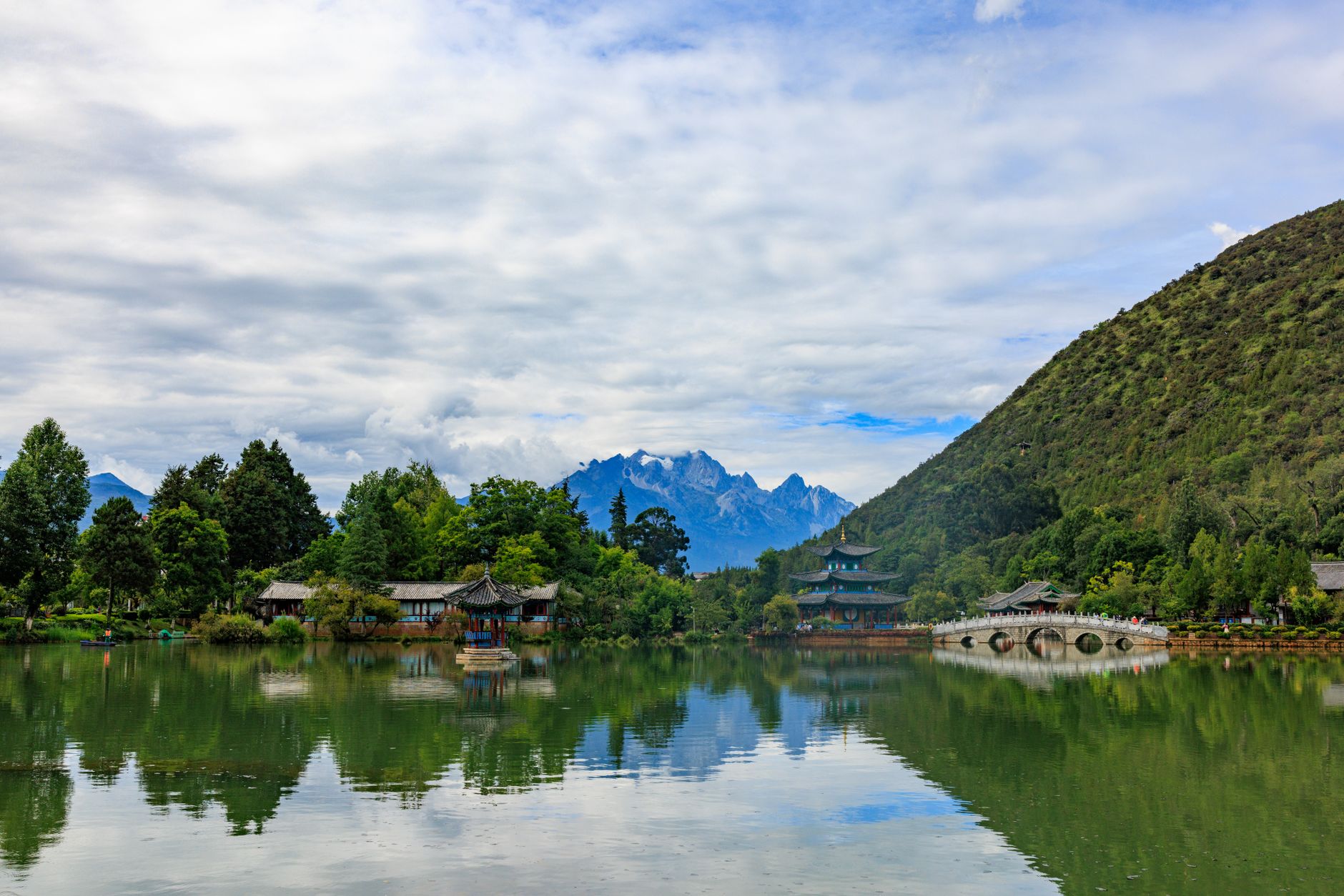
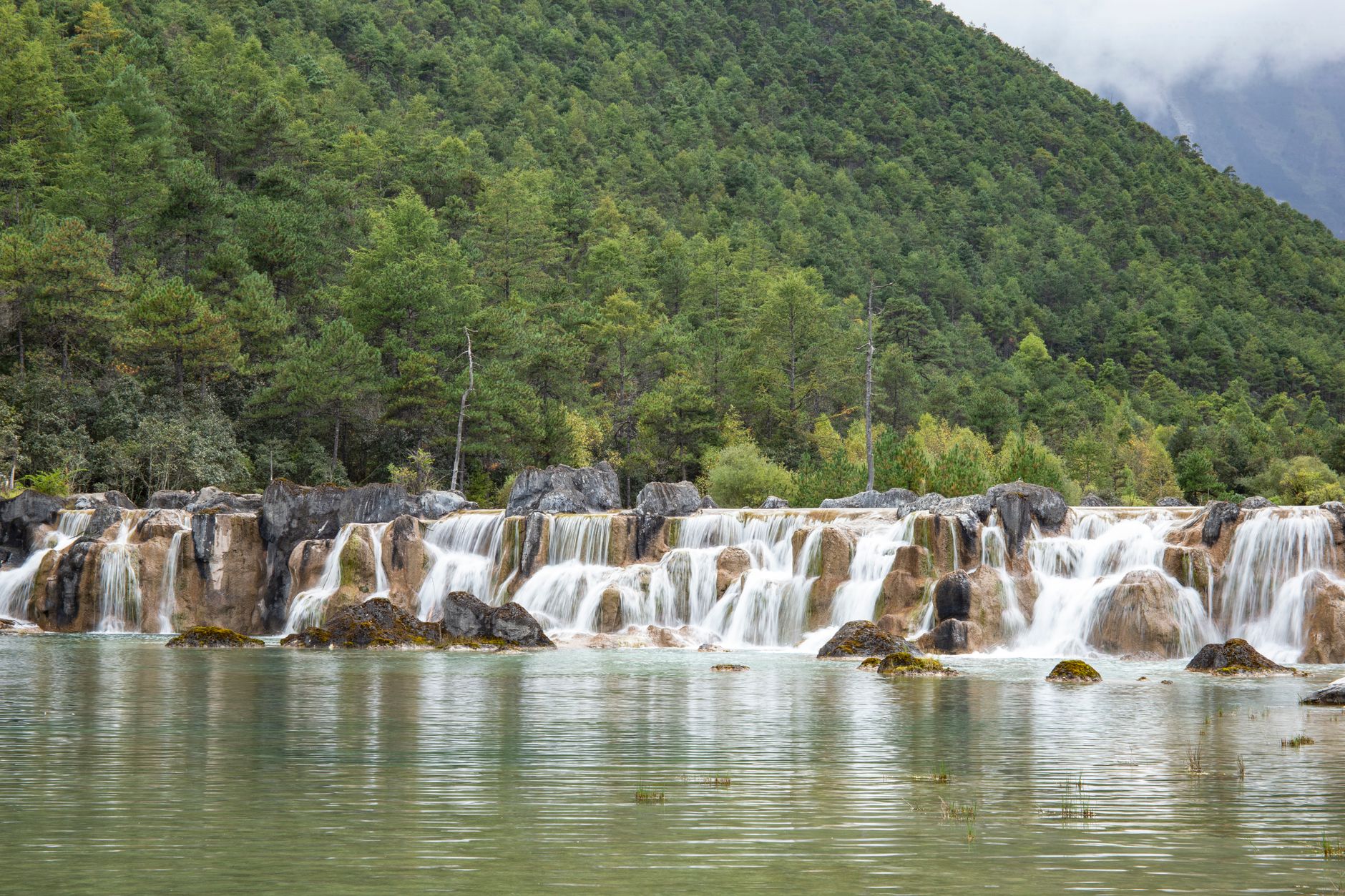
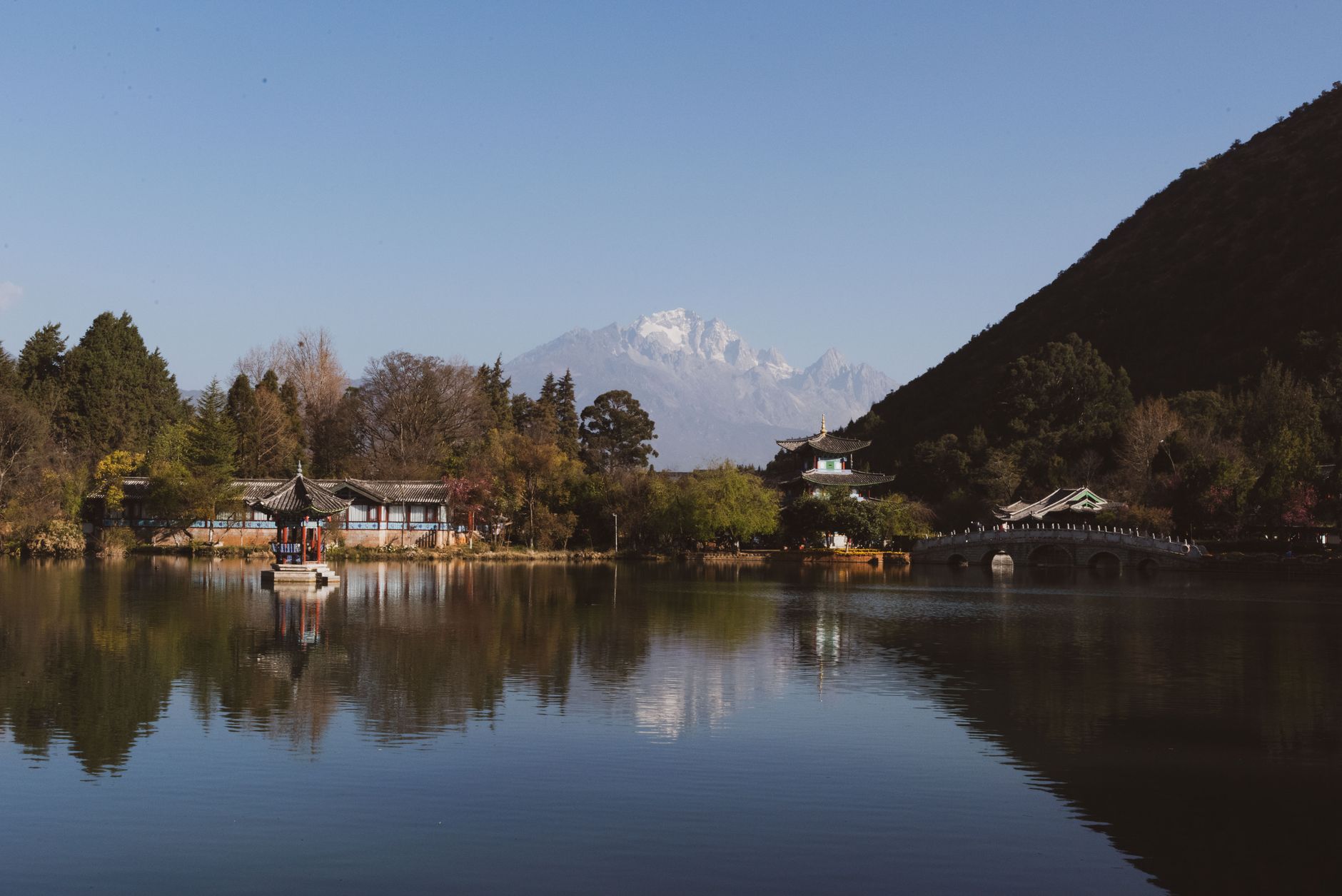
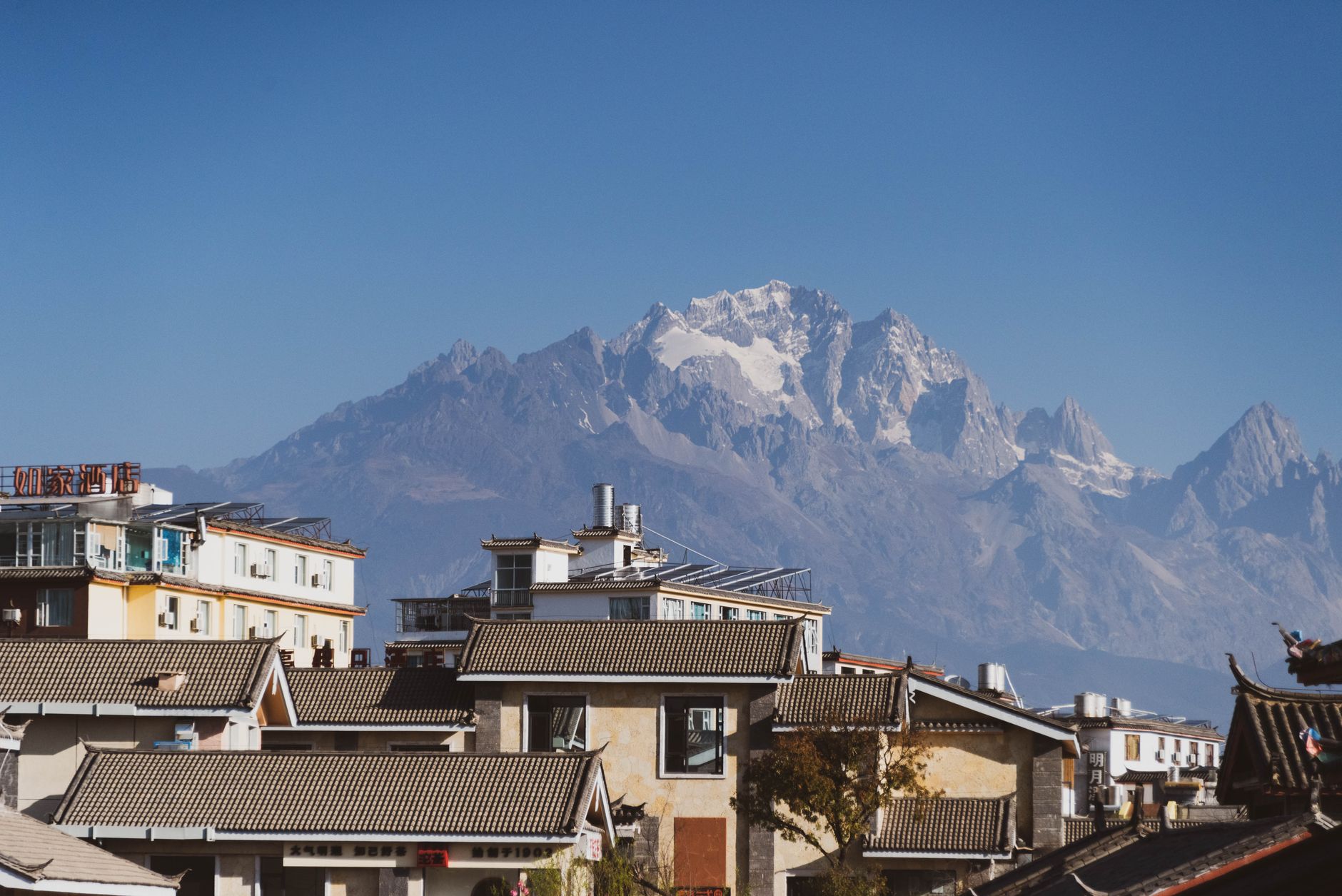
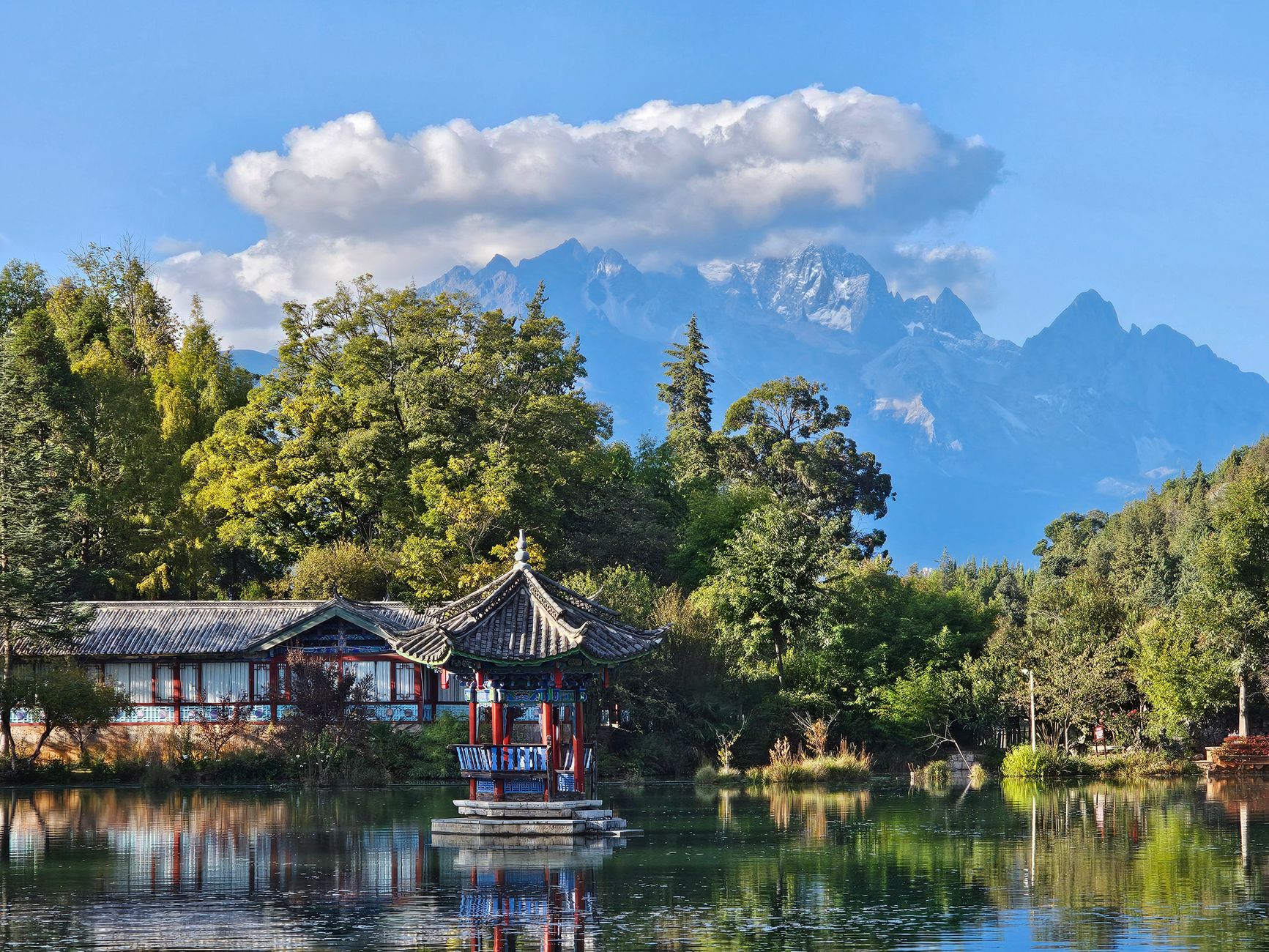
At 2,400 metres above sea level, Lijiang is the kind of place where the air has a particular quality — thinner, cooler, noticeably cleaner — and where the streets of the old town run with water channelled from the mountain above. The Naxi people built Dayan Old Town without city walls, an unusual choice in dynastic China, and the 354 stone bridges that cross its network of canals give it a rhythm unlike anywhere else in Yunnan.
Jade Dragon Snow Mountain anchors the horizon at 5,596 metres, snow-capped even in summer. Around it, the region holds three distinct ancient towns — Dayan, Shuhe and Baisha — each with its own pace, and the Dongba cultural tradition that the Naxi have carried for centuries.
💛 What travellers fall for
People who come back tend to head straight to Baisha, 8 km north of Dayan, before the day-trippers arrive. The Baisha Fresco is quieter than anything in the main old town, and the lanes around the Naxi Hand-made Embroidery Institute feel genuinely unhurried. Book a room inside the old town walls — the walk in with luggage is worth it for the early mornings.
How Lijiang came to be
The Naxi migrated into the Lijiang basin during the Tang and Song dynasties, and by the late Song the Mu family had consolidated power as hereditary chieftains. When Kublai Khan passed through in 1253 on campaign against the Dali Kingdom, the Mu chieftain submitted and received formal Yuan Dynasty authority — a political calculation that kept the family in power for centuries. During the Ming Dynasty the Mu clan reached their height, receiving the imperial surname Zhu as an honour; their residence, Mufu Mansion, once comprised 100 buildings and carried the saying "there is the Forbidden City in the north, Mu's Residence in the south."
In 1723, the Yongzheng Emperor's Gaitu Guiliu reforms dismantled hereditary chieftainships across southwest China, and the Mu family's authority ended. Lijiang became a standard prefecture, then a county by 1770. In 1961, the Lijiang Naxi Autonomous County was established, and in 1998 UNESCO inscribed Dayan Old Town on the World Heritage List.
Who and what shaped it
People who shaped it
Landmark buildings
See Lijiang in motion
Plan your visit
On the map
When to go
Spring and autumn are the most comfortable seasons — mild days, cool nights and clear views of Jade Dragon Snow Mountain. Summer brings the rainy season from roughly June to August, with afternoon downpours that clear quickly; winter is dry and sunny but cold at altitude, with temperatures dropping sharply after dark.
Right now
Background & history adapted from Wikipedia (CC BY-SA) · specs from Wikidata (CC0) · weather from Open-Meteo · map data © OpenStreetMap contributors · photos from Wikimedia Commons / Unsplash with per-image credit. No third-party reviews or social posts reproduced.