
Lekki Conservation Centre
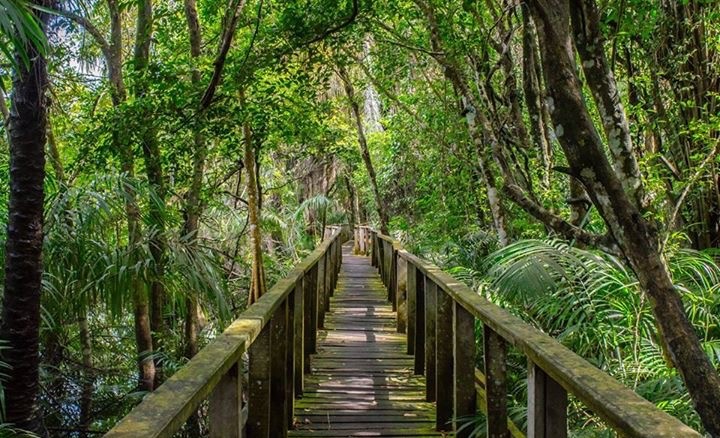
A coconut-tree boulevard leads you in, which sets the tone: this is a place that takes its time. Lekki Conservation Centre occupies 78 hectares of the Lekki Peninsula, where secondary forest gives way to swamp forest and patches of savanna grassland, and where Mona monkeys move through the canopy above raised wooden walkways.
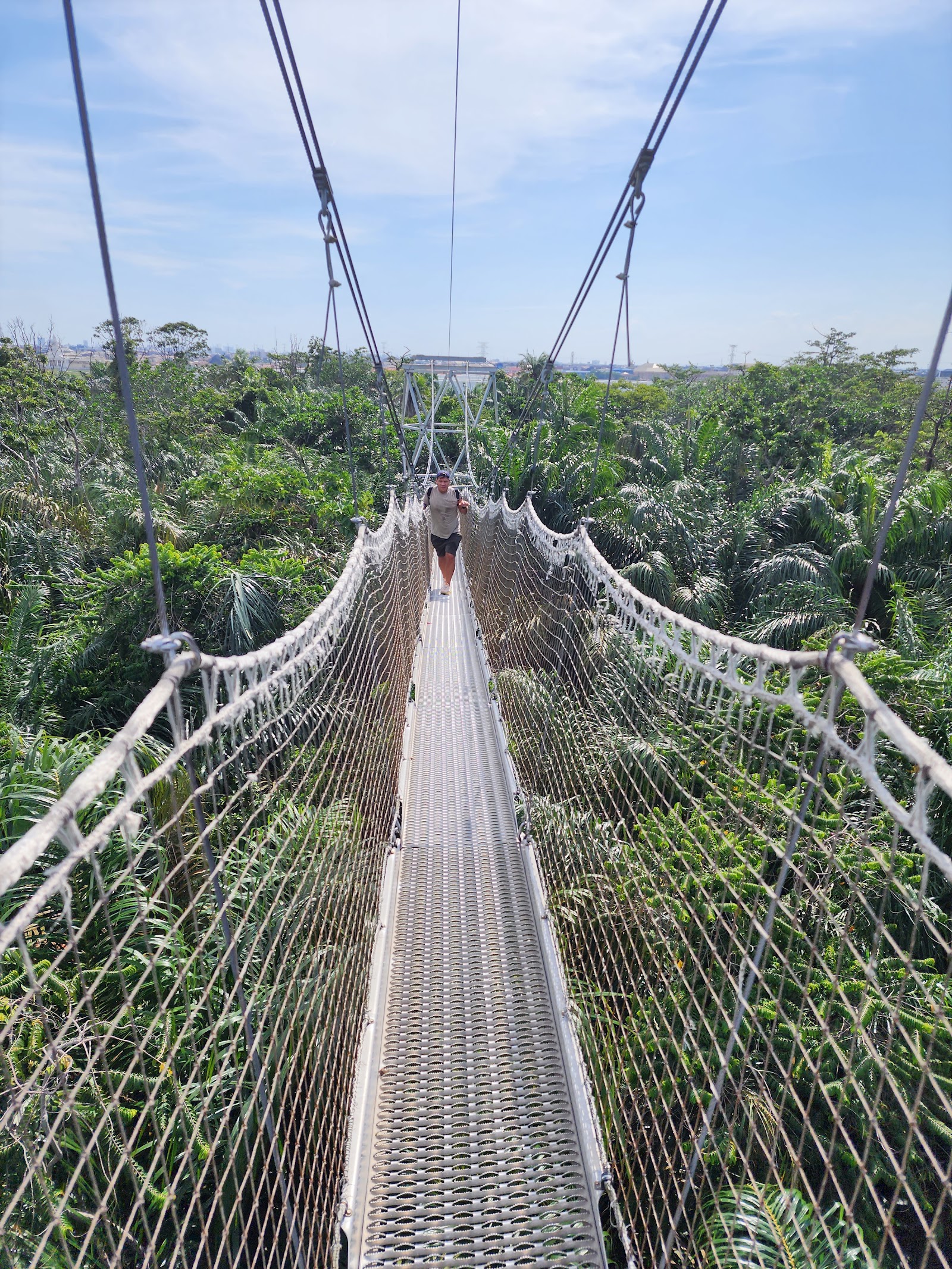
The centrepiece is a 401-metre canopy walkway — Africa's longest, certified by Guinness World Records — suspended 22.5 feet above the forest floor on six towers. Below it, a bird hide looks out over a marsh where crocodiles and monitor lizards keep their own schedule.
💛 What travellers fall for
People who come back tend to time it for a weekday morning, when the groups are smaller and the wait in the air-conditioned holding room is shorter. The tree house platform — 21 metres up — is worth the climb for the angle it gives you over the whole reserve. Wear trainers, not sandals with a heel.
The story behind Lekki Conservation Centre
The Nigerian Conservation Foundation identified the Lekki Peninsula as a priority site in 1987, when an NCF technical team surveyed three candidate areas alongside the Lagos State Ministry of Agriculture and Cooperative. Two years later, in 1989, NCF acquired the land from Chevron Corporation — which had funded the project — and began converting it into a nature reserve, with additional support from former President Ibrahim Babangida. The centre opened in 1990 as both a biodiversity sanctuary and an environmental education facility.
A timber boardwalk followed in 1992, threading through the mangrove terrain. The signature canopy walkway was added in 2015, and promptly entered the record books. The visitor pavilion — a concrete reworking of the traditional mud-hut form arranged around a circular auditorium — anchors the entrance end of the site.
Good to know
Buses 61–64 stop at Chevron/Lekki Conservation Centre Rd; Uber and Bolt drop you at the car park. Admission runs around ₦2,000 without the canopy walk, more with it — confirm current rates directly, as prices have shifted. Children under 1.2 metres enter free. Budget two hours.
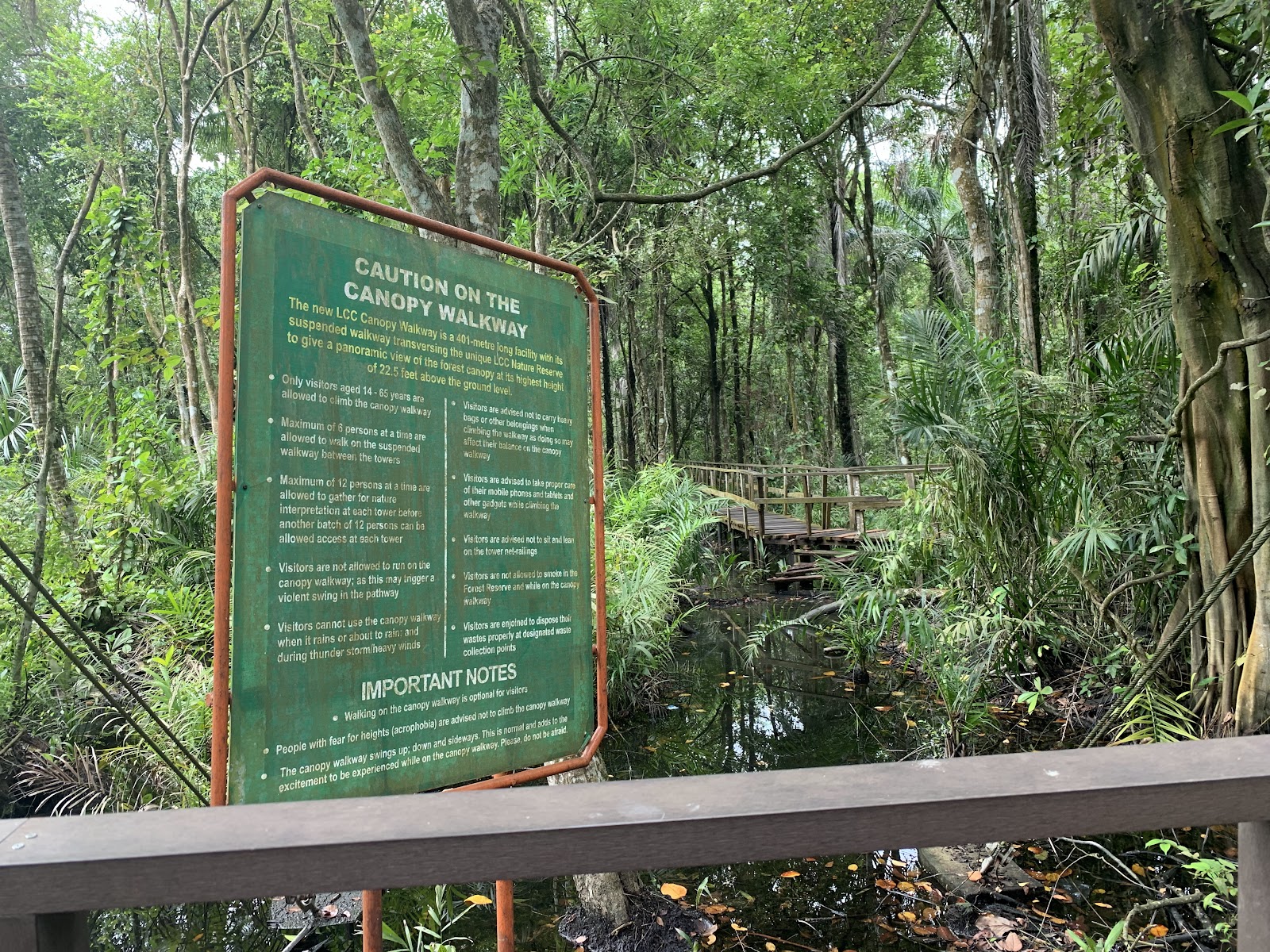
November through March, the dry season, is the most straightforward time to visit: the walkways are dry underfoot and the canopy walk stays open. Come during the rainy season and the boardwalks turn slick — the canopy walk closes in wet weather, and you should expect muddy trails regardless of footwear.
Where is Lekki Conservation Centre?
More tickets & tours for Lekki Conservation Centre
Book directly at the provider
What travellers say about Lekki Conservation Centre
I visited Lekki Conservation Centre on Sunday 24th May, and the experience blended nature, adrenaline, and a surprisingly relaxing finish. The reserve was lively with weekend energy, but still calm enough to enjoy the boardwalks, wildlife, and the long wooden approach to the famous suspended trail. 🌉 The Wobbly Bridge Trail — 401 Metres of Pure Thrill The highlight of my visit was the wobbly bridge trail, the iconic canopy walkway stretching 401 metres across the reserve. It starts gently, but once you step onto the first suspended segment, the sway and height become real.The walkway gradually climbs until it reaches its highest point at 22.5 metres, giving you a sweeping view of the forest canopy and wetlands below. Point of DecisionThis comes early — just before the first major suspended section. You’re still close enough to the ground to turn back, but the bridge already has that signature wobble. I paused, took a breath, and committed to the full trail.🔹 Point of No ReturnMidway through the walkway, you hit the longest, highest, and most exposed stretch. The bridge narrows slightly, the sway becomes more pronounced, and the ground feels very far away. At this point, you can’t turn back — you simply keep moving forward, one careful step at a time. It’s exhilarating, slightly nerve‑tingling, and absolutely unforgettable.By the time I stepped off the final platform, I felt like I’d completed a mini‑expedition suspended in the sky. Eateries & That Refreshing Piña ColadaAfter the trail, I headed to the food area near the family park, where several small vendors were serving snacks, grilled food, and cold drinks. The standout for me was the piña colada — cold, creamy, refreshing, and exactly what I needed after the heat and adrenaline of the walkway. It was the perfect cool-down before exploring the rest of the park. Atmosphere & WildlifeThe mona monkeys were active around the picnic area — curious, playful, and occasionally cheeky. The boardwalks were peaceful, and the entire reserve felt like a green escape from Lagos’ usual intensity. Overall ImpressionLekki Conservation Centre remains one of Lagos’ best nature experiences. The 401‑metre wobbly bridge trail, rising to 22.5 metres, is worth the visit on its own — a blend of height, movement, and scenery that stays with you long after you step off the final platform. Add the relaxed food area and that refreshing piña colada, and it becomes a full, satisfying day out.
If you’re living in Lagos and craving a break from the concrete jungle, traffic, and endless hustle this is one of the best quick getaways you can find right inside the city. As soon as you step onto the trails, you’re greeted by troops of playful monkeys swinging through the trees, jumping from branch to branch, and sometimes even coming quite close to visitors. However do not try to touch or feed them. These monkeys can bite if they feel threatened or if you’re carrying food or shiny items they might want to snatch. Keep your distance, hold onto your bags, and enjoy watching them from afar they’re wild animals not pets. Beyond the monkeys, the centre offers a peaceful network of raised boardwalks that take you through lush forest, wetlands, and mangrove areas. The highlight for most people is the Africa’s longest canopy walkway.It gives you an amazing bird’s-eye view of the forest and is a fun experience especially if you go with friends or family. What I loved most is how LCC provides a rare dose of real nature in a city where trees and green spaces are becoming harder to find. The air feels fresher, the sounds of birds and rustling leaves replace honking horns, and you actually get to breathe and unwind for a couple of hours. It’s perfect for a morning or afternoon outing, a casual date, family time, or even solo reflection. Tips for your visit: - Wear comfortable shoes and light clothing - Bring water and maybe a hat but avoid carrying too much food openly because of the monkeys. - The canopy walk can feel wobbly for some, so take it slow if you’re scared of heights. - Book your ticket online in advance if possible, as it can get busy on weekends.
Absolutely had amazing time here. The lady who first guided us to the main canopy was nice, she explained it well and answered all questions. The canopy walk itself is fun, had good time, and at the end there are lots of places to eat and games to play. I def recommend!! I’ll def be making a YouTube post about the place. Love it!!
Its Unbelievable to still see nature's reserve in the Lagos that seems overcrowded. Ambience is great. The Experience Excellent. You can only experience it, you can't explain it😂 As a lover of heights, 73 feets above ground level wasn't scary at all. Management should keep up with high maintenance of the ropes and walk ways. Other activities area at the end of the walk was great . Widelife?? It's a home of monkeys and a few tiny snakes I saw on the wooden walkways along the swampy forest path. Great experience overall.
I had a great experience visiting the Lekki Conservation Centre. The environment was beautiful, well-maintained, and offered a refreshing escape from the busy city. It was a wonderful place to relax, explore nature, and enjoy the attractions. One area that could use some attention is the safety nets in certain sections, as a few of them seemed loose and may need replacement or maintenance. Aside from that, everything was enjoyable and well organized. Overall, I loved my visit and would definitely recommend it to others. I look forward to visiting again in the future.
More of Lagos
Discover where to stay, what to do and the best deals for your trip.
Explore Lagos →More attractions in Lagos
All of Lagos →
Background adapted from Wikipedia (CC BY-SA) · map data © OpenStreetMap contributors · ratings & place photos via Google · other photos with per-image credit. Ticket links may earn us a commission at no extra cost to you.