
Leidseplein
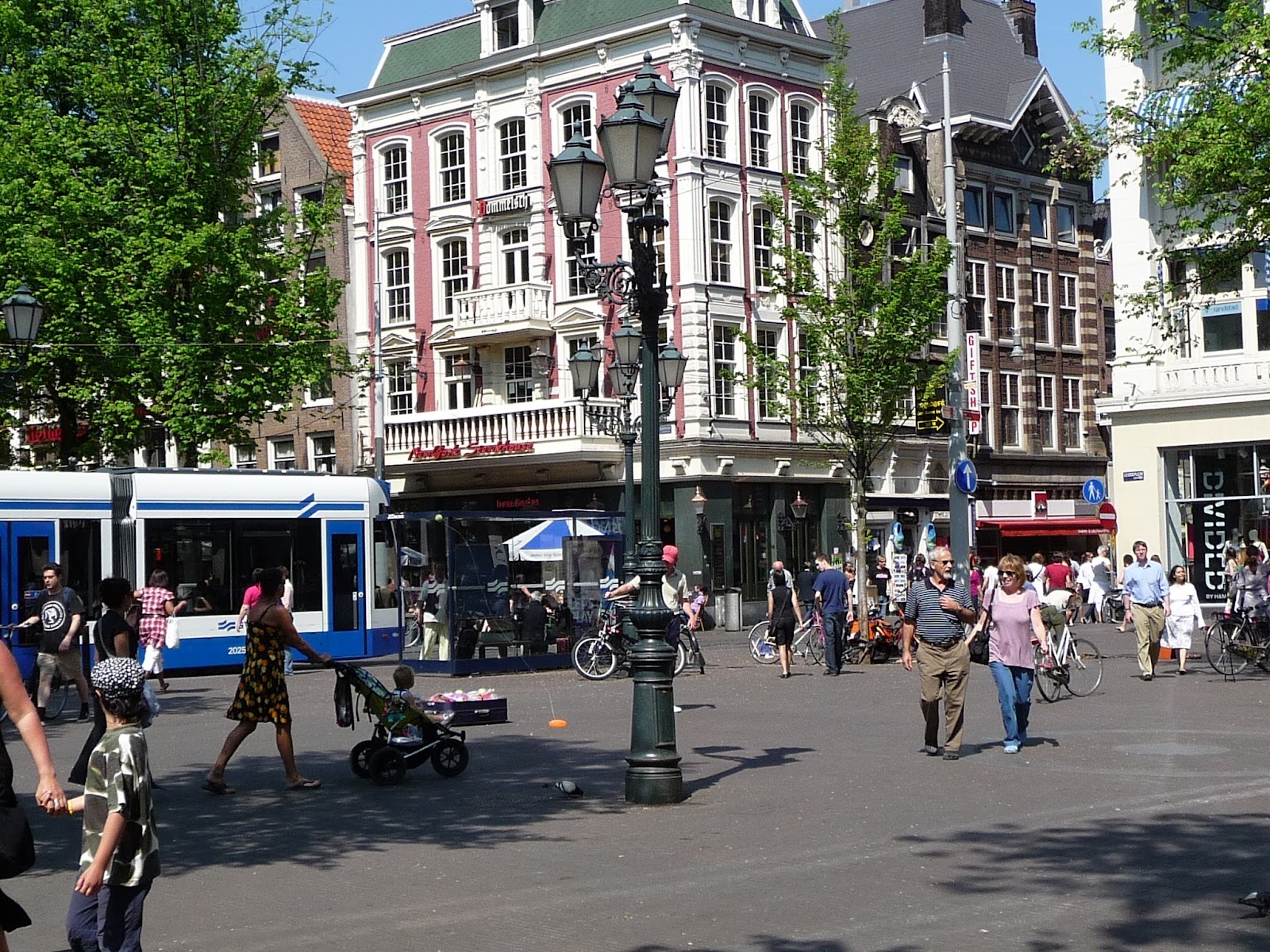
At the corner of the Stadsschouwburg's neo-Renaissance façade, tram lines converge from seven directions — a reminder that Leidseplein has always been a place where things arrive and depart. The square started life as a wagon park: farmers rolling in from Leiden through the city gate would leave their horses here before heading into Amsterdam on foot. That logic of gathering and dispersal never really left.
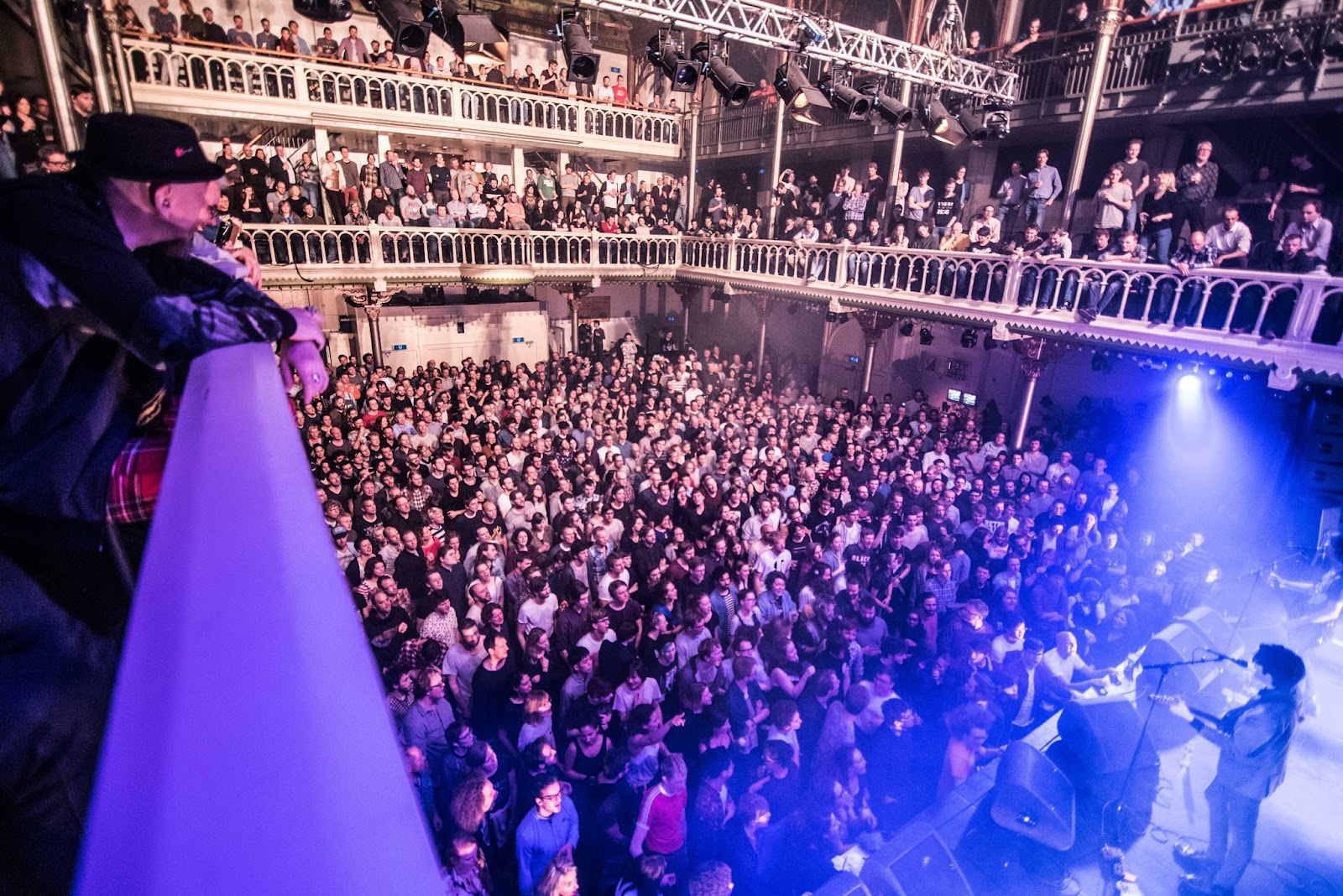
Today the square holds a concentrated run of architecture that spans three centuries — Art Nouveau hotel, neoclassical department store, converted church-venue — all facing a broad terrace that fills and empties with the rhythm of the city's evenings.
💛 What travellers fall for
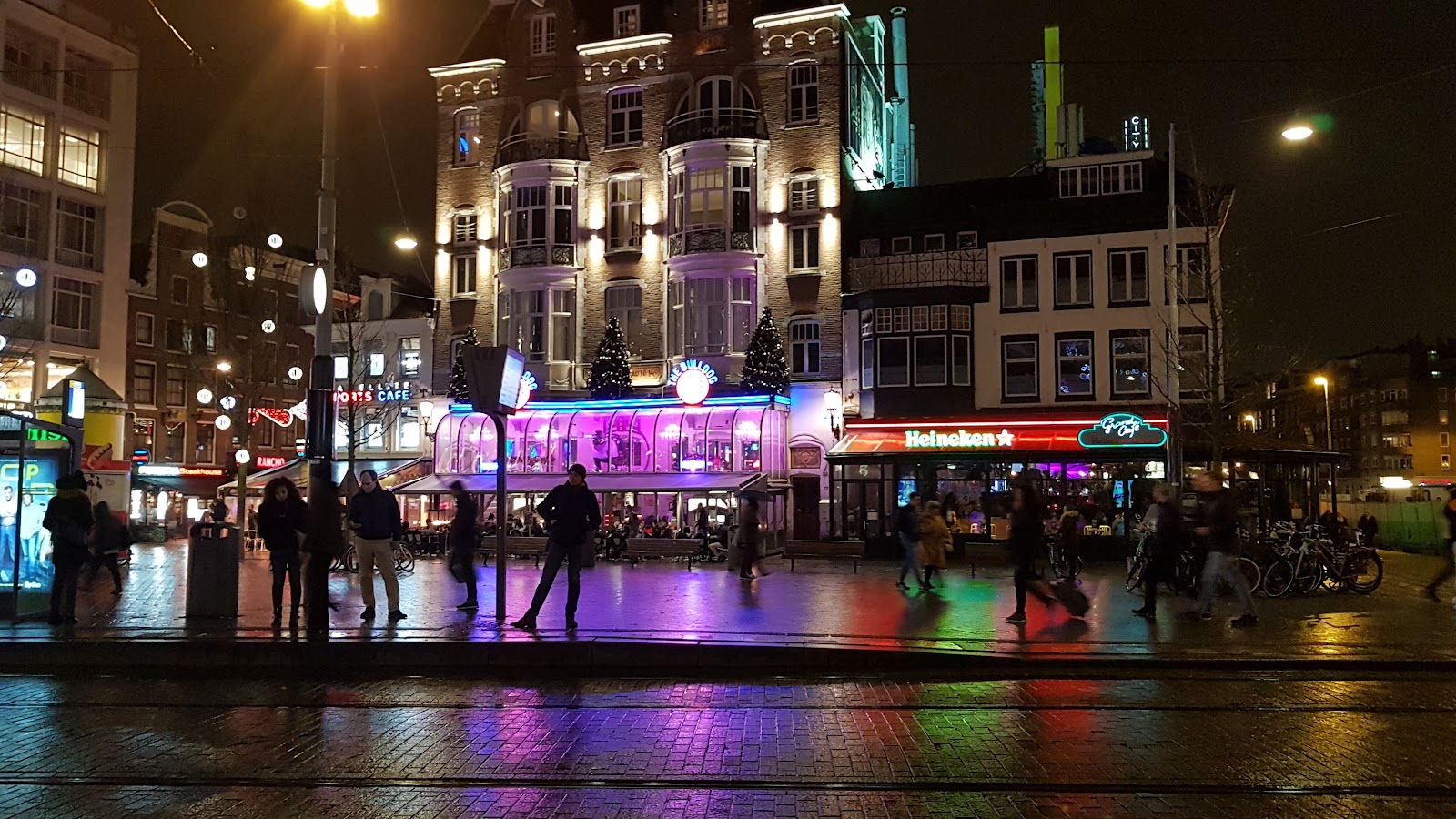
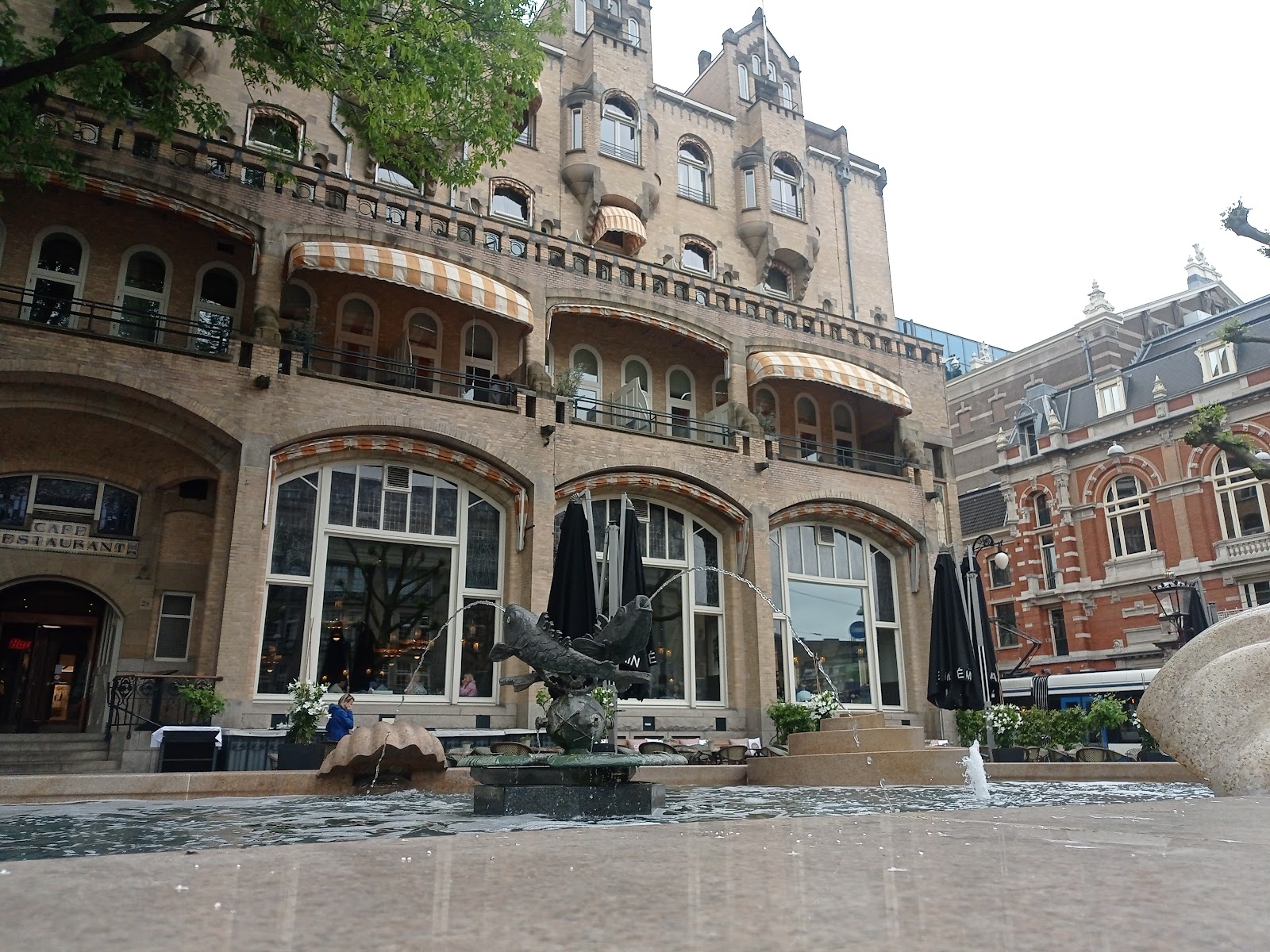
Regulars tend to pick a side: the Café Americain inside the American Hotel for a long afternoon coffee under its Art Deco lanterns, or a terrace seat facing the Stadsschouwburg's brick arches to watch the tram choreography. In December, the square's stone gives way to an ice rink, and the whole geometry of the place shifts.
The story behind Leidseplein
The square's name comes from the Leidsepoort, the city gate designed by Amsterdam's master builder Daniël Stalpaert and constructed between 1662 and 1664, where the road south to Leiden began. After the city's 1663 expansion, the open ground outside the gate became one of the first designated wagon parks — a practical staging post before the gate was demolished in 1862.
Cultural life arrived early: a first city theatre opened here in 1774, burned down in 1890, and was replaced by Jan Springer's current Stadsschouwburg in 1894. Six years later, on 17 August 1900, Amsterdam's first electric tram line ran from this square to the Brouwersgracht. By the 1950s and 1960s a generation of young artists known as the Pleiners had claimed the square as their own, with Café Eijlders and Café Reynders as their regular haunts.
Good to know
Trams 1, 2, 5, 7, 11, 12 and 19 all stop here; bus 397 connects directly to Schiphol. The square is car-free and street parking nearby is scarce — the Marnixstraat or Museumplein garages are your best options. Evenings draw the largest crowds; daytime is easier for taking in the buildings.
Summer days sit around 18–22 °C with long light — June sunrises come before five in the morning — though evenings cool quickly to around 10–13 °C, so a layer is worth carrying. From December, an outdoor ice rink takes over part of the square and food stalls appear around its edges.
Where is Leidseplein?
Location
- In Oud-West
- 52.3624, 4.8820
- Open in Google Maps
More tickets & tours for Leidseplein
Book directly at the provider
More of Oud-West
Discover where to stay, what to do and the best deals for your trip.
Explore Oud-West →More attractions in Oud-West
All of Oud-West →

Background adapted from Wikipedia (CC BY-SA) · map data © OpenStreetMap contributors · ratings & place photos via Google · other photos with per-image credit. Ticket links may earn us a commission at no extra cost to you.