
Koubba el Khamsinia (Pavilion of 50 Columns)


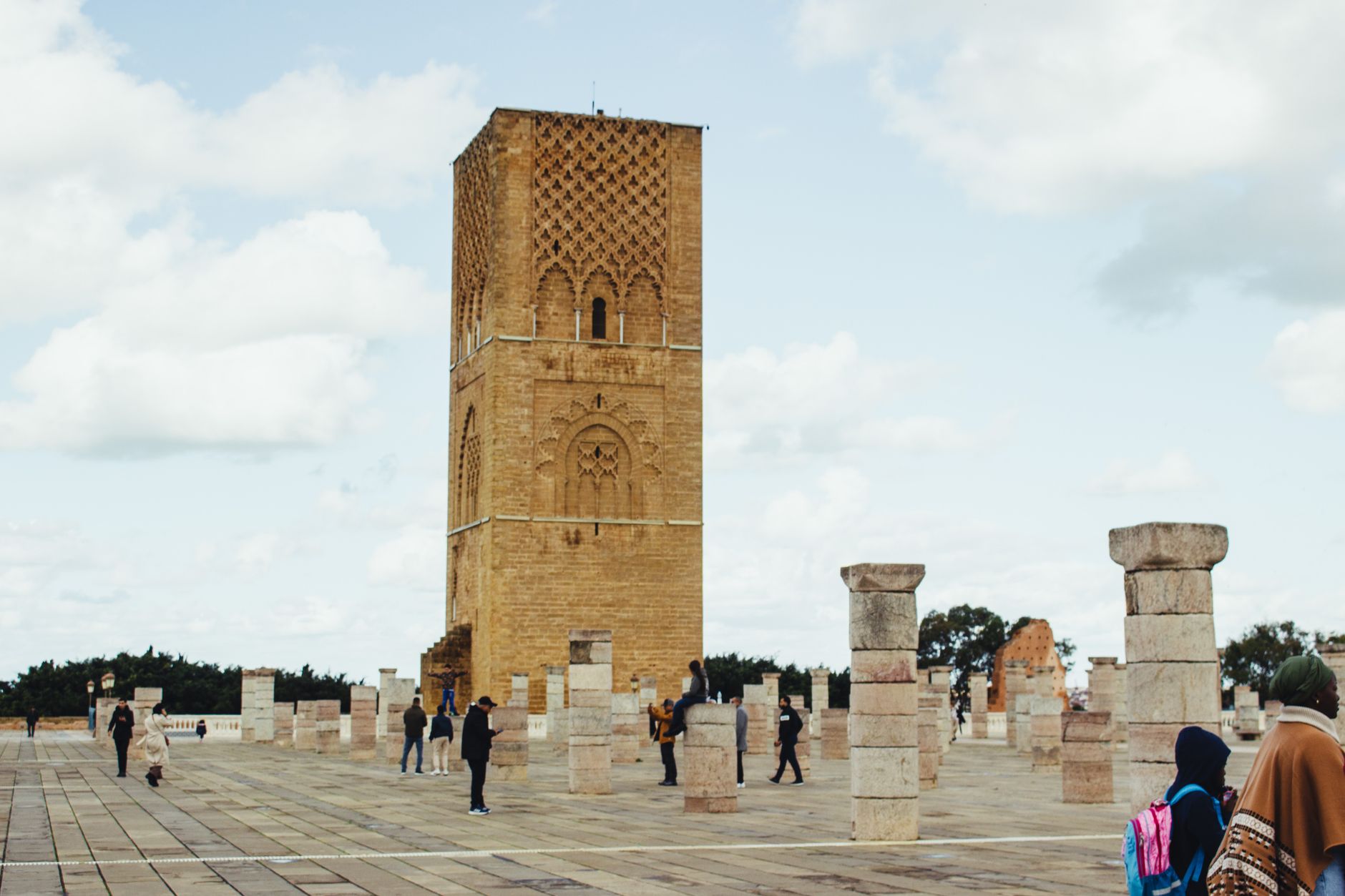


What remains of the Pavilion of 50 Columns is a lesson in what absence can communicate. You walk into a hall where the sultan's alcove still opens in the back wall, where a marble fountain once sat flanked by water basins fed through silver leopards and pythons, and where a poet laureate wrote verses in the building's honour — and you find mostly sky. A few columns stand. The rest is outline and implication.
That outline is worth reading carefully. The proportions alone — a throne hall named for either 50 columns or 50 cubits of floor space — tell you something about the scale of ambition Ahmad al-Mansur brought to El Badi in the decades after 1578.
💛 What travellers fall for
People who linger here tend to spend time in the alcove itself, standing where the sultan once sat in attendance, trying to reconstruct the room from what's left. The carved black marble inscription above the niche is gone, but the geometry of the space still frames a view across the courtyard that makes the pavilion's original purpose as a reception hall feel entirely legible.
How Koubba el Khamsinia (Pavilion of 50 Columns) came to be
Sultan Ahmad al-Mansur commissioned the pavilion within months of coming to power in 1578, and construction ran through to 1594, with finishing work continuing until his death in 1603. At its height the hall contained a central fountain, twin zellij-covered basins, animal sculptures in silver, and walls of white marble interrupted by a single Arabic inscription carved in black. The court poet Abd al-Fishtali wrote a dedicated poem to it.
The Saadian dynasty's fall undid much of it. Sultan Ismail Ibn Sharif, building his new capital at Meknes under the Alaouites, systematically stripped El Badi of its materials and decorations. What you see today is what that process left behind.
Who and what shaped it
People who shaped it
Landmark buildings
Plan your visit
On the map
When to go
Spring and autumn are the most comfortable seasons to be standing in an open, largely unshaded ruin — March through May brings warmth that can tip into real heat by May, while September and October offer a gentler version of summer. In July and August, daytime highs around 36°C make a morning visit the only sensible approach.
Right now
Background & history adapted from Wikipedia (CC BY-SA) · specs from Wikidata (CC0) · weather from Open-Meteo · map data © OpenStreetMap contributors · photos from Wikimedia Commons / Unsplash with per-image credit. No third-party reviews or social posts reproduced.