
Kalvarienberg Bad Tölz
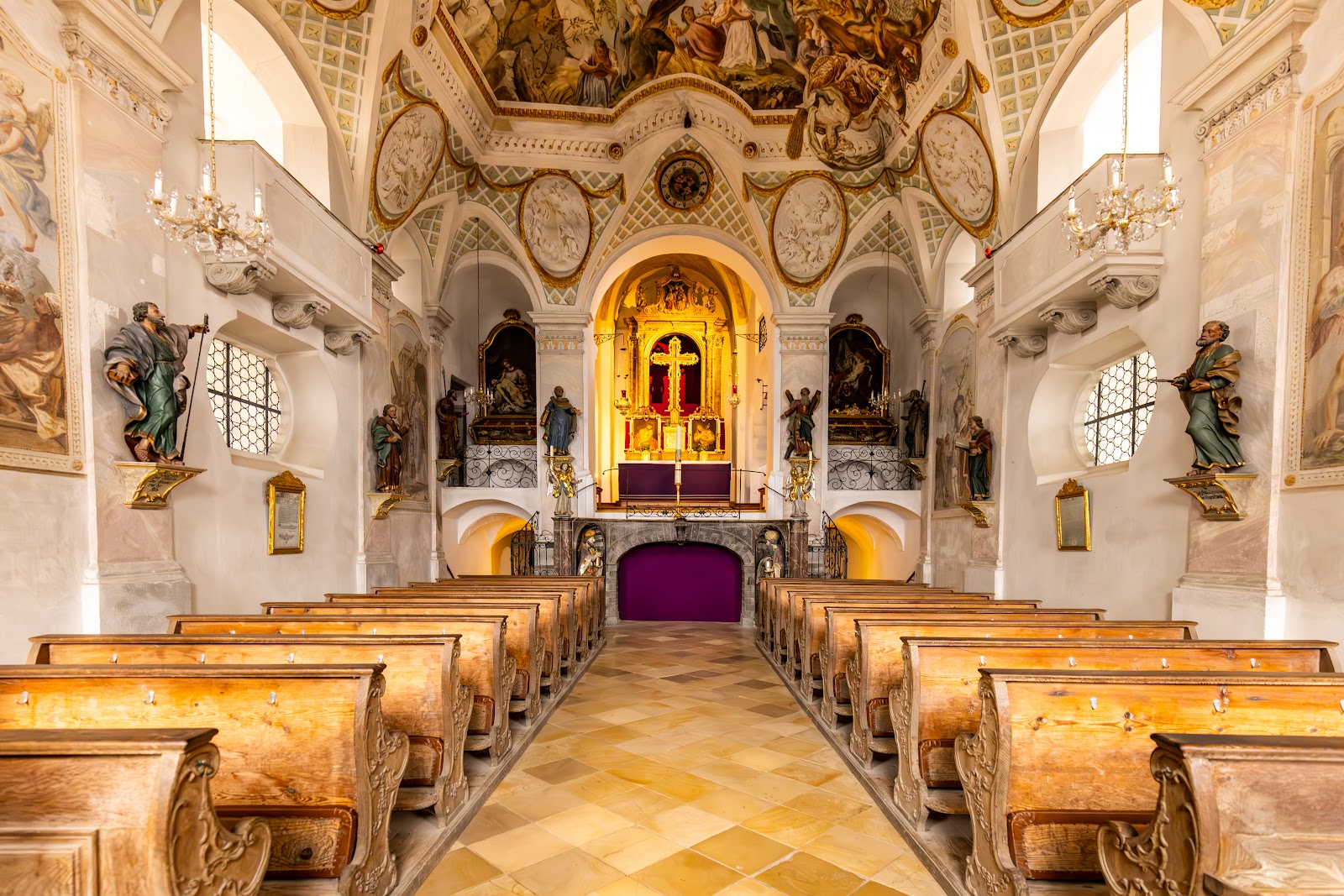
The hill above Bad Tölz was once an execution ground — a fact the locals seem to have deliberately inverted by covering it, over several decades, with chapels, carved figures, and a double-storey baroque church that reads like a small city of devotion from below. The Heilig-Kreuz-Doppelkirche anchors the top, visible from the length of the Isar valley, but the real texture of Kalvarienberg is the walk up: fourteen Stations of the Cross, a grotto chapel with columned portico, a Golgotha group with life-size figures carved across two centuries, and a Mount of Olives where three sleeping disciples have kept their pose since before 1773.

💛 What travellers fall for
People who return tend to time it for early morning before the day-trippers arrive from Munich. The Kerkerkapelle grotto rewards a slow look — Joseph Anton Fröhlich's figures carry a quiet intensity that photographs don't quite catch. Bring something warm even in summer; the hilltop catches wind off the Karwendel.
The story behind Kalvarienberg Bad Tölz
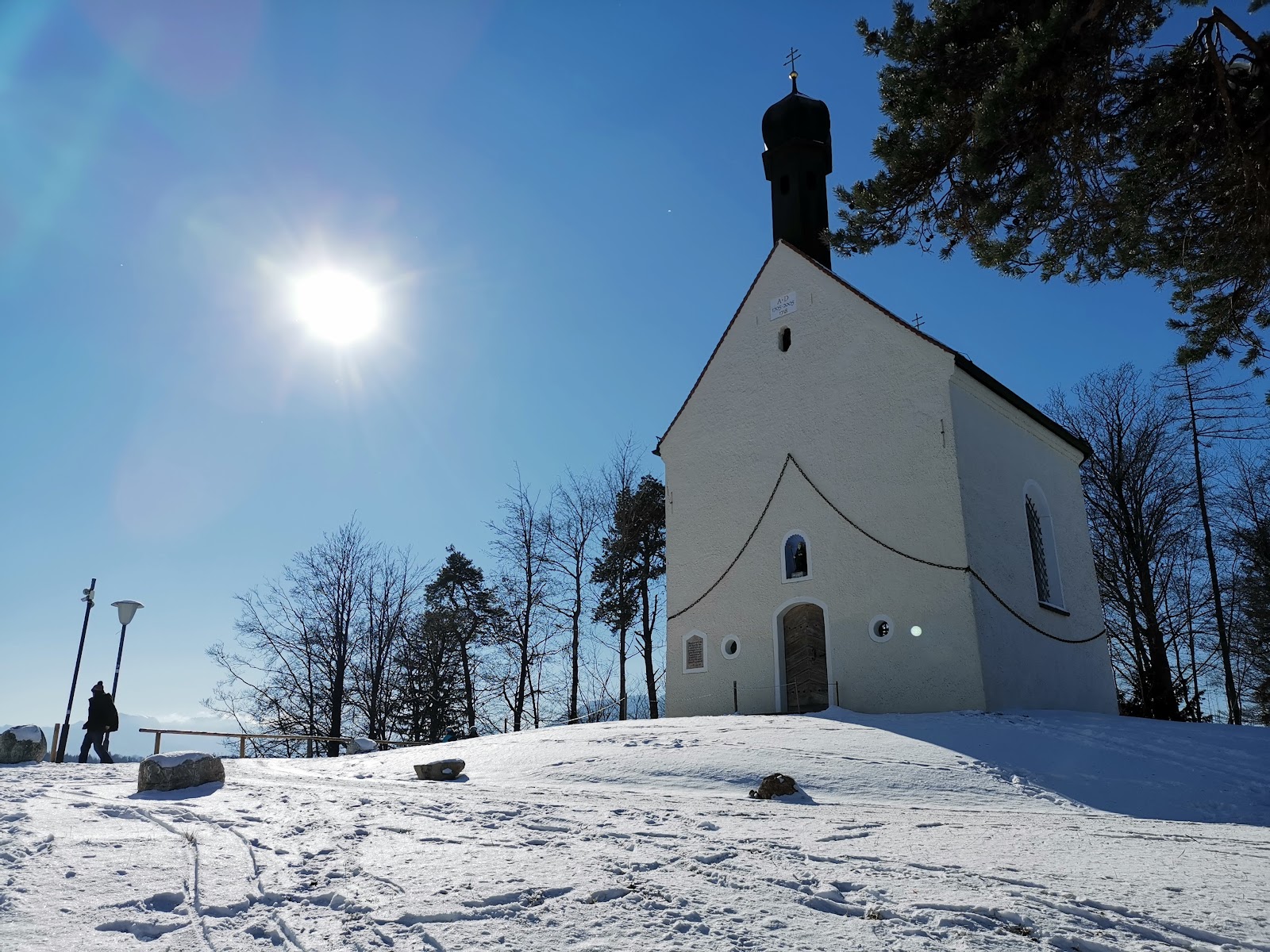
The hill was known as Höhenberg — the height mountain — and served as one of Bad Tölz's two medieval execution sites. Its transformation into a place of pilgrimage began in 1705, when local carpenters made a vow after surviving the Sendlinger Mordweihnacht, the Christmas Massacre of Sendling. Construction of the Leonhardskapelle followed from 1718, the same year salt-and-customs official Friedrich Nockher — inspired by a Kalvarienberg he'd attended the dedication of in Lenggries in 1694 — drove the founding of seven Way of the Cross chapels representing the Seven Falls of Christ.
The Heilig-Kreuz-Doppelkirche rose between 1722 and 1735; the Kerkerkapelle grotto followed in 1735, with figures by Tölzer sculptor Joseph Anton Fröhlich. The Golgotha crucifix group accrued figures across 150 years — Martin Hammerl's Christ in 1721, the two thieves in 1860, the mourning figures at the foot of the cross in 1872. A final set of five chapels completed the full fourteen-station sequence in 1926. King Ludwig I walked it on 5 September 1829, dined in a specially built pavilion, and looked out at the Karwendel.

Good to know
Access is free. The church is open daily 09:00–18:00. From Marktstraße, follow the stairs off Säggasse — about 500 metres and a genuine uphill push, allow 20–30 minutes at a comfortable pace. From Munich Hauptbahnhof, the train takes roughly an hour.
Summer visits are the most comfortable — July averages around 23°C at the top — but the exposed hilltop loses warmth quickly once clouds come in. The November Leonhardifahrt procession arrives in cooler, often grey conditions that suit the site's character well.
Where is Kalvarienberg Bad Tölz?
More tickets & tours for Kalvarienberg Bad Tölz
Book directly at the provider
What travellers say about Kalvarienberg Bad Tölz
I've been seeing this church atop the hill from our hotel and I told myself I have to go there. Navigated my way through maps and saw this mountain trail that will surely lead to it. The trail was a bit long and steep so I had to catch my breath a few times. But it was worth all the effort when I finally came up on top. What a sight to behold. It had an excellent view of Bad Tölz with the mountain ranges in the backkground. Inside the church is nice. Went to say a little prayer and it was very solemn since I'm the only one inside. On my way out, I panicked a bit since it was hard to open the old doors. Took me about 2 minutes to be able to open it!
Interesting church. Good views over the town, worth the walk up.
This is a must see if you are in Bad Tölz! It's just amazing to look at the wonderful art inside and the ceilings are beautifully painted! There are public toilets outside.
A healing place for the sick. Not claiming any miracles but it works to my husband. We always come here right after his treatment time (chemotherapy) 2 years ago and up to now. For those who are currently sick you may visit the place and experience it yourself. 🙏
A must-see in Bad Tölz! The view is fantastic, the church is beautiful and extraordinary inside, pretty unusual for Bayern architecture (however I’m not a specialist ;)) You can get there easily from city centre, the road to the church is uphill, but not that steep and short. There’re public bathrooms available
More of Bad Tölz
Discover where to stay, what to do and the best deals for your trip.
Explore Bad Tölz →More attractions in Bad Tölz
All of Bad Tölz →

Background adapted from Wikipedia (CC BY-SA) · map data © OpenStreetMap contributors · ratings & place photos via Google · other photos with per-image credit. Ticket links may earn us a commission at no extra cost to you.