
Jardin des Plantes
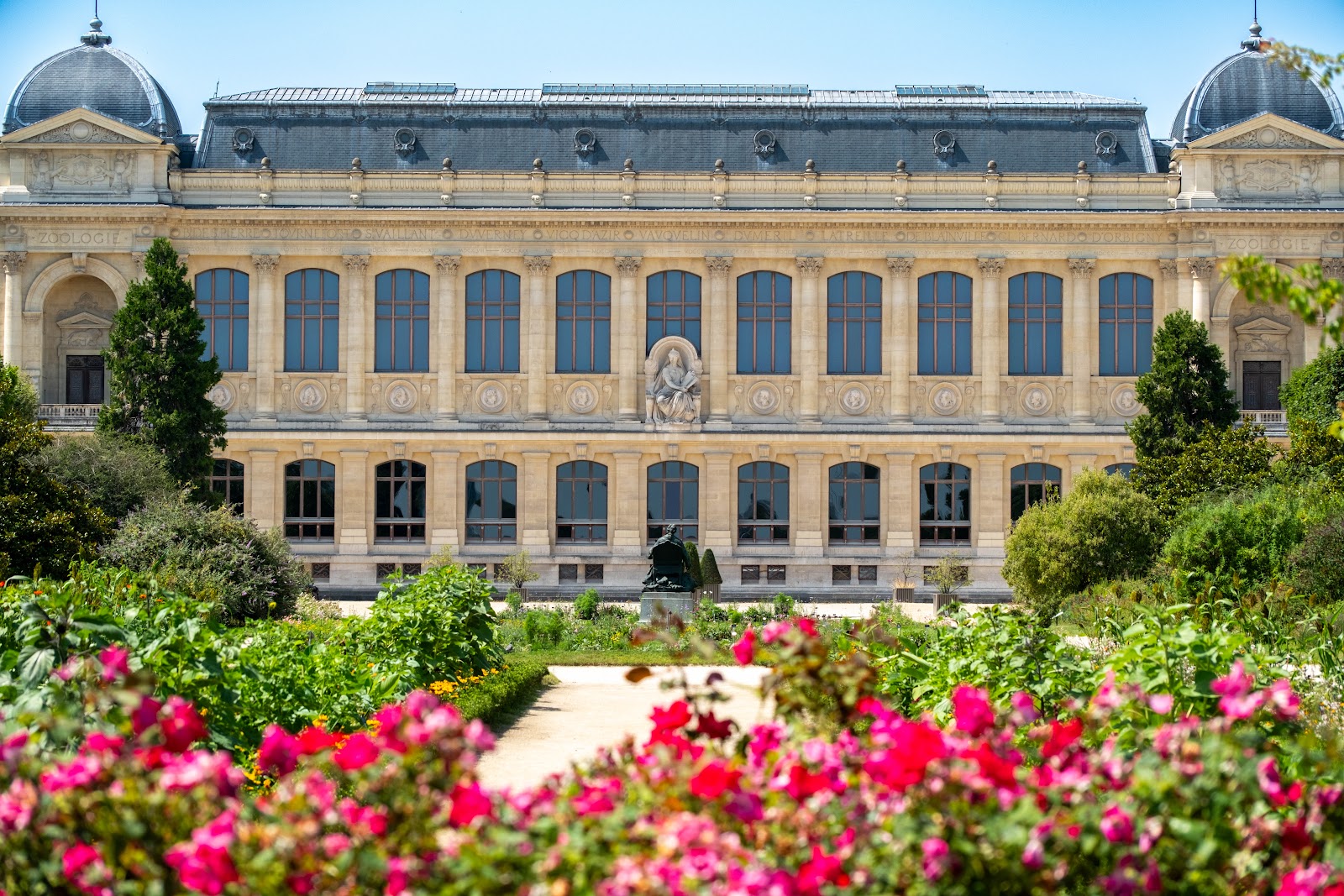
The Jardin des Plantes opens its gates before most of Paris has finished its coffee — 7:30 in summer — and that early hour is worth knowing. In the long allées, plane trees line up with the kind of formal patience that only centuries of pruning produce, and somewhere between the rose garden and the labyrinth hill, the city's noise drops away to almost nothing.
At 28 hectares along the Seine's left bank, this is at once a botanical garden, a zoo, and a cluster of natural history galleries — each with its own admission, its own hours, its own logic. You can spend a morning here and barely scratch the surface.

💛 What travellers fall for
People who come back tend to head straight for the Gloriette de Buffon — a cast-iron viewing platform finished in 1787 and considered the oldest metal structure in Paris. It's easy to walk past. Regulars also time the greenhouse visit for a weekday; the Mexican and Australian greenhouses get crowded on weekends, and at 20 by 12 metres each, they feel it.
The story behind Jardin des Plantes
A royal edict dated 6 July 1626 authorised a garden of medicinal plants in the marshy Faubourg Saint-Victor, on Louis XIII's orders. His chief physician, Guy de La Brosse, became the first intendant and pushed the project into existence; the garden opened to the public in 1650. For most of the 18th century it grew quietly, until Georges-Louis Leclerc, Comte de Buffon, took charge in 1739 and held the post until his death in 1788, transforming it into a serious centre of scientific inquiry. The Jussieu brothers, Cuvier and Lamarck all worked here.
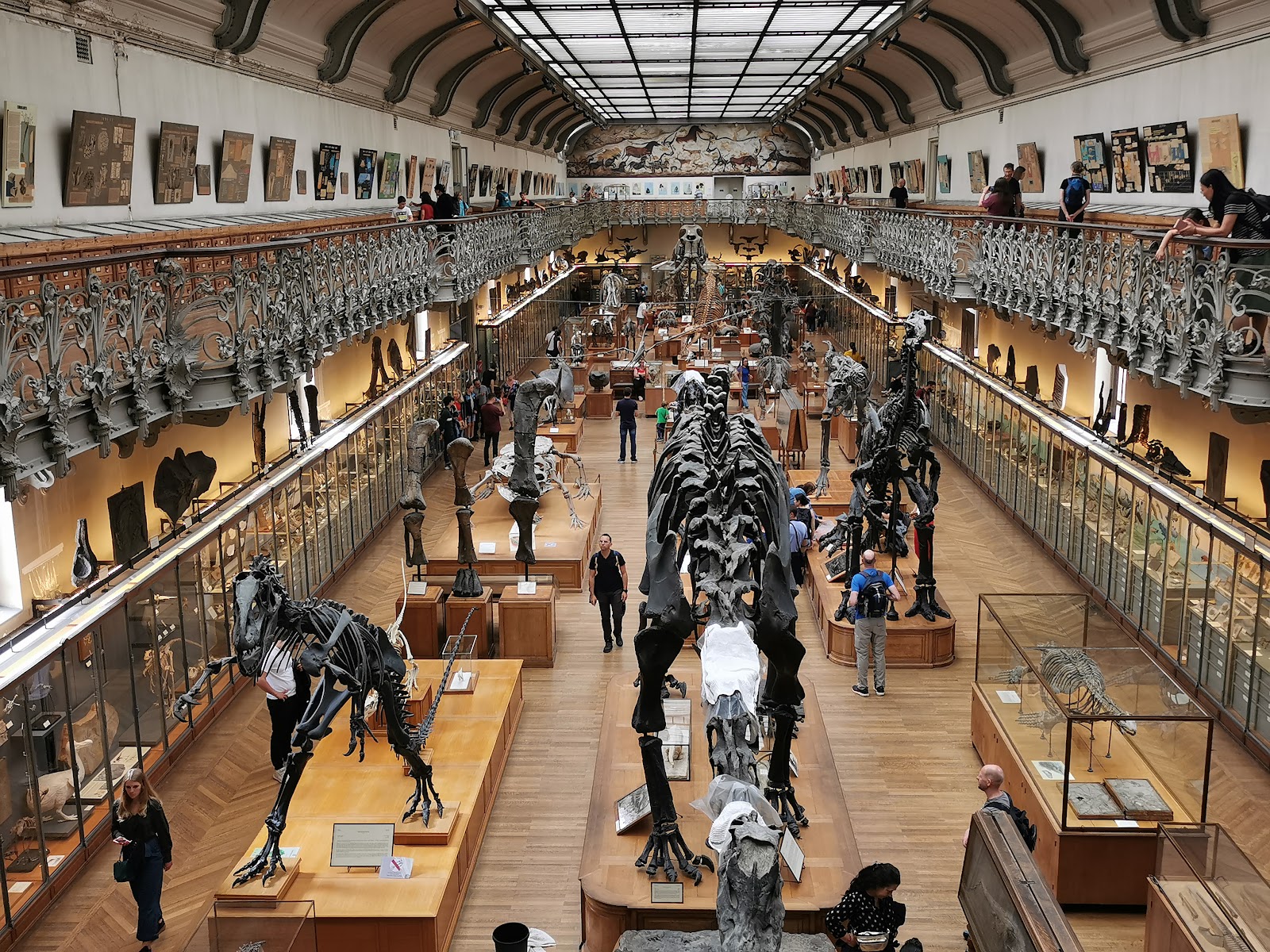
The Revolution reshaped it again. In June 1793 a decree created the Muséum d'Histoire Naturelle with twelve professorial chairs — the so-called Republic of Professors. The following year, animals from the abandoned royal zoo at Versailles formed the nucleus of the Ménagerie, now the second-oldest zoological garden in the world. The Grande Galerie de l'Évolution, designed by Jules André and inaugurated in 1889 as the Galerie de Zoologie, was closed for decades before reopening, renovated, on 21 June 1994.
Good to know
Entry to the gardens themselves is free; galleries and the zoo charge €7–16. The Ménagerie and Grande Galerie de l'Évolution have separate tickets. The Alpine Garden closes November through February. Metro Jussieu or Gare d'Austerlitz puts you at opposite ends — choose based on what you're heading for first.
Spring is the obvious season — the rose garden peaks in May and the alpine plants are in flower before the summer heat — but autumn brings its own colour to the allées and far fewer visitors. Summer mornings before 9am are worth the early alarm; by midday in July the open lawns offer little shade.
Where is Jardin des Plantes?
Location
- In Paris 5th Arrondissement
- 48.8442, 2.3601
- Open in Google Maps
Rating
4.6 ★ · 50,956 Google reviews
More tickets & tours for Jardin des Plantes
Book directly at the provider
What travellers say about Jardin des Plantes
What a lovely place. It is huge with so much happening and so many people around. There were families on holiday, people exercising, school trips and solo travellers. Everyone enjoying the scenery and great weather. It’s lovely to go for a walk and very accessible from the metro. I sat on a bench and enjoyed my book for a while.
I absolutely loved my visit to Jardin des Plantes this March! 🌸 The beautiful cherry blossoms were in full bloom, creating such a picturesque setting. It was a truly delightful experience strolling through the gardens. 🚶♂️ I especially enjoyed the vibrant colors and serene atmosphere. I can't wait to go back! 🌳✨
A very large botanical garden in the 5th Arrondissement in Paris. There are many walking trails that wind you through the amazing older trees, there are many garden areas with multiple plantings (with all plants labeled) throughout the garden, in addition to the Merry Go Round for the children and the greenhouses for everyone. We visited the last week in April so the tulips were almost done blooming along with a few of the other bulbs. There are a few trees and shrubs that are still in full bloom giving the garden some amazing color. There are plenty of benches scattered throughout the walkways that you can enjoy a short rest along with public restrooms. The green houses cost 9 euro to enter, with a reduction in price for younger visitors. The rest of the garden is free to enter and enjoy.
Absolutely beautiful gardens, trees and flowers. Huge place with free bathrooms within which was nice. You can talk a tunnel to a secret rock garden and high on hill can look into the kangaroo den. I came here on a sunny day to enjoy the warmth and sit on a bench to enjoy nature.
An incredible escape within the city. We were lucky enough to visit in April during tulip season, and the colors were spectacular. It’s the perfect spot for a high-quality, relaxing walk.
More of Paris 5th Arrondissement
Discover where to stay, what to do and the best deals for your trip.
Explore Paris 5th Arrondissement →More attractions in Paris 5th Arrondissement
All of Paris 5th Arrondissement →

Background adapted from Wikipedia (CC BY-SA) · map data © OpenStreetMap contributors · ratings & place photos via Google · other photos with per-image credit. Ticket links may earn us a commission at no extra cost to you.