
Jardin Botanique Val Rahmeh
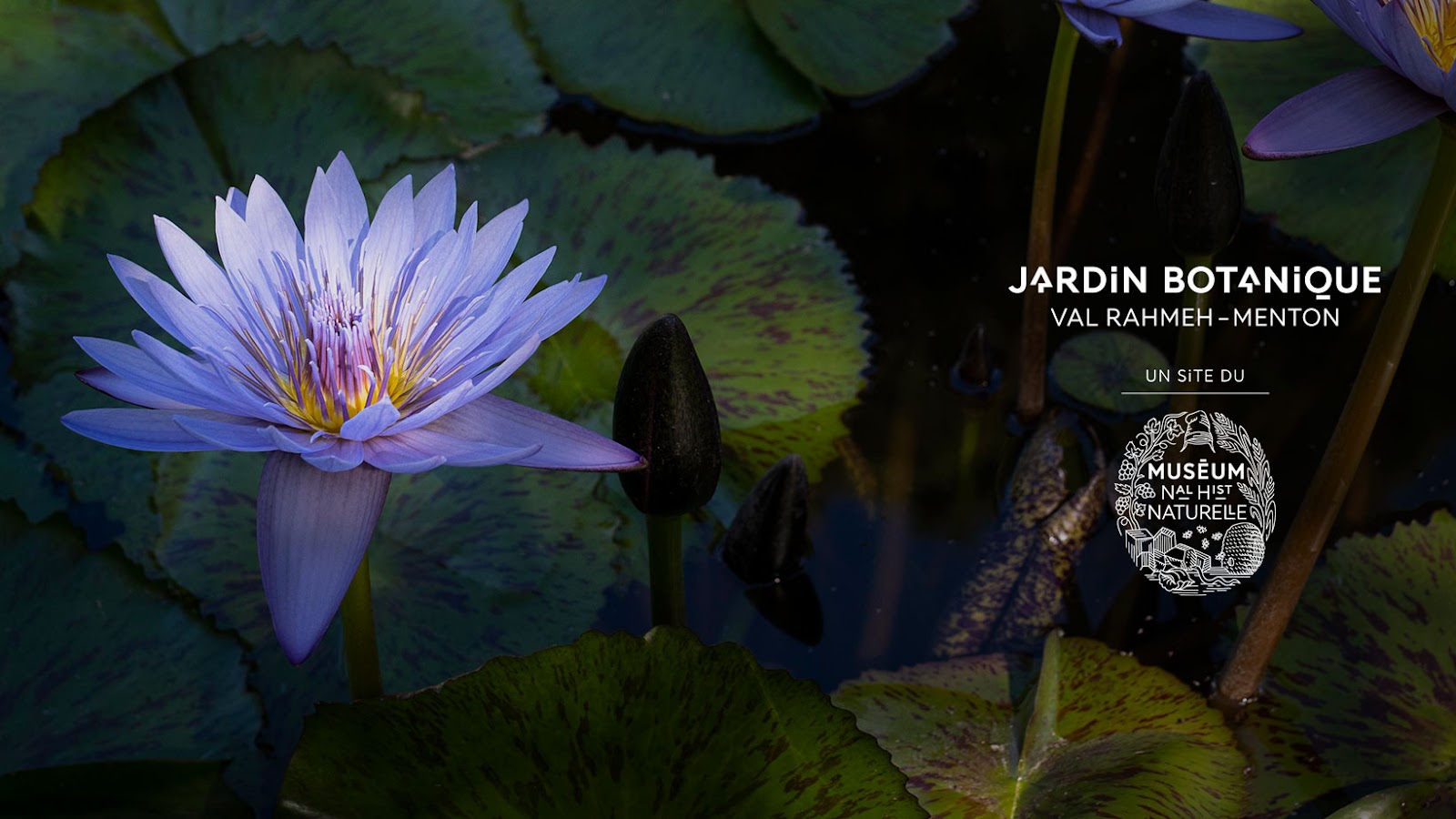
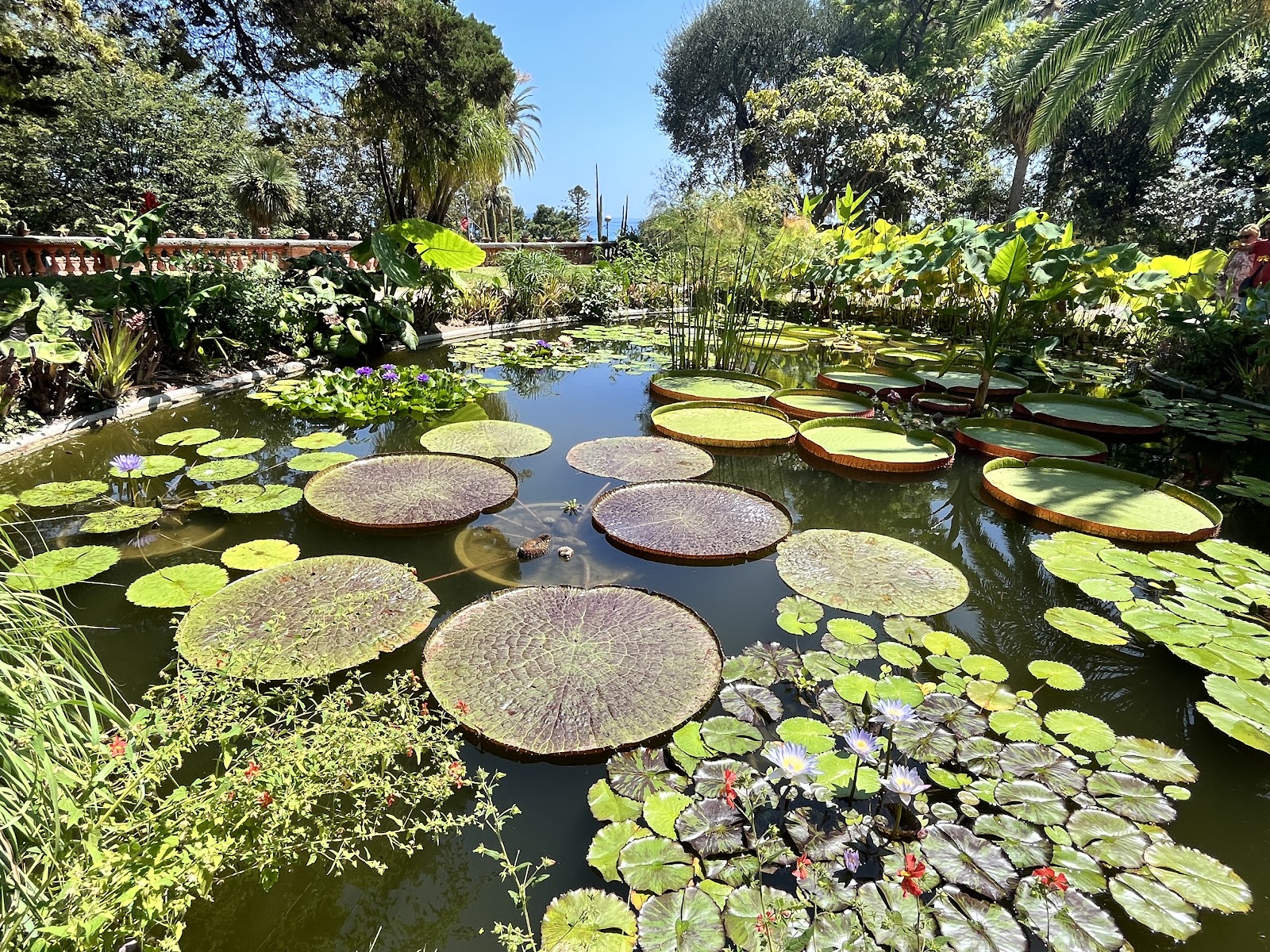
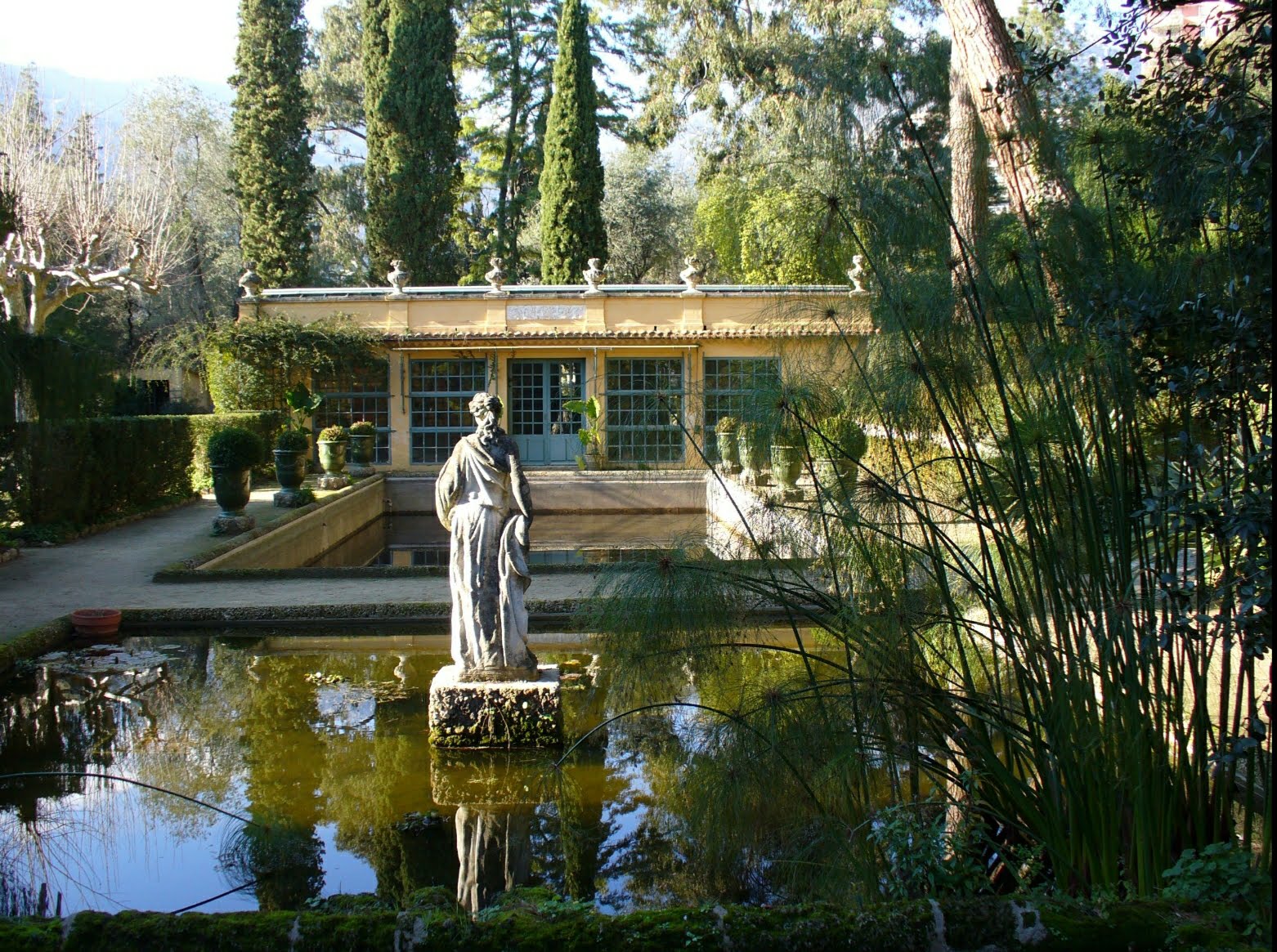
Walk in through the avenue of Canary Island palms and the garden immediately starts doing something unexpected: it organises the world by climate. Tropical dry plants give way to Mediterranean ones, the ancient olive trees among them dating to a 17th-century grove that predates every other chapter of this property's story. At the far end, a 3,000 m² pond holds sacred lotus, water lilies and papyrus.
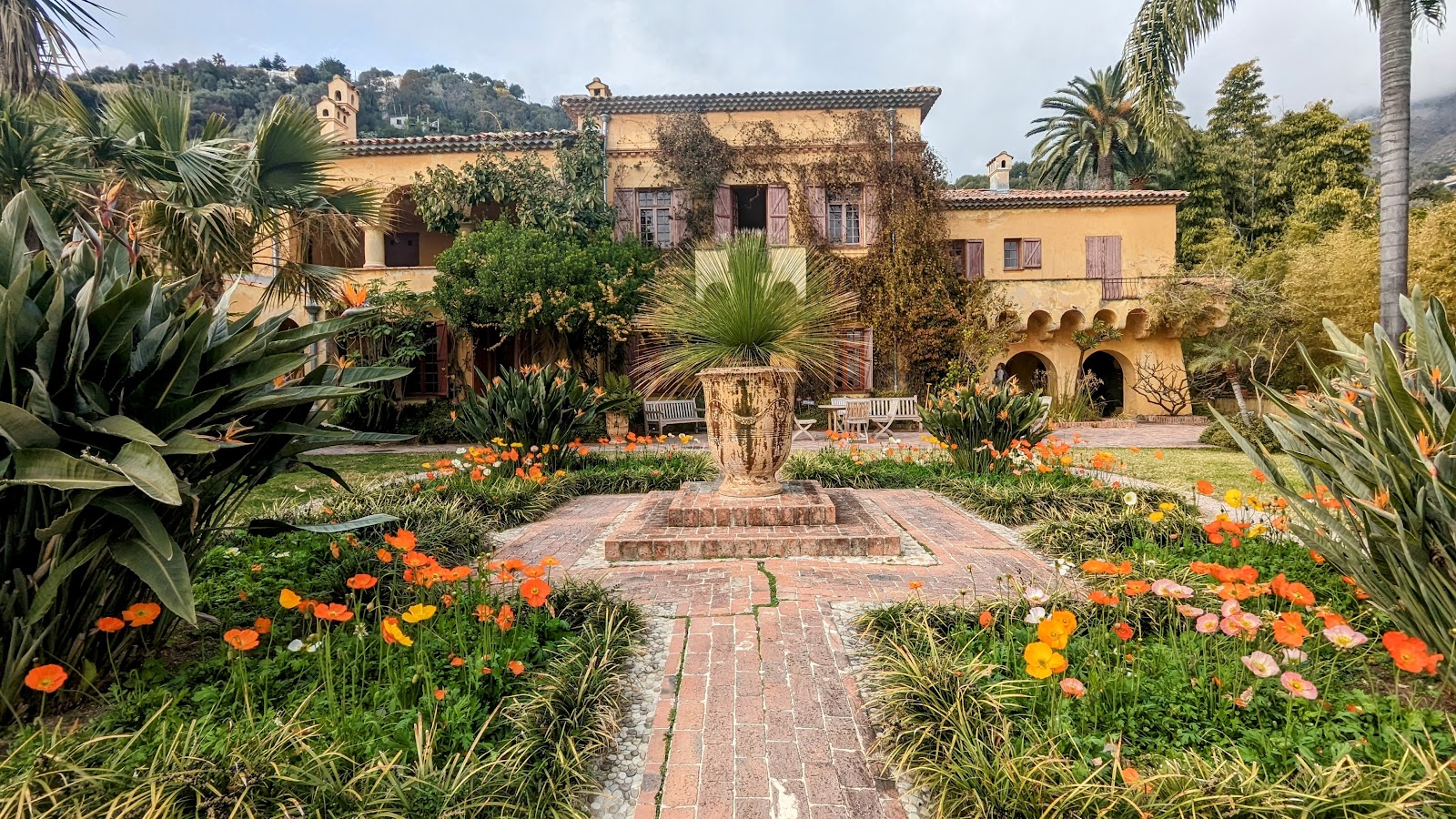
The Muséum national d'Histoire naturelle has managed Val Rahmeh since 1966, and the collection now runs to 1,800 species across 160 families — a density that rewards slow walking. The ochre-walled villa, designed in an Italian-Provençal style, anchors the upper grounds without demanding much attention.
💛 What travellers fall for
People who come back tend to time it for the lotus flowering, which peaks in summer. The lower pond is quieter than the entrance terraces, and the three greenhouses — easy to walk past — hold the succulent and xerophytic collection, a different world from the lush main garden. Dogs on leads are welcome, which changes the pace pleasantly.
The story behind Jardin Botanique Val Rahmeh
The property dates to 1875, when Henriette Marguerite Françoise de Monléon established it. Its defining character came later: in 1905, Lord Percy Radcliffe — a British Army general and former governor of Malta — acquired it with his wife Rahmeh Theodora Swinburne, adding adjacent farmland. When Rahmeh died in 1924, Radcliffe renamed the estate in her memory and commissioned Menton architect Frédéric Orrigo to redesign the villa, completed in 1926.
The garden's botanical ambition arrived with Miss May Sherwood Campbell, an English botanist who bought Val Rahmeh in 1957. She added the lower grounds and the pond. In 1966 she entrusted management to the Muséum national d'Histoire naturelle; the garden opened to the public the following May.
Good to know
Closed Tuesdays year-round, and on 1 May and 25 December. Admission is €8, reduced to €6 for groups of 20 or more and ages 3–25 with proof. The nearest train stop is Menton Garavan. Allow at least 90 minutes.
Menton's position — sea-facing, sheltered to the north by mountains — gives Val Rahmeh a genuinely mild winter, rarely dropping below 6°C at night. Summer days reach around 25°C and stay dry; the garden is at its most lush in spring and early autumn, when the humidity that sustains 1,800 exotic species is most apparent.
Where is Jardin Botanique Val Rahmeh?
More tickets & tours for Jardin Botanique Val Rahmeh
Book directly at the provider
What travellers say about Jardin Botanique Val Rahmeh
Very nice garden in Menton. Great variety of plants and prices of 8 euros pp was reasonable. Plan one to two hours.
Nice Jardin to visit in Menton however, we did find that a lot of the plants were dead - not sure if it’s the right season? Otherwise, quite a nice walk around and reachable from Menton old town.
Great botanical garden to visit. We wandered around for a hour or 2. Lots to see and everything is kept nice and clean. Mosquitoes are a thing ( everywhere in this region!! ) but they offer free repellent at the reception.
Before you come, make sure to bring mosquito repellent like Autan, otherwise the mosquitoes will eat you alive. The garden has about 40 minutes’ worth of content, but it doesn’t seem like it has been updated in a while (at least when it comes to the information boards). Some signs are wrongly placed (decribing trees that aren’t even there) and some QR codes lead to 404 pages. If you’re into botany, you might enjoy it. But even as someone who likes plants, I’d honestly rather spend my time in the park next to it, just sitting by the sea and watching the waves.
Very nice visit to the gardens. Not far to walk from centre of Menton voya beach promenade and about 7 minutes up a small inclined street. Friendly staff, helpful numbered walking path around lovely gardens and the beautiful villa. The lily pond and flowers was the highlight. They also can make coffee/ tea plus ice creams
More of Menton
Discover where to stay, what to do and the best deals for your trip.
Explore Menton →More attractions in Menton
All of Menton →
Background adapted from Wikipedia (CC BY-SA) · map data © OpenStreetMap contributors · ratings & place photos via Google · other photos with per-image credit. Ticket links may earn us a commission at no extra cost to you.