
Igreja Matriz de Portimão
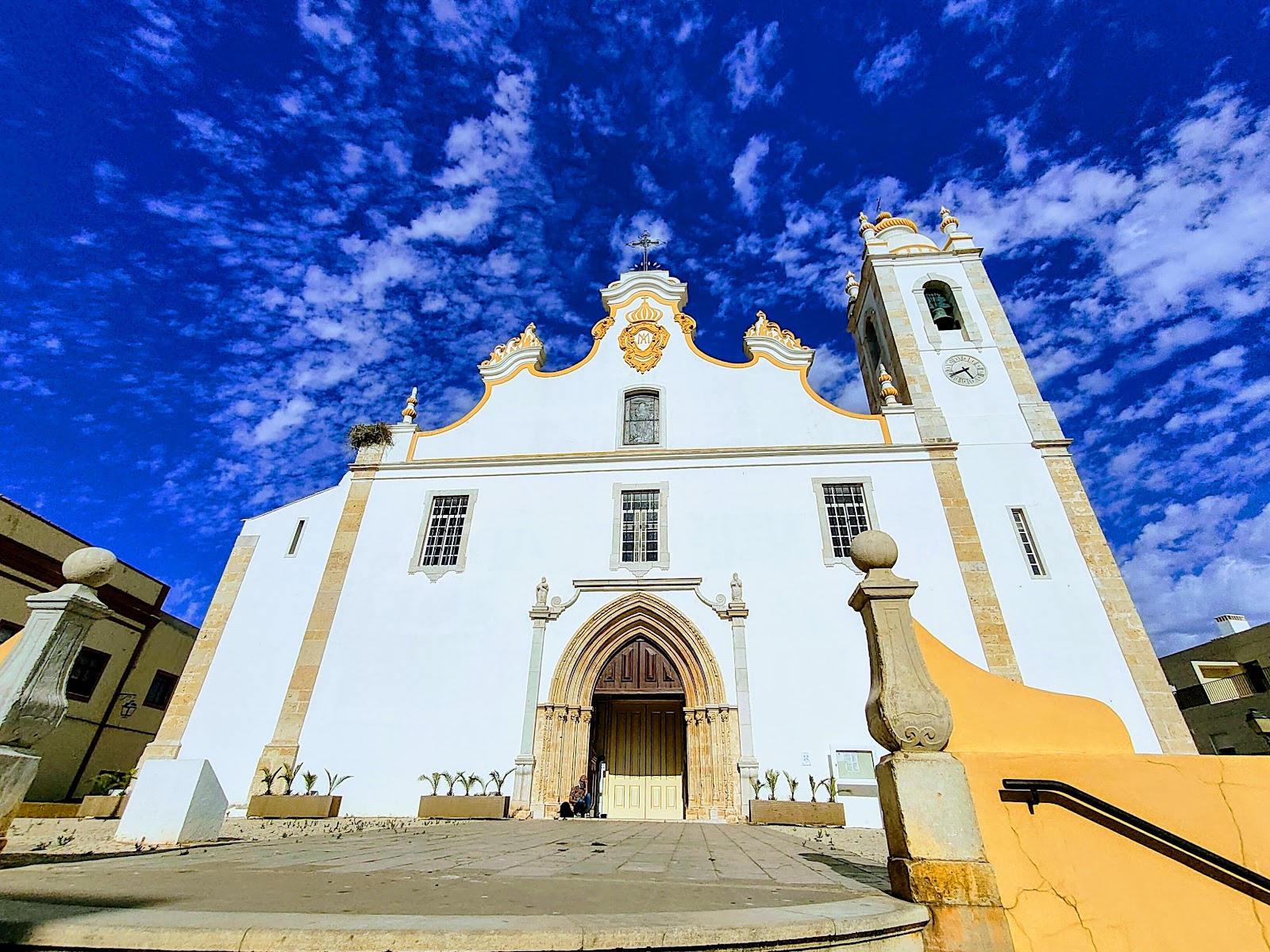
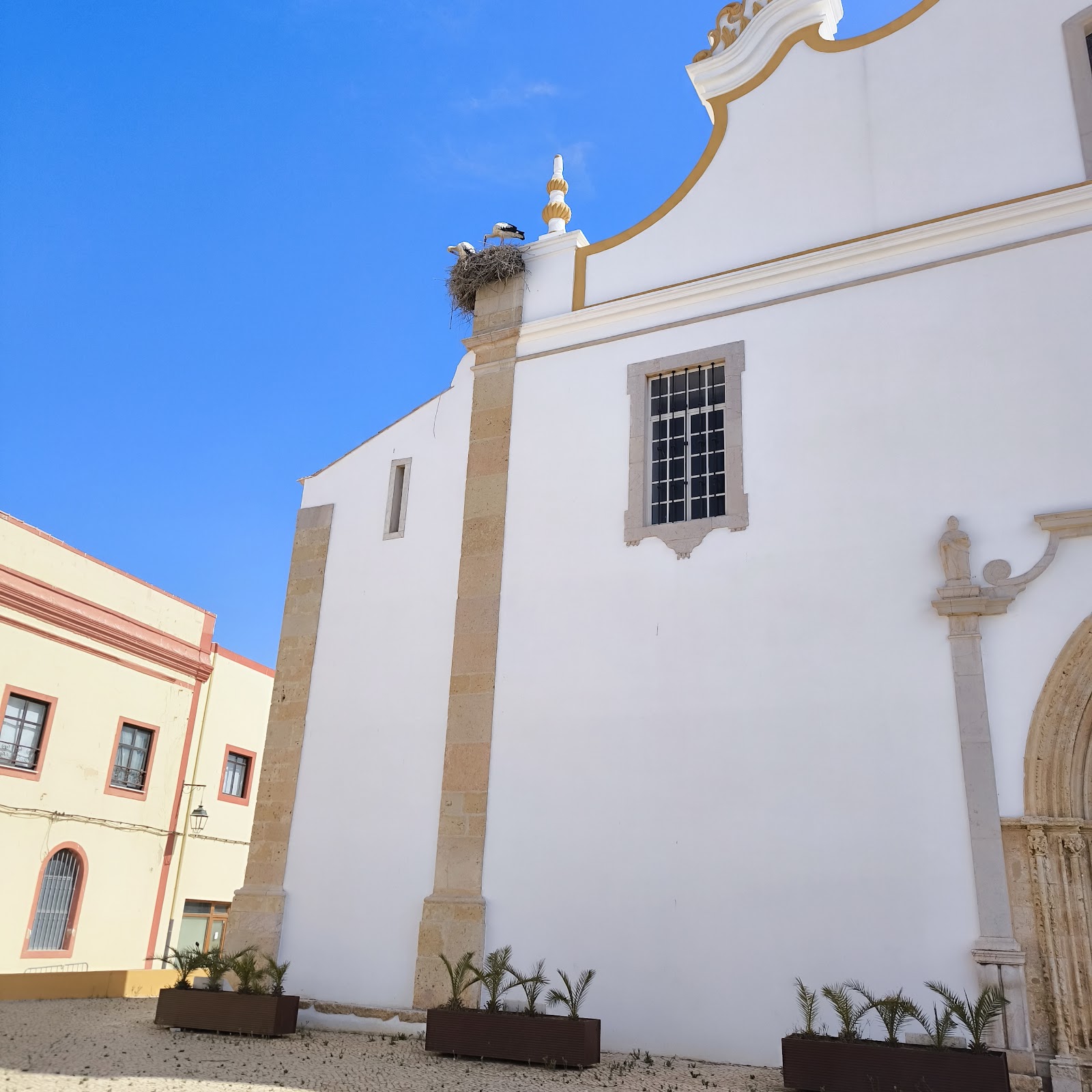
The Igreja Matriz de Portimão sits at the highest point of the old city, and the climb to reach it is worth it before you even step inside. Look at the main portal first: late Gothic stonework from 1476, with small carved figures of musicians and women framing the entrance — work that survived the 1755 earthquake when almost nothing else here did.
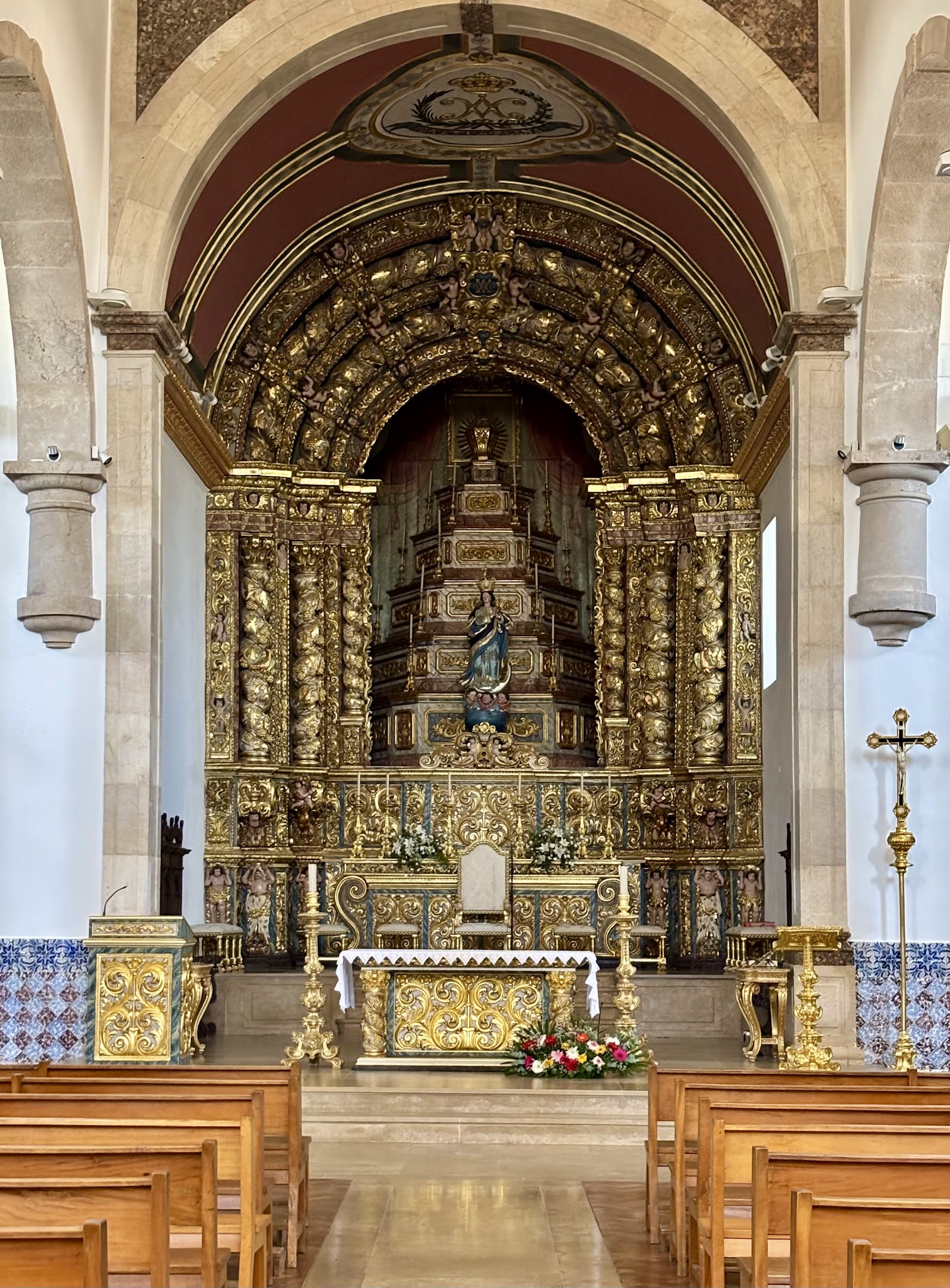
Inside, the three naves run between columns with Tuscan capitals toward a triple chancel thick with gilded carving. A pipe organ built by London maker Henry Fincham in 1886 stands quietly above the nave, repaired as recently as 2009 and still used for Sunday Mass.
💛 What travellers fall for
People who come back tend to arrive on a weekday morning, when the church is open from ten and largely quiet. The holy water basins near the entrance reward a close look — Silves stoneware with Manueline motifs, among the few objects that predate 1755. The walnut retablo carved by Manuel Francisco Xavier de Faro is easy to walk past; it shouldn't be.
The story behind Igreja Matriz de Portimão
Gonçalo Vaz de Castello Branco, appointed 1st Lord of Vila Nova de Portimão by King Afonso V, founded the church in 1476. It was built in Gothic style with three naves and ten stone columns — a substantial structure for a town of that era.
The earthquake of 1 November 1755 destroyed almost all of it. The reconstruction stretched across more than fifty years; the parish moved temporarily to the Igreja do Corpo Santo, and the rebuilt church — now Baroque in character — only reopened for worship in 1786. Materials from the old Porta da Serra and the city walls were donated by Prince Regent João in 1802–03 to help finish the work. A local benefactor, Luís António Maravilhas, funded a further restoration in the mid-19th century and is buried in the crypt. The church has been classified as an Imóvel de Interesse Público since 1977.
Good to know
Open Monday to Friday 10:00–12:30 and 15:00–19:00; Sunday 10:30–13:00 and 17:00–19:00. No admission charge. The church is a short uphill walk from the city centre — Rua da Igreja leads straight to it. Allow thirty to forty minutes inside.
Where is Igreja Matriz de Portimão?
More tickets & tours for Igreja Matriz de Portimão
Book directly at the provider
What travellers say about Igreja Matriz de Portimão
The Igreja de Nossa Senhora da Conceição in Portimão is a very pretty and elegant church! I recommend stopping by if you’re in town. Inside, the church impresses with its rich historical and artistic details: three naves with columns in between, a high altar featuring a beautiful gilded Baroque retable, and several side chapels with ornate decoration. The glazed tiles (azulejos) along parts of the nave add a striking touch and show the Portuguese tile tradition well.  The church remains an active place of worship, making it a peaceful space for prayer and reflection, especially if you appreciate historical churches with character.
A beautiful historic church in the center of Portimão. Not large, but full of charm and peaceful atmosphere. The interior features traditional Portuguese azulejos and a lovely altar. Worth a short stop while exploring the old town.
We were on a very long cruise on NCL last year and one of the stops was Portimao. We got off the ship and walked around the old town using google maps. Lots of beautiful buildings and we took lots of pictures including this 15th century catholic church.
We spent here Christmas and two week days. The local priest helds the mass in a beautiful, full of honor way. The choir sings nicely. The church itself is pretty as well. The community seems to be engaged in the igreja’s life. I would say you can pray here and take part in a mass with no worries something will dissapoint you.
Midnight mass on Christmas eve here was amazing. I'm not religious but wanted to enjoy the atmosphere. Stunning church with local congregation..well worth a visit
More of Portimão
Discover where to stay, what to do and the best deals for your trip.
Explore Portimão →More attractions in Portimão
All of Portimão →
Background adapted from Wikipedia (CC BY-SA) · map data © OpenStreetMap contributors · ratings & place photos via Google · other photos with per-image credit. Ticket links may earn us a commission at no extra cost to you.