
Igreja do Carmo and Chapel of Bones

Above the entrance to the Chapel of Bones, a Portuguese inscription stops you before you step inside: *Stop here and consider, that you will reach this state too.* The Carmelites who arranged the skulls and long bones of 1,245 of their brothers across the vaulted ceiling and walls in geometric patterns were making a theological argument, not a spectacle.
The church that precedes it, Igreja do Carmo, is a different kind of statement — a Rococo facade of golden limestone designed as a *fachada-retábulo*, its altar-shaped front turning the sacred interior outward to face Largo do Carmo's calçada stone square. Statues of St. Elias and St. Teresa of Ávila stand in the facade niches; inside, gilded woodcarving covers almost every surface.

💛 What travellers fall for
People who come back tend to linger at the chapel inscription longer the second time. Go at 10am when the doors open — the 24-square-metre space fills quickly in summer, and you want room to look up at the ceiling without someone's shoulder in your face. The €2 ticket covers both buildings.
The story behind Igreja do Carmo and Chapel of Bones
Bishop António Pereira da Silva founded the church in 1713, with the original design attributed to Fray Manuel da Conceição. Construction proper began in 1747 under master builder Diogo Tavares and was completed by 1755 — the same year the great earthquake struck. The rebuilding that followed was financed by Brazilian gold, and master craftsmen Gaspar Martins, Manuel Martins and Miguel Nobre carried out the elaborate gilded woodcarving that survived intact. The twin bell towers were not finished until 1878.
The Chapel of Bones was inaugurated in 1816, a practical response to overcrowded cemeteries. Because the church belonged to a lay brotherhood of wealthy local citizens rather than a monastic order, it escaped the state seizures that followed the 1834 dissolution of religious orders — which is why the interior you see today is essentially as the craftsmen left it.

Good to know
A seven-minute walk from Faro's marina along Largo do Carmo. Open Monday to Friday 10:00–13:00 and 15:00–17:30, Saturday mornings only; closed to visitors on Sundays. Mass and other events can shift hours, so check ahead. Exact change for the entrance fee is appreciated.
Where is Igreja do Carmo and Chapel of Bones?
More tickets & tours for Igreja do Carmo and Chapel of Bones
Book directly at the provider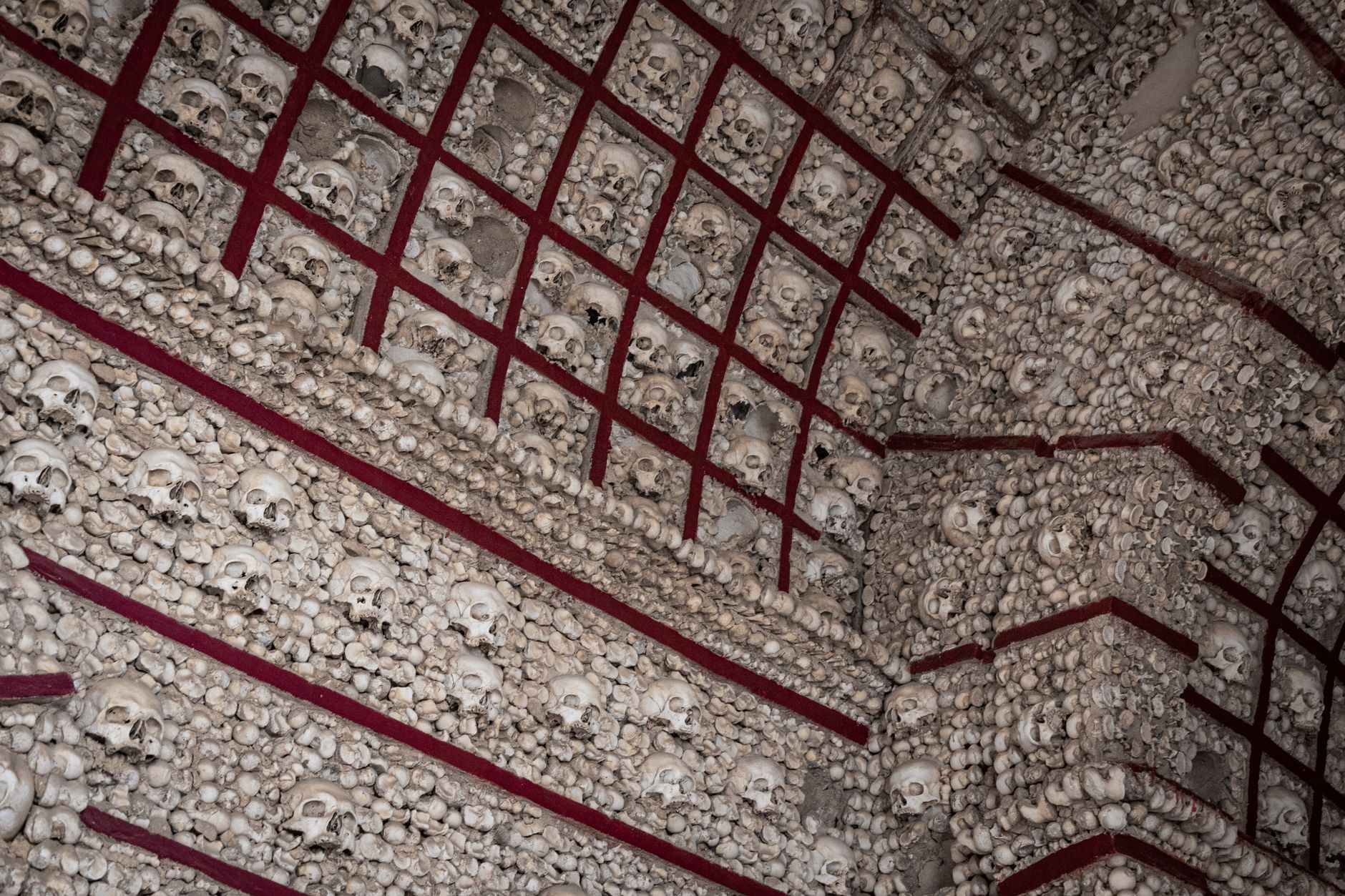
What travellers say about Igreja do Carmo and Chapel of Bones
Nice church that is know to have a bone chapel that is made out of the bones of skeletons. There are multiple skulls in the chapel in a regular pattern. The church itself is very over the top. It seems quite Catholic with expensive looking decoration.
Visited the Igreja do Carmo and the Capela dos Ossos today, and it’s a deeply memorable experience. The church itself is elegant and peaceful, but the Chapel of Bones is truly striking, both haunting and thought-provoking in the way it reflects on life, mortality, and history. The space is well maintained and respectfully presented, allowing visitors to take it in quietly rather than sensationally. Informational displays provide helpful context, and the chapel feels contemplative rather than unsettling. A meaningful stop in Faro that offers more than just visual impact, it invites reflection. Well worth visiting if you’re interested in history, culture, or unique sites with depth and significance.
The ticket costs 2 euros, but I'm not sure if what's inside is worth the price. The interior of the church is sorely lacking in outstanding religious art, but the chapel of bones, which is included in the €2 admission fee, is indeed quite interesting. Unfortunately, the small garden behind the church is in very poor condition, and if you want to use the restroom next to it, you’ll have to pay an extra euro.
I came here to see chapel of bones to be honest because I wanted to compare it to Czermna in Poland... I also found very authentic figures in the church. St Antonio looked like very old saint....
We are glad we went. We were visiting Portugal from California and feeling like there wasn't much we couldn't have done at home. However, Chapel of the Bones is real European experience you will not get in the States. Just wish there were more plaques describing what things are. It's 2 euros per person, and it takes about 30 - 40 minutes to see the whole thing. It's down in the old, port part of town with other touristy shops and restaurants.
More of Faro
Discover where to stay, what to do and the best deals for your trip.
Explore Faro →More attractions in Faro
All of Faro →

Background adapted from Wikipedia (CC BY-SA) · map data © OpenStreetMap contributors · ratings & place photos via Google · other photos with per-image credit. Ticket links may earn us a commission at no extra cost to you.