
Hôtel de Ville de Paris
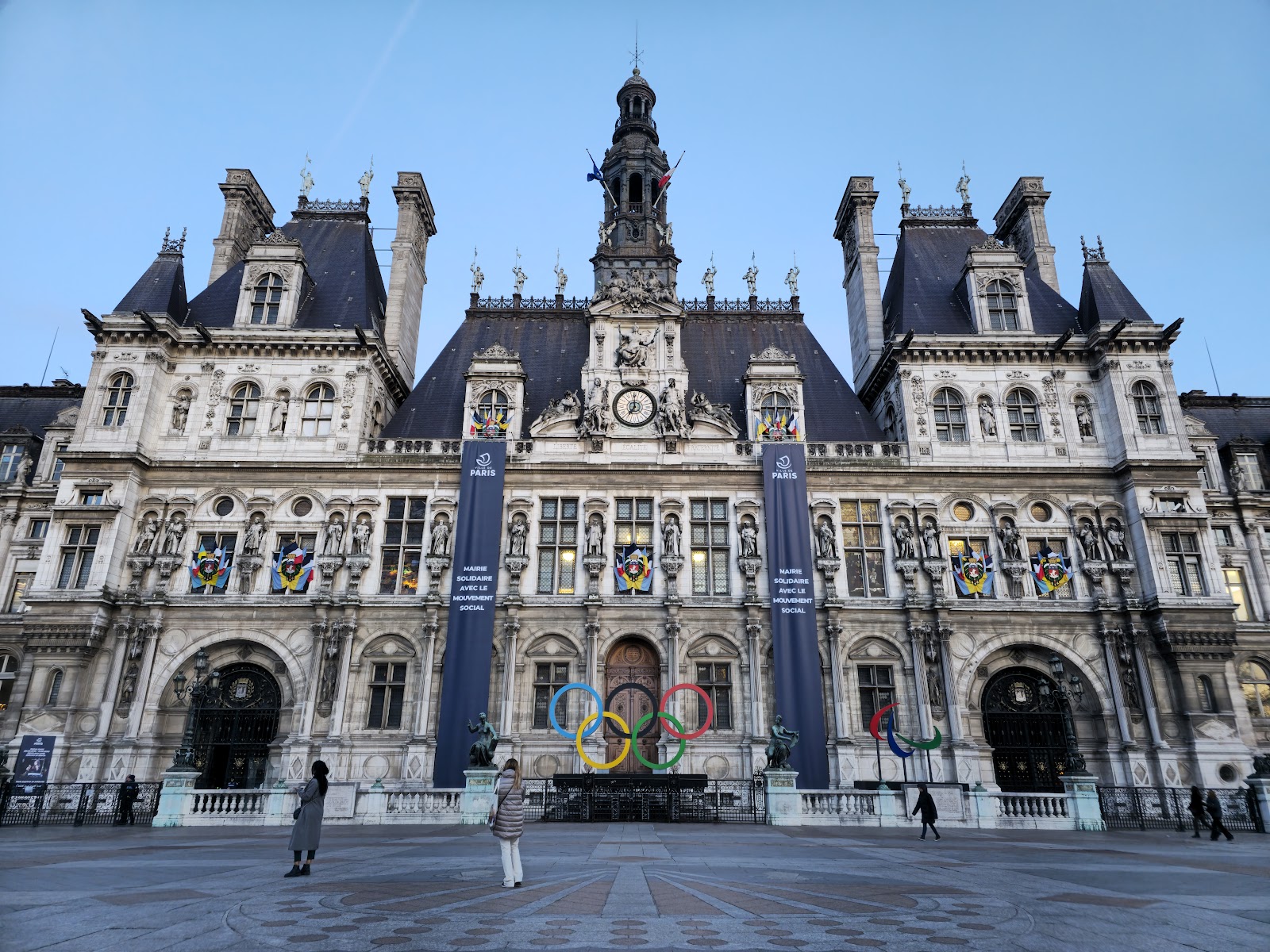
The square out front was Paris's principal place of execution for more than five centuries — guillotine installed in 1792, the last public execution here in 1832. That history sits quietly beneath your feet when you cross the Place de l'Hôtel-de-Ville today, now more likely occupied by an outdoor exhibition or, in winter, a free ice rink spreading across 1,365 square metres.
The building itself has governed Paris since 1357, when provost-marshal Étienne Marcel acquired the original site. His equestrian statue, sculpted by Antonin Idrac, stands on the river side of the building — a small, easy-to-miss detail worth finding.
💛 What travellers fall for
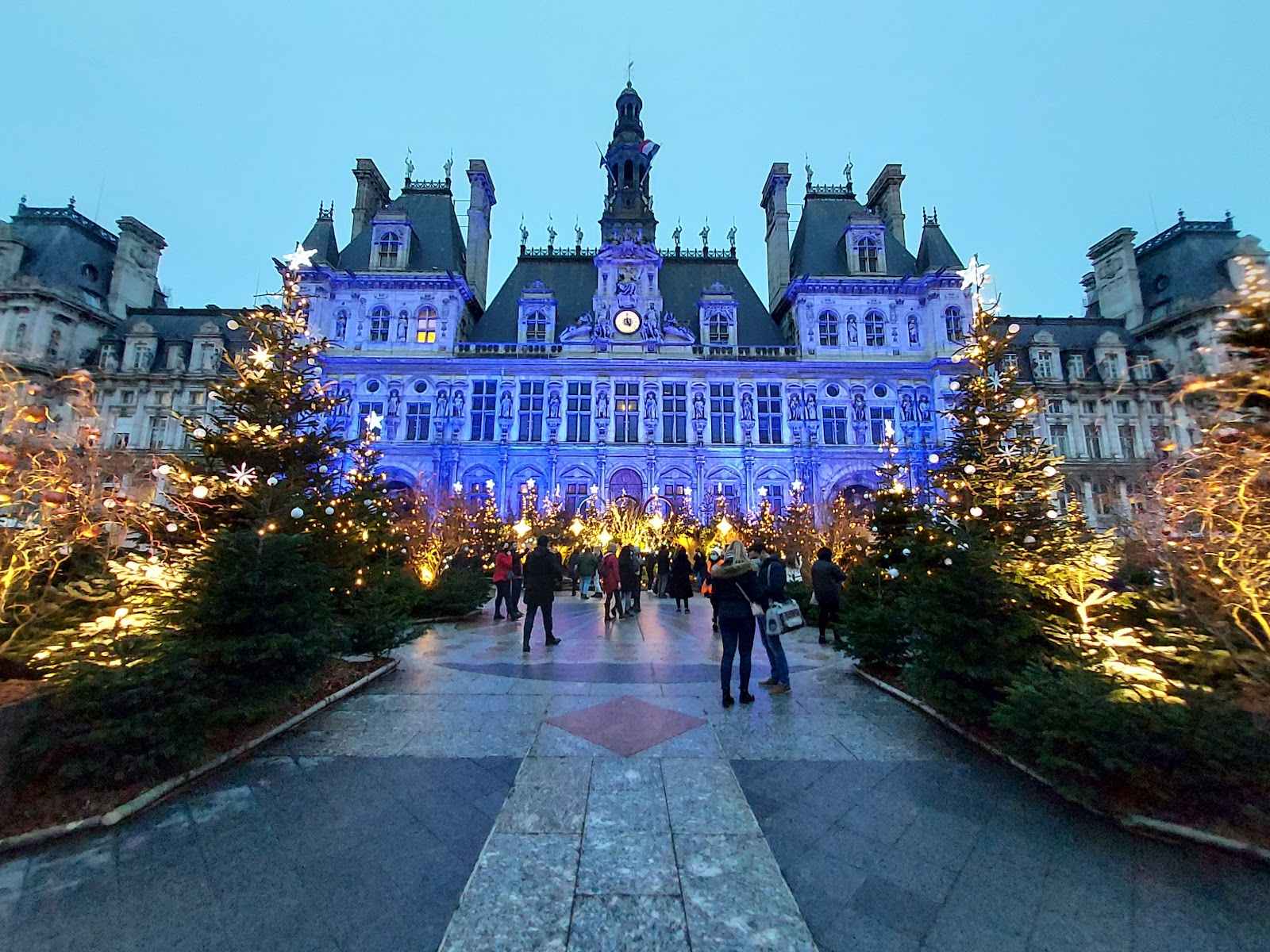
People who've been inside tend to mention the Salle des fêtes: a ballroom designed as a republican answer to the Hall of Mirrors at Versailles, which lands differently once you know that's the intention. The free library — Bibliothèque de l'Hôtel de Ville — is the quietest way in on an ordinary day, no appointment needed.
The story behind Hôtel de Ville de Paris
Étienne Marcel bought the original 'Maison aux Piliers' here in 1357, making this one of the longest-serving seats of municipal government in Europe. Construction of the Renaissance building began under Francis I in 1535, with Italian architect Dominique de Cortone — known as Boccador — and French architect Pierre Chambiges sharing the design. The north wing followed under Henry IV and Louis XIII between 1605 and 1628.
In May 1871, during the final days of the Paris Commune, the building burned. Architects Théodore Ballu and Édouard Deperthes won the public competition to rebuild it, reopening on July 13, 1882 — one day before Bastille Day — following the original design but on a larger scale. The interior ceremonial rooms, decorated with frescoes by Jean-Joseph Weerts and others, were completed by 1906. Charles de Gaulle spoke from a window here on August 25, 1944, the day Paris was liberated.
Good to know
Metro Hôtel de Ville (lines 1 and 11) drops you at the door. Free guided tours of the reception rooms run once weekly year-round, twice in summer; book at least two months ahead by calling the Protocol Department. Free exhibitions run Monday–Saturday, 9:30am–7pm, no booking required.
Where is Hôtel de Ville de Paris?
Location
- In Paris 4th Arrondissement
- 48.8566, 2.3522
- Open in Google Maps
Rating
4.5 ★ · 5,137 Google reviews
More tickets & tours for Hôtel de Ville de Paris
Book directly at the provider
What travellers say about Hôtel de Ville de Paris
Incredible Paris Hotel de Ville! I attended an event here and the interiors are incredible! If you can visit definitely make the effort to go!
An incredible building that many tourists mistake for a luxury hotel. In fact, in medieval France, the word "hôtel" referred to grand public residences, so this is actually the "Town House" or City Hall. The site is steeped in history: the municipal government has been located here since 1357, though the building itself had to be rebuilt after a fire in the 19th century. A must-see for the architectural details and the vibrant atmosphere of central Paris!
This is the big City Hall of Paris. I went here to see a special exhibition. The building itself is beautiful and very old. It has many tall windows and detailed statues outside. Inside, the halls are huge. They have fancy lights and lots of decoration. It felt like being in a museum. The exhibition was about photography, and it was very good and interesting. It is a great place to see art shows. It is right by the river, so it is easy to find. I give this place 5 stars.
Hôtel de Ville, or Paris City Hall, is one of the most beautiful and magnificent historic buildings in the city, located in the heart of Paris near the River Seine. Its façade is decorated with numerous statues of important figures from French history. Admiring the exterior and the surrounding area is absolutely worth it.
The building was unbelievably cool, so I took a picture of it without even knowing what kind of building it was. Next time I visit, I definitely want to explore the inside of the building as well.
More of Paris 4th Arrondissement
Discover where to stay, what to do and the best deals for your trip.
Explore Paris 4th Arrondissement →More attractions in Paris 4th Arrondissement
All of Paris 4th Arrondissement →
Background adapted from Wikipedia (CC BY-SA) · map data © OpenStreetMap contributors · ratings & place photos via Google · other photos with per-image credit. Ticket links may earn us a commission at no extra cost to you.