
Grand Riad
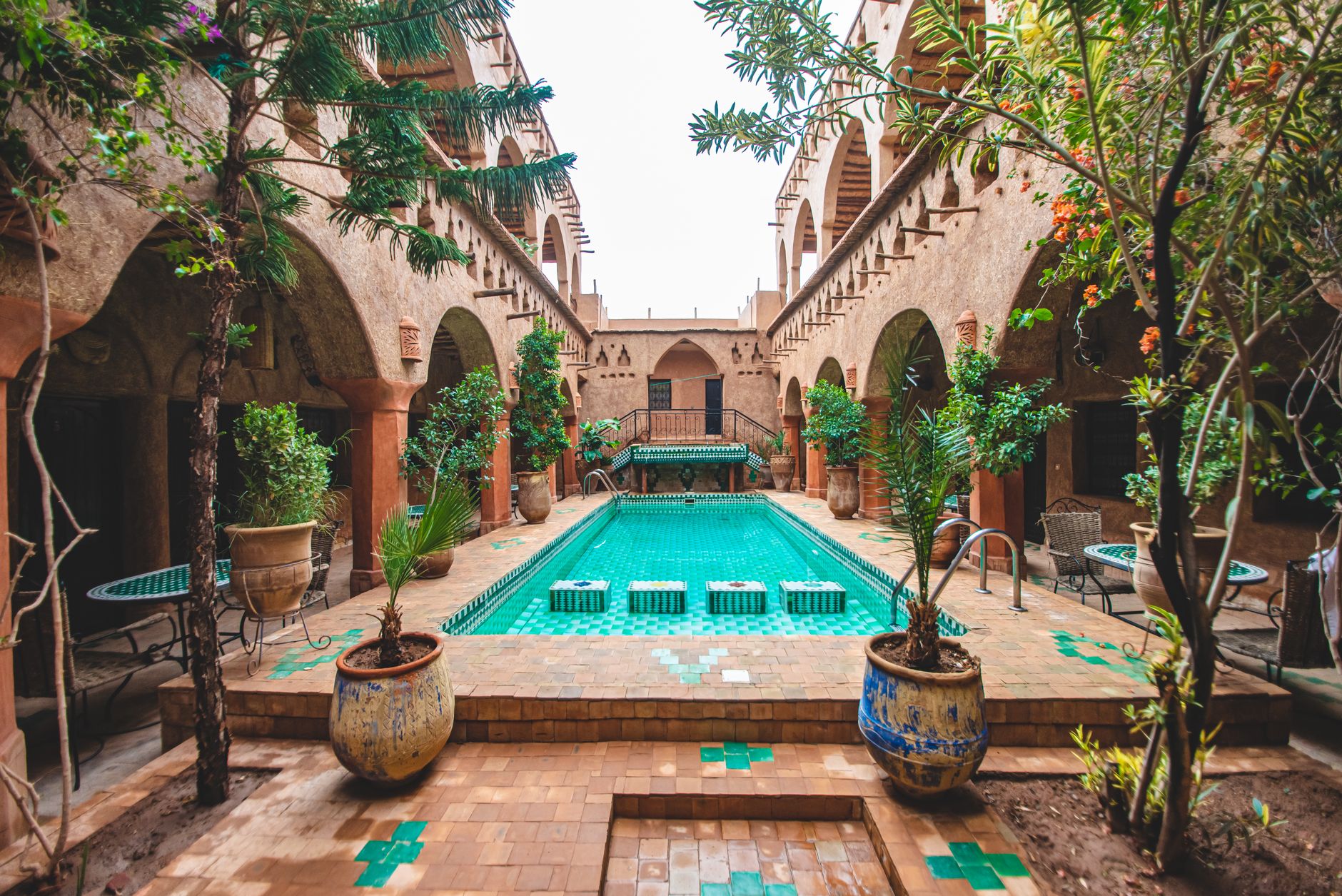
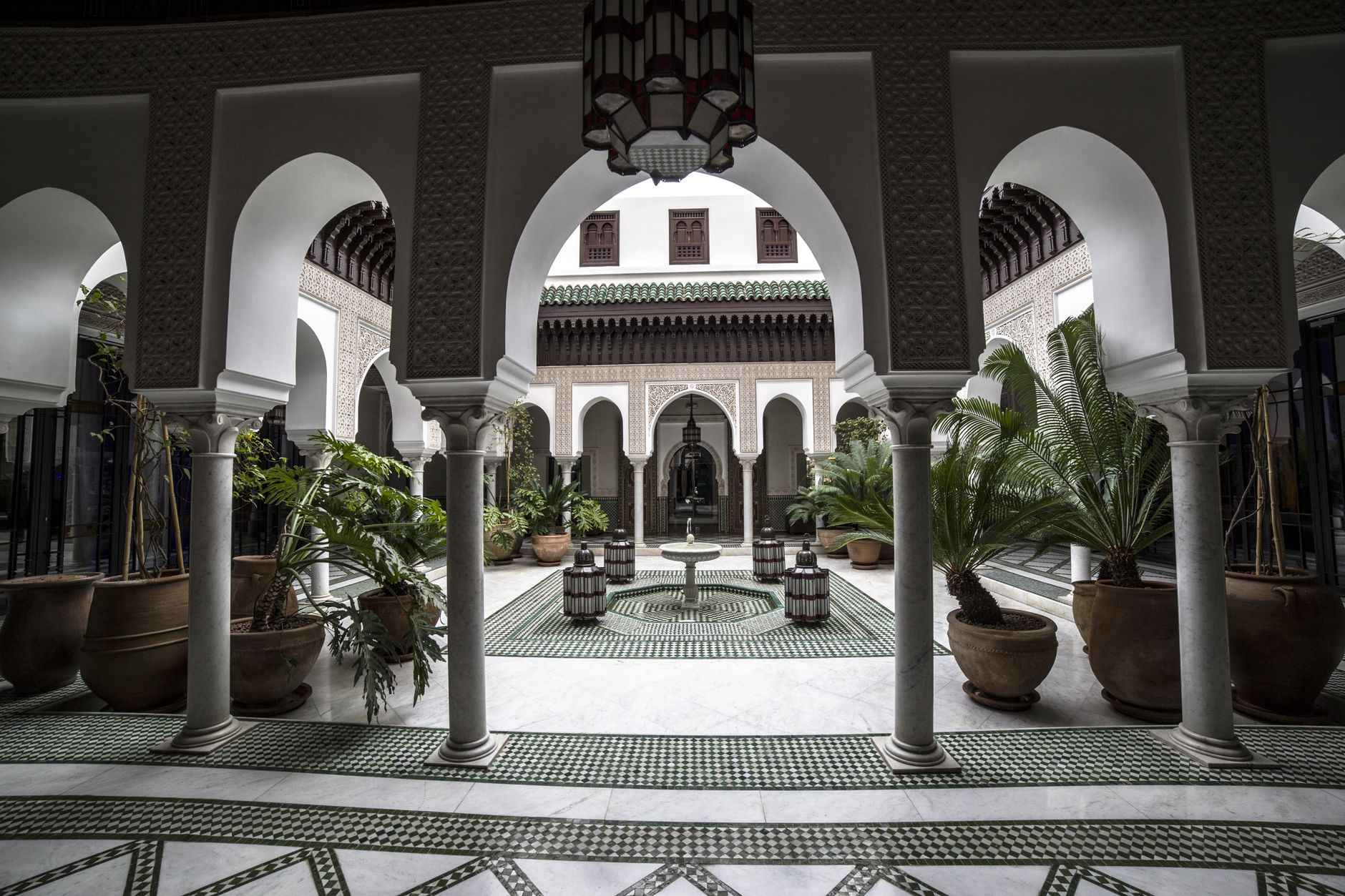



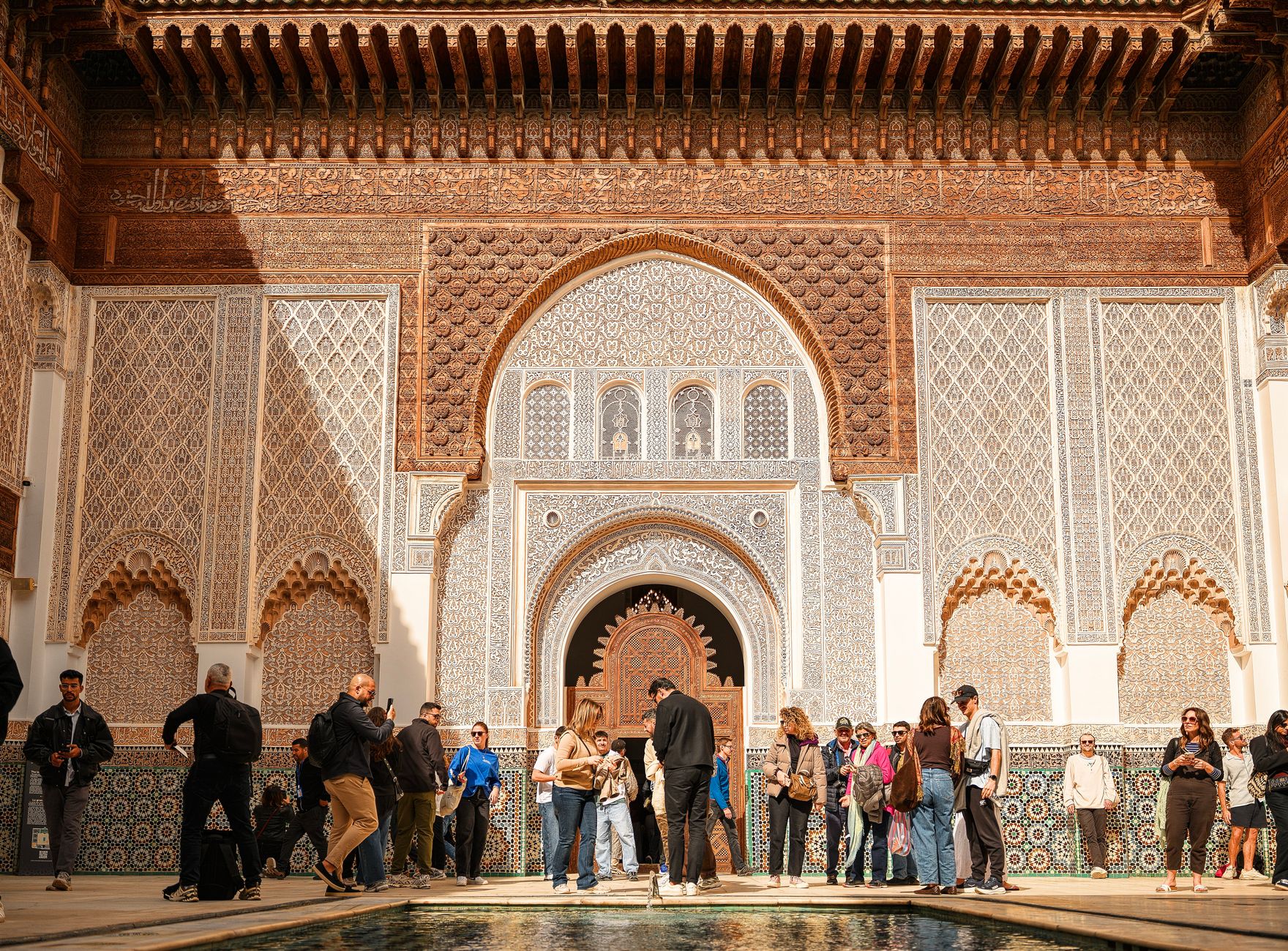
The Grand Riad is the oldest part of Bahia Palace, completed in 1867, and it carries its age in the details: carved wood lintels, zouak paintwork, and stained glass that — when the light shifts — throws colour across the tiled floor. The courtyard once served as a waiting ground where the vizier Ba Ahmed left lawbreakers to bake in the sun until he was ready to receive them. That history sits quietly in the open space now, which is planted with mature 19th-century trees and filled, most mornings, with nothing louder than birdsong.
The rooms themselves are empty — stripped after Ba Ahmed's death in 1900 on the sultan's orders — so what you're reading here is the architecture itself.
💛 What travellers fall for
People who come back tend to go straight to the salon rather than lingering in the entrance. The stained glass is better observed from inside looking out, especially in the mid-morning when the sun is still low enough to angle through. Bring your own context — English signage is minimal, and the silences between rooms need something to fill them.
How Grand Riad came to be
Si Moussa, a former slave who became one of Sultan Hassan I's most trusted aides, began construction in 1859 and completed the Grand Riad in 1867. His son, Ba Ahmed ibn Musa, inherited both the position and the ambition: appointed grand vizier in 1894, he expanded the palace significantly, adding the Grand Courtyard between 1896 and 1897. The architect Muhammad ibn Makki al-Misfiwi, originally from Safi, oversaw the work. The palace is said to take its name from Al-Bahia, Ba Ahmed's favourite wife.
When Ba Ahmed died in 1900, Sultan Abdelaziz ordered the palace looted. By 1908 it passed to Madani el-Glaoui; by 1912, under the French Protectorate, it became the residence-general. The September 2023 earthquake caused partial collapses and ceiling damage; the palace reopened the following month.
Who and what shaped it
People who shaped it
Landmark buildings
See Grand Riad in motion
Plan your visit
On the map
When to go
Spring (March to April) and autumn (late September to mid-November) are the most comfortable windows — warm without the punishing heat of summer, when July daytime temperatures regularly reach 36°C. The courtyard is open to the sky, so midday in July is a different proposition than midday in October.
Right now
Background & history adapted from Wikipedia (CC BY-SA) · specs from Wikidata (CC0) · weather from Open-Meteo · map data © OpenStreetMap contributors · photos from Wikimedia Commons / Unsplash with per-image credit. No third-party reviews or social posts reproduced.