
Grand Basin (Sahraj el Hana)

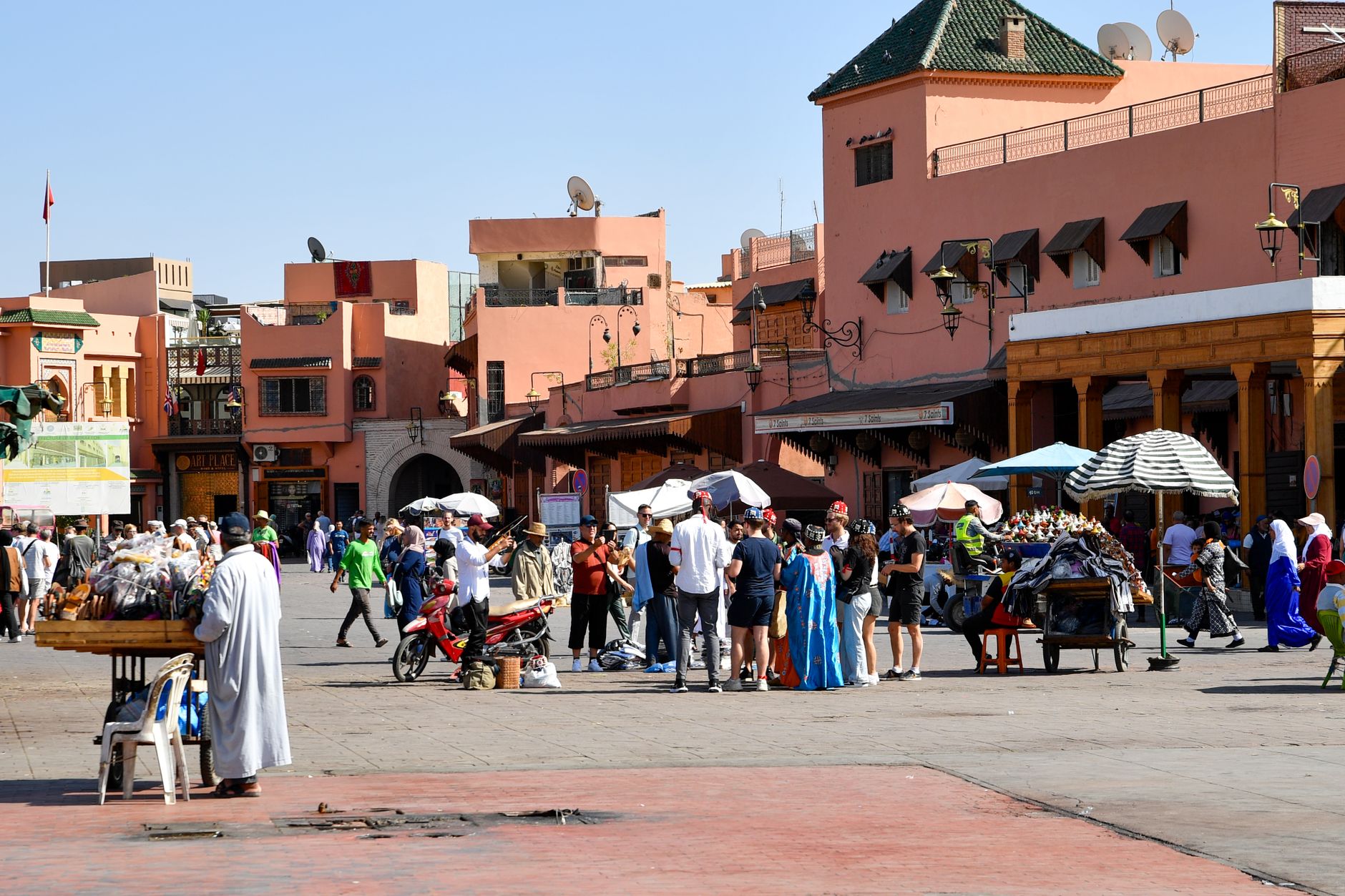

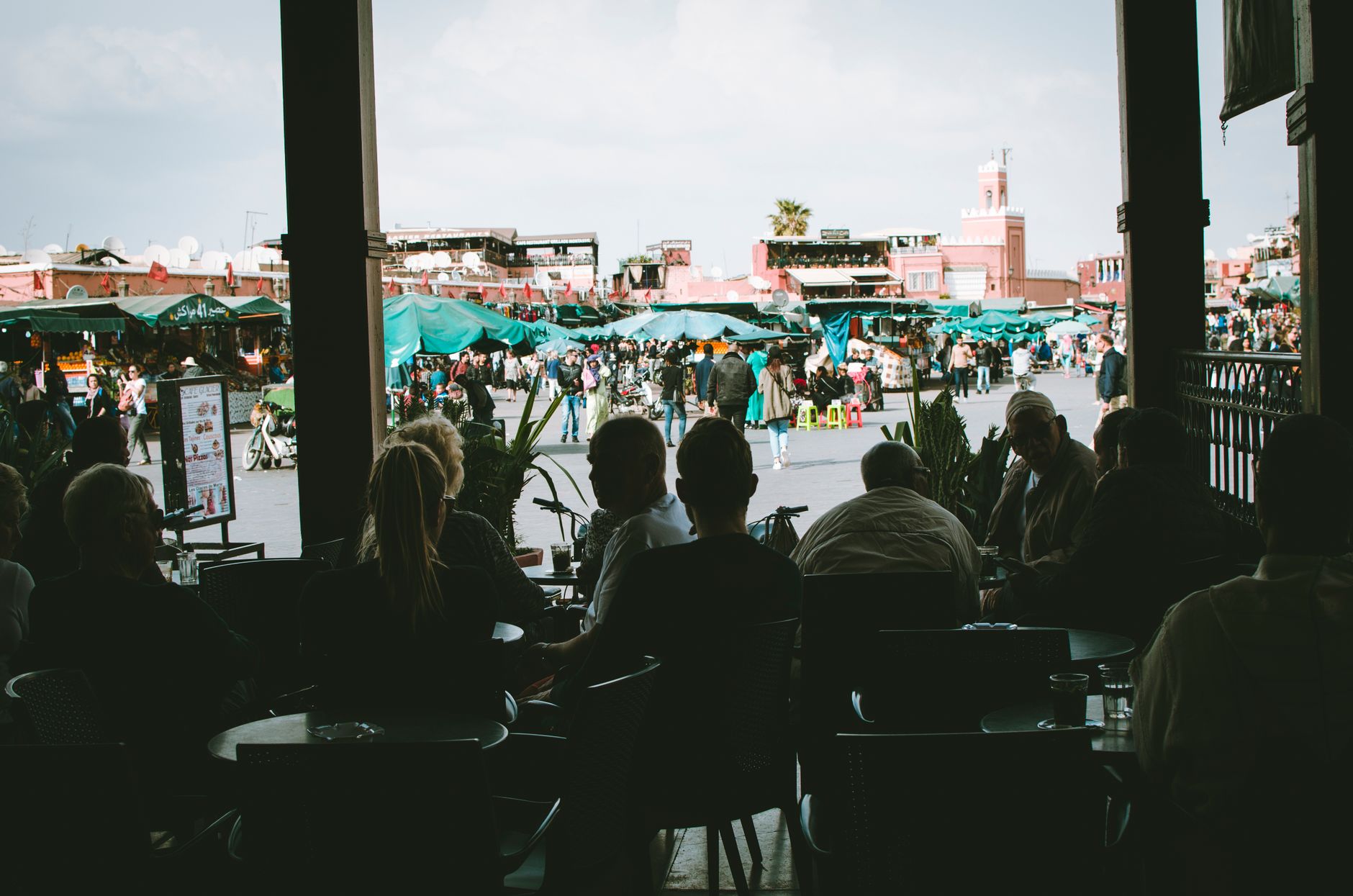
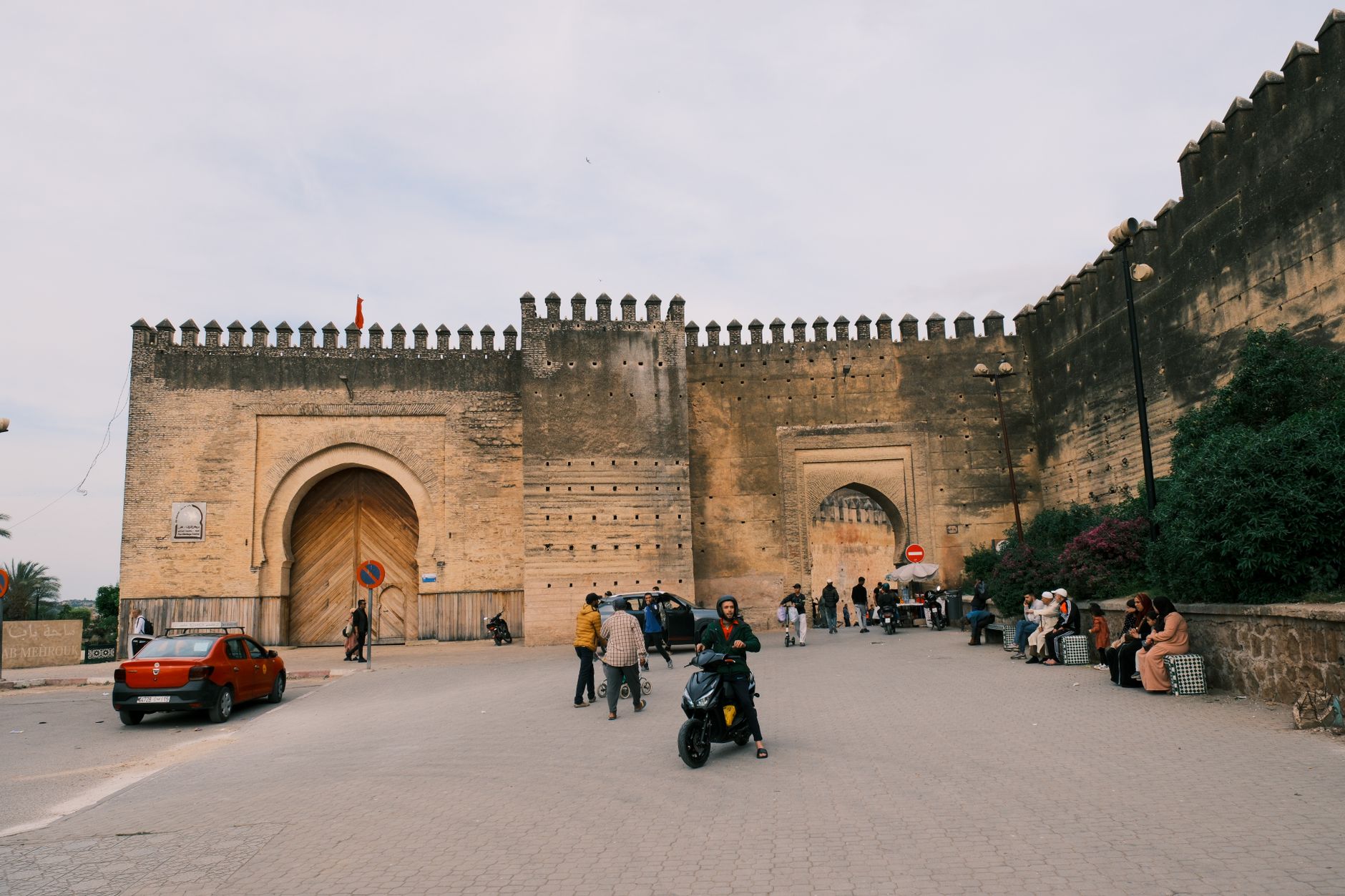

The Grand Basin — Sahraj el Hana, the Tank of Health — is a rectangle of water so large that the Atlas Mountains appear in it on clear mornings, floating upside-down at your feet. It measures 208 by 181 metres and holds 83,000 cubic metres, fed by underground channels running from the Ourika River basin, far up in the High Atlas, through a system of khettara that predate the basin itself.
The paved path around the perimeter is shaded and quiet, broken only by the sound of birds and, on Fridays and Sundays when the gates are open, the occasional family spreading a picnic on the grass. The orchards of olive, orange, pomegranate and apricot press in on all sides, and from the terrace of the small pavilion beside the water, the mountain view is unobstructed for kilometres.
💛 What travellers fall for
People who come back tend to arrive early — the light on the water before 9 a.m. is different from anything you get later in the day, and the path is yours alone. Bring something to eat. The walk around the full perimeter, taking in the orchard edges, is longer than it looks on any map.
How Grand Basin (Sahraj el Hana) came to be
The Agdal Gardens were laid out in the twelfth century under the Almohad dynasty. The main reservoir is attributed to the reign of Abu Ya'qub Yusuf (1163–1184), designed by Ahmad ibn Muhammad ibn Milhan, an engineer of Andalusian and Berber origin. The basin was practical before it was ornamental: it irrigated the orchards and served as a training ground for troops learning to swim.
The Saadi dynasty renovated the gardens, and Sultan Moulay Abderrahmane enlarged them substantially in the nineteenth century. The site earned UNESCO World Heritage status in 1985. In 1873, Sultan Mohammed IV drowned here when his steam launch capsized on the basin — a detail the still water does nothing to advertise.
Who and what shaped it
People who shaped it
Landmark buildings
See Grand Basin (Sahraj el Hana) in motion
Plan your visit
On the map
When to go
Spring (March to May), when the orange blossom is out and temperatures hover around 24°C, is the most rewarding time to visit. Summer is reliably rainless but can push 38°C by midday, so an early-morning start matters; autumn is gentler and the orchards are at their fullest.
Right now
Background & history adapted from Wikipedia (CC BY-SA) · specs from Wikidata (CC0) · weather from Open-Meteo · map data © OpenStreetMap contributors · photos from Wikimedia Commons / Unsplash with per-image credit. No third-party reviews or social posts reproduced.