
Gerard Douplein
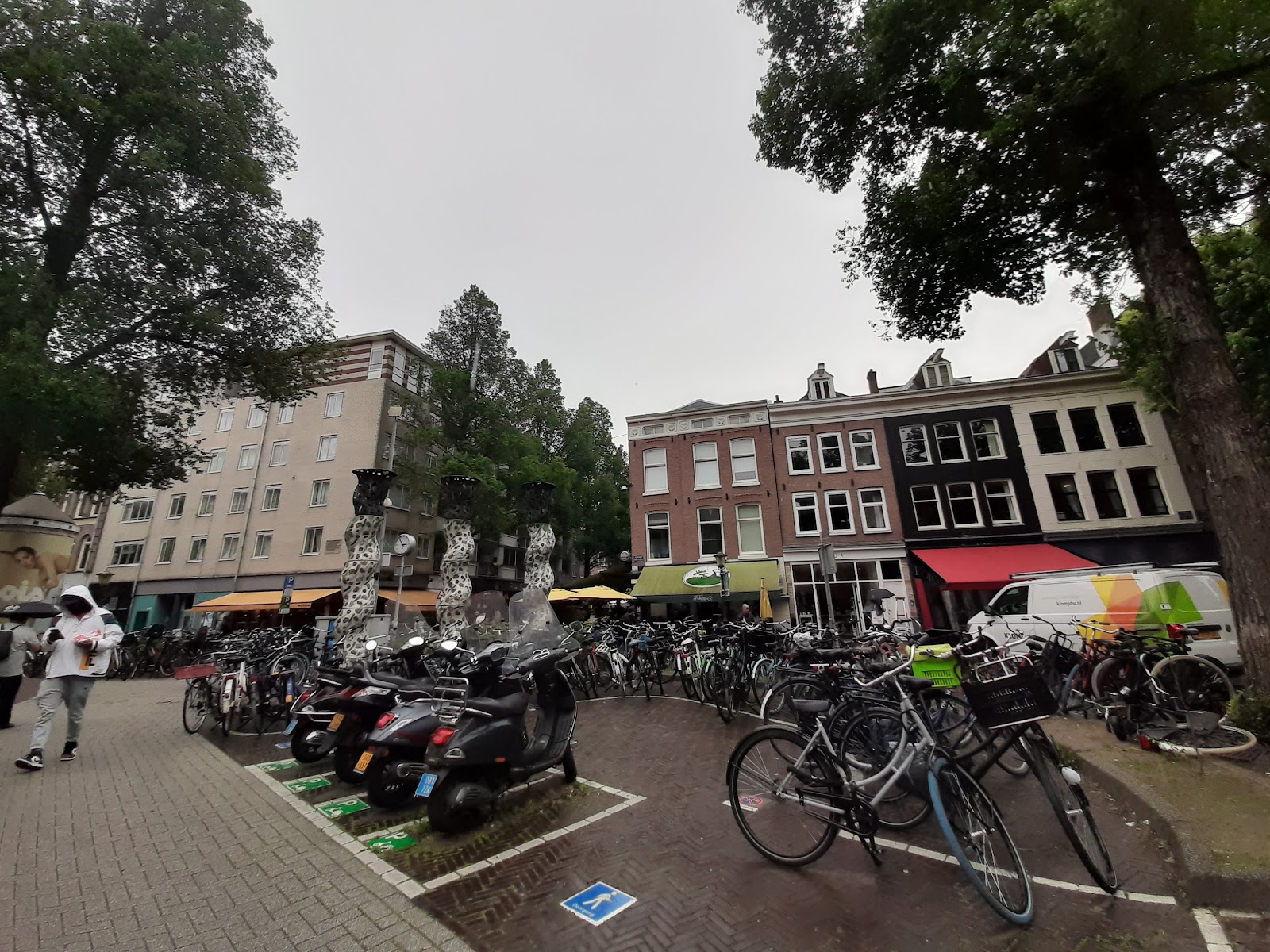
Three illuminated pillars stand at the centre of Gerard Douplein, a small triangular square where Gerard Doustraat crosses Eerste van der Helststraat in the middle of De Pijp. The pillars — a public artwork by Henk Duijn, placed here in the 1990s — glow after dark, giving the square a quiet focal point amid the café terraces that ring it.
The square is named for Gerard Dou, the 17th-century Leiden painter who studied under Rembrandt from 1628 to 1631 and went on to develop the fijnschilder style: small, immaculately finished panels that rewarded close looking. The square itself rewards the same approach.
💛 What travellers fall for
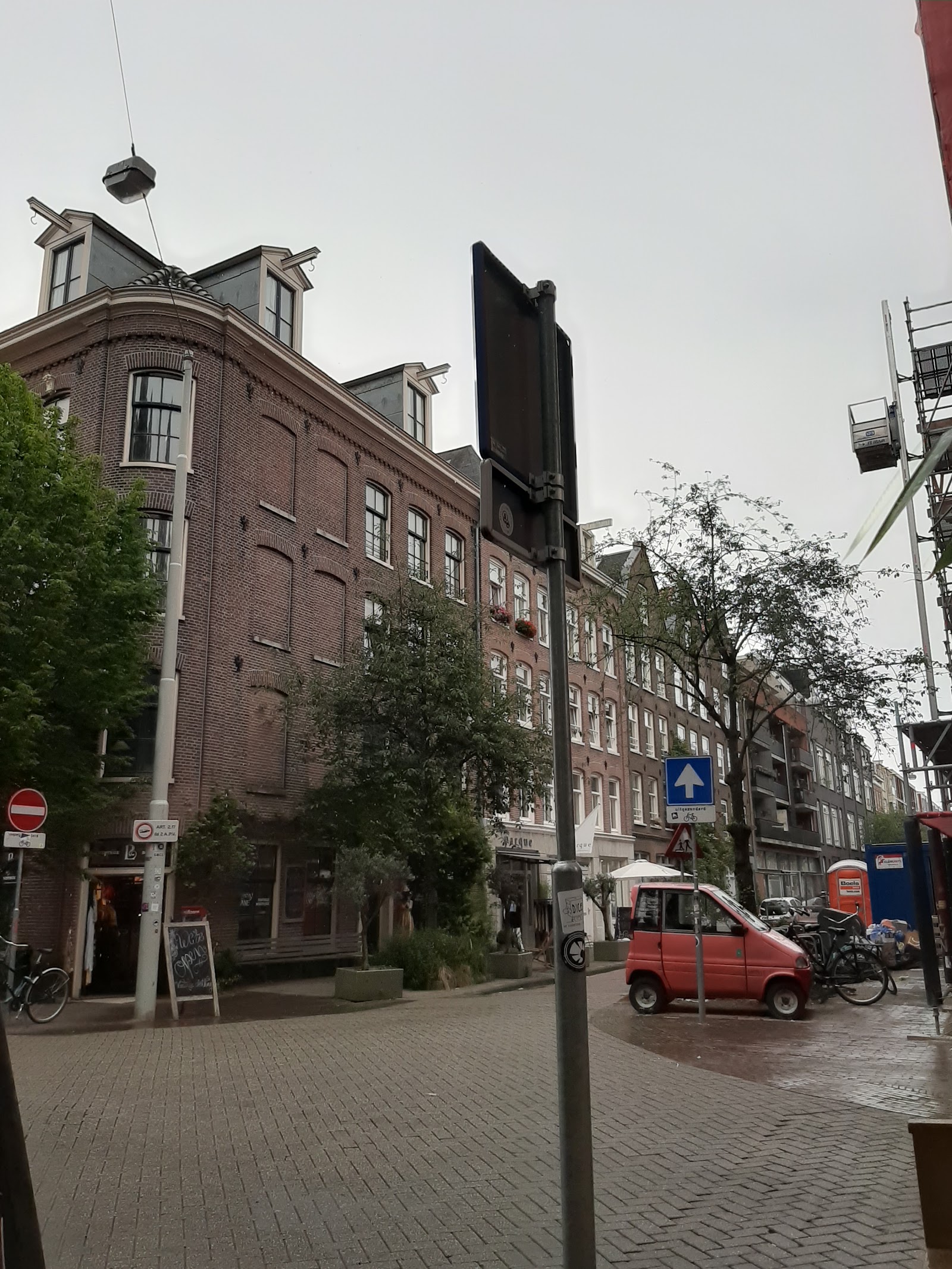
People who know De Pijp well tend to start here. Het Paardje's terrace, which has anchored one corner for nearly two decades, is the natural place to sit before deciding which direction to walk — toward Albert Cuypmarkt, along Ruysdaelkade, or simply deeper into the side streets that open off the square.
The story behind Gerard Douplein
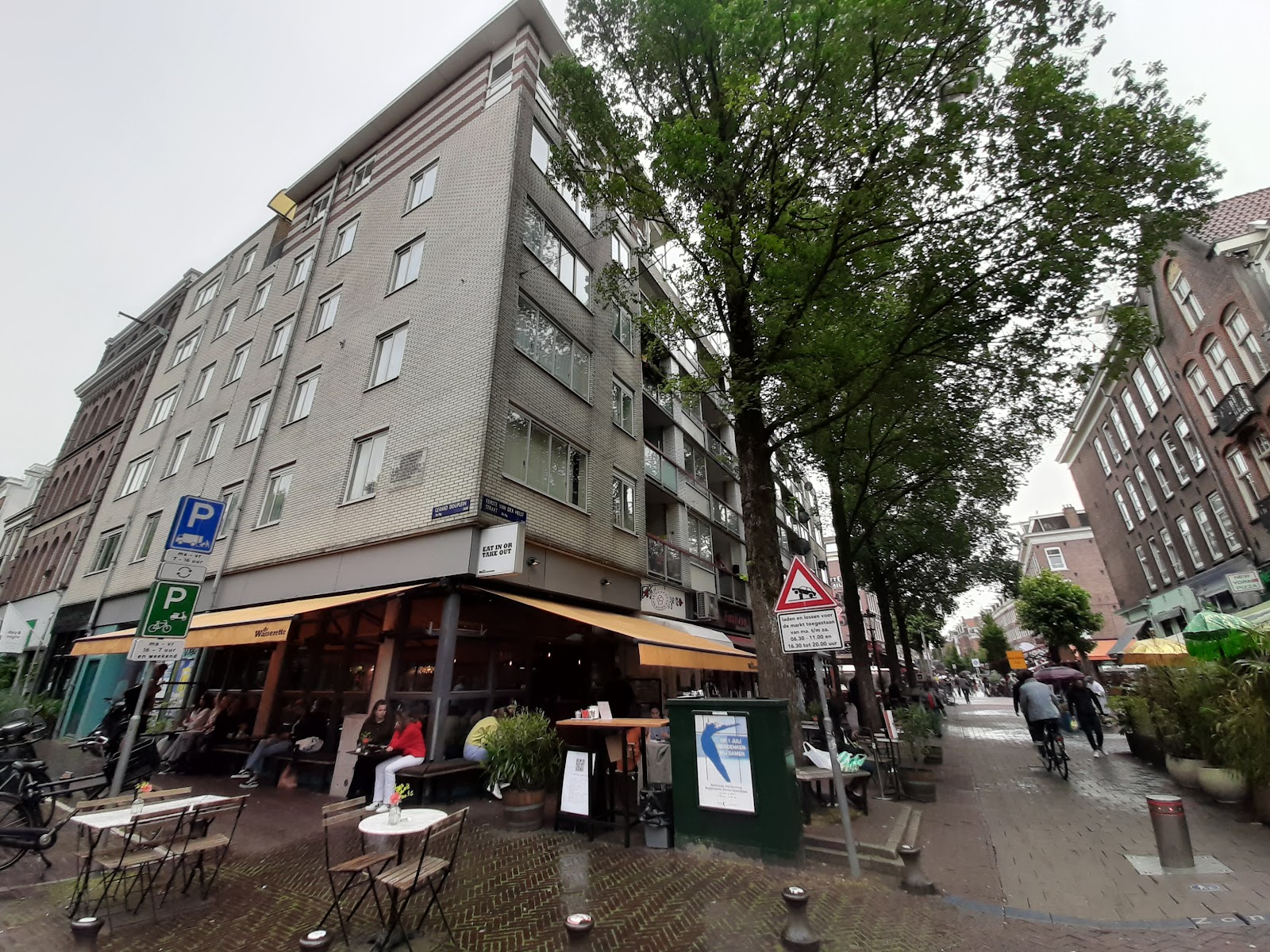
Gerard Douplein emerged in the late 19th century at the seam between two urban plans — Van Niftrik's triangular grid and Kalff's more regular block layout. That collision of geometries is why the square has its irregular shape, and why it became one of the few breathing spaces in what was then a densely packed working-class neighbourhood.
The square's current character solidified gradually as cafés moved in. The Henk Duijn pillars, installed in the 1990s, gave it a modest landmark of its own rather than letting it function purely as a traffic node. The Wikidata inception date of 1909 sits in mild tension with the late-19th-century planning records, though the discrepancy may reflect when the square was formally completed versus when its layout was first drawn.
Good to know
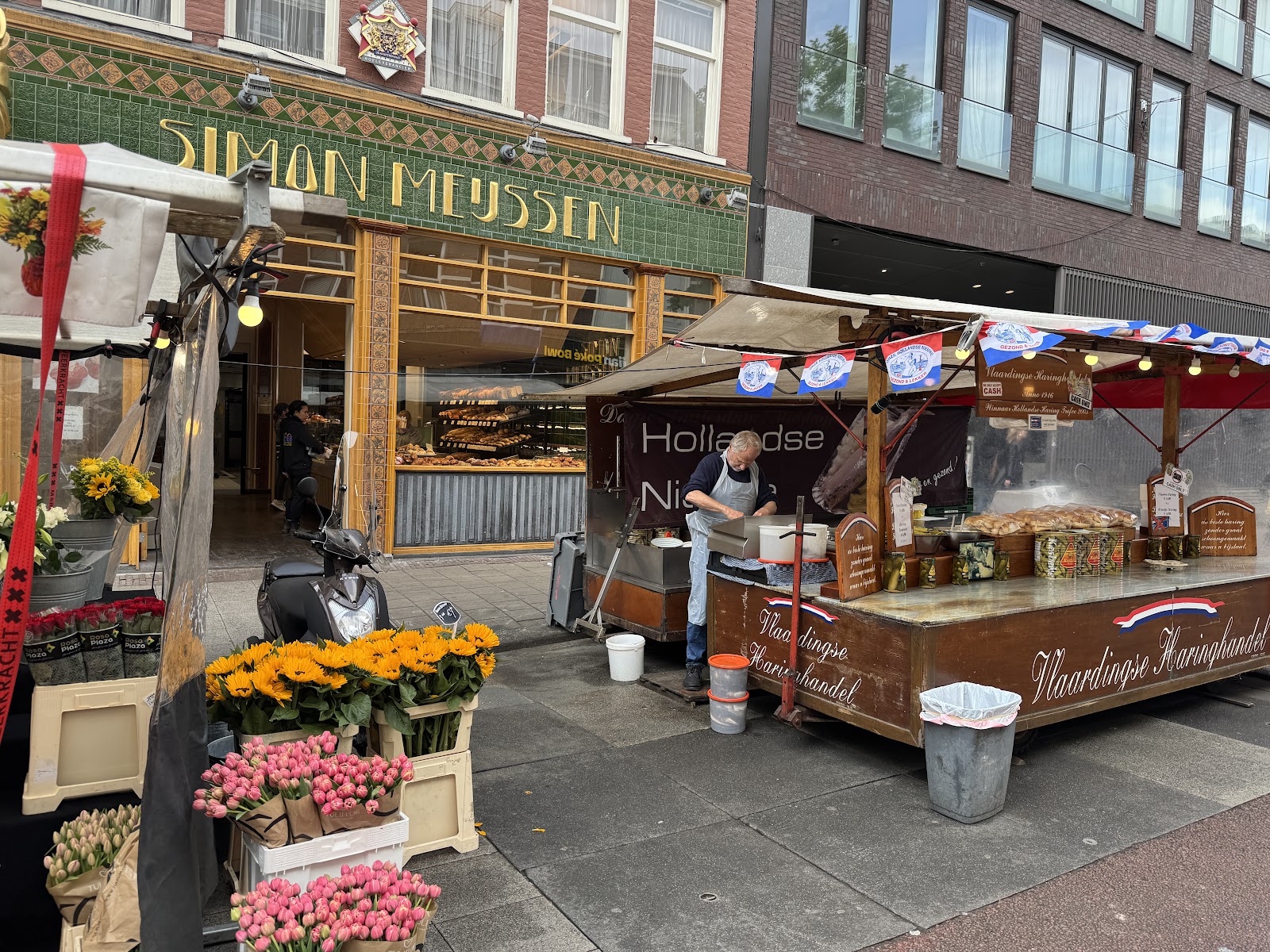
Metro Line 52 stops at De Pijp station, a short walk away. The square is at its liveliest on market days when Albert Cuypmarkt draws crowds through the neighbourhood. Come on a weekday morning if you want a terrace seat without waiting.
Amsterdam's climate is temperate and changeable year-round. Summer evenings are mild enough to sit outside comfortably, while autumn and winter bring rain and cold that push the square's life indoors. Spring, when the terraces reopen in earnest, is often the most pleasant time to linger here.
Where is Gerard Douplein?
Location
- In De Pijp
- 52.3558, 4.8934
- Open in Google Maps
More tickets & tours for Gerard Douplein
Book directly at the provider
More of De Pijp
Discover where to stay, what to do and the best deals for your trip.
Explore De Pijp →More attractions in De Pijp
All of De Pijp →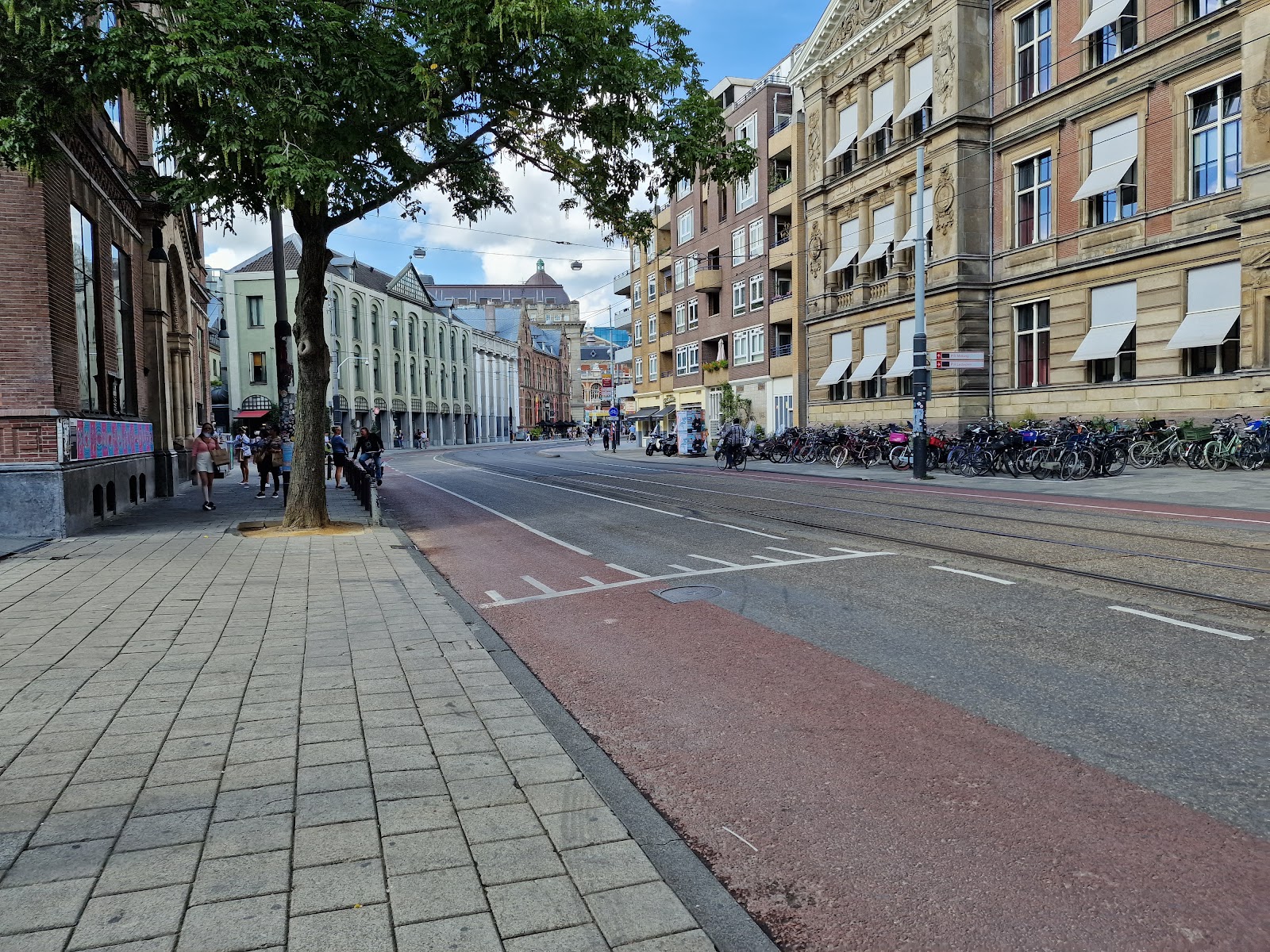
Background adapted from Wikipedia (CC BY-SA) · map data © OpenStreetMap contributors · ratings & place photos via Google · other photos with per-image credit. Ticket links may earn us a commission at no extra cost to you.