
Geigenbaumuseum Mittenwald
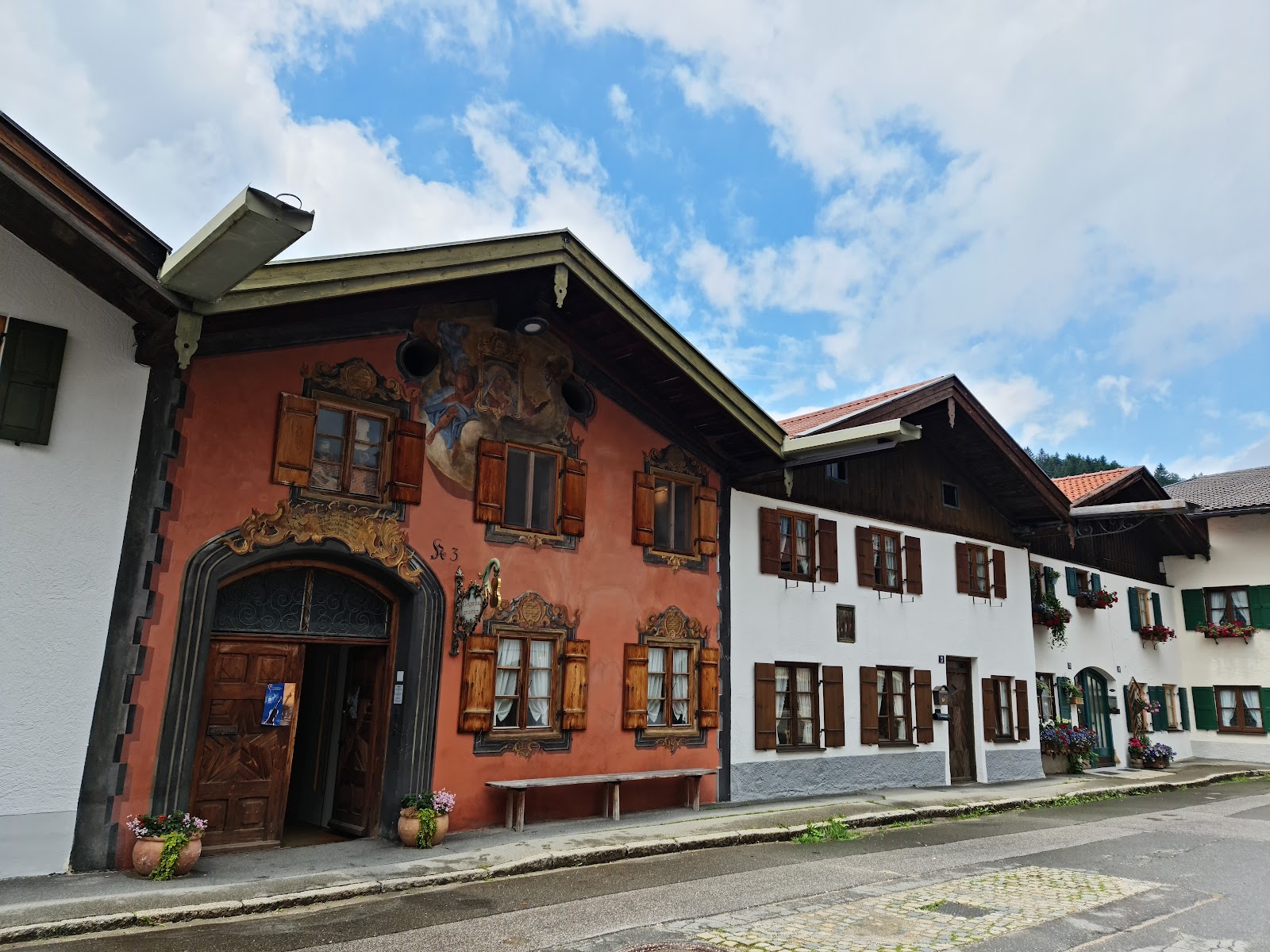
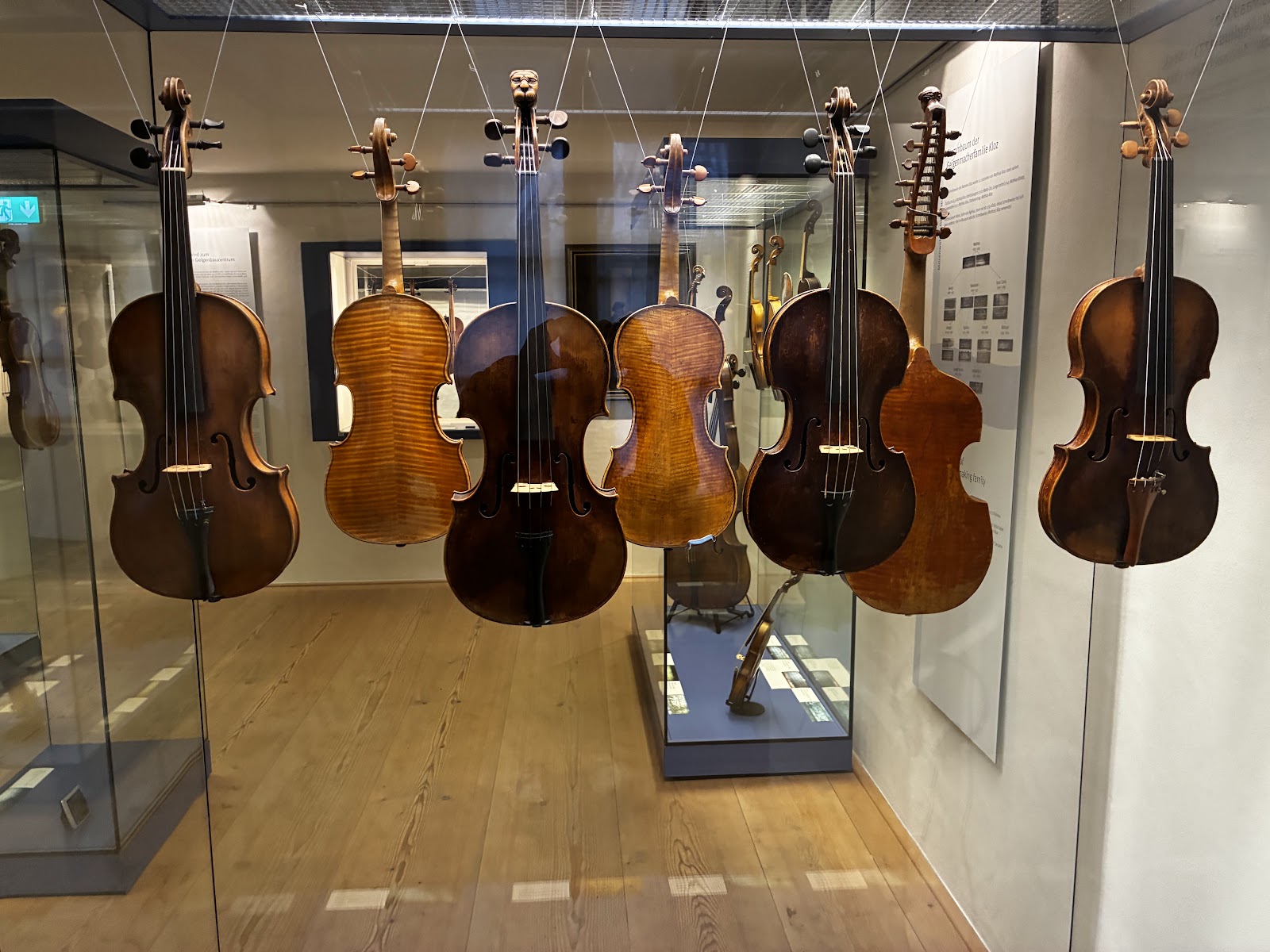
Pick up any violin in this museum and you'll notice something the labels don't tell you: the wood still smells faintly of resin. The Geigenbaumuseum Mittenwald holds around 200 instruments — from master-quality concert violins to the humbler dealer pieces that once shipped across Europe — inside a Seitenflurhaus at Ballenhausgasse 3, one of the oldest buildings in town.
The collection is compact enough to see properly in an hour, but the working demonstration workshop and the archive of historical films tend to slow people down in the best way. Audio guides and videos run in English, which matters here, because the placards lean heavily German.
💛 What travellers fall for
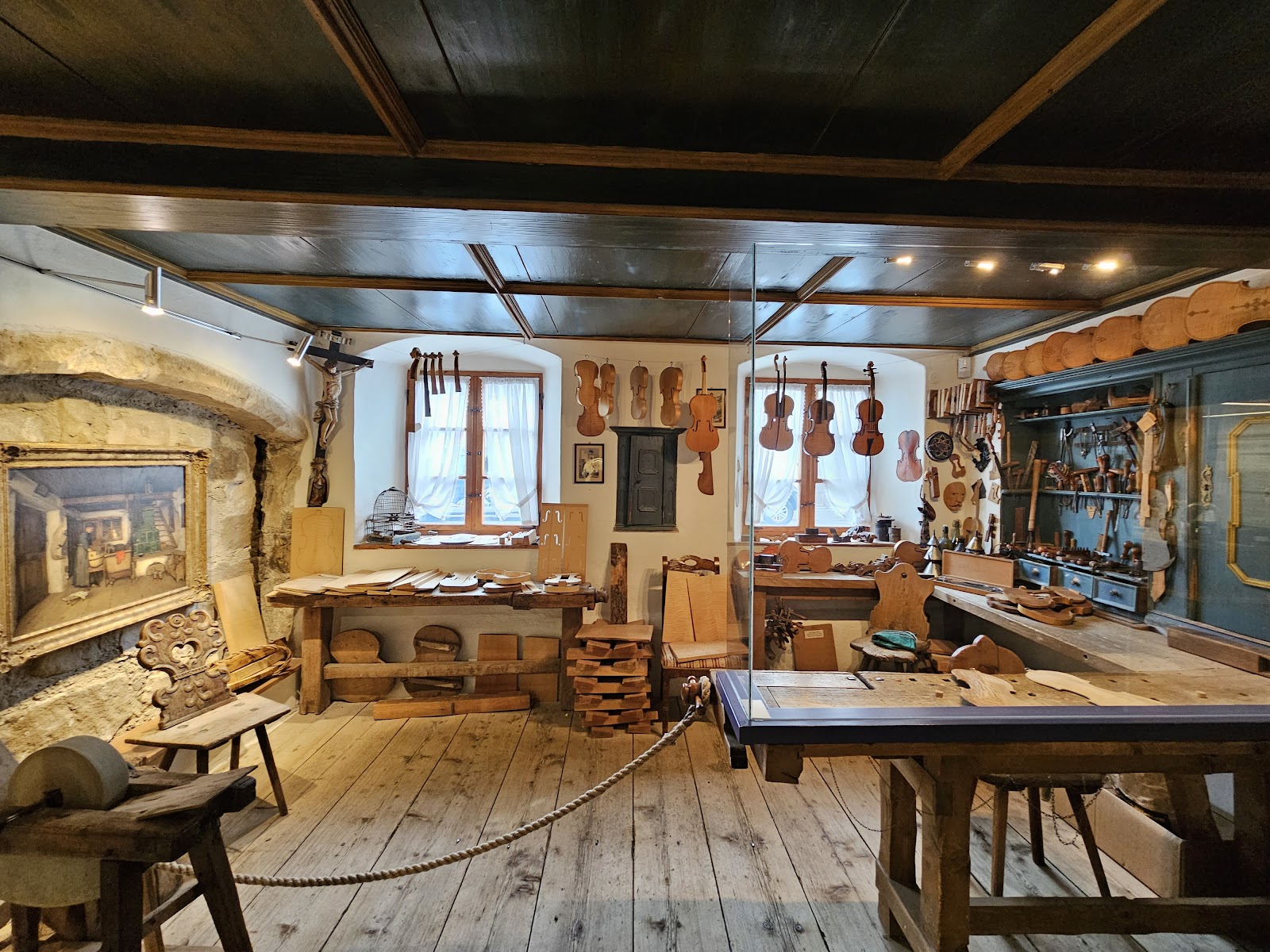
People who come back tend to linger in the demonstration workshop rather than the main gallery — watching a maker work a piece of spruce puts the 200 hanging instruments in a different light. The small concert hall also runs occasional chamber evenings; worth checking the schedule before you arrive.
The story behind Geigenbaumuseum Mittenwald
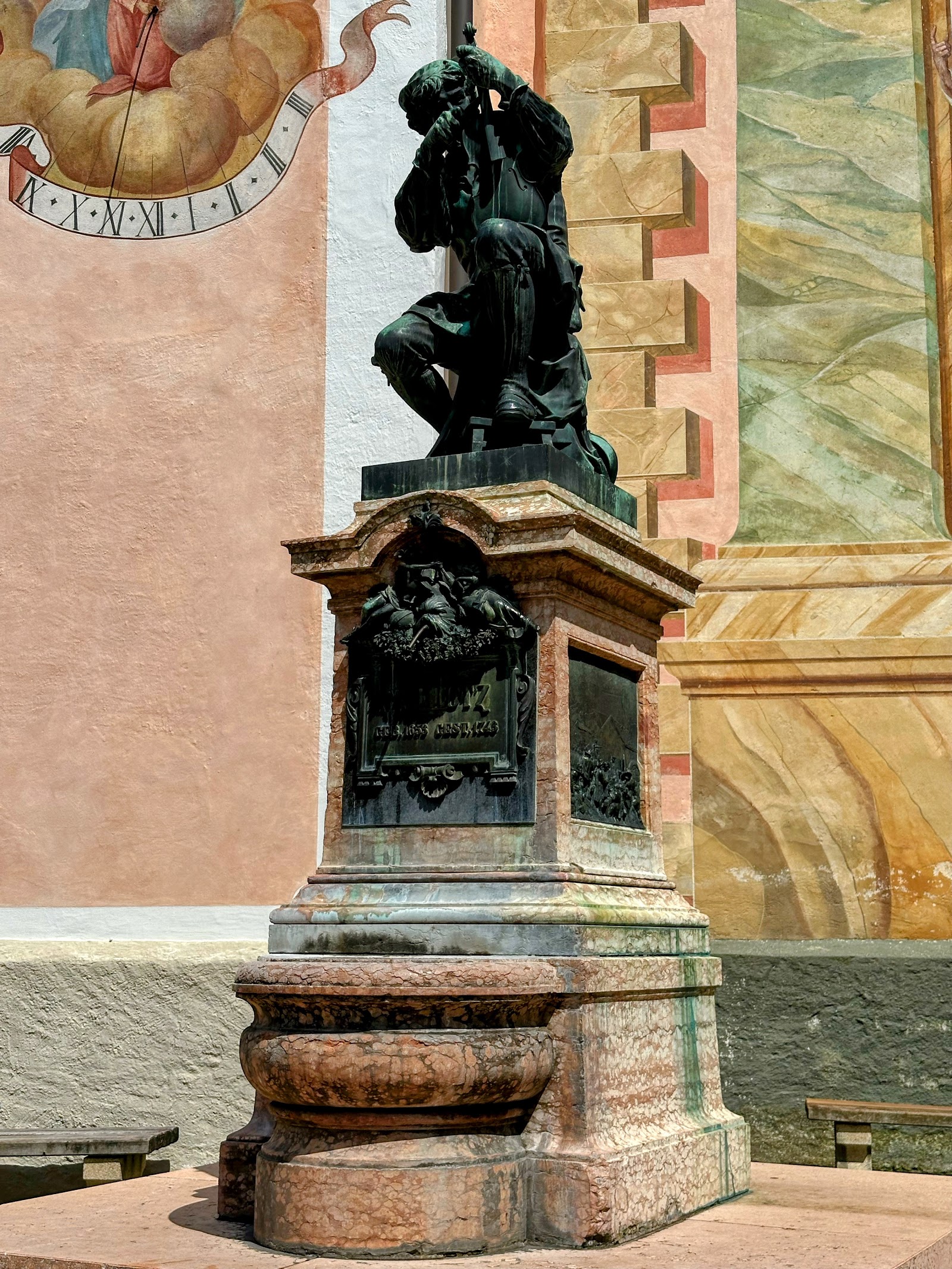
Matthias Klotz, a tailor's son born in 1653, trained first in Füssen and then travelled to Padua to work under Pietro Railich before returning to Mittenwald and opening the town's first violin workshop around 1685. The oldest surviving instrument bearing his name dates to 1712. His son Sebastian refined what became known as the Klotz violin, and the craft spread through entire family lines — the Neuner atelier ran through 15 generations, the Hornsteiner family counted 26 luthiers.
A violin-making school formalised the tradition in 1858 and still operates today. The museum itself was founded in 1930 and moved into its current building in 1960. World War I effectively silenced the workshops for roughly three decades; production only recovered after World War II.
Good to know
Mittenwald sits on the hourly Munich–Innsbruck rail line; the museum is a short walk from the station. Open daily except Mondays and some public holidays — hours shift seasonally, so check the official site. Admission runs around €5.50 for adults. Bring cash as a precaution.
Where is Geigenbaumuseum Mittenwald?
More tickets & tours for Geigenbaumuseum Mittenwald
Book directly at the provider
What travellers say about Geigenbaumuseum Mittenwald
A place to know brief history of Mittenwald and how it got famous for it's 🎻 Violin making business, their pioneer in Violin-making Matthias Klotz (even Mozart used Violin made by him) 🎻, linkage of this business with ancient trade connections of Mittenwald due to geographical advantage, economical reasons of minerals found in the region, train from Mittenwald to the Austrian city of Innsbruck ( operating for over 100 years)etc. Small 2 minute audios are also very informative, videos can also be played on the first floor, small but nicely maintained place, about an hour is enough to visit. The staff at the reception was also very friendly. Tip: You can get a discounted (ermäßigt) rate of 4.5 Euro/person (which is one Euro less than standard price), if you have Alpenwelt Card. You can get this card for free at the your accomodation (hotel/ hostel/ or so), if you have anyway paid visitors tax (Kurbeitrag) of 3.5 Euro/person. I have added screenshot of my Karwendel Card and copy of the ticket I got at reduced (ermäßigt) rates too. (Date of visit: 4 April 2026).
Lovely museum for all, depicted history of violin instruments production and development. Interesting way to get know how difficult hand work it is even these days to create this musical inšstrument. All instructions in German and English, appreciated movie room with choice of short films, where I admired the one about Mittenwald school for violin makers.
Amazing how much time, effort skill and passion goes into making a violin.. very interesting museum, with the possibility to touch, feel and even smell the different stages of building a violin
Very informative museum that explains well the whole process of making a violin from the selection of trees for wood until a violinist can play the instrument. They provide a personal show and also an informative video on top of the hundreds of display items.
This museum is excellent. There is nearly 1000 years of luthier (instrument crafting) history in this small southern Germany town. Anyone who loves music, woodworking/craftsmanship, or history would thoroughly appreciate this museum. I hope to return.
More of Mittenwald
Discover where to stay, what to do and the best deals for your trip.
Explore Mittenwald →More attractions in Mittenwald
All of Mittenwald →
Background adapted from Wikipedia (CC BY-SA) · map data © OpenStreetMap contributors · ratings & place photos via Google · other photos with per-image credit. Ticket links may earn us a commission at no extra cost to you.