
Galeries Lafayette
A belle-époque department store crowned by a glorious stained-glass dome.
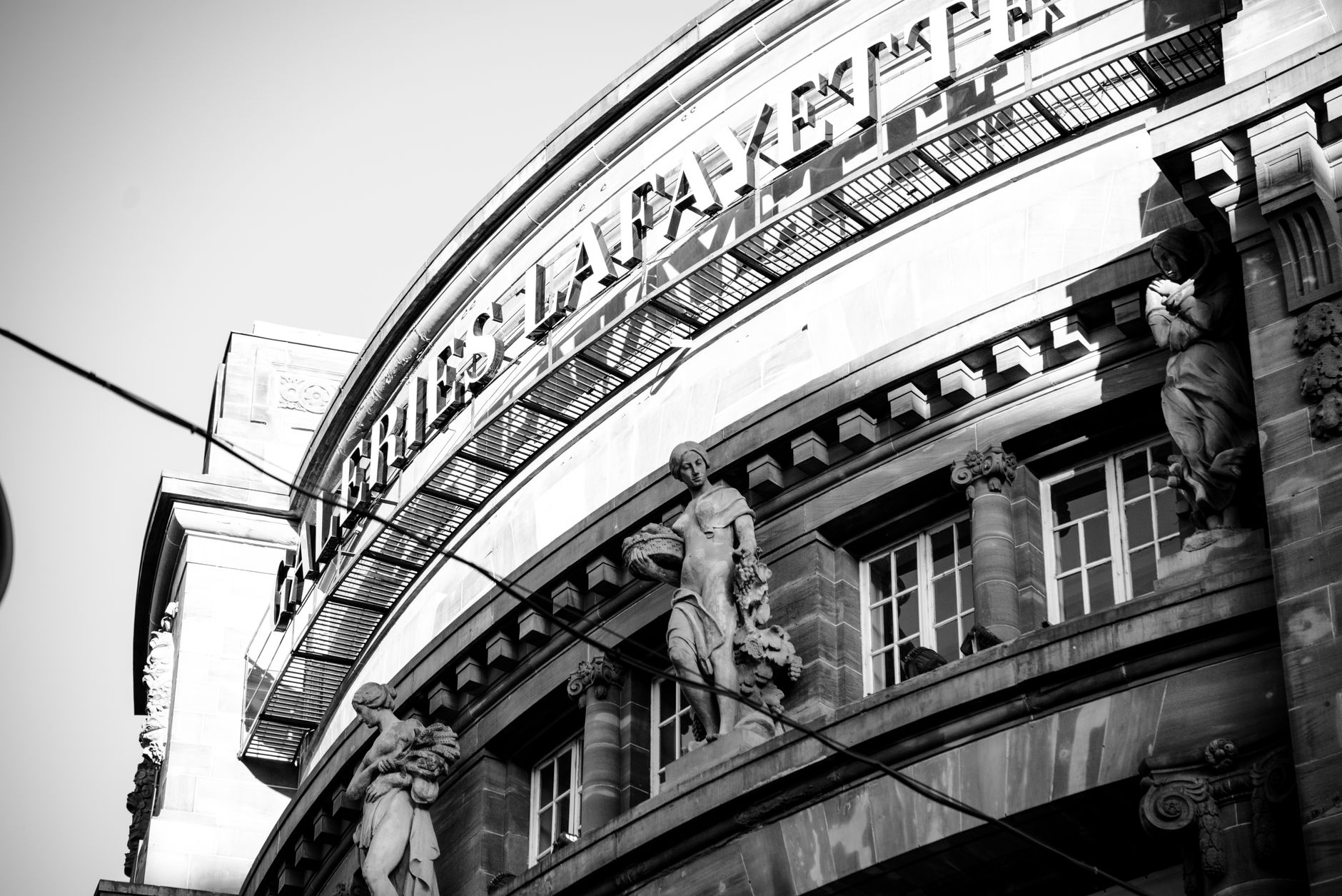
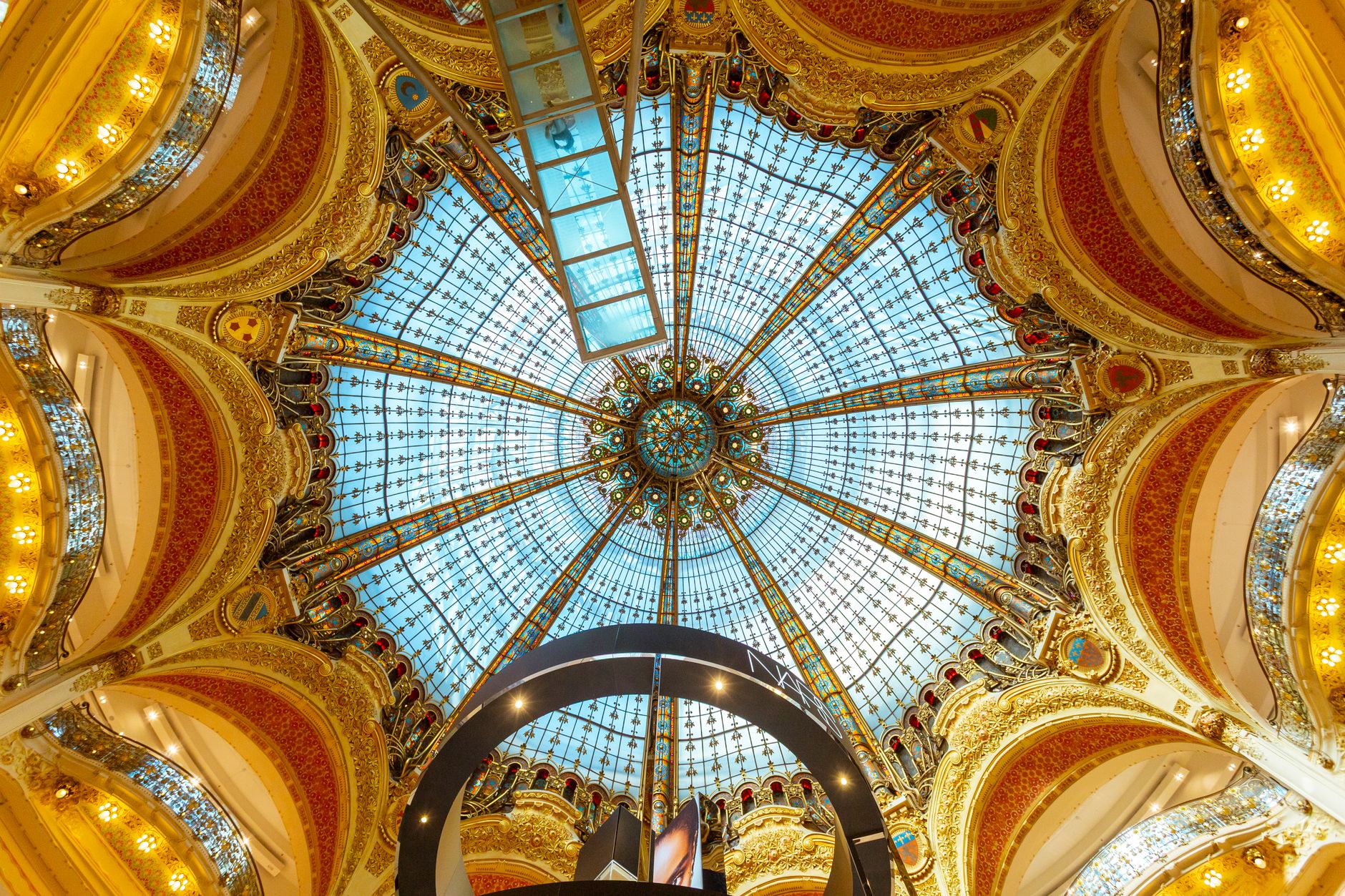
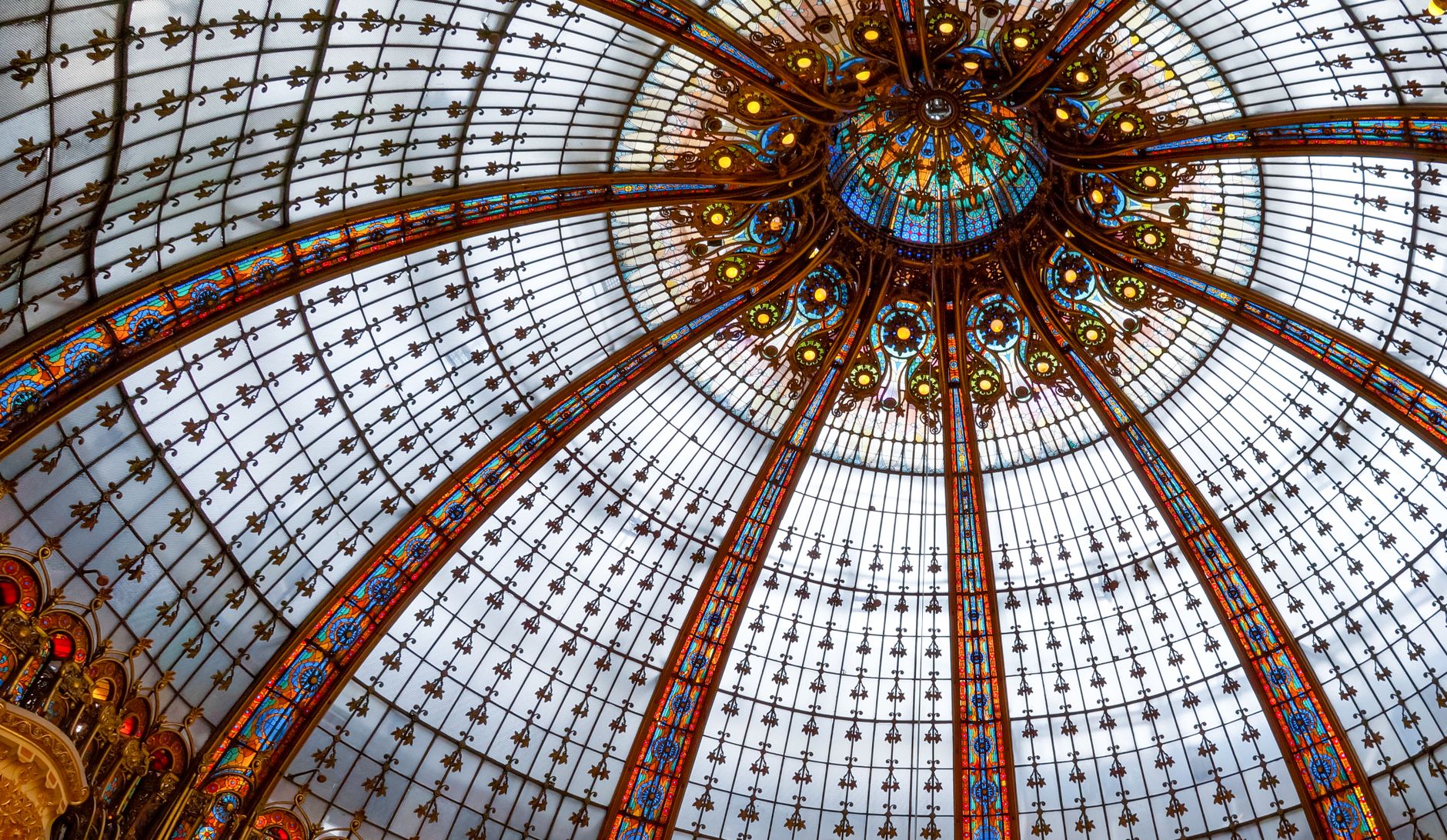
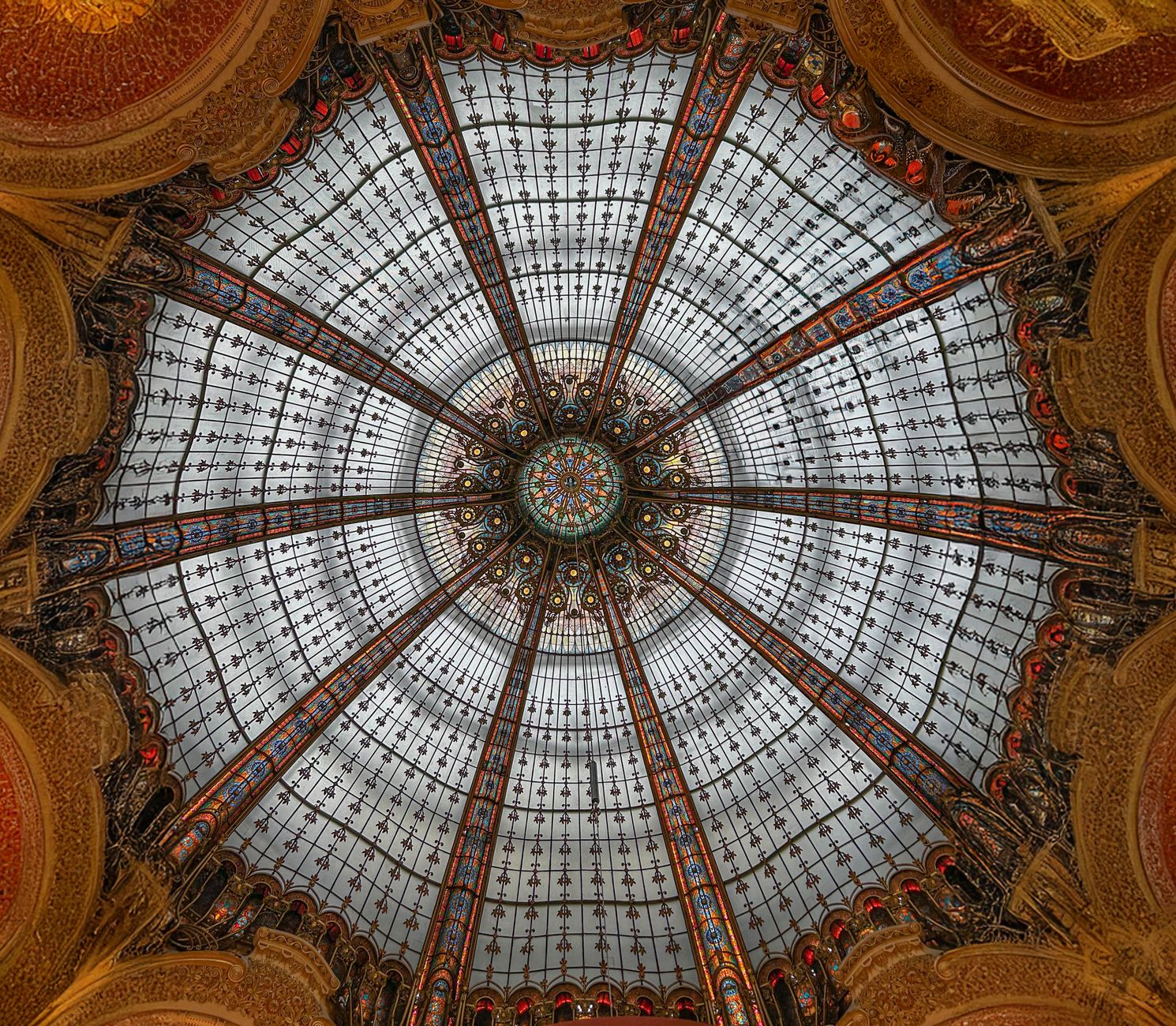
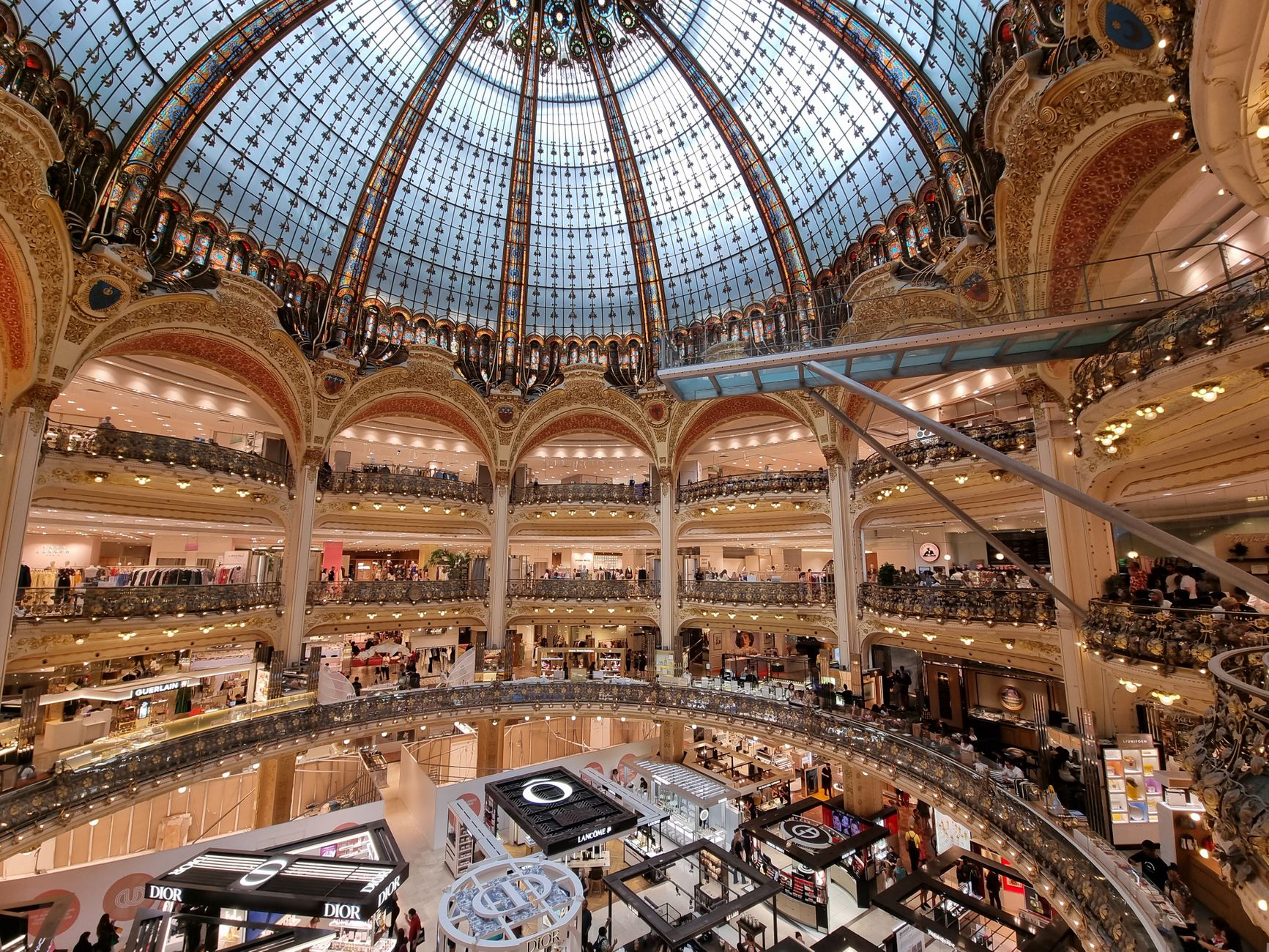
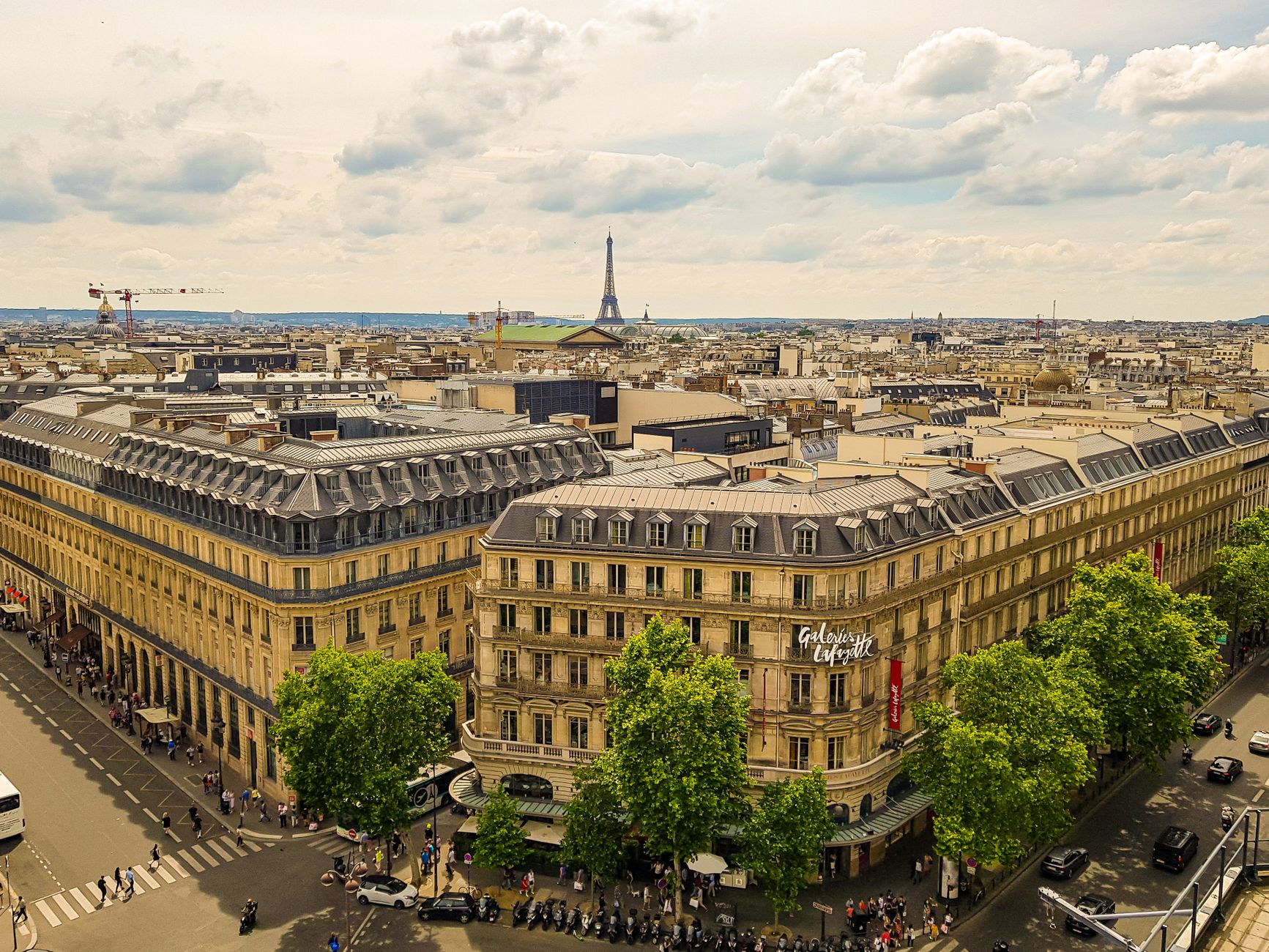
Look up the moment you walk in. The dome stops you before the shops do — 43 metres of Neo-Byzantine stained glass designed by Ferdinand Chanut and glazed by Jacques Gruber, its 1,000 square metres arranged into a vast luminous flower overhead. The ironwork balconies that ring each floor below it were Louis Majorelle's work, though the original staircase he designed, inspired by the Opéra Garnier, came down in 1974.
Spread across three connected buildings on Boulevard Haussmann — the main store at number 40, menswear at 48, home and food at 35 — this is a department store that rewards looking as much as buying. The rooftop terrace is free, open during store hours, and offers a clean sightline toward the Opéra and across the 9th arrondissement.
💛 What travellers fall for
People who come back tend to go straight to the third floor for the glasswalk — a transparent walkway suspended 16 metres above the central void, which is either thrilling or quietly alarming depending on your disposition. The free Friday fashion show at 3 PM requires advance reservation and books out fast. The gourmet store at number 35 stays open until 9:30 on weekdays.
How Galeries Lafayette came to be
In 1893, two Alsatian cousins — Théophile Bader and Alphonse Kahn — opened a 70-square-metre novelty shop at the corner of rue La Fayette and rue de la Chaussée d'Antin. Within a decade they had acquired the surrounding buildings on Boulevard Haussmann and commissioned architect Georges Chedanne, with his apprentice Ferdinand Chanut, to design something grander. The dome and Art Nouveau staircases were finished in time for the store's formal inauguration in October 1912.
The building did not pass through the twentieth century untouched. During the Nazi Occupation, the store was 'aryanised' — the founding family ousted, the business placed under Vichy administration until Liberation. The stained glass was removed during the war to prevent shattering from bombing; some panels were never recovered, and their places are now held by white glass. The Majorelle staircase came down in 1974. The dome, at least, survived.
Who and what shaped it
People who shaped it
Landmark buildings
Background & history adapted from Wikipedia (CC BY-SA) · specs from Wikidata (CC0) · weather from Open-Meteo · map data © OpenStreetMap contributors · photos from Wikimedia Commons / Unsplash with per-image credit. No third-party reviews or social posts reproduced.