
Gaasperplaspark
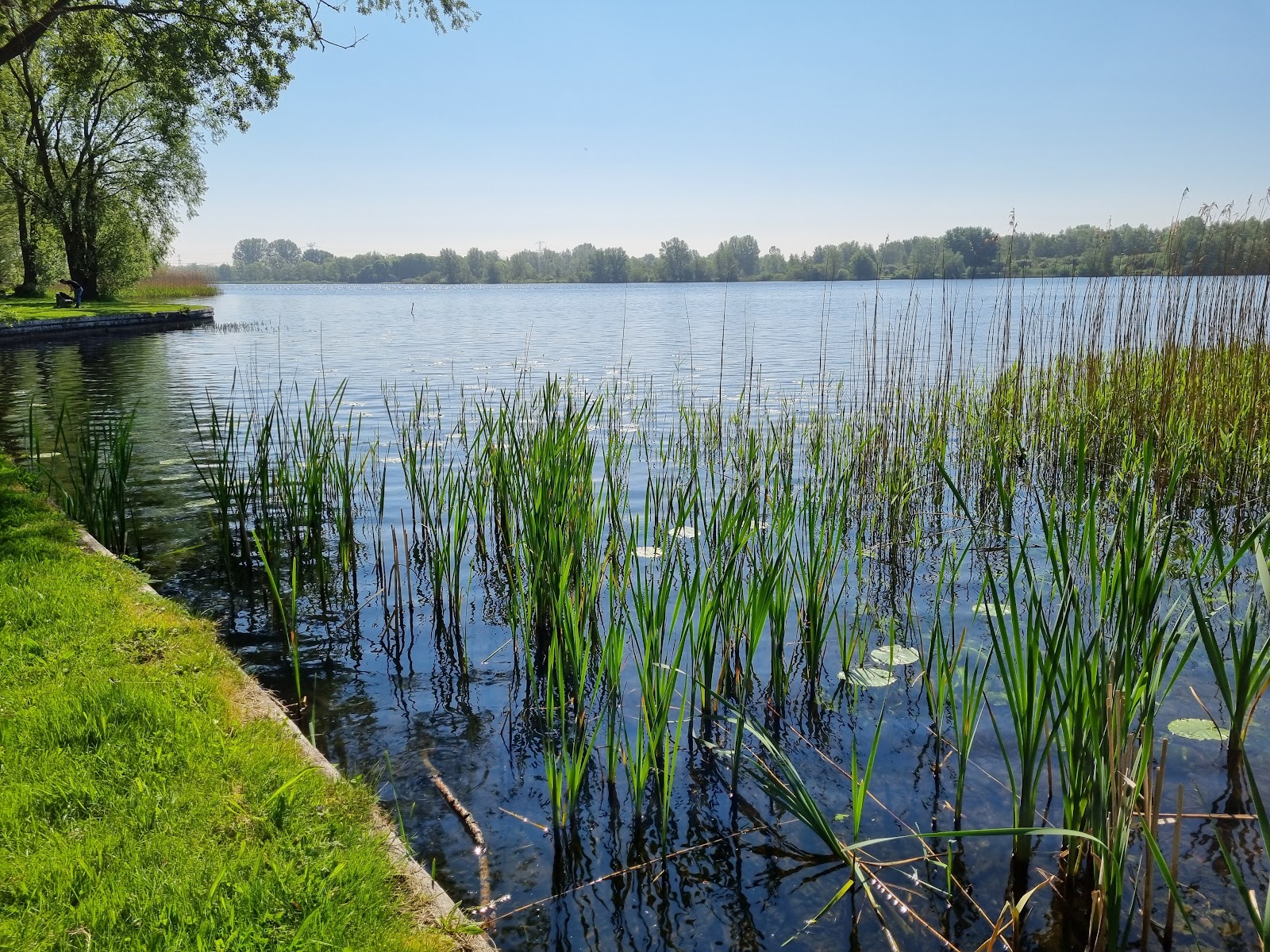
The lake at Gaasperplaspark drops to 35 metres — deeper than you'd expect from a body of water dug out to supply sand for building a neighbourhood. That neighbourhood is Gaasperdam, and the excavation left behind something the planners could work with: a long, cold stretch of water on the southeastern edge of Amsterdam that would eventually host one of the Netherlands' great horticultural exhibitions.
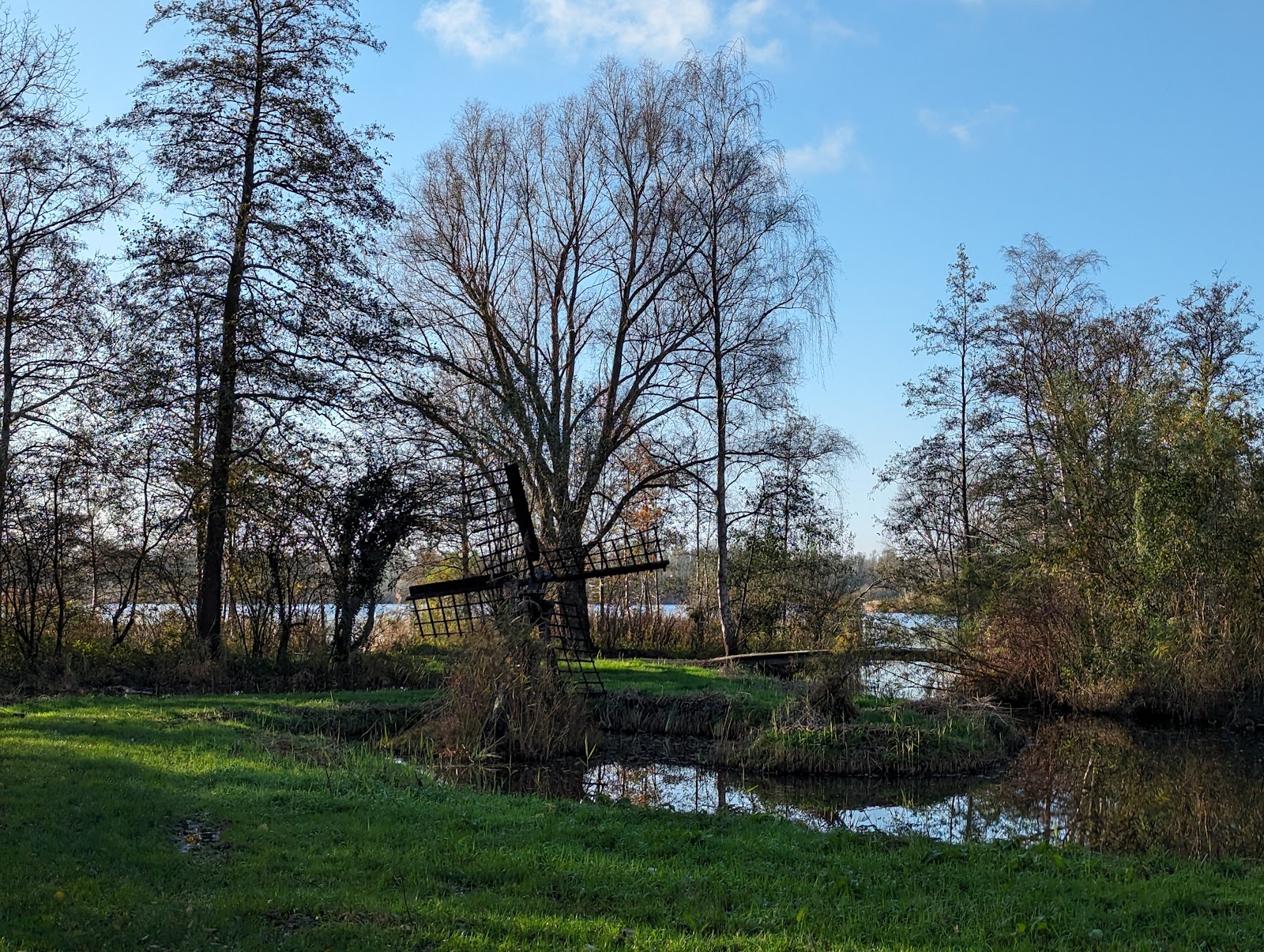
Today the park is a working green lung for Amsterdam-Zuidoost. Paths branch off in a fine mesh across the grounds, a ghost of the 1982 Floriade layout still legible in the landscape. A small windmill stands near the water. Cyclists pass dog-walkers. On warm days, people spread out on the grass banks above the lake.
💛 What travellers fall for
Regulars tend to arrive by metro — the line 53 drops you at the Gaasperplas stop, right at the north entrance, twenty minutes from Central Station. Most head straight for the water's edge rather than the main paths. The steel box sculpture near the old entrance is easy to walk past; worth a pause. Summer weekends fill the sunbathing areas early.
The story behind Gaasperplaspark
The lake was dug in the late 1960s when sand was extracted to build Gaasperdam, the postwar expansion district that now surrounds the park. Construction of the park itself began in 1977, with landscape architect Pieter van Loon coordinating the design team for what would become the 1982 Floriade — a national horticultural exhibition that drew more than 3.5 million visitors.
When the Floriade closed, almost everything built for it was removed. The former planetarium building survived and eventually became a congress centre; the planetarium itself was relocated to Artis in 1988. What remained was simpler and quieter — a city park whose path network still traces the bones of that earlier, more elaborate event.
Good to know
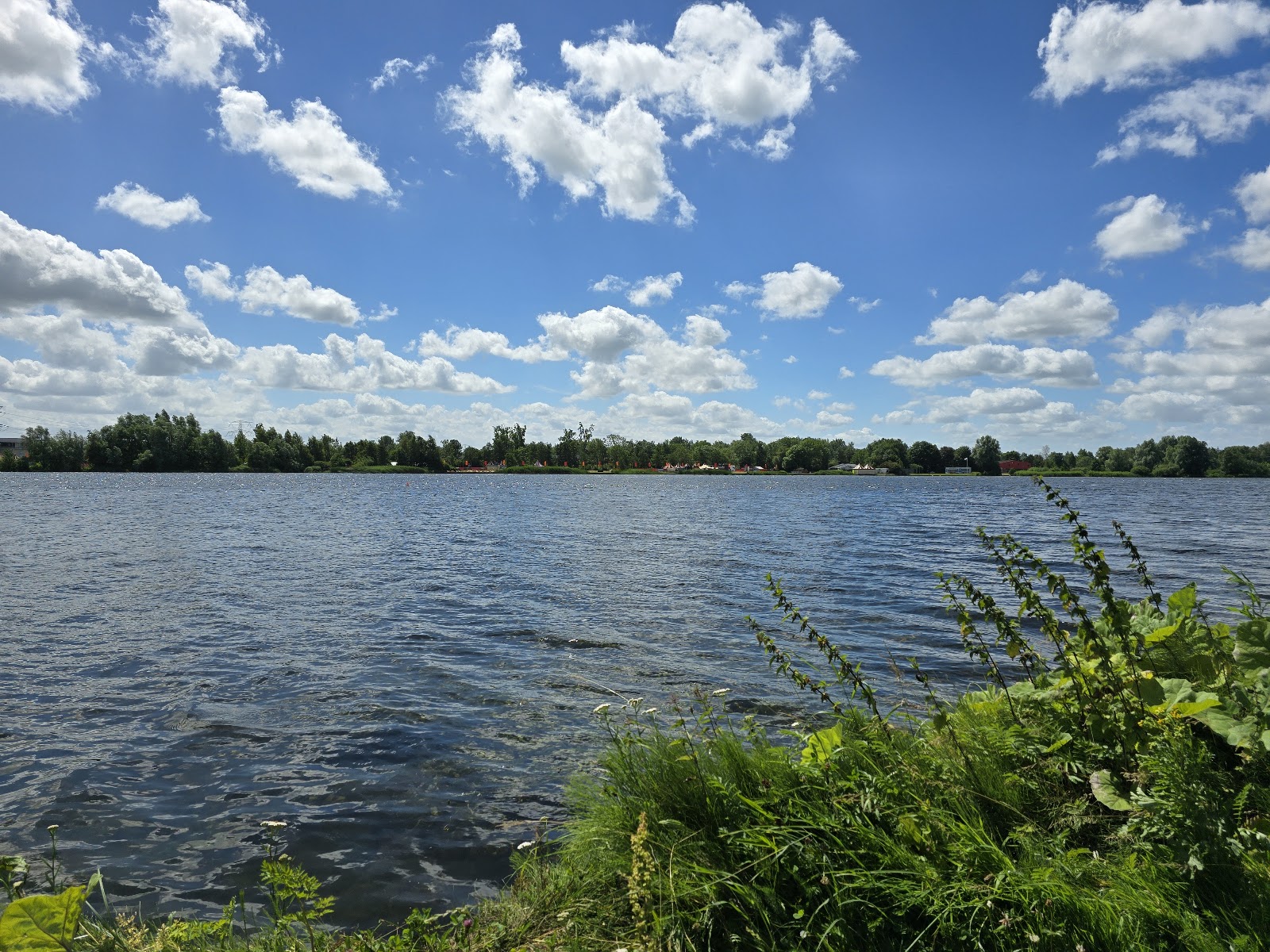
Metro line 53 from Central Station to the final stop, Gaasperplas, is the simplest approach. Entry is free, dawn to dusk year-round. Swimming is only realistic in summer; the lake runs cold. Note that renovation work on the pathways began in September 2025 — some routes may be disrupted.
Amsterdam summers are mild and occasionally sunny, which is when the park earns its keep — the lake opens for swimming in designated areas and the grass fills up. Spring and autumn are good for cycling and walking but the water stays cold. Winter visits are quiet; the paths are open but facilities are limited.
Where is Gaasperplaspark?
Location
- In Amsterdam-Zuidoost
- 52.3044, 4.9897
- Open in Google Maps
Rating
4.5 ★ · 4,562 Google reviews
More tickets & tours for Gaasperplaspark
Book directly at the provider
What travellers say about Gaasperplaspark
Gaasperpark is large park where a former Floriade-event which was organized in 1982. It’s a nice, green citypark in the outskirts of Amsterdam. It has nice paths to stroll around by foot or by bike. There are areas in the park with different topics and playgrounds. Water is a big theme in this park. You can play with the water or in the water. The park also has facilities like toilets and food-selling booths. During Spring, Summer and early Autumn, it’s great to settle down to have a picnic with family and friends. In the Winter - if there is snow - you may use your sledge to run down the slope. It’s easy to get there by metro, by bus or by car. If you are adventurous enough, it’s possible to bike towards Gaasperpark. Update: The municipality is renovating the park and its pathways.
Great campsite for metro trip into Amsterdam, otherwise you are stranded if you don't have transport. Nowhere to go for food, drink(unless summer holiday season), would not walk to and from metro station when dark as you have to walk through a very dodgy carpark. Facilities were good and mostly very clean, but odd days had obviously been left uncleaned. Good for laundry washing.
Amazing place for отдых and barbecue! 🌿 Beautiful nature, clean surroundings, and a very relaxing atmosphere. We had a wonderful time here with friends and truly enjoyed the peaceful environment. Perfect place to relax, enjoy nature, and spend a great day together.
Beautiful silent place next to Amsterdam. We spend few days at the camper park.
Great festival..4th year for me...Great food bit pricey but to be expected...toilets are plentiful not to bad at start..but as time passes gets a bit grubby but that's festival life...Will continue to be my go to festival...very friendly crowd..people mistake us for Dutch locals (Jamaican)...no trouble lots of sound systems...very limited police presence...more towards the end to guide the crowd to the train station which takes you to the park...beautiful lake lots of places to chill..love it..hope this helps
More of Amsterdam-Zuidoost
Discover where to stay, what to do and the best deals for your trip.
Explore Amsterdam-Zuidoost →More attractions in Amsterdam-Zuidoost
All of Amsterdam-Zuidoost →
Background adapted from Wikipedia (CC BY-SA) · map data © OpenStreetMap contributors · ratings & place photos via Google · other photos with per-image credit. Ticket links may earn us a commission at no extra cost to you.