
Freibergsee
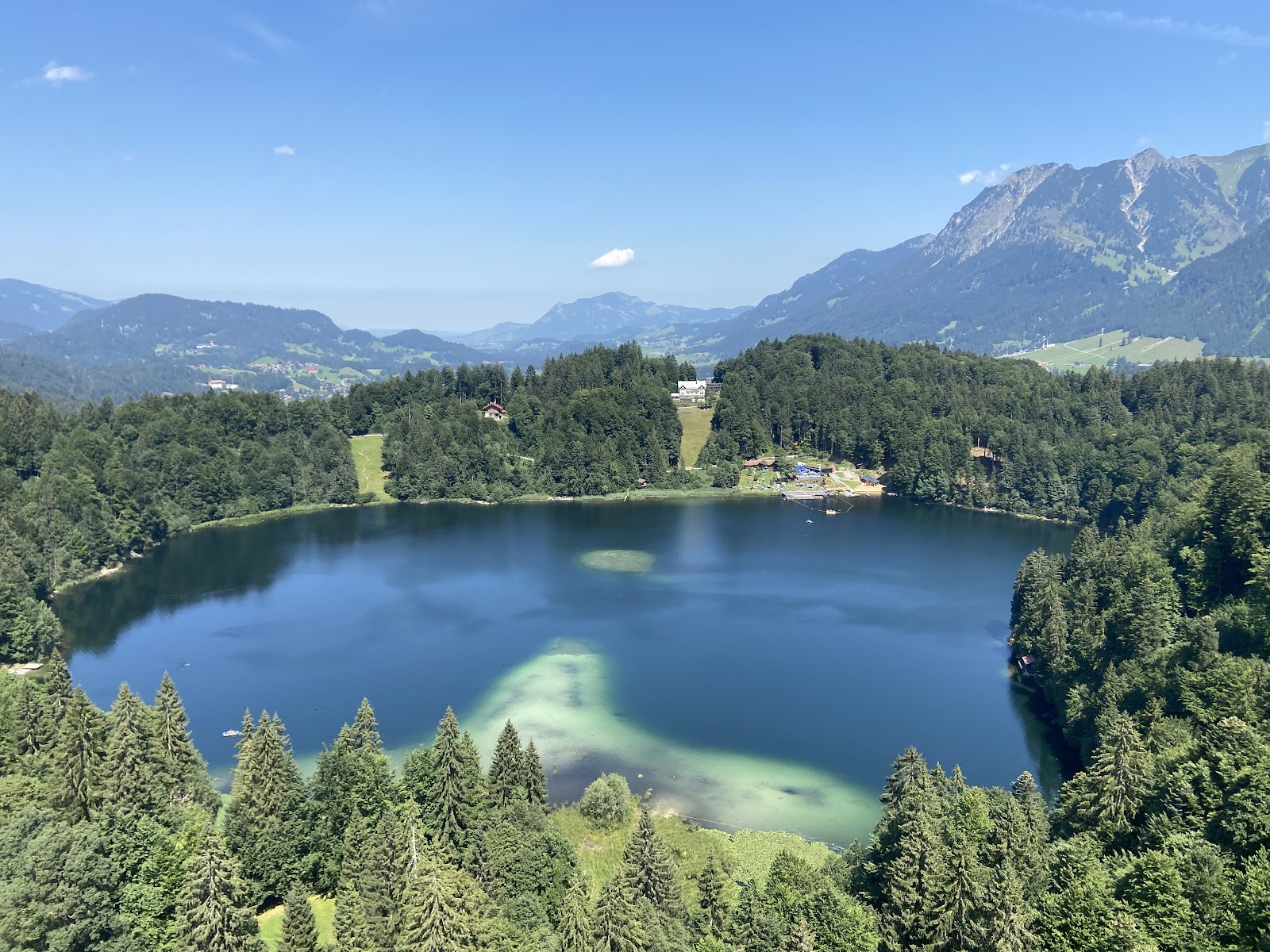
The road to Freibergsee is closed to you — deliberately, and it turns out, usefully. You park at Renksteg and walk the last twenty-odd minutes through beech and fir, arriving at a glacial lake sitting 931 metres above sea level with no visible inlet or outlet, its water level quietly managed by underground flows nobody fully mapped.
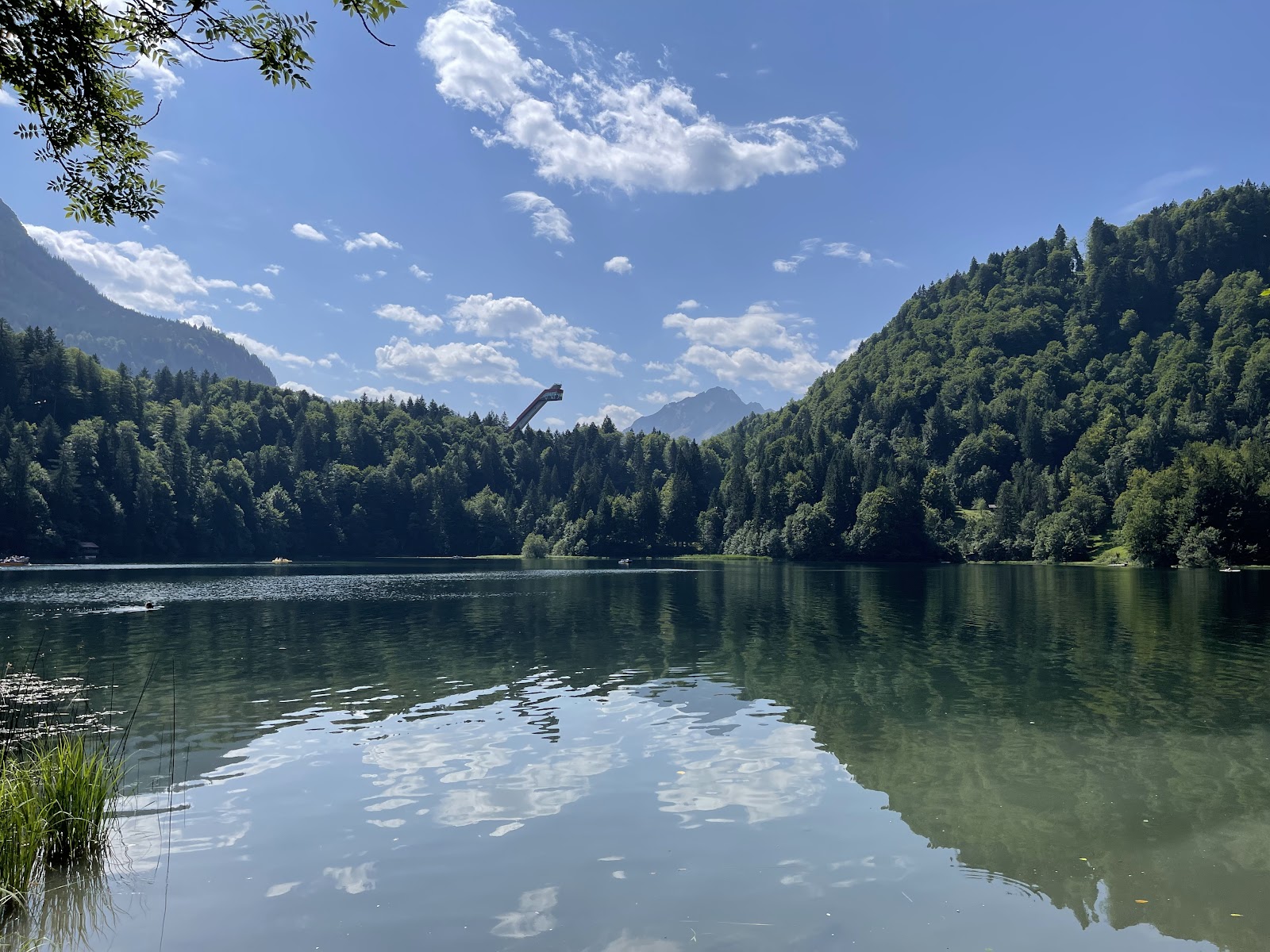
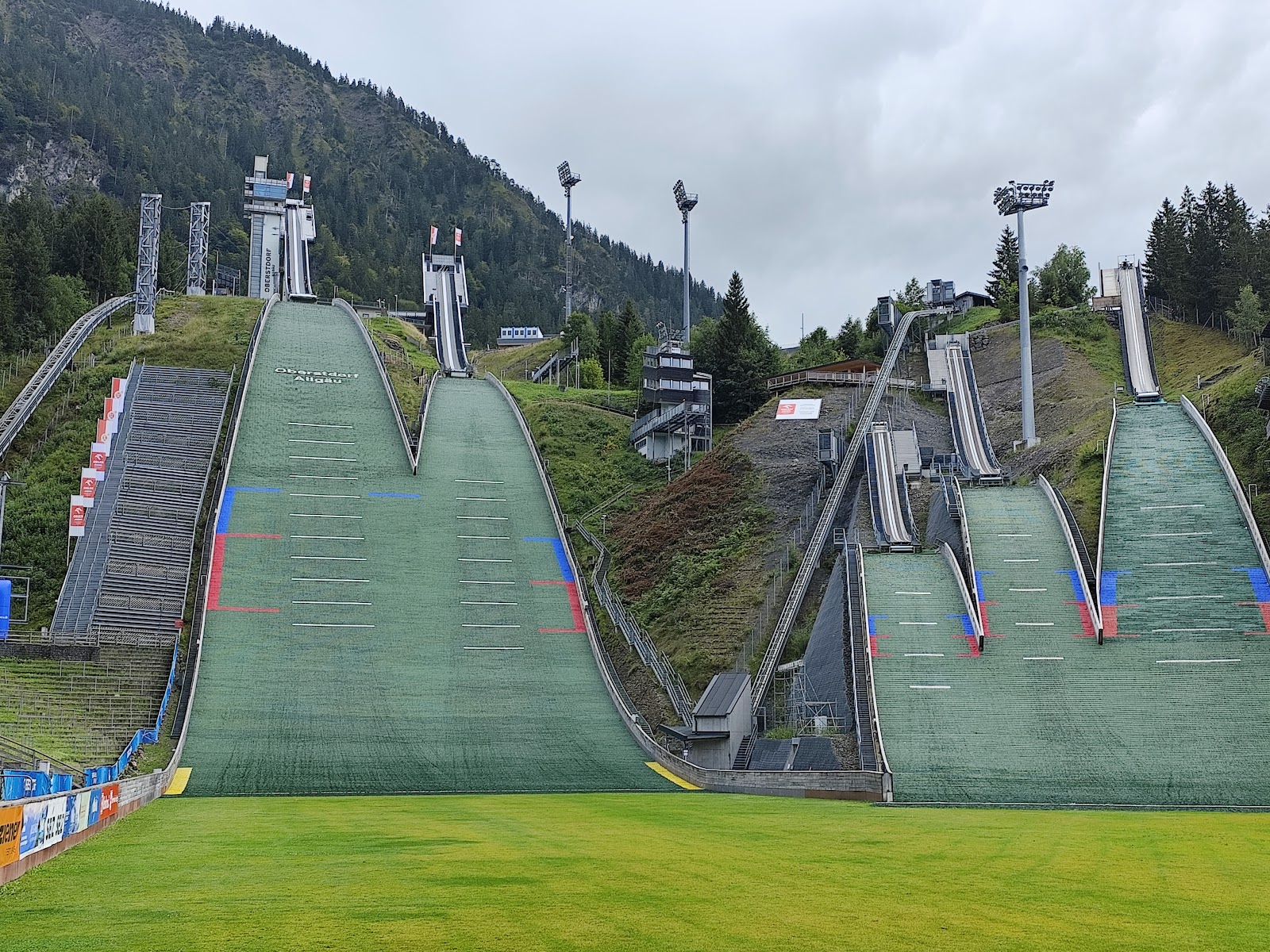
At 18 hectares, it is the largest high-mountain lake in the Allgäu, and in July the water reaches 25°C — warm enough that the three-metre diving tower gets a queue by noon. A raft floats in the middle. The restaurant on the shore has a sun terrace facing the lake and, behind it, the angular silhouette of the Heini-Klopfer ski flying hill.
💛 What travellers fall for
People who come back tend to arrive before 11:00, when the terrace is still half-empty and the water is glassy. The right-shore path to the ski jump takes about twenty minutes and gives you the lake from above on the return. The Strandcafé handles coffee and cake; the restaurant handles Allgäu dishes worth sitting down for.
The story behind Freibergsee
Freibergsee is an ice-age remnant — a lake formed by glacial action in the Allgäu mountains and left behind when the ice retreated. No construction date, no founder, no redesigning architect: the lake simply is what geology made it.
What humans added came gradually: a bathing facility, a café, boat rental, the diving tower. The Heini-Klopfer-Schanze, the ski flying hill just south of the lake, grew into one of the largest in the world and gave the area a second identity alongside swimming. The two — summer lake, winter jump — now share the same access road and the same car park, an unlikely pairing that somehow defines the place.
Good to know
The natural pool runs early June to mid-September, 10:00–18:00, weather-dependent. Entry is €6 (€5 with a guest card). Sun loungers rent for around €5 plus a deposit. The restaurant stays open year-round. Go by bus to the ski flying hill or walk from Renksteg — the full round-trip from Oberstdorf covers about 9 miles with 1,700 feet of climbing. Parts of the shoreline are bird-protection zones and off-limits.
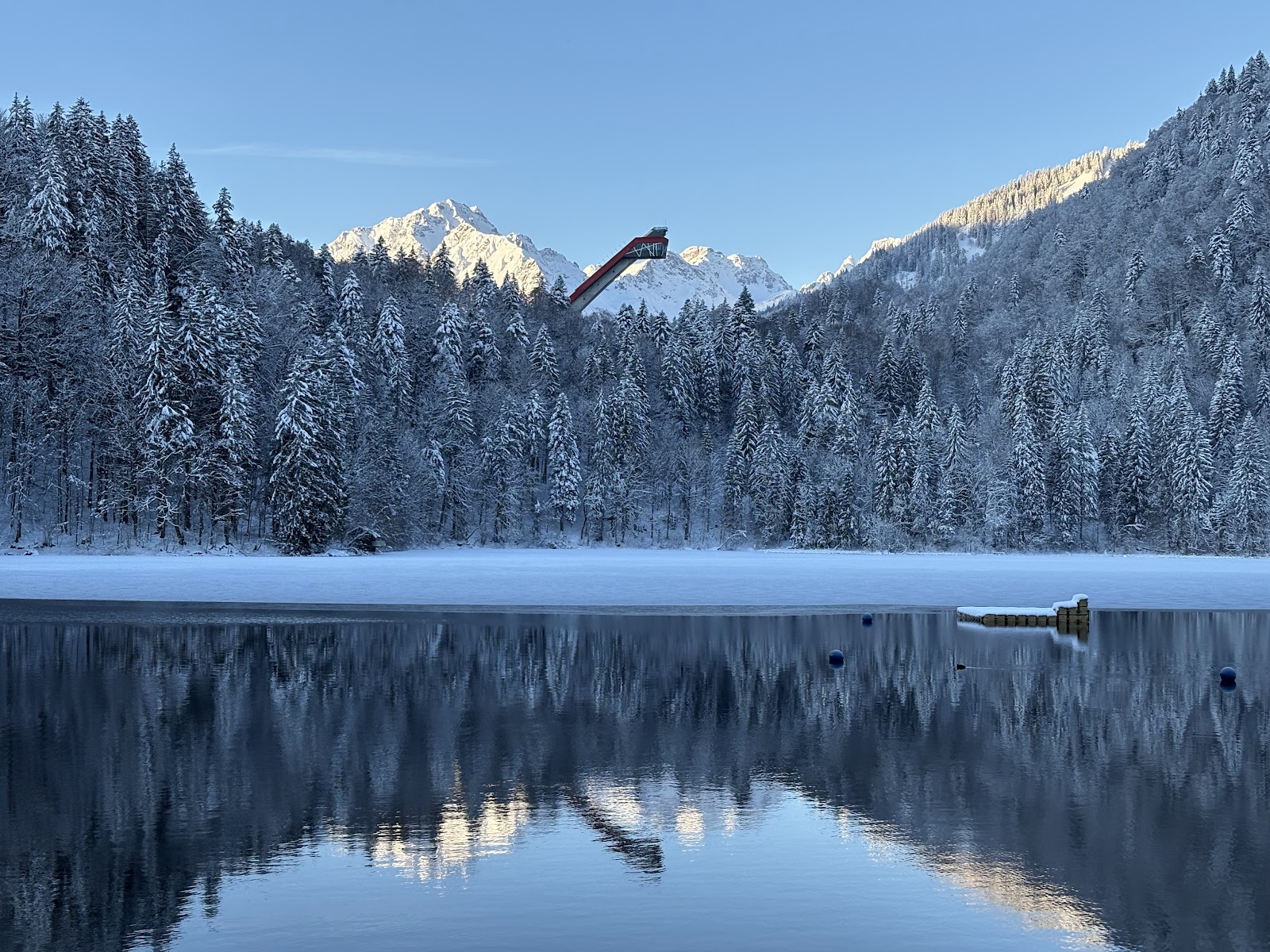
Summer (June–September) brings the warmest water, peaking around 21–25°C in July, though mountain afternoons can cloud over quickly. In winter the lake freezes and sits under snow; the surrounding forest turns in autumn, the mixed beech and fir holding colour well into October.
Where is Freibergsee?
More tickets & tours for Freibergsee
Book directly at the provider
What travellers say about Freibergsee
Really beautiful lake with alps in the background. A lot of nice hiking trails are also nearby which make this place a worthy visit. I visited in April 2022 and the weather was just perfect. Would definitely recommend to anyone who likes lakes and short hikes.
Nice place to visit . Swimming after hiking love it
Nice location with a beautiful view. Worth a hike!
Visited in February. Because of winter it was frozen. It is beautiful but it got merged into surrounding white mountains. I think it will look more beautiful in summer. Parked at Skischanze parking space. It was 7 euro per day.
Generally very nice
More of Oberstdorf
Discover where to stay, what to do and the best deals for your trip.
Explore Oberstdorf →More attractions in Oberstdorf
All of Oberstdorf →
Background adapted from Wikipedia (CC BY-SA) · map data © OpenStreetMap contributors · ratings & place photos via Google · other photos with per-image credit. Ticket links may earn us a commission at no extra cost to you.