
Fortezza Vecchia
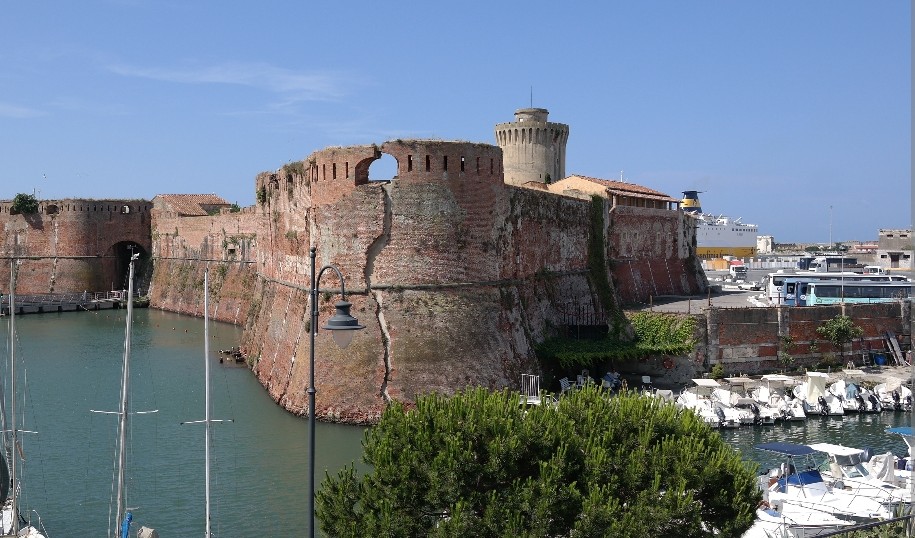
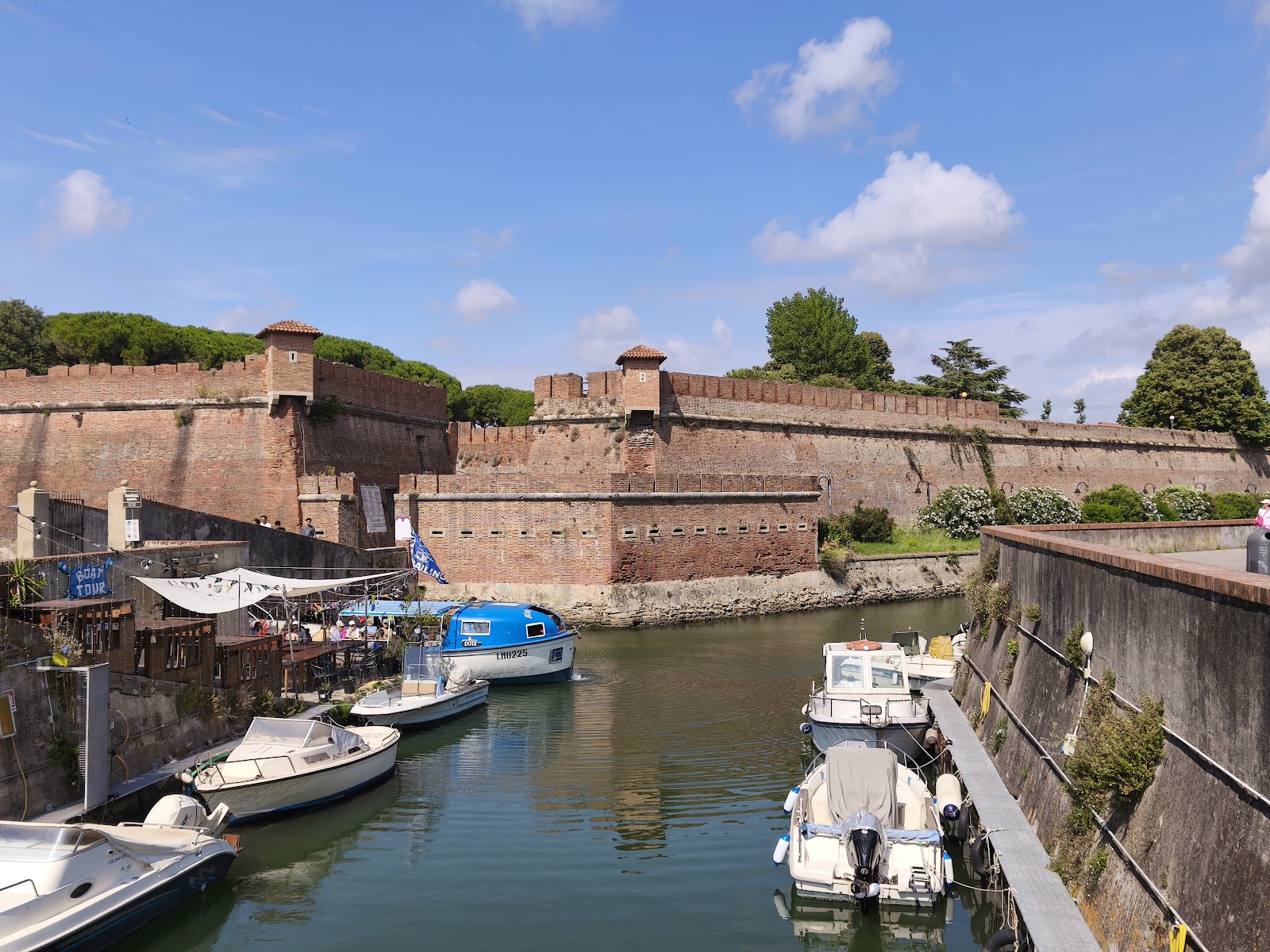
You enter Fortezza Vecchia through an underground passageway that rises into open sky — a threshold that makes the scale of the place land all at once. Built in warm yellowish pietra panchina quarried locally, the fortress sits partly ringed by canals at the edge of Livorno's old Medicean dock, more island than ruin.
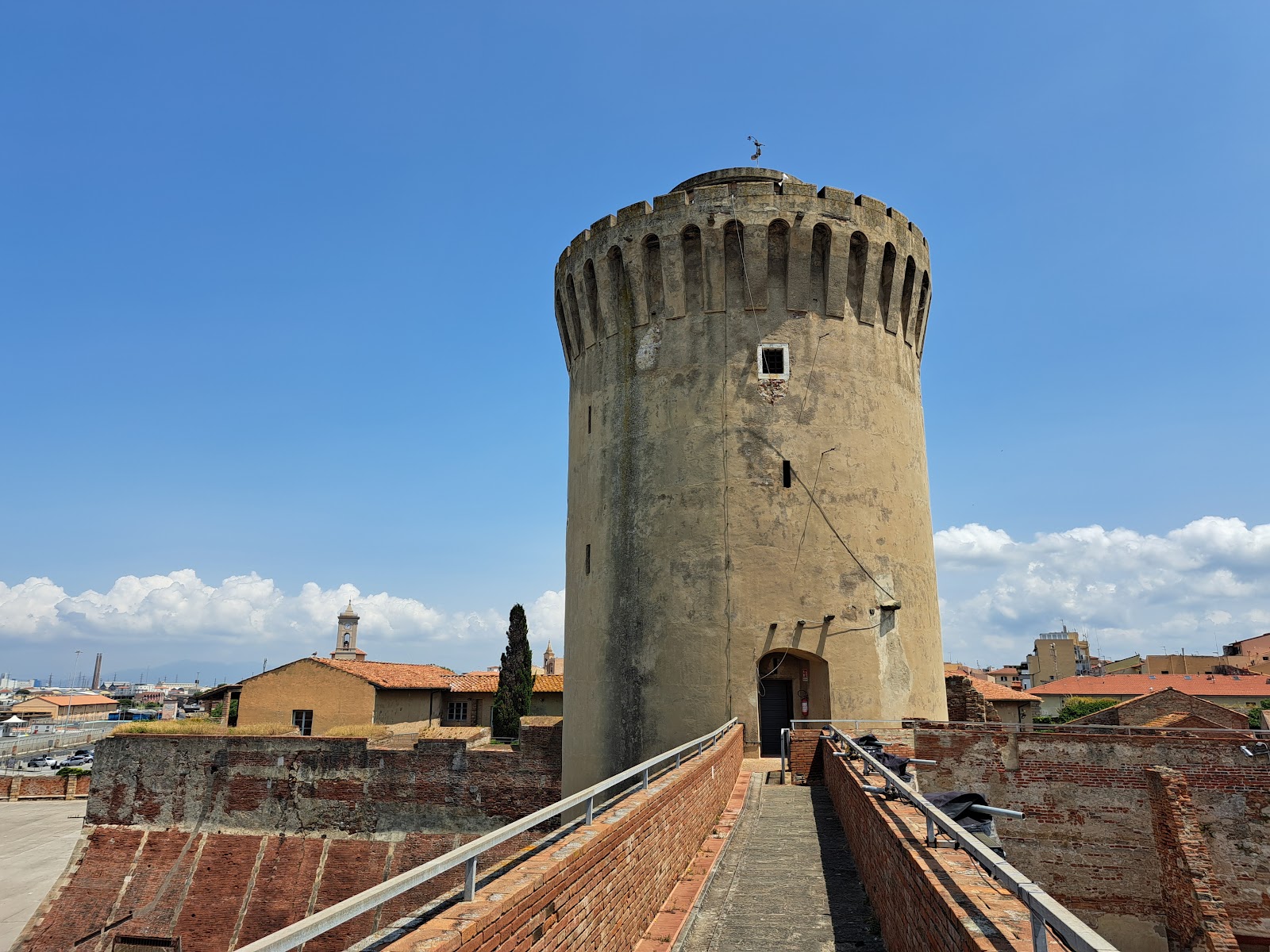
At its centre, the Mastio di Matilde — a circular tower of two concentric cylinders wound by a helicoidal staircase, dating to 1241 — predates the rest of the fortress by nearly three centuries. Everything else was built around it, and that layering is the whole story of the place.
💛 What travellers fall for
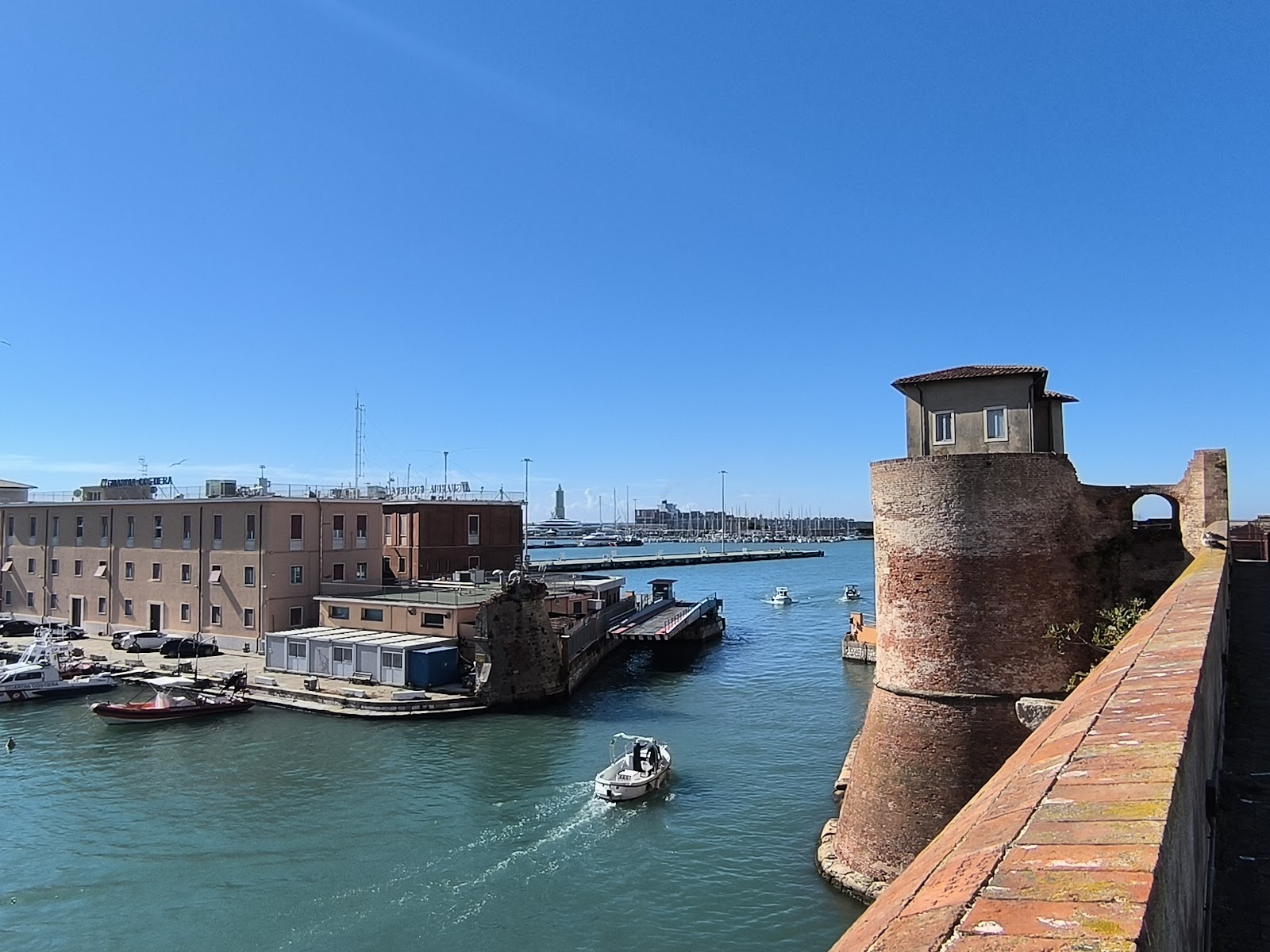
People who come back tend to time it for late afternoon, when the light off the harbour turns the sandstone amber and the port traffic slows. The restaurant inside is a practical choice after walking the full 1,500-metre perimeter. The Canaviglia bastion, facing the sea, is where you want to be at that hour.
The story behind Fortezza Vecchia
The site has been fortified since the eleventh century, when a keep attributed to Countess Matilda of Tuscany — the Mastio di Matilde — was raised here by the Pisans. The Quadratura dei Pisani, a roughly square enclosure, followed around 1377. The fortress as it stands today took shape from 1519, when Antonio da Sangallo the Elder drew up plans under his brother Giuliano's supervision; Alessandro de' Medici saw the project completed by 1534.
The Medici kept building: Cosimo I added a palace between 1559 and 1565, and Francesco I another toward the sea. On 24 April 1589, Christine of Lorraine crossed the drawbridge here to begin her wedding celebrations with Ferdinand I. The city of Livorno was formally proclaimed inside these walls on 19 March 1606. Later centuries brought harder uses — prison, barracks, a transit point for convicts — and World War II left serious damage before restoration returned the fortress to public life.
Good to know
Entry is free, no booking needed. Open Tuesday through Sunday, 9 am to 8 pm. Allow at least an hour to walk the perimeter and climb the Mastio di Matilde. Concerts and special events require a separate ticket. Mid-April to mid-June and early September are the most comfortable periods to visit.
Spring visits (mid-April through early June) offer mild temperatures and good light without summer crowds. In July and August the heat is tempered by sea breezes off the port, though afternoons can reach the low thirties. November is the wettest month; winter is mild but variable.
Where is Fortezza Vecchia?
More tickets & tours for Fortezza Vecchia
Book directly at the provider
What travellers say about Fortezza Vecchia
Pretty big with nice views . Inside there are short text describing what the old fortress used to be like and its history. To cross its faster with bridge at the bottom of the fortress. Be advised the bridge opens only every hour. The bridge allows 30 minutes for people to cross and then the other 30 minutes for boats to cross.
Free admission. Free washrooms on the second level. Basement level is cool to get relief from the hot sun. There is a cafe on the 2nd level too. We saw fluffy baby seagulls in their nest on the 3rd level.
Nice place for walk. Inside is cafe where you can enjoy a drink.
Incredible place with centuries of history. Amazing architecture, and a sense of life in the 1500s. Easily accessible and free to enter and explore on your own.
We really enjoyed visiting this fortress. The cost is free so it is worth a visit when in the city. Situated at the port area it is next to the port. Be careful if using phones to get there as it will have you walk three kilometers to get there. However there is an entrance by the canals in the residential area that can get you there in just a few minutes if you are near the center. There is a nice cafe inside with food and drinks to relax after visiting the fortress.
More of Livorno
Discover where to stay, what to do and the best deals for your trip.
Explore Livorno →More attractions in Livorno
All of Livorno →

Background adapted from Wikipedia (CC BY-SA) · map data © OpenStreetMap contributors · ratings & place photos via Google · other photos with per-image credit. Ticket links may earn us a commission at no extra cost to you.