
Fortezza Medicea di Arezzo
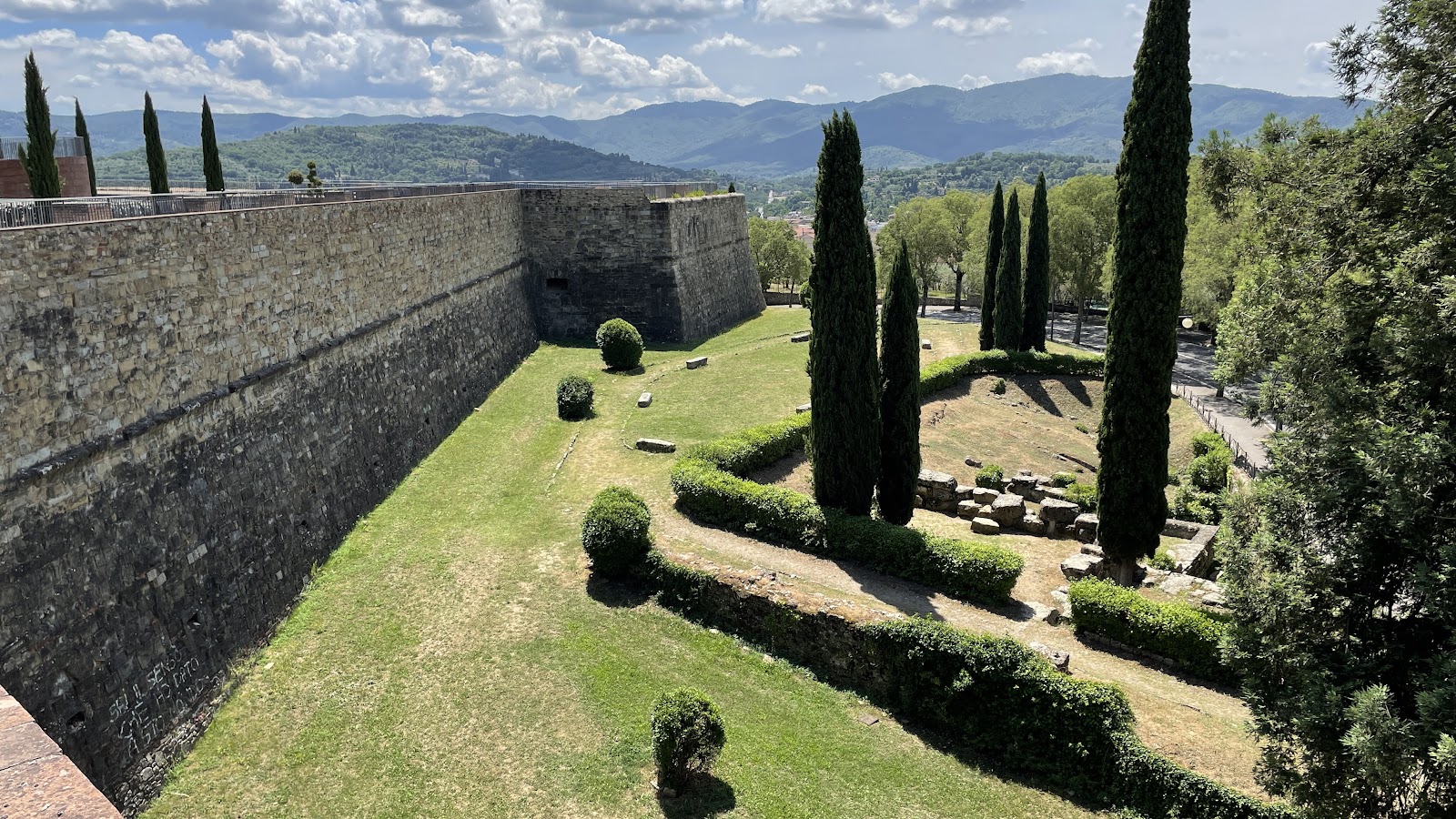
At the top of Colle di San Donato, Arezzo's Medicean fortress sits in a state of deliberate openness — its star-shaped walls, once designed to keep people out, now draw them in for the view alone. From the bastions, the Arno valley spreads below and the Pratomagno ridge fills the horizon.
The fortress is a public garden now, free to enter, and locals treat it accordingly — morning walkers, kids on bikes, the occasional reader on a bastion wall. Beneath the grass, excavations uncovered the remains of an 11th-century church and a Roman-era mosaic, layers the 2016 restoration quietly brought back to light.
💛 What travellers fall for
People who return tend to time it for late afternoon, when the light on the valley is softer and the crowds have thinned. The Belvedere bastion gives the clearest sightline north. Worth a slow loop of all five bastions — each has a slightly different angle on the city below.
The story behind Fortezza Medicea di Arezzo
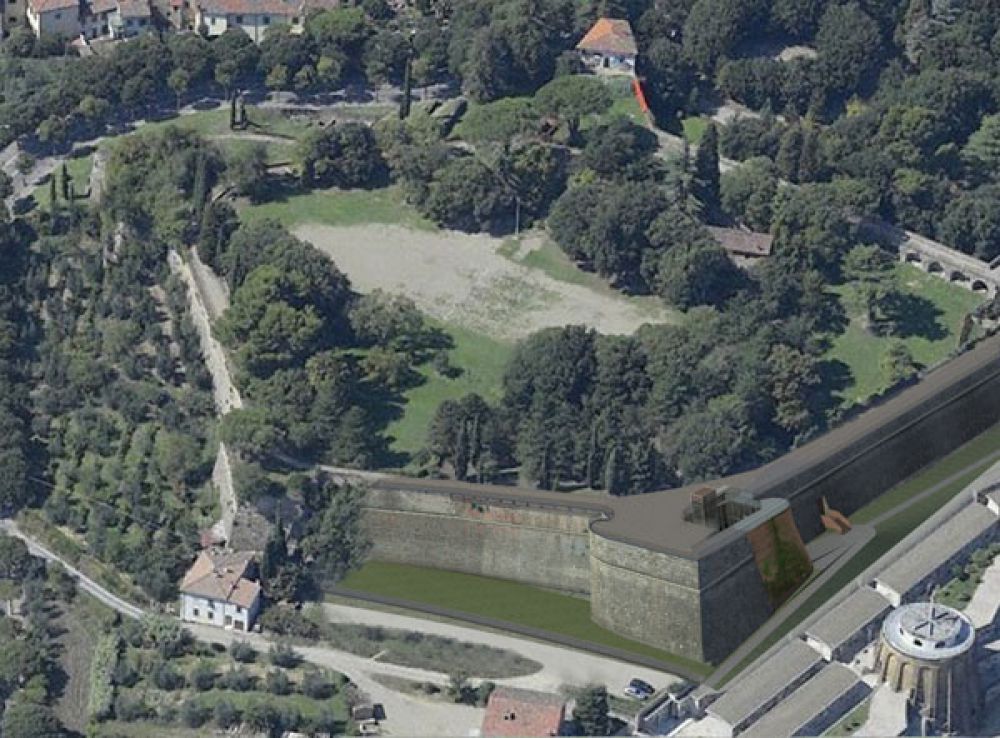
A fortified presence has stood on this hill since the 9th or 10th century. The 14th-century bishop-count Guido Tarlati built a keep here, of which only the Porta Sant'Angelo survives. The current structure was commissioned in the early 16th century to the Florentine architects Giuliano and Antonio da Sangallo, with Antonio da Sangallo the Younger responsible for the distinctive five-bastion star plan; Grand Duke Cosimo I de' Medici oversaw its completion around 1540.
French troops attempted demolition in the early 19th century — the scarring on the western wall is still visible. Count Vittorio Fossombroni purchased the ruin in 1816 and eventually bequeathed it to the city of Arezzo in 1893. Restoration between 1896 and 1904 converted it into a public garden, and a second major restoration completed in 2016 revealed the buried church remains and Roman mosaic.
Good to know
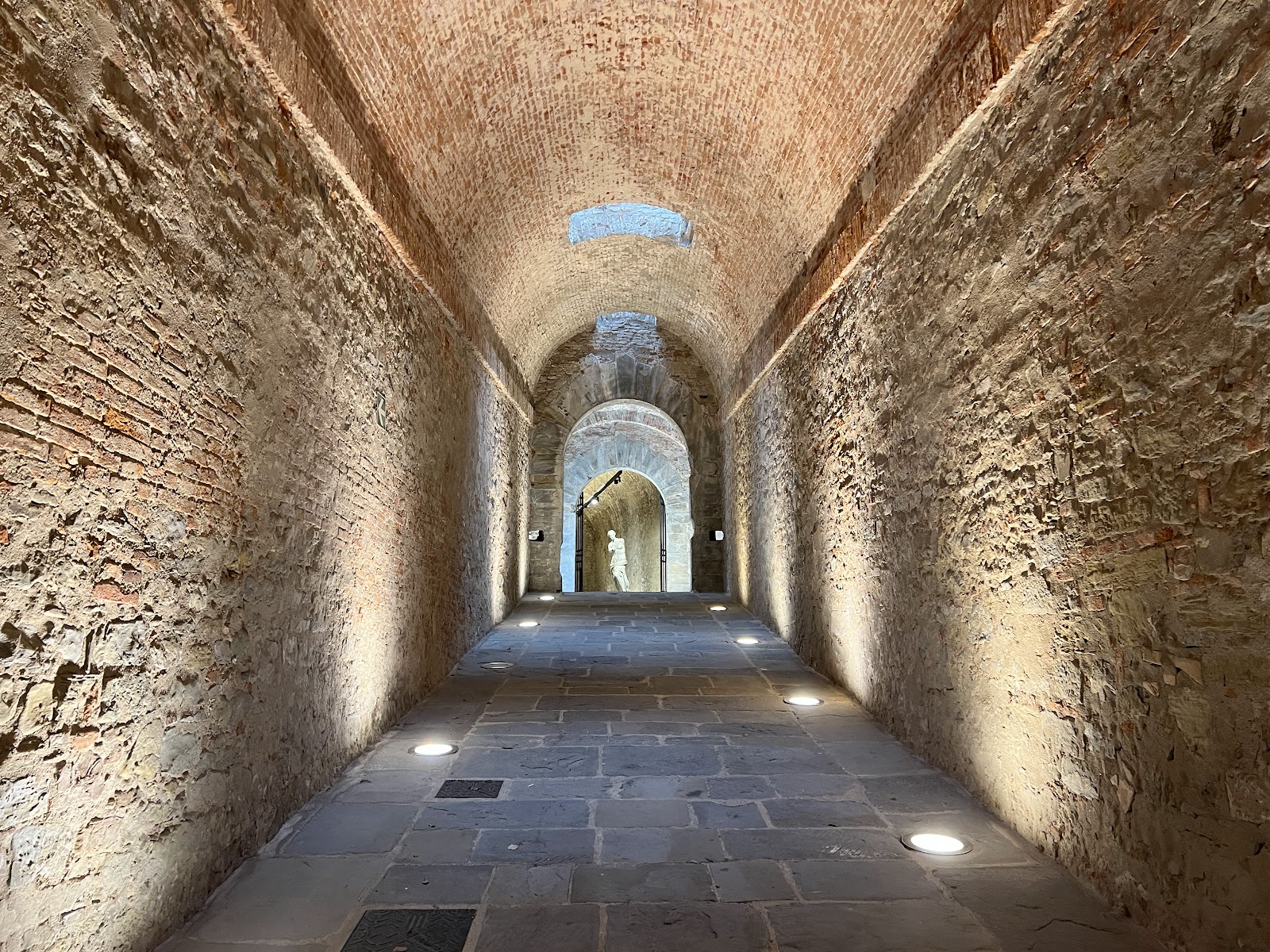
Open daily except Mondays; summer hours run 07:00–20:00, winter 10:30–18:00. Entry to the park is free. The 15-minute walk up from Piazza Grande along Viale Bruno Buozzi is the most direct route. Some interior areas involve uneven terrain and steep stairs.
Spring (April to June) and early autumn (September to October) offer the most comfortable walking conditions, with clear sightlines across the valley. Summer visits are best made in the early morning or around dusk, when the hilltop heat eases and the light is worth the climb.
Where is Fortezza Medicea di Arezzo?
More tickets & tours for Fortezza Medicea di Arezzo
Book directly at the provider
What travellers say about Fortezza Medicea di Arezzo
Excellent and marvelous during Christmas. I traveled on Christmas eve, and this was a fairy land. You can figure out from the photographs. Best for kids. Even has a kids room for drawing on books with supervision. Has some provisions for food with slightly increased cost but it is good. Has a candy shop inside, which we did not visit. You can meet the Santa. It is dreamy.
Fascinating Renaissance fortress of the Medici dynasty. It's in very good condition and the views from the top are spectacular.
Interesting fort at the top of town in Arezzo with good views and some information plaques, check whether it's open as it seems to be closed at times for preparation for major events like Christmas.
Arezzo is a small town and most of the main visitor sites can be seen in a few days. The highlight for me was the Fortezza Medicea. We visited on the Sunday of the first weekend in July to escape the ' antiques fair' held that expensive weekend (of which the vast majority of stalls sold mostly 'tot' ). We mostly had the site to ourselves. The mainer reason for visiting is the glorious views over the town and the hilly countryside. A slow walk around the walls is relaxing and the site is not too expensive to enter. You can walk through the inside of some of the walls to cool down afterwards. The Fortezza is accessed through Parco Il Prato a largish park that was being set up for their summer festival. It was a good (if slightly expensive cafe) to sit and enjoy a cappuccino and after the visit.
A calm and beautiful place especially at almost closing time. They close at 7 (iRL 640pm) and almost no one here. You pay eight euro and walk into the fort. You climb up the stairs and see circumferential 360° views of the Tuscan countryside. They even have concerts here.
More of Arezzo
Discover where to stay, what to do and the best deals for your trip.
Explore Arezzo →More attractions in Arezzo
All of Arezzo →
Background adapted from Wikipedia (CC BY-SA) · map data © OpenStreetMap contributors · ratings & place photos via Google · other photos with per-image credit. Ticket links may earn us a commission at no extra cost to you.