
Fontaine Saint-Michel
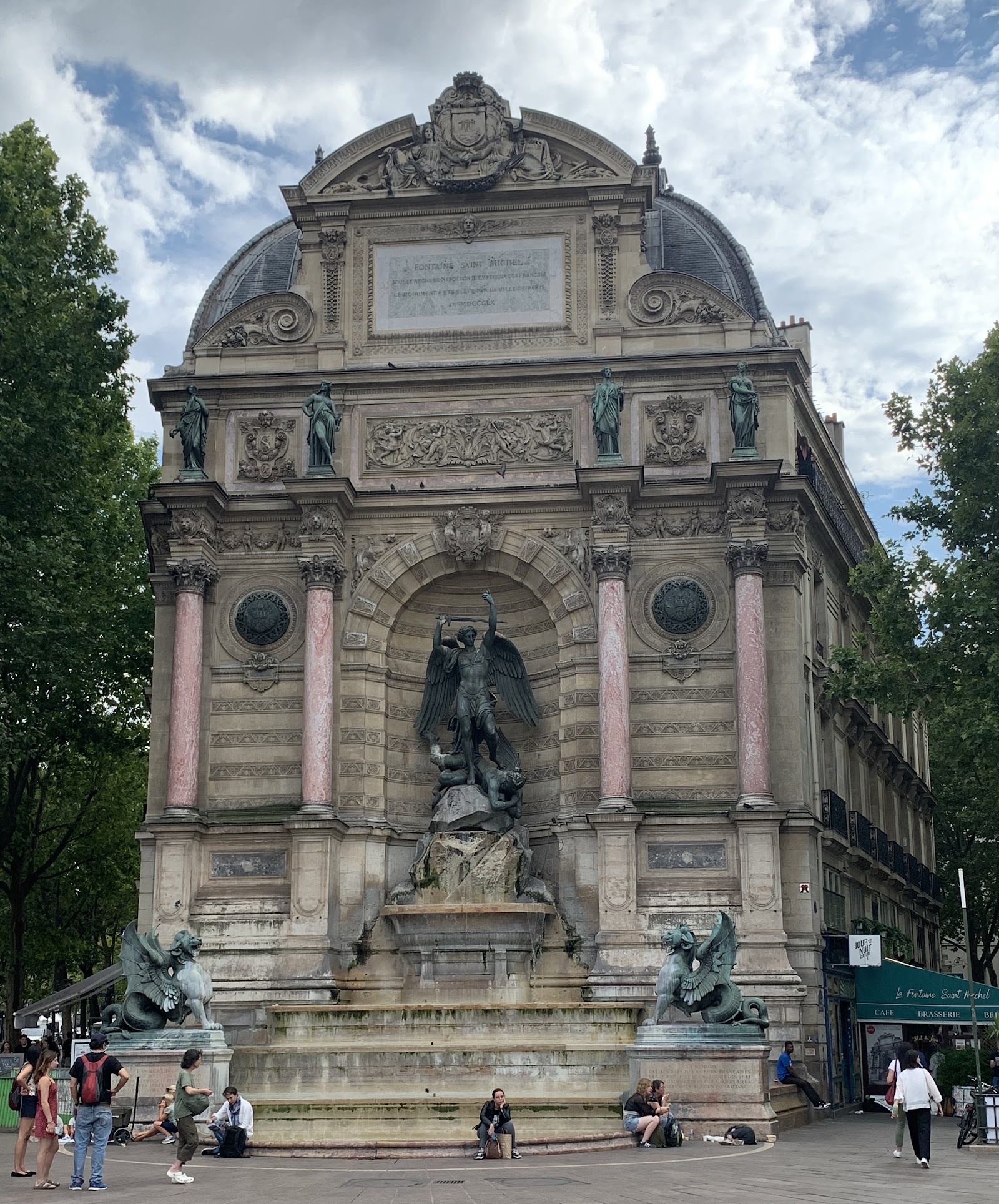
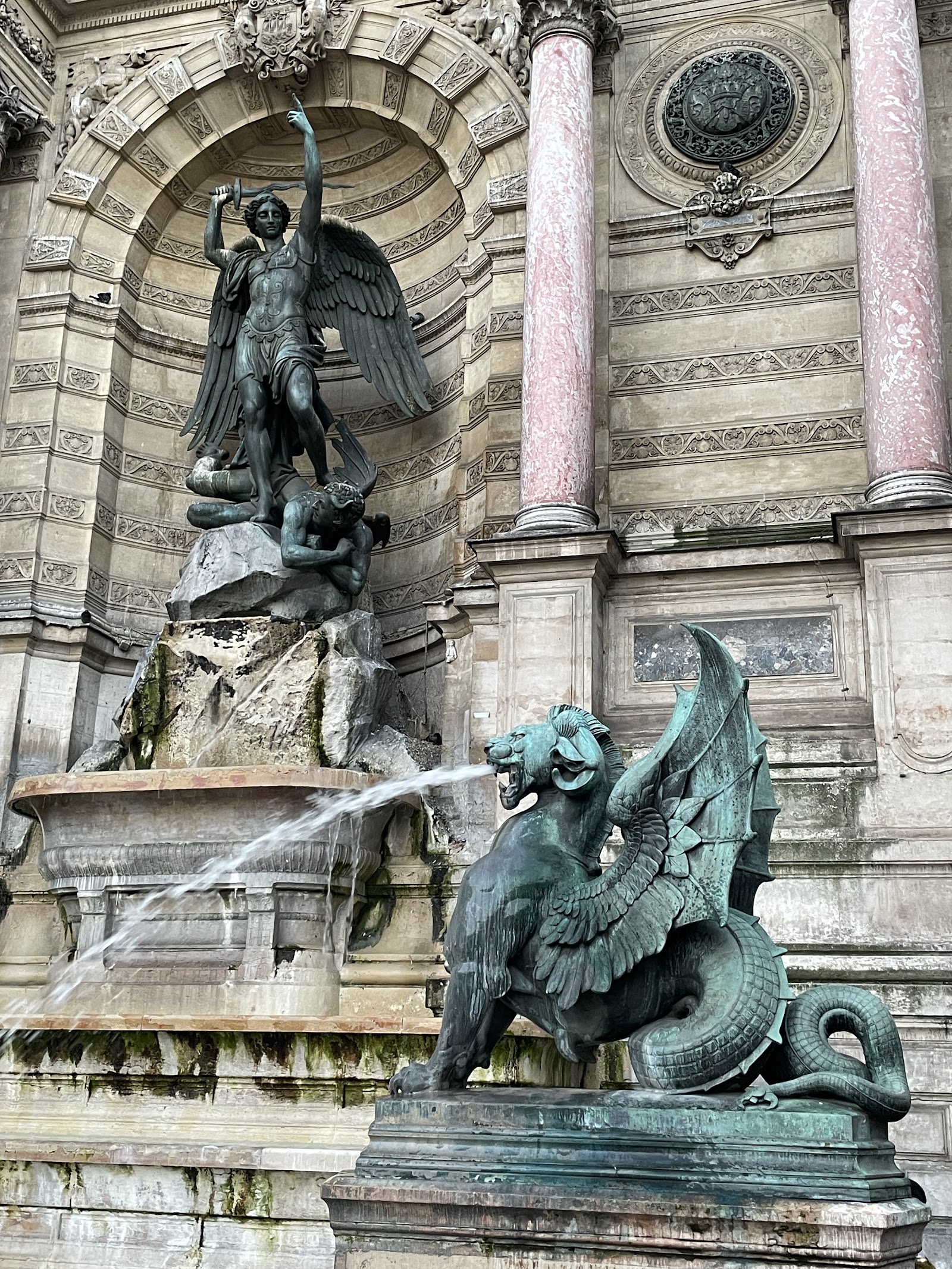
The fountain stops you before you mean to stop. At 26 metres wide and four storeys tall, it fills the entire end wall of the building it was designed to conceal — a piece of architectural sleight of hand that became one of the most recognisable meeting points in Paris. Saint Michael stands at the top, bronze wings spread, foot on the devil's neck, while two dragons below him spout water into the basin.
Nine sculptors worked on it, and you can feel the collaborative ambition: red Languedoc marble columns, green marble, blue Soignies stone, yellow Saint-Yllie stone, all layered like a Roman triumphal arch translated into a Parisian corner.
💛 What travellers fall for
Regulars know to arrive early on weekday mornings, when the square belongs mostly to people on their way somewhere else. The polychrome stonework reads more clearly in morning light, before the crowd gathers at the basin edge. Look for the four cardinal virtue figures flanking the central niche — they're easy to overlook once your eye goes straight to Saint Michael.
The story behind Fontaine Saint-Michel
When Haussmann drove the Boulevard Saint-Michel through the Left Bank in the 1850s, it left an awkwardly large square with an exposed party wall at one end. He gave the problem to architect Gabriel Davioud, who had trained as a sculptor at the École des Beaux-Arts. Davioud's first proposal — a freestanding peace fountain in the centre of the square — was rejected by prefectoral authorities, who wanted the wall covered. The fountain he built instead was inaugurated on 15 August 1860.
Critics at the time were divided: some admired the polychrome Roman ambition; others condemned it as incoherent. The Paris Commune of 1871 damaged it badly enough that Davioud was called back the following year to oversee repairs, during which the imperial arms on the pediment were replaced by those of the City of Paris. It was classified as a monument historique in 1926.
Good to know
Free and open around the clock. Metro Line 4 drops you directly at Saint-Michel; RER B and C stop at Saint-Michel – Notre-Dame. The fountain is an easy pivot point between the Latin Quarter and the Saint-Germain side — Odéon and the Luxembourg Gardens are both a short walk west.
The fountain is exposed and fully outdoors. Paris winters run cold and grey from December through February, but the stonework and bronze hold their colour in flat light. Summer mornings, before the square fills, are the most comfortable time to look at it slowly.
Where is Fontaine Saint-Michel?
Location
- In Paris 6th Arrondissement
- 48.8530, 2.3467
- Open in Google Maps
Rating
4.4 ★ · 7,908 Google reviews
More tickets & tours for Fontaine Saint-Michel
Book directly at the provider
What travellers say about Fontaine Saint-Michel
Fountain etched into building near Seine River and Notre Dame Cathedral. It is a fairly large foundation and quite imposing. Close to main roads so extra caution would be necessary especially if travelling with children.
Visited Fontaine Saint-Michel today during my family’s first trip to Paris as a meeting point for a city tour. Although the fountain is under repair there was a very nice Christmas market there.
Set back aways from the Seine, this magnificent monument certainly catches the eye. Many different pieces make up the whole and it can be worth a number of pictures taken from different angles. Interestingly the fountain is not stand alone, but built onto the end wall of a house.
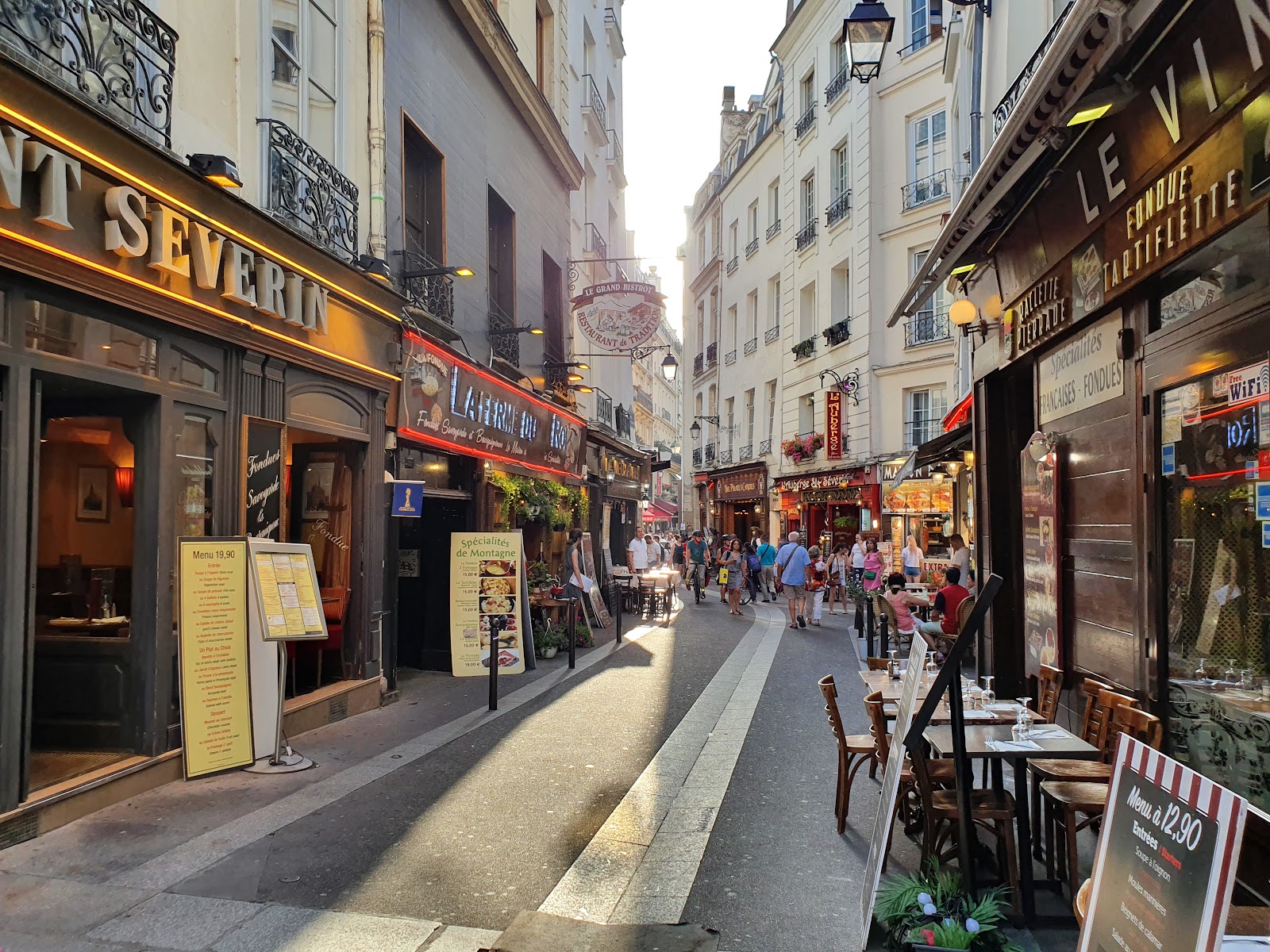
Saint Michel overall is a really nice place to visit in Paris. It has plenty of places to eat from kebabs to French cuisine. There is plenty of places to have beer, wine or a coffee. Great place to wander around.
This is a stunning monumental fountain, located at the beginning of a housing structure, we love how the french cant bare, an empty space, a square and an ornament will fill the space, of course.
More of Paris 6th Arrondissement
Discover where to stay, what to do and the best deals for your trip.
Explore Paris 6th Arrondissement →More attractions in Paris 6th Arrondissement
All of Paris 6th Arrondissement →
Background adapted from Wikipedia (CC BY-SA) · map data © OpenStreetMap contributors · ratings & place photos via Google · other photos with per-image credit. Ticket links may earn us a commission at no extra cost to you.