
EYE Film Museum
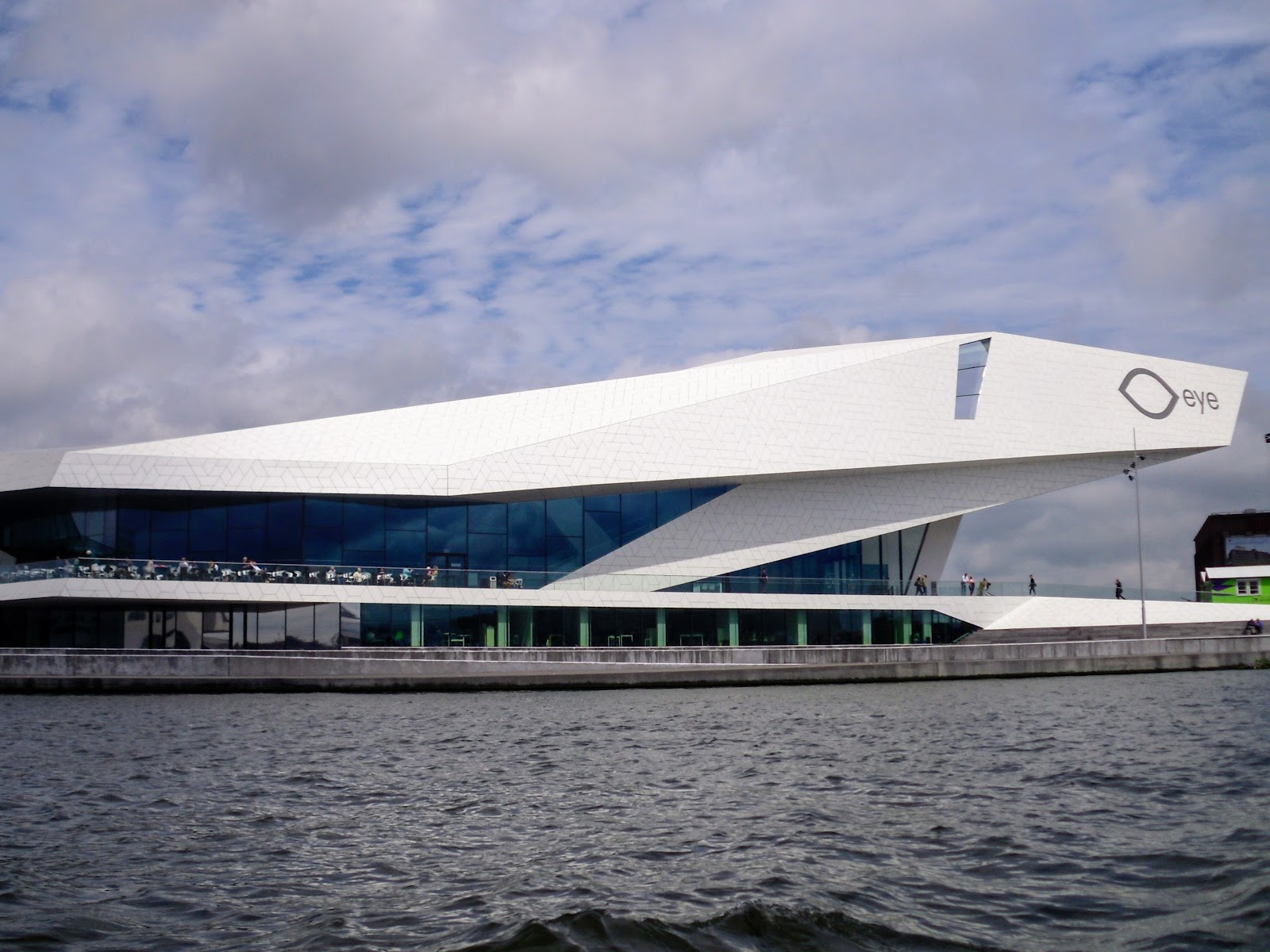
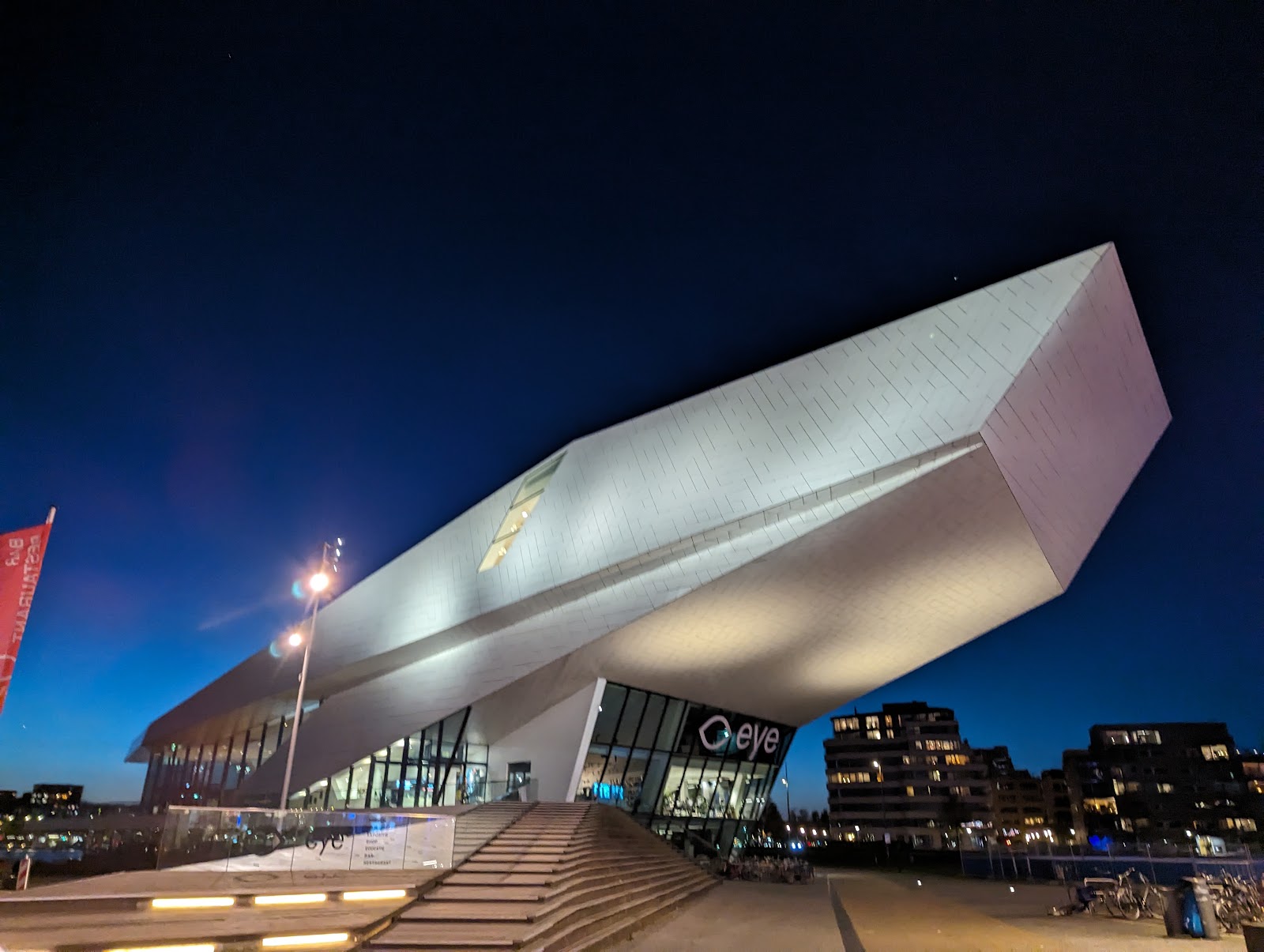
The building announces itself before you've crossed the IJ: an aluminum-clad white form that juts and folds above the riverbank like a frame mid-splice. Designed by Vienna's Delugan Meissl Associated Architects and opened in April 2012, EYE Film Museum sits at the end of a three-minute walk from the free Buiksloterweg ferry — a crossing that takes roughly five minutes and runs around the clock.
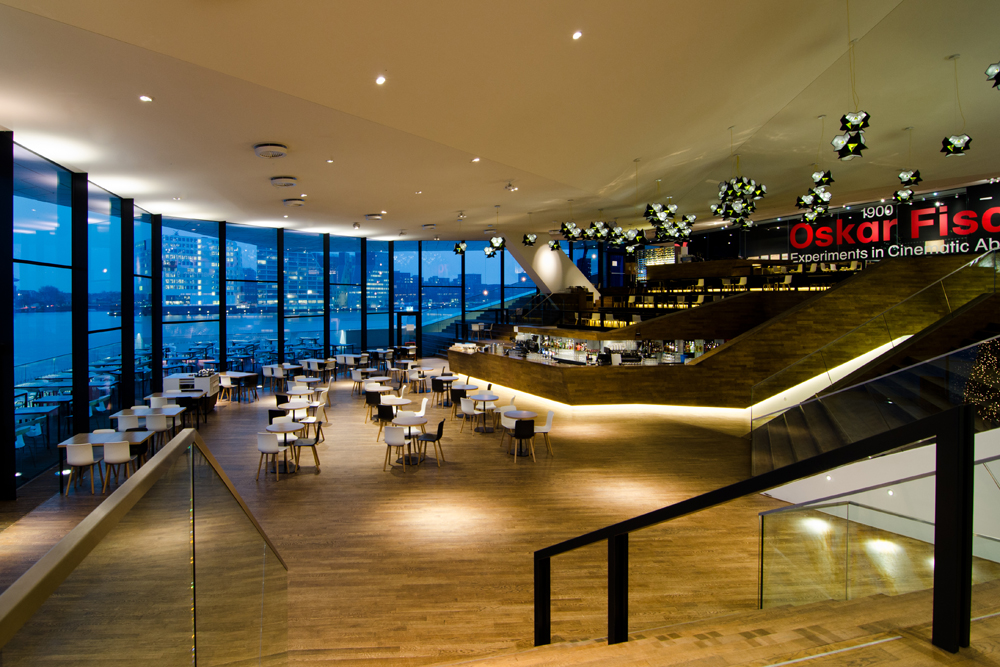
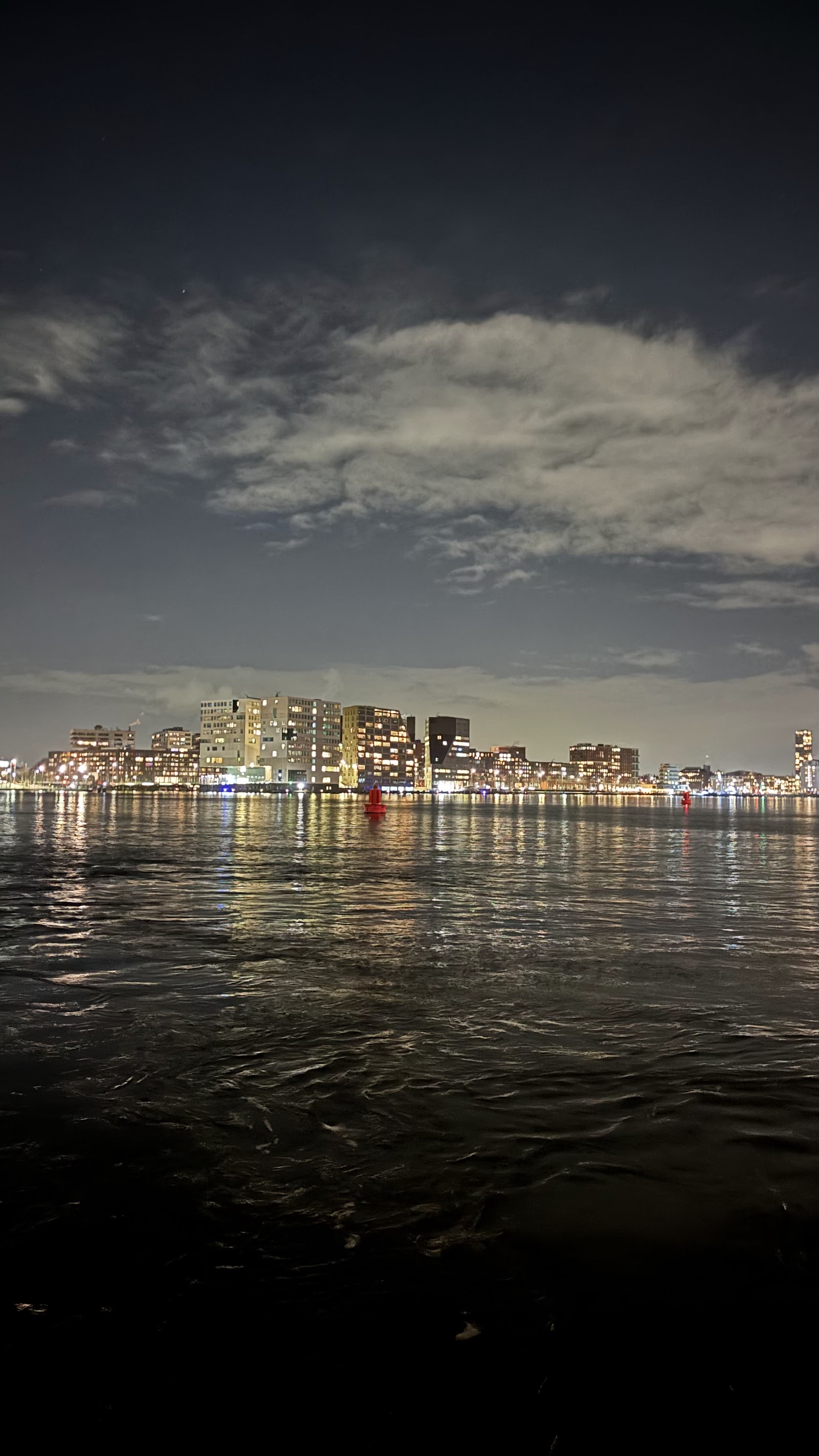
Inside, four cinemas screen everything from new Dutch releases to archive rarities drawn from a collection of more than 60,000 films. The permanent exhibition traces the technical and aesthetic history of cinema, while around four temporary exhibitions rotate through the year. The Arena — a wide stepped space at river level — holds the café-restaurant, its windows framing an uninterrupted view of the water and the city skyline opposite.
💛 What travellers fall for
Regulars tend to arrive by the late-afternoon ferry, catch the permanent collection before 19:00, then stay on for an evening screening in Cinema 4 — worth seeking out for its art-deco wall decoration, which was inspired by a former Parisian cinema that once stood in Amsterdam. Card payment only; leave the cash behind.
The story behind EYE Film Museum
The museum's origins are less glamorous than its current home suggests. Three men — Piet Meerburg, a former wartime resistance fighter and founder of the Kriterion cinema; film producer Paul Kijzer; and David van Staveren, who later chaired the Dutch film rating system — established the Nederlands Historisch Film Archief in 1946. Jan de Vaal, described by those who knew him as a fanatical collector, took over as director in 1948 and shaped the archive's character for years.
The organisation eventually became the Nederlands Filmmuseum, spent decades housed in the Vondelparkpaviljoen villa, and in 2009 merged with three other Dutch film bodies. The decision to build on the north bank of the IJ — then still largely industrial — proved prescient. The Eye Collection Centre followed in 2016, purpose-built for archival storage.
Good to know
Take the free F3 ferry from Centraal Station's north side — it runs every few minutes, 24 hours a day. Exhibitions close at 19:00, but the box office stays open until 22:00 on weekdays and 23:00 on Saturdays. Entry for under-18s is free. No cash accepted.
Where is EYE Film Museum?
Location
- In Amsterdam-Noord
- 52.3842, 4.9006
- Open in Google Maps
Rating
4.4 ★ · 11,235 Google reviews
More tickets & tours for EYE Film Museum
Book directly at the provider
What travellers say about EYE Film Museum
Visited this museum a couple of years ago. Overall, it was a disappointment, as I was very much looking forward to this visit, being a film buff. The staff at the entrance was rather unpleasant and snobbish. Not a good representation of a cultural institution. The museum itself felt cold and soulless. There was a room with all sorts of cameras, and another room that hosted some kind of exhibition that overall felt exhausting and not enjoyable. In the hallway, there were some movie posters that I found interesting to check out. The only really enjoyable part was the steps next to the café where one could sit, listen to different audio presentations on different movie topics, and just absorb the beautiful view of the outside. I got into the museum with I Amsterdam card, so that is also a part of why I give this museum the second star. If I actually paid the entry ticket (which could have perfectly happen, as this museum was on my must-see list while visiting Amsterdam), then this would have been a one-star review, definitely not worth the money. If you are short on time during your Amsterdam visit, simply skip this museum, you won't miss much.
A very good experience. The exhibition hall was spacious, bright, and had many interactive exhibits. There was a particularly kind elderly staff member who kept explaining things to us. The restaurant had a fantastic view and was reasonably priced.
"The Eye Film Museum building is just amazing! The architecture is so futuristic and white, looks like something from the future. I really loved sitting there near the river, the view is everything and very relaxing. Honestly even if you dont go inside for movies, just seeing the building and the area around it is worth it. One of the most beautiful spots in Amsterdam for sure, highly recommend for the vibes and photos!"
EYE Filmmuseum in Amsterdam feels designed to be a landmark rather than just a museum. The building itself stands out with its sharp angles, fractured rooflines, and dynamic geometry. The white cladding and sculptural form give it a futuristic presence along the waterfront. From certain angles it almost feels like a ship or a frozen wave, and visually it works very well as an urban icon. My visit was brief and more exploratory. I stopped for coffee and enjoyed the view across the water, which is honestly one of the strongest aspects of the experience. The setting is beautiful and the architecture definitely achieves its goal as a visual statement. However, when it comes to the café and bar, there is room for improvement. The coffee could be better in quality, and the food selection feels like it deserves more attention. With such a strong architectural presence, the hospitality experience should rise to the same level. The building is iconic. The café just needs to catch up.
Really cool spot to check out and catch a movie. We went for a night time showing and caught the sunset before our movie. Then, on the way out at 10:45pm, the restaurant/deck was lit nicely and had some music playing (maybe a dj?). Not super busy but lively and kind staff as well. I’d like to go back to see the exhibits soon!
More of Amsterdam-Noord
Discover where to stay, what to do and the best deals for your trip.
Explore Amsterdam-Noord →More attractions in Amsterdam-Noord
All of Amsterdam-Noord →

Background adapted from Wikipedia (CC BY-SA) · map data © OpenStreetMap contributors · ratings & place photos via Google · other photos with per-image credit. Ticket links may earn us a commission at no extra cost to you.