
Estepona Castle (Castillo de San Luis)
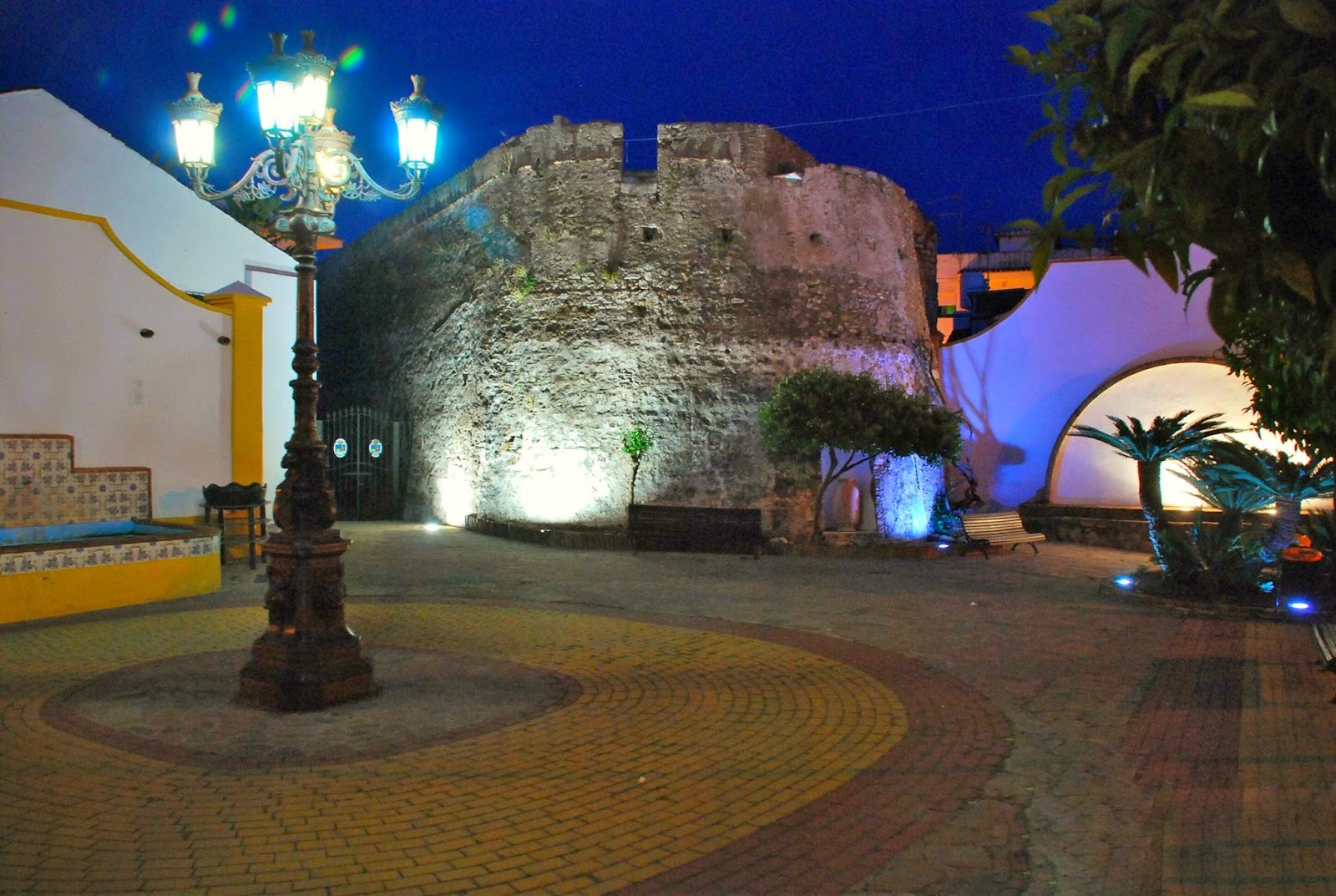
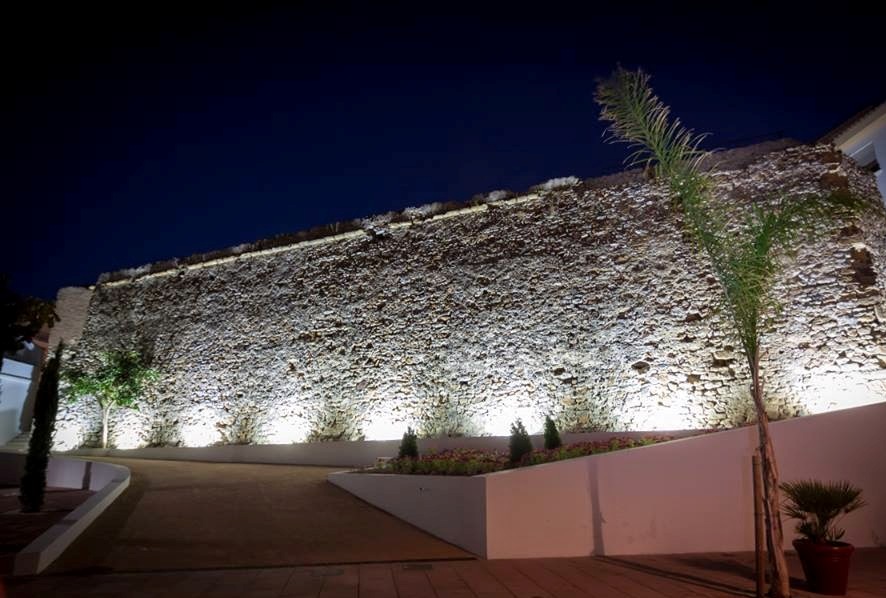
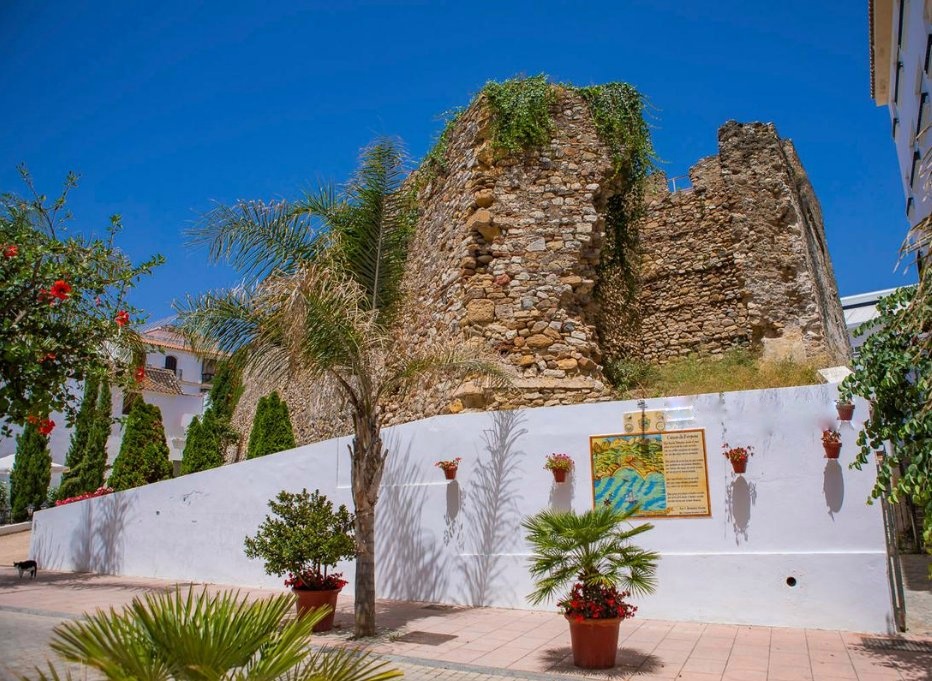
The front wall of the Castillo de San Luis only became visible from Calle Castillo in 2014, when a row of town houses built against it was finally cleared away. Stand there now and you can read the layers directly in the stonework — the pentagonal 16th-century fortress designed by Juan Ambrosio Malgrá, the double bulwark added to face down naval threats, the repaired rear wall that collapsed in the 1755 Lisbon earthquake and was rebuilt thicker than before.
Since the Town Hall completed its restoration and opened the site as a free municipal exhibition centre, a modern walkway threads through the remains, bringing you close enough to trace the casemates in two of the three bastions. Inside, the finds range from archaeological fragments to cannons and nautical instruments — a quiet record of the centuries when this fortress was the reason Estepona existed at all.
💛 What travellers fall for
People who come back tend to walk the little path through the semi-tropical garden between the market and the castle wall, then drop down the steps into Calle Castillo to see the other face of it. The watchtower view — more than 15 kilometres of coastline on a clear day — is worth the climb, and the market floor with its exposed Moorish watchtower foundations is directly next door.
The story behind Estepona Castle (Castillo de San Luis)
The site has been a defensive position since Moorish times, when a fortification called Estebbuna stood here. After Enrique IV seized the town in 1457, the Catholic Monarchs Ferdinand and Isabella ordered a new castle to replace it, and the engineer Juan Ambrosio Malgrá — Maestro Mayor de obras del Reino de Granada — designed the pentagonal structure whose walls still stand over two metres thick. A double V-shaped bulwark was added on the seaward side during the 16th century, likely before Felipe II's broader coastal defence programme of 1575.
The 1755 Lisbon earthquake brought down the rear cannon wall, which was rebuilt with greater strength. French forces demolished parts of the fortification in 1812, and for nearly a century after that the ruins were largely left alone. The Town Hall's eventual restoration project — acquiring adjacent properties, clearing vegetation, stabilising the structures, and excavating the ground — returned the castle to public life. By December 2025, the site had welcomed more than 34,500 visitors in its first year as an exhibition centre.
Good to know
Entry is free. The castle sits in the monumental centre, about 150 metres from Plaza de las Flores and a couple of minutes' walk from the Clock Tower and the Church of the Remedies. Wear shoes with grip — the ground inside is uneven. Check current opening hours with the Town Hall before visiting, as they weren't confirmed at time of writing.
Spring, from April into June, gives you mild temperatures in the high teens to mid-twenties Celsius and little rain — the most comfortable window for walking the uneven ground and climbing to the tower view. September and October are similarly pleasant. July and August are reliably hot, regularly touching 30°C, which makes the shaded interior sections welcome but the exposed walkways intense at midday.
Where is Estepona Castle (Castillo de San Luis)?
More tickets & tours for Estepona Castle (Castillo de San Luis)
Book directly at the provider
What travellers say about Estepona Castle (Castillo de San Luis)
I love how other countries make everything possible to preserve their history by restoring important locations.I really enjoyed visiting these remains and they made a great job preserving it. It's really small, from what i understood it was just the battery part of the castle, so it's pretty small, it will take you just a few minutes to see it all, but the most beautiful part is that they have alot of items on display old since the 1700s.You can find jeweleries, ceramic figures, different objects that are part of their history.It's very interesting. the entrance fee is 1€ , you can pay cash or card, and is very easy to find it, being just a couple of streets away from Plaza de Las Flores, in the old town, in a wonderful area that seems out of a fairytale.
The small interior with several display cases containing historical artefacts is worth seeing, but do not expect a large archaeological collection. The interesting exhibition of walls and glass floors is noteworthy. Tickets are very affordable.
No longer free but only €1 entry fee which is worth it. Small but interesting. A visit won't take longer than 1/2 hour
small castle but the renovation is quite nice and there’s great history- open M-F 10-2 and 5-8pm. https://ayuntamiento.estepona.es/noticia/18458-el-ayuntamiento-abre-al-publico-el-castillo-de-san-luis-como-centro-museistico-tras-las-obras-de-recuperacion-y-conservacion.html
They have done a great job opening up this small castle, and some interesting things on display. Only €1 entry.
More of Estepona
Discover where to stay, what to do and the best deals for your trip.
Explore Estepona →More attractions in Estepona
All of Estepona →


Background adapted from Wikipedia (CC BY-SA) · map data © OpenStreetMap contributors · ratings & place photos via Google · other photos with per-image credit. Ticket links may earn us a commission at no extra cost to you.