
Estepona Bullring (Plaza de Toros)
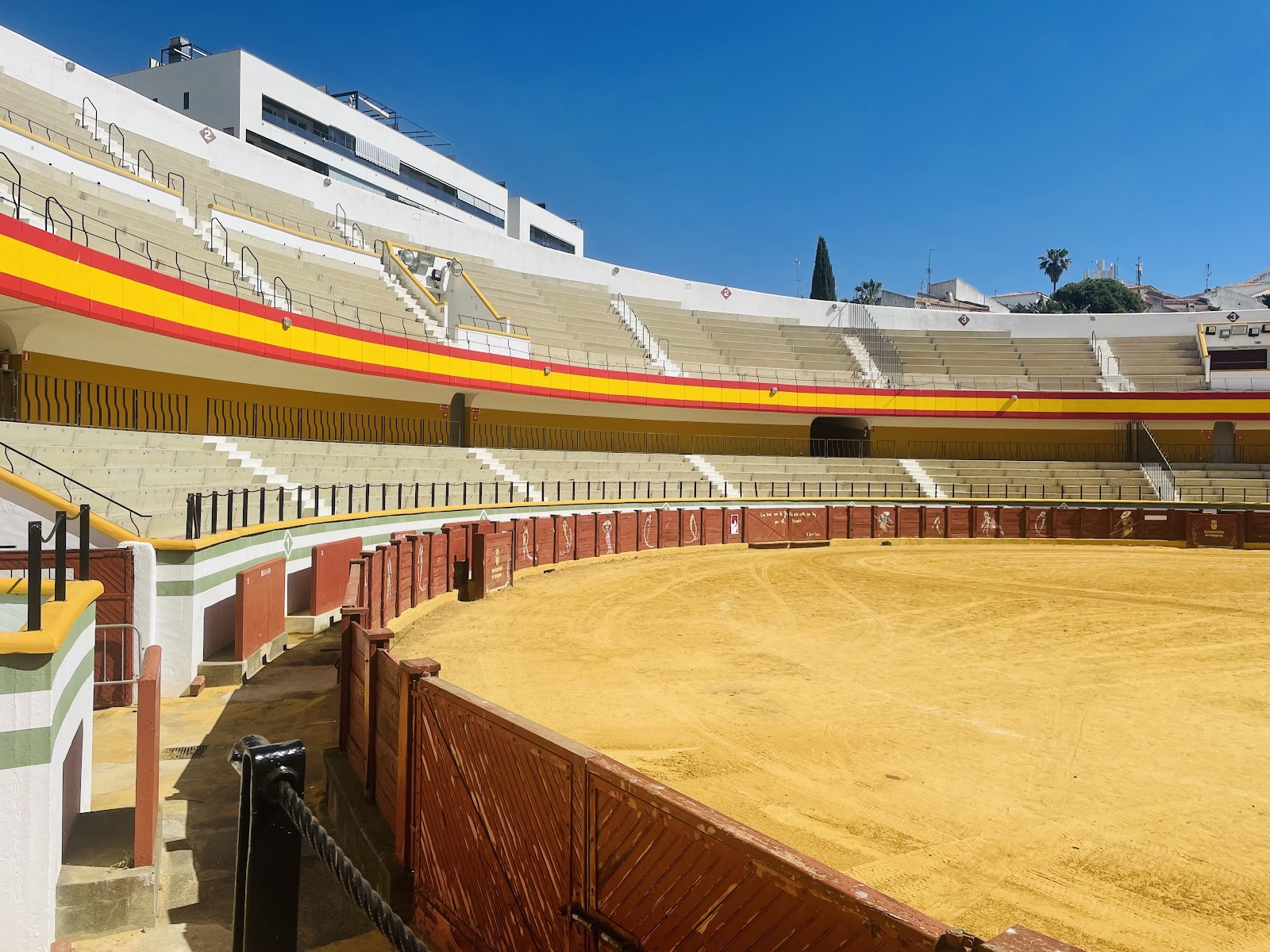
Most bullrings are round. Estepona's is not. Completed in 1972 to a design by architect Juan Mora Urbano, it is the first asymmetrical bullring ever built — its elliptical stands tilted and shaped so that the maximum number of seats fall in the shade, a practical ambition that produced something genuinely strange and striking in concrete.
The arena holds over 8,000 people and, when bullfights aren't filling it, hosts concerts, cultural events and sports. On quieter days, you come for the four small museums tucked inside: bullfighting, ethnography, palaeontology and cinema history, all free to enter.
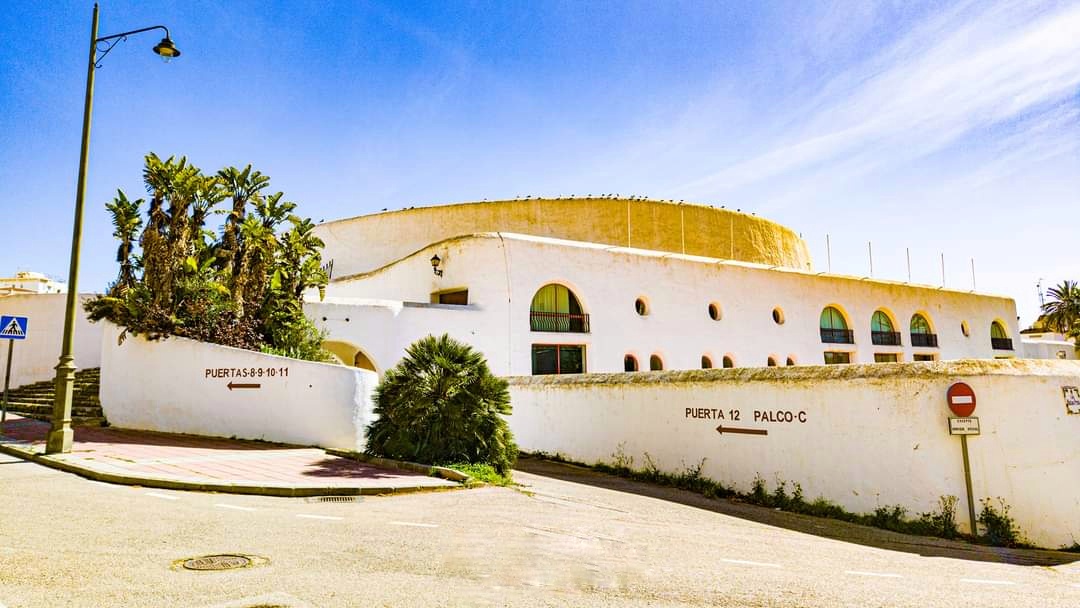
💛 What travellers fall for
People who come back tend to linger in the Palaeontology Museum longer than they planned — over 2,000 fossils from 600 species is a serious collection for a building most visitors arrive at expecting only capes and sand. The Bullfighting Museum's donated suits, given by some of Spain's top names, are also worth the detour.
The story behind Estepona Bullring (Plaza de Toros)
Juan Mora Urbano designed the plaza in the early 1970s with a single governing idea: shade. By breaking from the traditional circular form and working with an asymmetrical ellipse, he could orient the stands to keep spectators out of the Andalusian sun for as long as possible. The exterior ramps allow access to the upper terraces without steps — another considered detail.
It opened in 1972, with the celebrated Ronda bullfighter Antonio Ordoñez as its first entrepreneur and promoter. Over the following decades the building's role broadened well beyond corridas, and the municipal museums now housed inside it give the concrete shell a second, quieter life.

Good to know
Free admission to all four museums, open Tuesday to Sunday from 09:00 to 16:00, closed Mondays. The bullring sits close to the marina, so it pairs naturally with a walk along the port. Bullfights take place during the Estepona Festival in July; tickets carry a handling fee through Servitoro.
The bullring's museums are indoors, so rain is no obstacle. If you're visiting for an outdoor event in the arena itself, July and August are reliably dry but hot; April through June and September through October offer more comfortable temperatures for sitting in open stands.
Where is Estepona Bullring (Plaza de Toros)?
More tickets & tours for Estepona Bullring (Plaza de Toros)
Book directly at the provider
What travellers say about Estepona Bullring (Plaza de Toros)
Its a bullring, its huge, there's a museum attached which was very interesting, with insights to rural life through the years
This bullring is not very big, but it is very nice. Admission to the tour is free and inside the arena there is a museum of the history of Estepona and prehistory. I recommend visiting.
Inside this building you can find a museum with 5 sections. Entry is free but a donation is well received.
Needs painting very scruffy. Shame as it is unique in design and well worth a visit. The show we saw was fabulous. Although I really do not appreciate the taking off of the lids of our water bottles. Really?
nice bullfighting museum with weekly Sunday flea market. We picked up an expresso cup set for just €3 and resisted the urge to buy a bullfighter poster to annoy vegan house guests.
More of Estepona
Discover where to stay, what to do and the best deals for your trip.
Explore Estepona →More attractions in Estepona
All of Estepona →


Background adapted from Wikipedia (CC BY-SA) · map data © OpenStreetMap contributors · ratings & place photos via Google · other photos with per-image credit. Ticket links may earn us a commission at no extra cost to you.