
Église Saint-Étienne-du-Mont
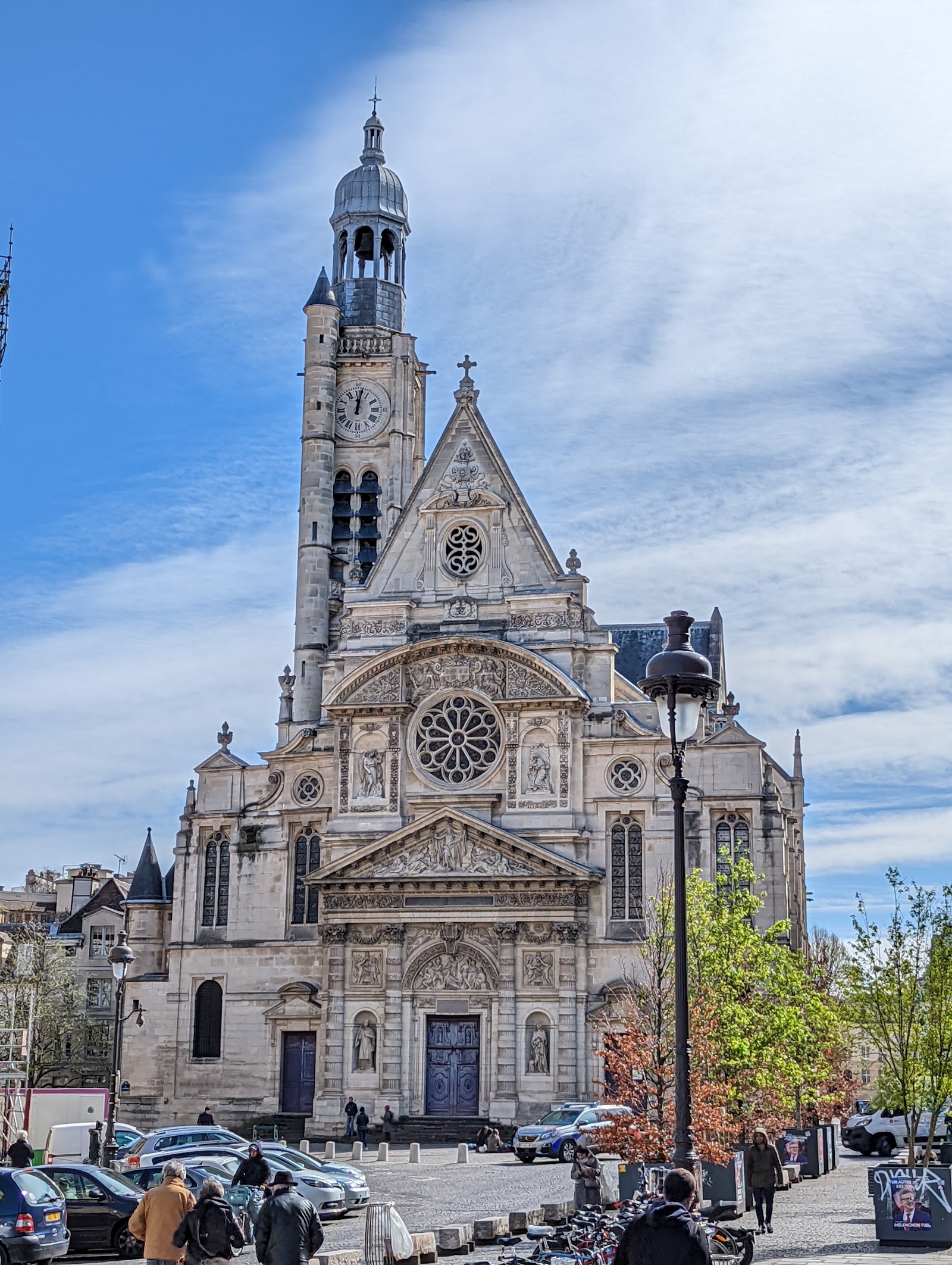
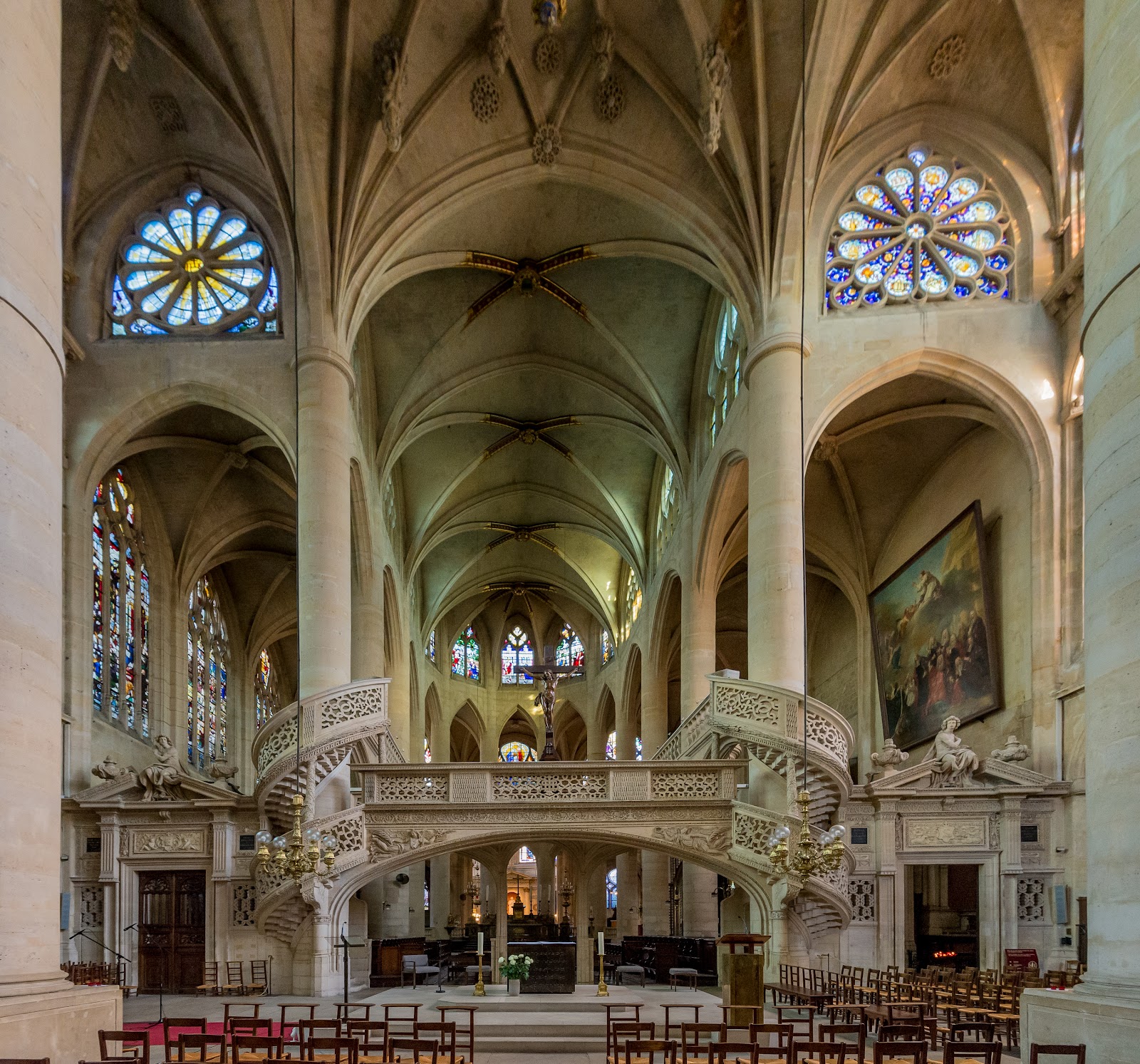
Stand at the top of the rue de la Montagne-Sainte-Geneviève and the façade of Saint-Étienne-du-Mont stops you — three stacked pediments, Gothic towers, and a Renaissance portal all pressing against each other in a way that shouldn't work but does. Inside, the nave opens wide and pale, and your eye goes immediately to the rood screen: a carved stone bridge arching over the central aisle, its twin spiral staircases curling upward like something from a dream of the sixteenth century. It is the only jubé left standing in Paris.
The church sits a short walk from the Panthéon, but few of the crowds from that monument seem to find their way here. On a Tuesday afternoon, you can have the stained glass almost to yourself.
💛 What travellers fall for
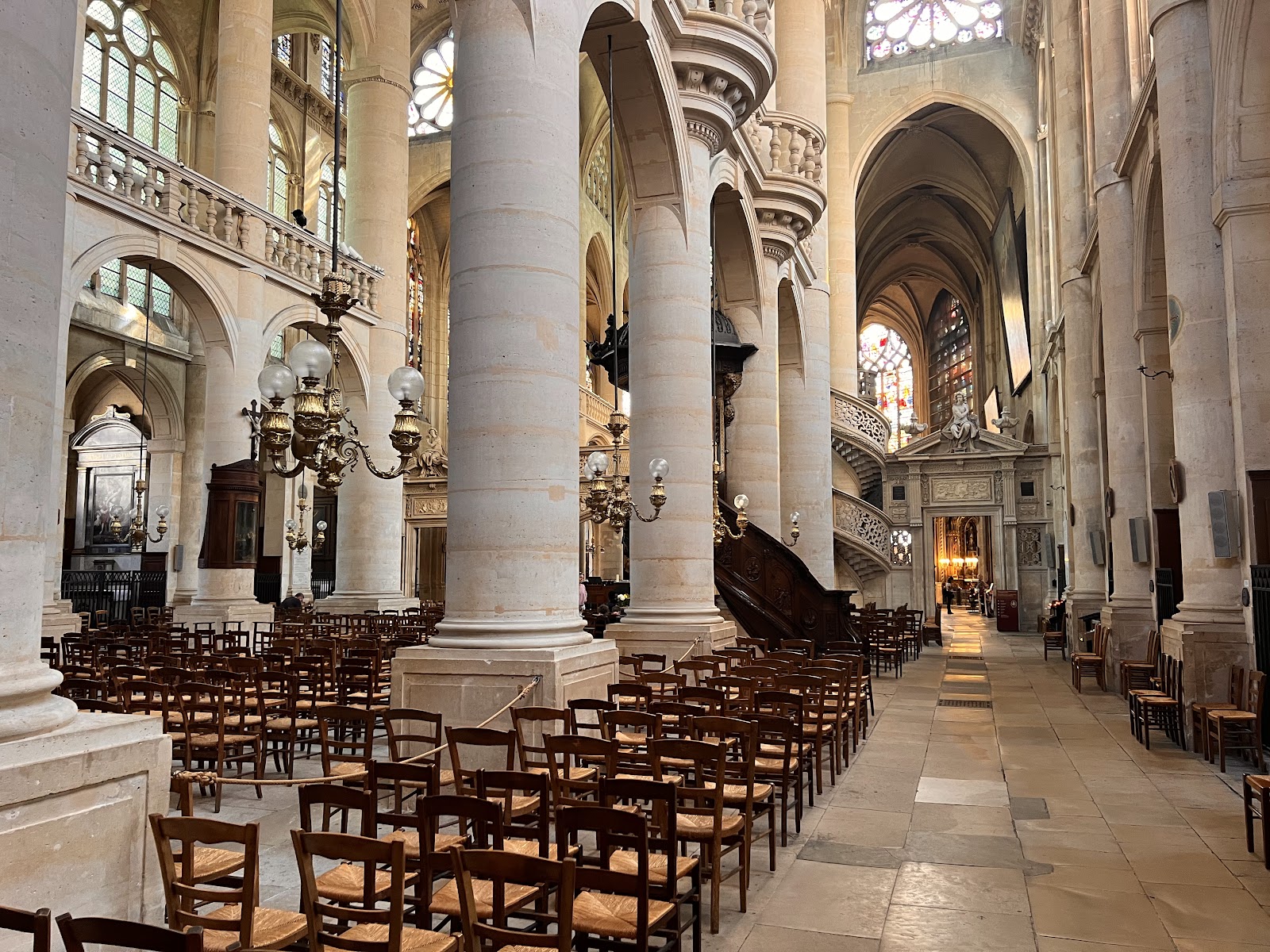
People who come back tend to position themselves under the organ case — carved by Jehan Buron in 1631, the oldest surviving example in Paris in its original state — and look back down the nave toward the rood screen. The guided tours depart from this spot at 3pm and are worth joining if the timing works.
The story behind Église Saint-Étienne-du-Mont
A chapel on this hill was already too small by 1222, when Pope Honorius III authorised an independent church dedicated to Saint Stephen. The Génovéfain monks donated the land in 1492, and work began in earnest: Stephen Viguier planned the apse and bell tower in 1494, the choir was complete by 1537, and the nave finished in 1584. The façade's first stone was laid in 1610 by Marguerite de Valois; the church was finally consecrated in 1626 by Jean-François de Gondi, first Archbishop of Paris.
The Revolution closed it and stripped much of its decoration. Worship resumed in 1803 under Napoleon's Concordat, and Victor Baltard — better known for the iron market halls of Les Halles — oversaw a thorough restoration between 1865 and 1868. Pascal and Racine are both interred here.
Good to know
Free to enter. Metro Cardinal Lemoine (line 10) leaves you about 250 metres away; RER Luxembourg is roughly the same distance. Tuesday through Friday the church opens at 8am. Saturday and Sunday hours are split across morning and afternoon — check before you go.
Where is Église Saint-Étienne-du-Mont?
Location
- In Paris 5th Arrondissement
- 48.8468, 2.3502
- Open in Google Maps
Rating
4.7 ★ · 3,227 Google reviews
More tickets & tours for Église Saint-Étienne-du-Mont
Book directly at the provider
What travellers say about Église Saint-Étienne-du-Mont
Magnificent church in the Latin Quarter, right next to the Pantheon. As a catholic I must confess the reason I've visited this historic site was because of Woody Allen's movie "Midnight in Paris", far from a religious pilgrimage :) If you are a fan of this movie, you will love the idea of stepping back in time while waiting on the church steps for you taxi. If you are interested in history facts, here lies the rests of Paris' patron saint, Saint Genevieve. Wonderful visit, and it's free, a must!
Great cathedral, often overlooked near the Pantheon. It contains the shrine of St. Geneviève, the patron saint of Paris, and the tombs of Blaise Pascal. The interior is beautiful, the spiral stairs alongside the tribune are just amazing, the sculptures are amazing, and there is a part of the church with 16th century vitrages. Walking in there makes you feel like you are in the Middle Ages. A beautiful cathedral!!
Église Saint-Étienne-du-Mont is a beautiful historic church sitting directly across from the Panthéon above the Latin Quarter, and it ended up being one of the more memorable churches I visited in Paris. The inside is seriously impressive. Tall archways, stained glass, old stonework, and a lot more detail than you notice at first glance. I kept spotting little things the longer I walked around. What I liked most was the contrast between this church and the huge Panthéon sitting right across the street. The Panthéon feels massive and formal, while Saint-Étienne-du-Mont feels more intricate and personal. The area around the church is great too. Old streets, cafés, bookstores, students walking around, and a lot of classic Paris architecture packed into a relatively small area. As the author of The Grant Colson Thriller Series, I’m always drawn to places with layered history and strong atmosphere, and this whole part of the Left Bank has that everywhere you turn. Spending time around neighborhoods like this also influenced parts of the Paris Nights Romance Series because the Left Bank really does feel different once evening hits and the cafés and old stone buildings start glowing under the streetlights. I almost skipped going inside because of the bigger landmarks nearby, and I’m glad I didn’t.
This lovely, atmospherics church contains the shrine of Paris' savior saint. At night the bright white pierced screen half way through the church provides a dramatic contrast to the dark recesses of the high roof. It is also unusual to see the raised walkway running from column to column. There are many wonderful paintings and sculpture.
While the facade is impressive with its detailed stonework and grand stature, the true beauty of the building lies within the sanctuary. The space is defined by an elegant stone rood screen and delicate staircases that showcase exceptional craftsmanship.
More of Paris 5th Arrondissement
Discover where to stay, what to do and the best deals for your trip.
Explore Paris 5th Arrondissement →More attractions in Paris 5th Arrondissement
All of Paris 5th Arrondissement →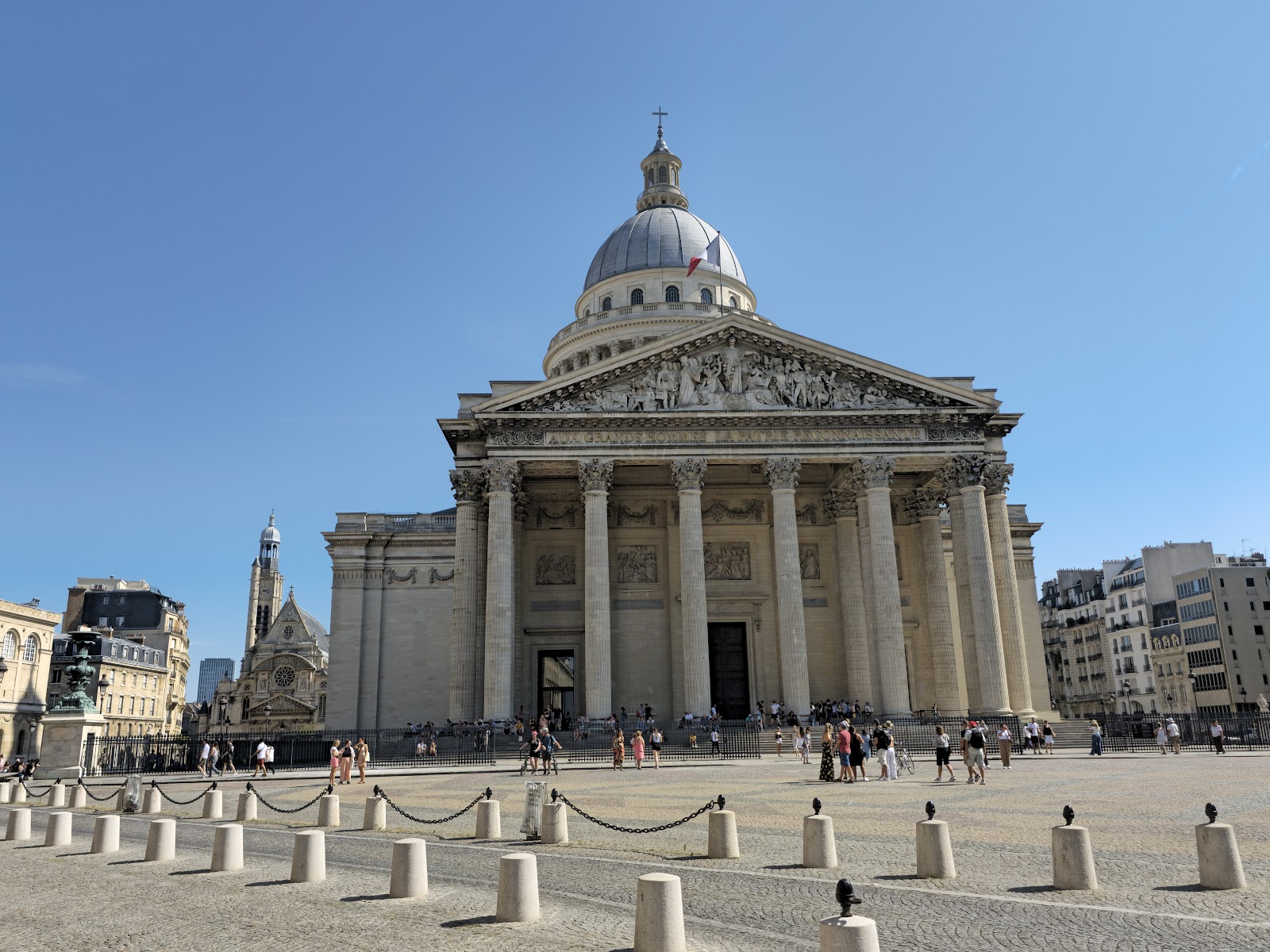

Background adapted from Wikipedia (CC BY-SA) · map data © OpenStreetMap contributors · ratings & place photos via Google · other photos with per-image credit. Ticket links may earn us a commission at no extra cost to you.