
De Hallen Amsterdam
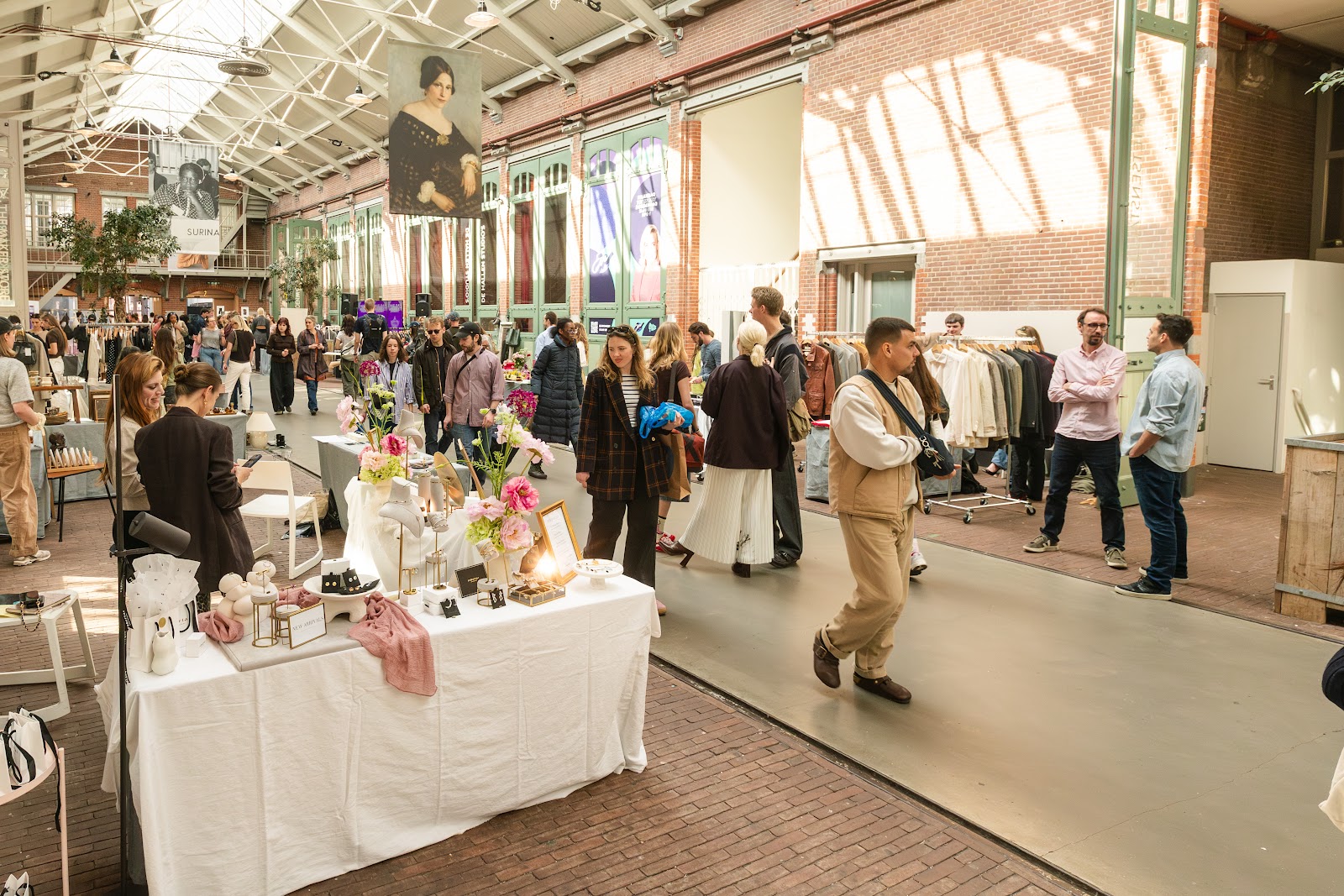
The tram rails are still there, running through the central passage under your feet — a quiet reminder that this complex of seven brick halls once housed the vehicles that moved half of Amsterdam. De Hallen opened in 2014 after a long conversion led by architect André van Stigt and a coalition of local residents and future tenants, and it now holds a cinema, a library, a food hall, a hotel, galleries, and weekend markets, all within the Amsterdam School brickwork and exposed timber trusses of a depot built between 1901 and 1928.
The original stone number plates marking each hall are still fixed to the walls. The passage connecting Tollensstraat to Ten Katemarkt stays open from seven in the morning until one at night, which means it functions less like an attraction and more like a neighbourhood through-road that happens to have good food and a nine-screen cinema off to the side.
💛 What travellers fall for
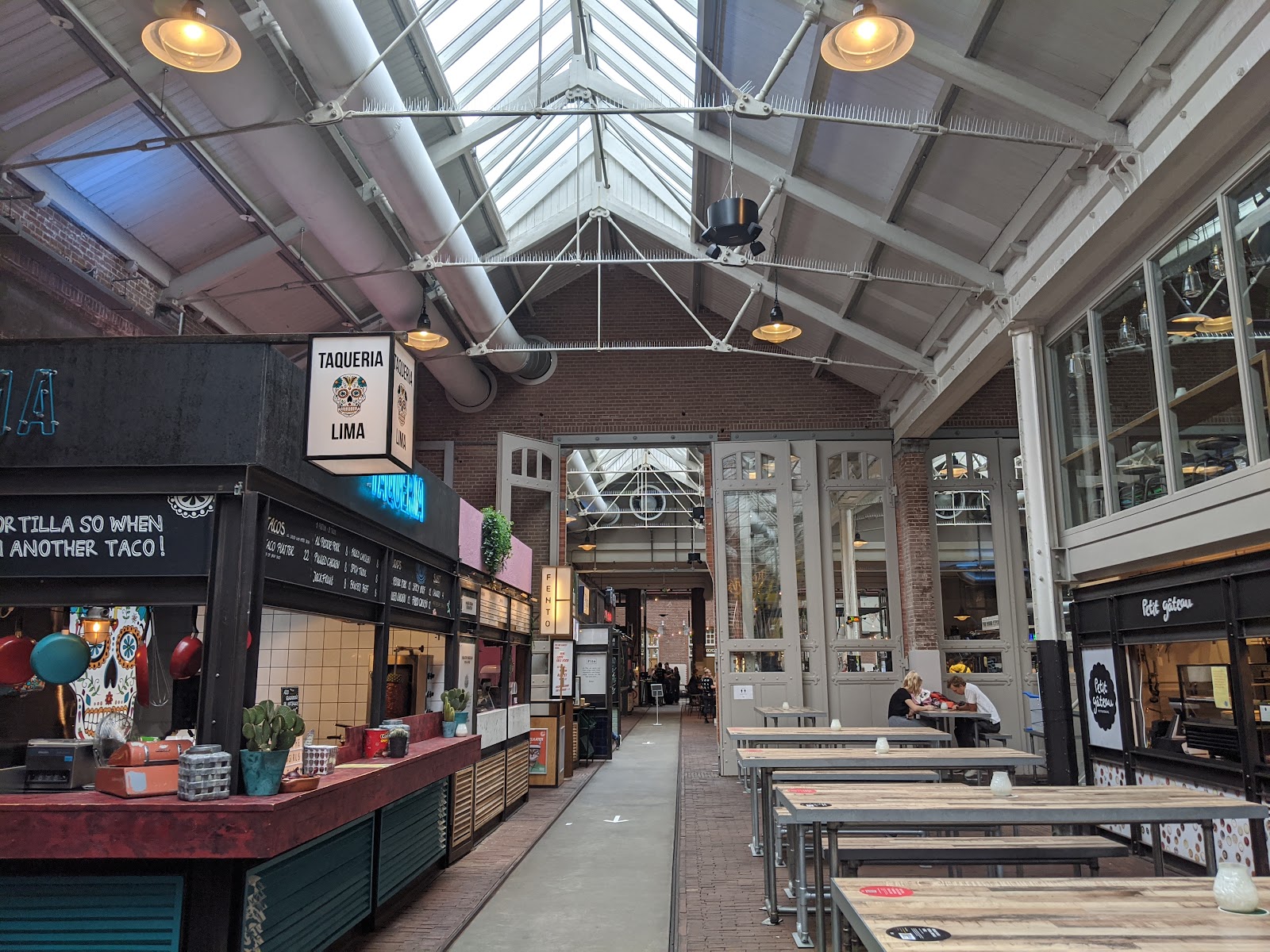
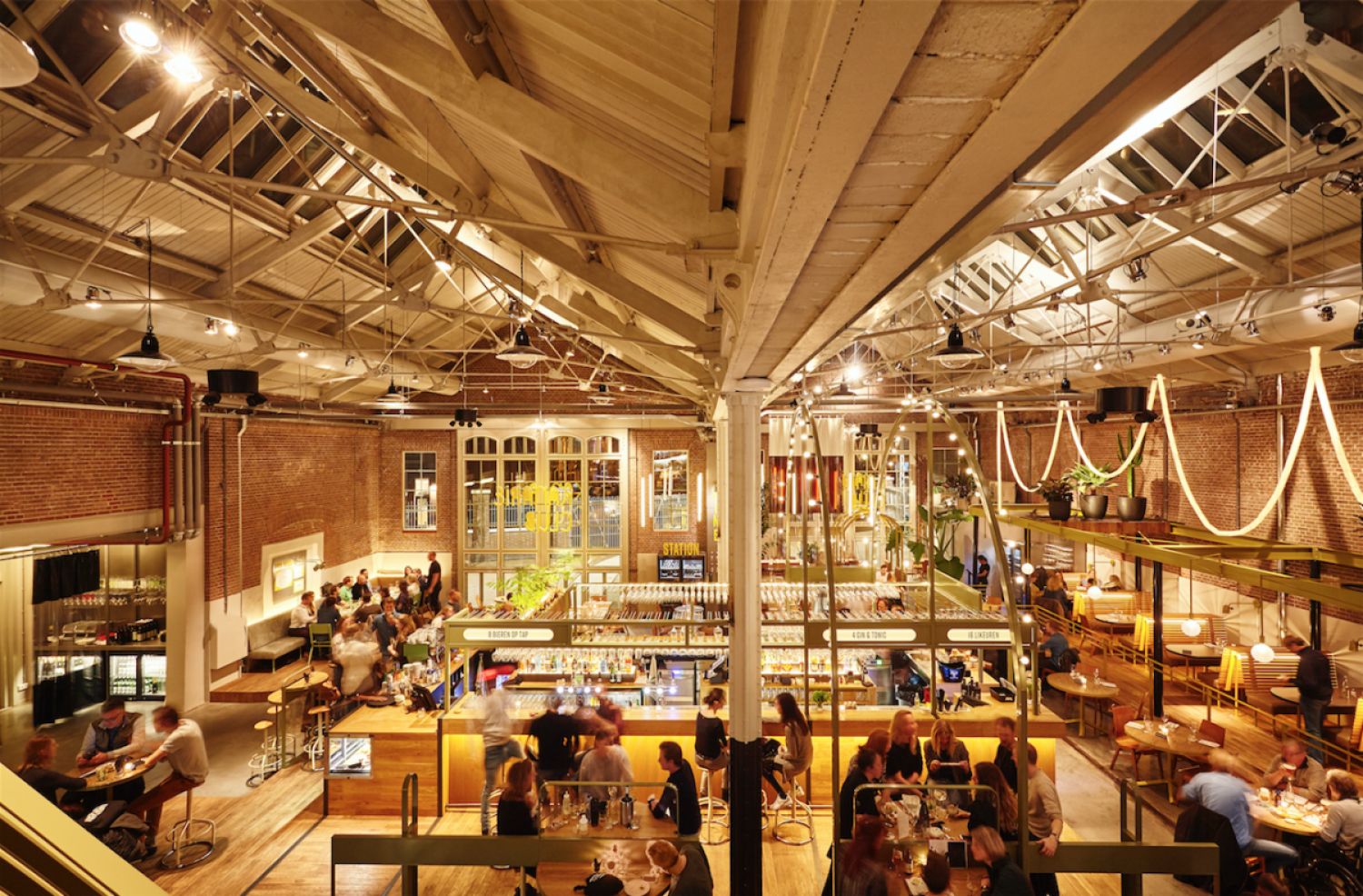
People who come back tend to arrive early for the Foodhallen before the evening crowd, then drift into De Filmhallen for a late showing — the Parisienzaal screen preserves the interior of Cinema Parisien, dating to 1924, and it rewards attention. Wednesday mornings bring free children's workshops in De Passage, which clears out the usual weekend market energy entirely.
The story behind De Hallen Amsterdam
Before the tram depot, this patch of Oud-West was water — the Kwakerspoel, dug in the seventeenth century to give Amsterdam's sawmills room to operate during the city's rapid expansion. When the timber trade contracted and the mills fell quiet, the canal was filled in, and the flat, open land that remained made a practical site for the municipality's new tram infrastructure.
The Public Works Department built the depot in phases from 1901 to 1928, in the expressive brick style associated with the Amsterdam School. The GVB ran trams from here until 1996, when operations shifted to Diemen-Zuid; the halls then sheltered museum trams for a few years before closing entirely in 2005. TROM, the development company formed in 2010, spent four years converting the complex before De Hallen opened in 2014.
Good to know
Trams 7 and 17 stop at Ten Katestraat, a short walk away. Entry to De Hallen itself is free; book FilmHallen tickets in advance, and budget around €6 for the vintage flea market when it runs on weekends. Two hours covers most of it comfortably.
Where is De Hallen Amsterdam?
More tickets & tours for De Hallen Amsterdam
Book directly at the provider
What travellers say about De Hallen Amsterdam
Loved everything about this place. All staff are super friendly and helpful, so much choice for all tastes and ages. You can watch your meal being prepared freshly in front of you. Something for every budget and nobody is judging how you look or what you eat. Great vibes and definitely recommend to everyone.
De Hallen is a really nice food hall and social space in Amsterdam. There’s a good variety of food options inside, from European dishes to international cuisines, and the prices are quite reasonable compared to other places in the city. The space is spacious, clean, and comfortable to sit and eat, which makes it great for hanging out with friends or taking a break during sightseeing. The area feels safe and is easy to find, with some nice spots around for photos. I stopped by to rest and grab a meal, and the whole place felt very chill. Definitely worth a visit if you’re in Amsterdam.
Such a lovely place! There are many different foods from several cultures, the space is big and the people are very friendly. The drinks are wonderful — I had one of the best gin and tonics! The croquettes are also very good. It’s a really nice place to go on a cold day or when you have time to relax and enjoy. I would definitely come back.
visited on a saturday so it was quite busy but otherwise would still recommend to visit! really enjoyed their bitterballen sampler and the pulled pork sando which i forgot to take a photo of because it was devoured in minutes 😅 was also pleasantly surprised one of the bars had a riesling 🫶✨️ went here mainly for the foodhall but the other shops were really nice and quirky too!
Food hall with plenty of choice for young and old, fussy or experimental, you will find food to your liking. Lovely surroundings and live music. Plenty of seating and toilet facilities too.
More of Oud-West
Discover where to stay, what to do and the best deals for your trip.
Explore Oud-West →More attractions in Oud-West
All of Oud-West →

Background adapted from Wikipedia (CC BY-SA) · map data © OpenStreetMap contributors · ratings & place photos via Google · other photos with per-image credit. Ticket links may earn us a commission at no extra cost to you.