
Dam Square
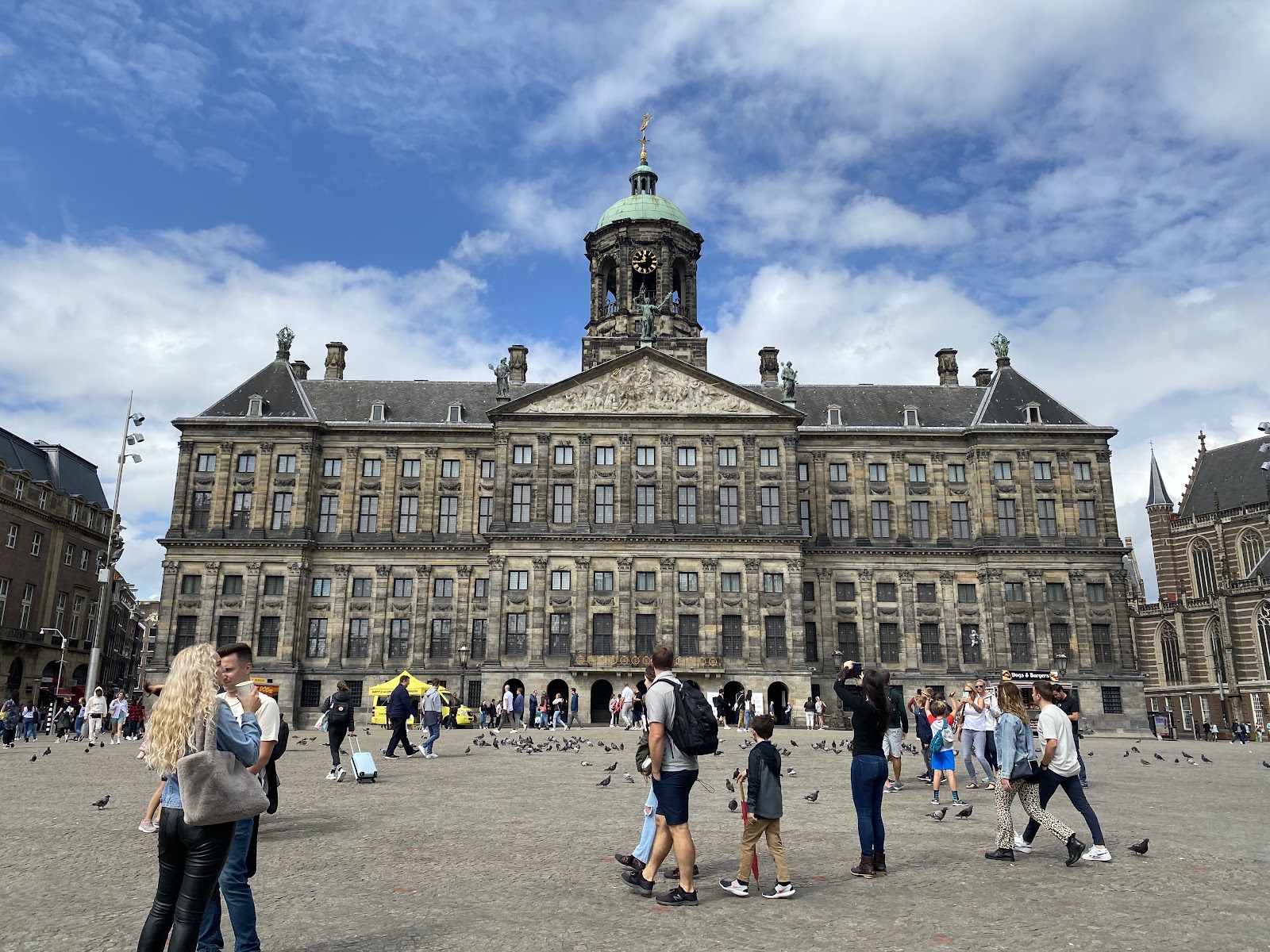
The square takes its name from the dam built here around 1270 across the Amstel River — the same act of engineering that gave Amsterdam its name. Today the cobblestones hold pigeons, trams, street performers and a slow circulation of people who have come from everywhere and are mostly not sure where to look first.
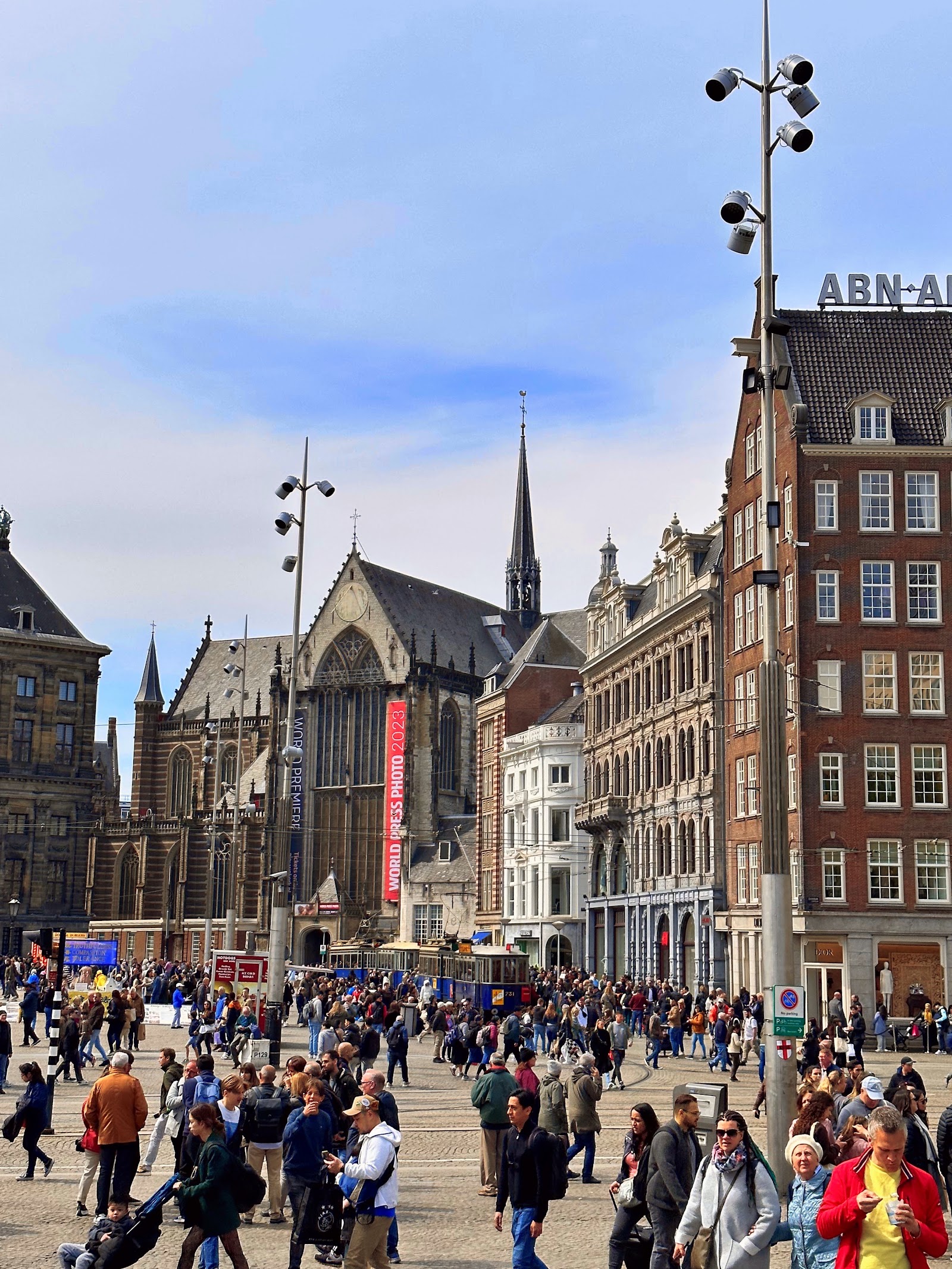
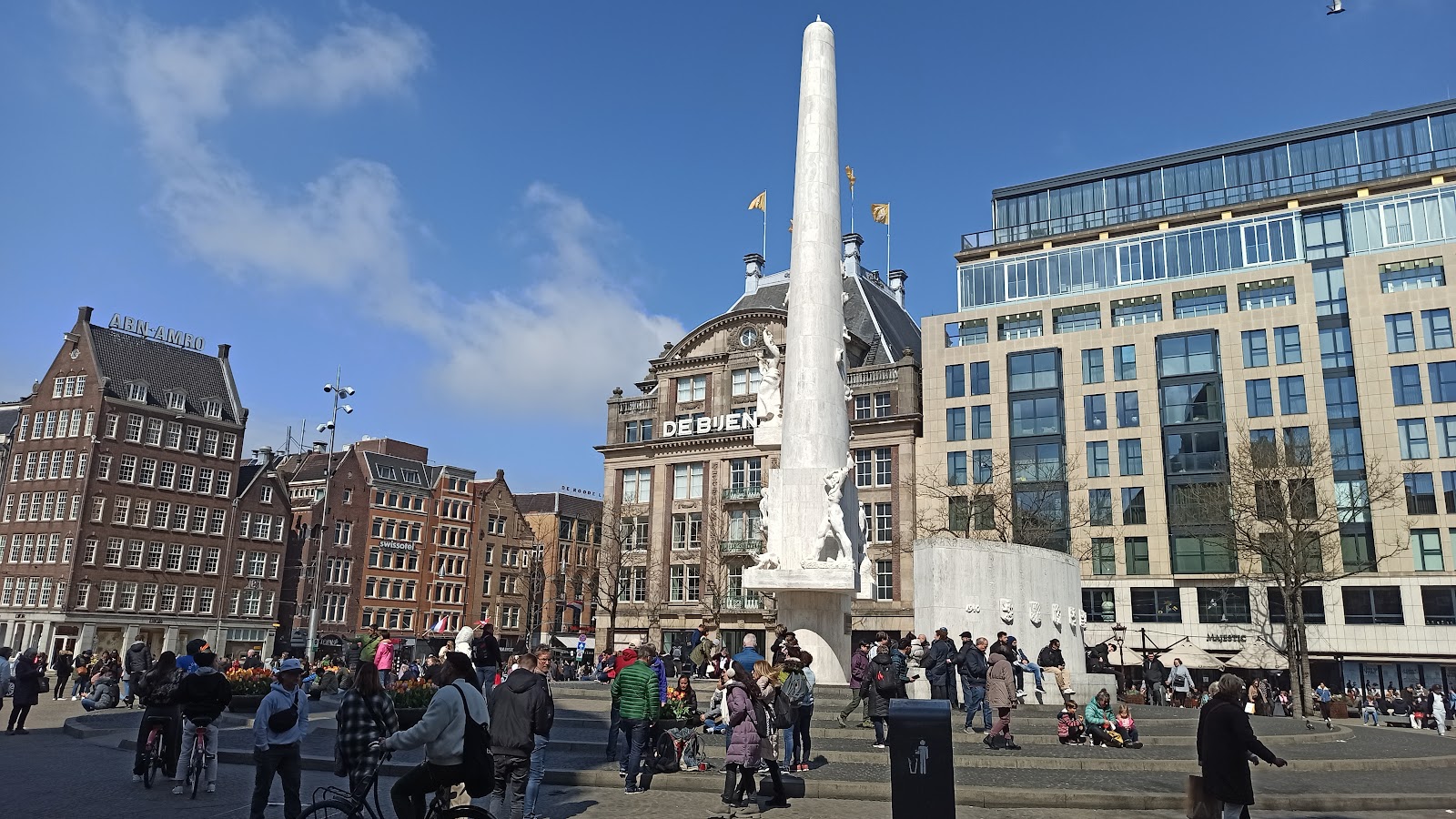
The answer is probably the Royal Palace, which occupies the western edge on 13,659 wooden piles driven into the soft ground below. Next to it, the Nieuwe Kerk has been standing in some form since 1408. The 22-metre white obelisk at the centre — the National Monument, erected in 1956 — contains soil from every Dutch province.
💛 What travellers fall for
People who know the square well tend to arrive early, before the tour groups find their rhythm. The light on the Royal Palace facade is best in the morning. Cross to the Nieuwe Kerk side for a cleaner view back across the cobblestones, and notice the National Monument up close — the urn chambers in its base are easy to walk past without registering what they hold.
The story behind Dam Square
A dam across the Amstel around 1270 created the conditions for a trading settlement, and the square that formed around it became the commercial and civic heart of the city. A weigh house opened here in 1341, replaced in 1565, then demolished in 1808 on the orders of Louis Bonaparte, who had already converted the city's grand new town hall into a royal palace two years earlier. That building — the Royal Palace — was designed by Jacob van Campen and constructed between 1648 and 1665, functioning as Amsterdam's city hall from 1655.
The Nieuwe Kerk alongside it dates to 1408, rebuilt after a devastating fire in 1645. The National Monument, the white obelisk by architect J.J.P. Oud, arrived in 1956 as a memorial to the Second World War dead.
Good to know
The square is open and free at all times. Tram lines 4, 14 and 24 stop on the Rokin side; lines 2, 12, 13 and 17 on the Nieuwezijds Voorburgwal side. Amsterdam Centraal is a 5–7 minute walk down the Damrak. Royal Palace entry runs around €12.50. April and May are the least rainy months to visit.
Amsterdam runs cool and damp through much of the year, with the heaviest rain arriving in autumn. Summer days reach around 20–25°C and are the most reliably pleasant for time spent on the cobblestones; April and May are the driest spring months. Winter brings occasional snow, and the square can be raw and wind-exposed.
Where is Dam Square?
Location
- In Amsterdam Centrum
- 52.3731, 4.8926
- Open in Google Maps
More tickets & tours for Dam Square
Book directly at the provider
More of Amsterdam Centrum
Discover where to stay, what to do and the best deals for your trip.
Explore Amsterdam Centrum →More attractions in Amsterdam Centrum
All of Amsterdam Centrum →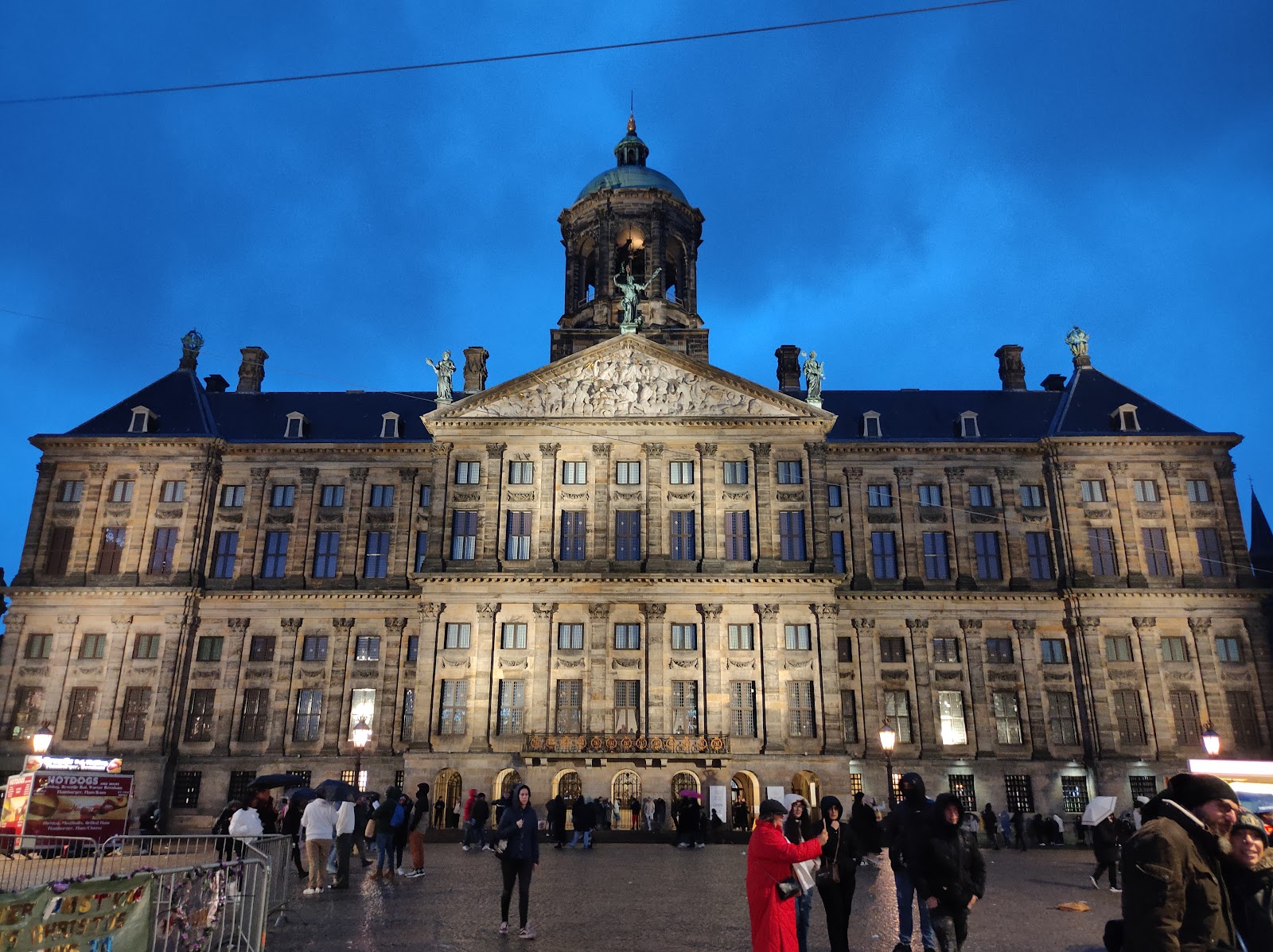
Background adapted from Wikipedia (CC BY-SA) · map data © OpenStreetMap contributors · ratings & place photos via Google · other photos with per-image credit. Ticket links may earn us a commission at no extra cost to you.