
Cuevas de Nerja
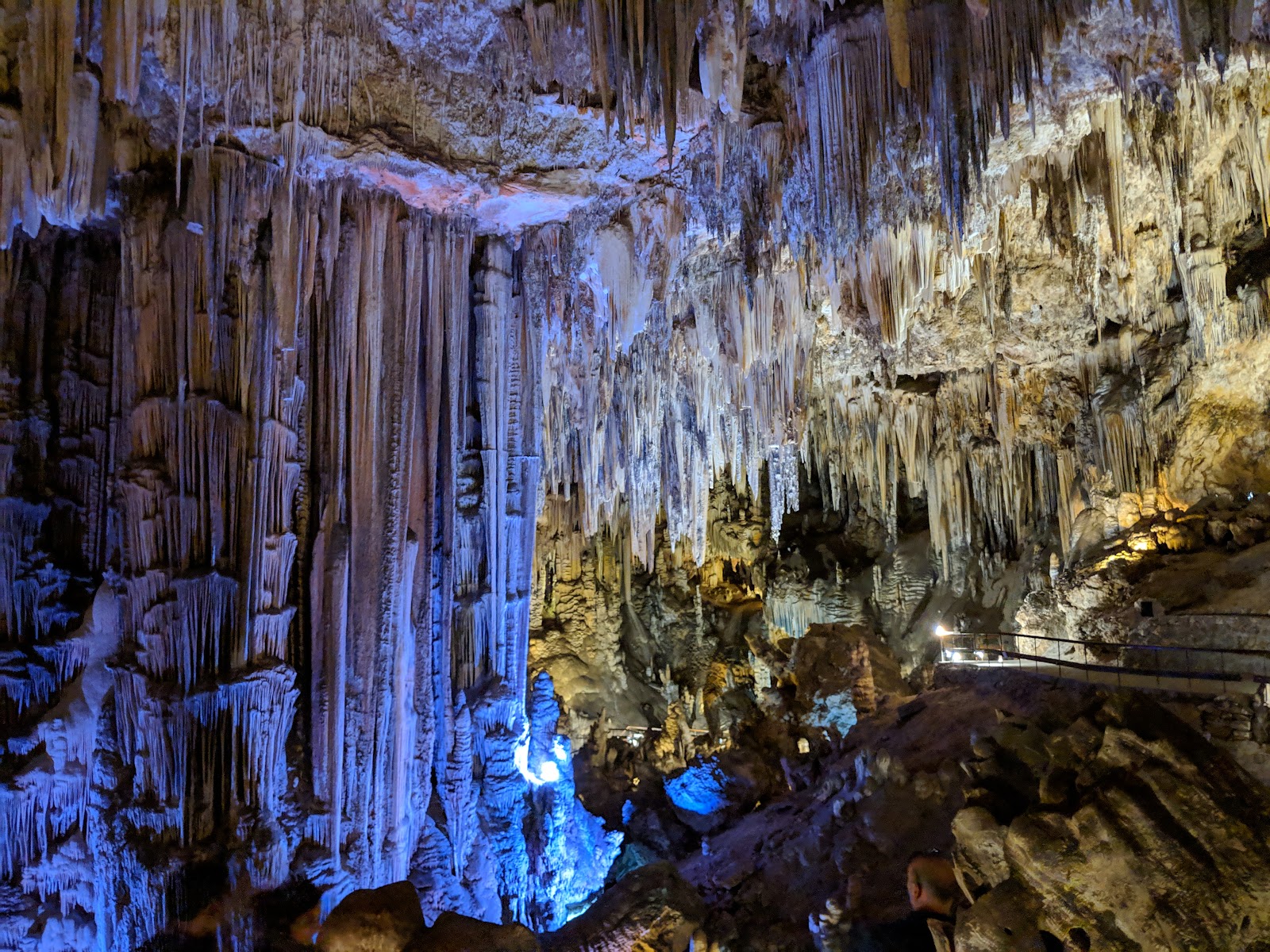
The central column in the Hall of Cataclysm stands 32 metres tall — a stalactite and stalagmite that spent millennia reaching for each other before finally fusing. It has held a Guinness World Record since 1989, and standing beneath it, the scale of the cave's five-million-year geology becomes less abstract. The Cuevas de Nerja sit in the limestone flank of the Sierra Almijara, four kilometres east of Nerja town near the village of Maro, and what's open to the public is only a third of the total 7,219 metres of passages.
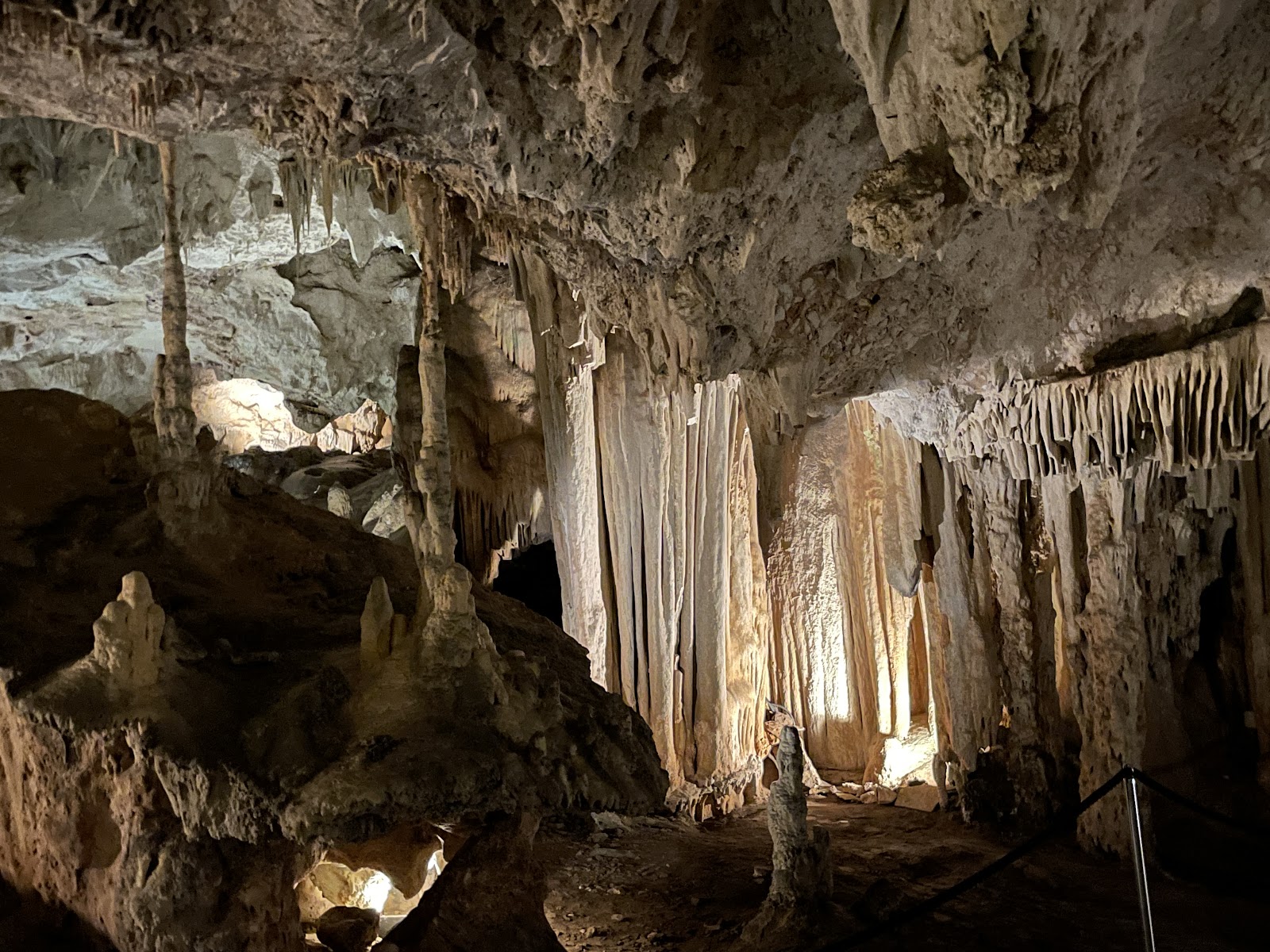
The route takes you through chambers with names earned by their shapes — the Hall of Ghosts, where stalactites throw long shadows, and the Hall of the Waterfall, where formations called gours stack like a dry stone cascade. The temperature inside holds steady regardless of what the coast is doing outside.
💛 What travellers fall for
People who return tend to book online in advance — tickets are cheaper and the queue at the booth on a summer morning is long. The audio guide app covers 15 languages and lets you linger at the column in the Hall of Cataclysm without a group moving you on. The panoramic terrace restaurant is a reasonable place to decompress afterward, with a direct view down to the Mediterranean.
The story behind Cuevas de Nerja
On 12 January 1959, five young men from Maro and Nerja — Manuel and Miguel Muñoz Zorrilla, José Luis Barbero de Miguel, Francisco Navas Montesinos, and José Torres Cárdenas — went looking for bats and instead found one of Europe's largest cave systems. The first official speleological expedition followed in February 1960, led by two of the original discoverers, Navas Montesinos and Barbero.
The caves opened to the public on 12 June 1960, inaugurated with a concert by the Málaga Symphonic Orchestra and a performance by the La Tour de Paris ballet company in the Hall of the Waterfall — a venue the annual music and dance festival would use for decades. Spain declared the site a Historical Artistic Monument in 1961, and a Property of Cultural Interest in 2006. The Nerja Cave Research Institute has been based here since 1999.
Good to know
Drive the A-7 east from Málaga (exit 295 toward Maro) or take an Alsa coach to Nerja then a taxi for the final four kilometres. The interior tour runs about 45 minutes; steep stairs and uneven limestone make it unsuitable for visitors with significant mobility limitations. Buy tickets online — cheaper than on-site.
Where is Cuevas de Nerja?
More tickets & tours for Cuevas de Nerja
Book directly at the provider
What travellers say about Cuevas de Nerja
Amazing place with a truly special atmosphere. The caves are absolutely gorgeous and mysterious, it is quite dark inside but it doesn't feel grim but rather inviting and mysterious. Definitely worth a visit if you love nature. The area around the cave is also very beautiful it is green, clean and has plenty of amenities.
What a place!! A must visit if you’re in the area. You have to be prepared for plenty of steps but worth every one of them. Stunning natural formations and steeped in history. It complements one of my new favourite parts of España as Nerja itself is a truly beautiful part of the world. The locals clearly take pride in their immaculate town as well. Visit and enjoy. The one caveat would be that road train thingy. Terrible reviews for good reason. Get a cab to avoid being stressed, it’s literally my only bad experience. The Caves, the town. Treat yourself, you won’t be disappointed.
A magnificent cave with amazing views. Impressive stalactites and stalagmites make a huge impression. I didn't want to leave there🙂 You can see the amount of work put in there. The cave itself is located in a large area with a picnic area, a playground for children and a cafeteria with a parking lot. The price of a regular ticket includes a visit to the cave and an interactive room, which you need to go to a separate building, as well as a visit to the museum located in the center of the city. It's really worth going there!
Pretty cool cave experience! If you are anywhere in the area I definitely recommend a visit out here. It was reasonable for the price. We took this trolley car/train thing back into town which was pretty cool also. Definitely recommend this place!
If you’re even remotely considering visiting this cave, just go. It’s truly one of the most breathtaking places I’ve ever experienced. We bought tickets when we got there, and there were spots available for just a few minutes from when we bought our tickets. I don’t recommend buying a ticket in advance, but might be different on a weekend or when they have a special event. Nothing prepares you for seeing it in person. The size is absolutely massive. It is easily one of the largest caves I’ve ever been in. The features create this unreal, almost dreamlike atmosphere. What really sets it apart is how different it feels from other caves. It’s not just another rock formation; it feels alive, shaped by the ocean in a way that’s both powerful and peaceful at the same time. I’ve also heard they host concerts here, and I can’t even imagine how incredible that must be. The acoustics and setting would be unforgettable. Pictures don’t do it justice. This is one of those places you have to experience for yourself. They do have an audio guide that you can download to listen to while you go through the cave, marked with certain spots to learn more.
More of Nerja
Discover where to stay, what to do and the best deals for your trip.
Explore Nerja →More attractions in Nerja
All of Nerja →
Background adapted from Wikipedia (CC BY-SA) · map data © OpenStreetMap contributors · ratings & place photos via Google · other photos with per-image credit. Ticket links may earn us a commission at no extra cost to you.