
Conciergerie
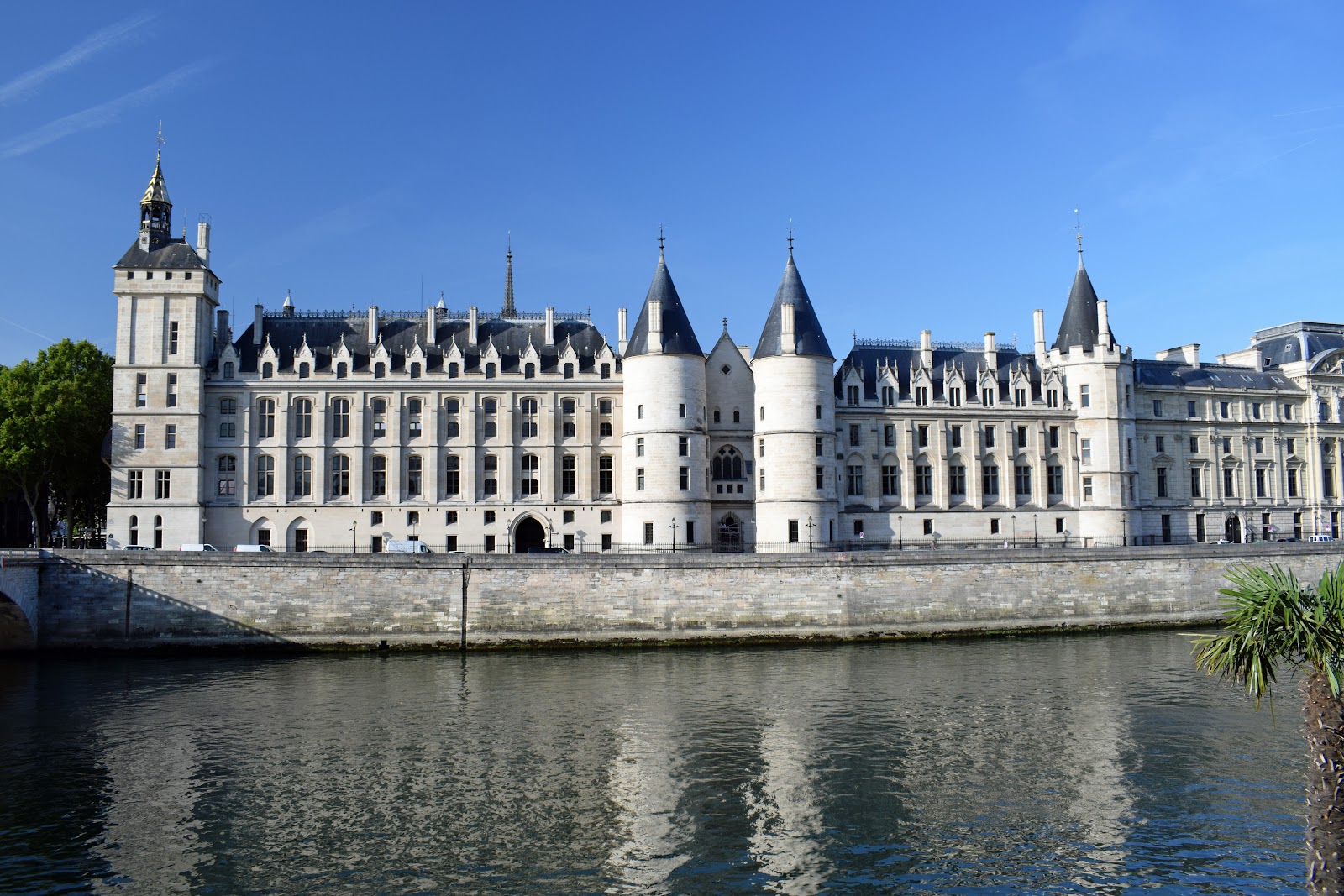
The first public clock in Paris still marks time on the Tour de l'Horloge, its face looking out over the Boulevard du Palais as it has since Charles V had it installed in the 14th century. That detail — a clock built to organize a city, mounted on a building that would go on to organize death — is the kind of compression the Conciergerie keeps offering you.
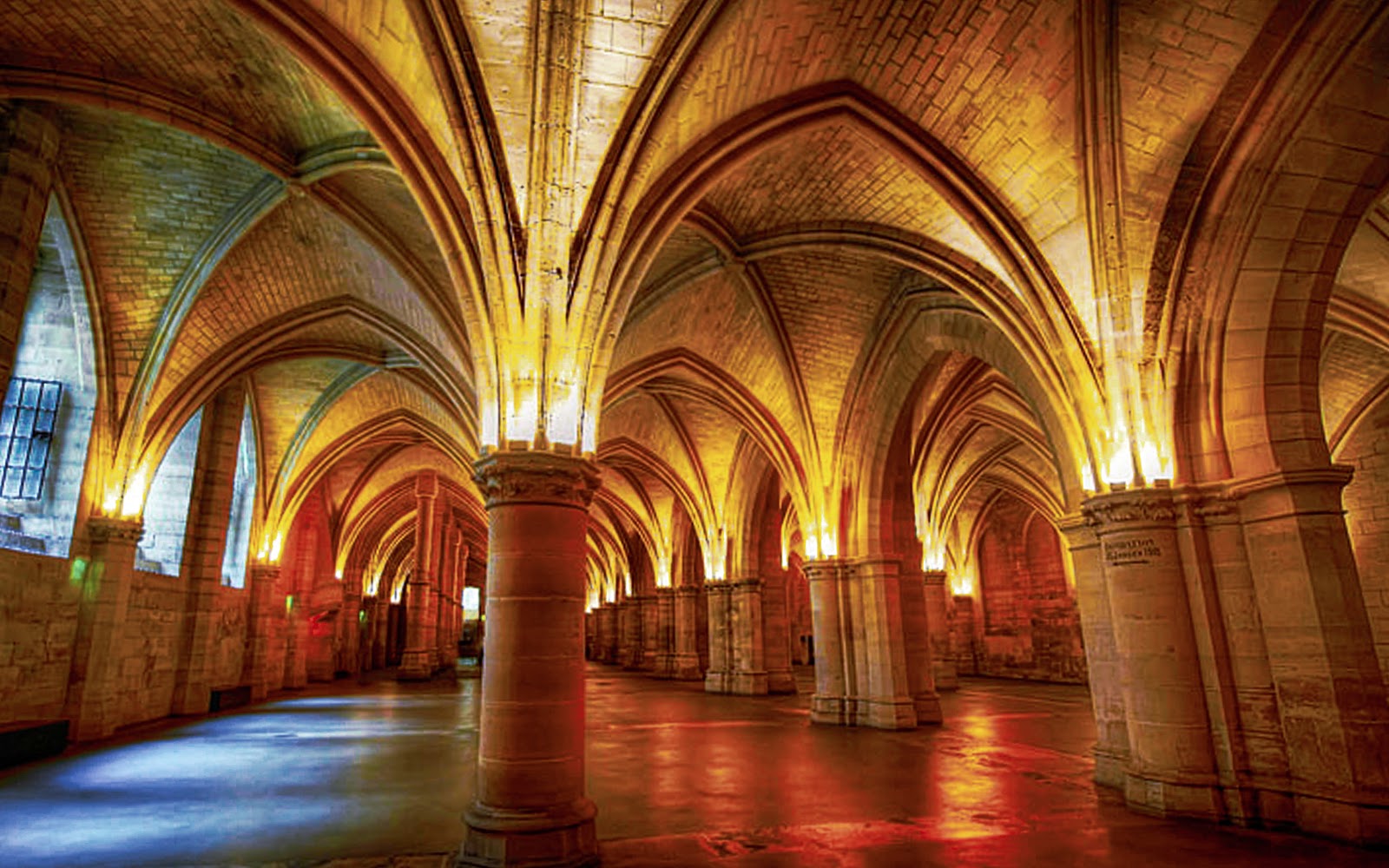
This was a royal palace before it was a prison, and a prison before it became a monument. Walking its medieval halls, you move through all three identities at once: the vaulted Salle des Gens d'Armes with its eight-and-a-half-metre keystones, the cell where Marie-Antoinette spent her last two months, and the Revolutionary Court that sent thousands to the guillotine.
💛 What travellers fall for
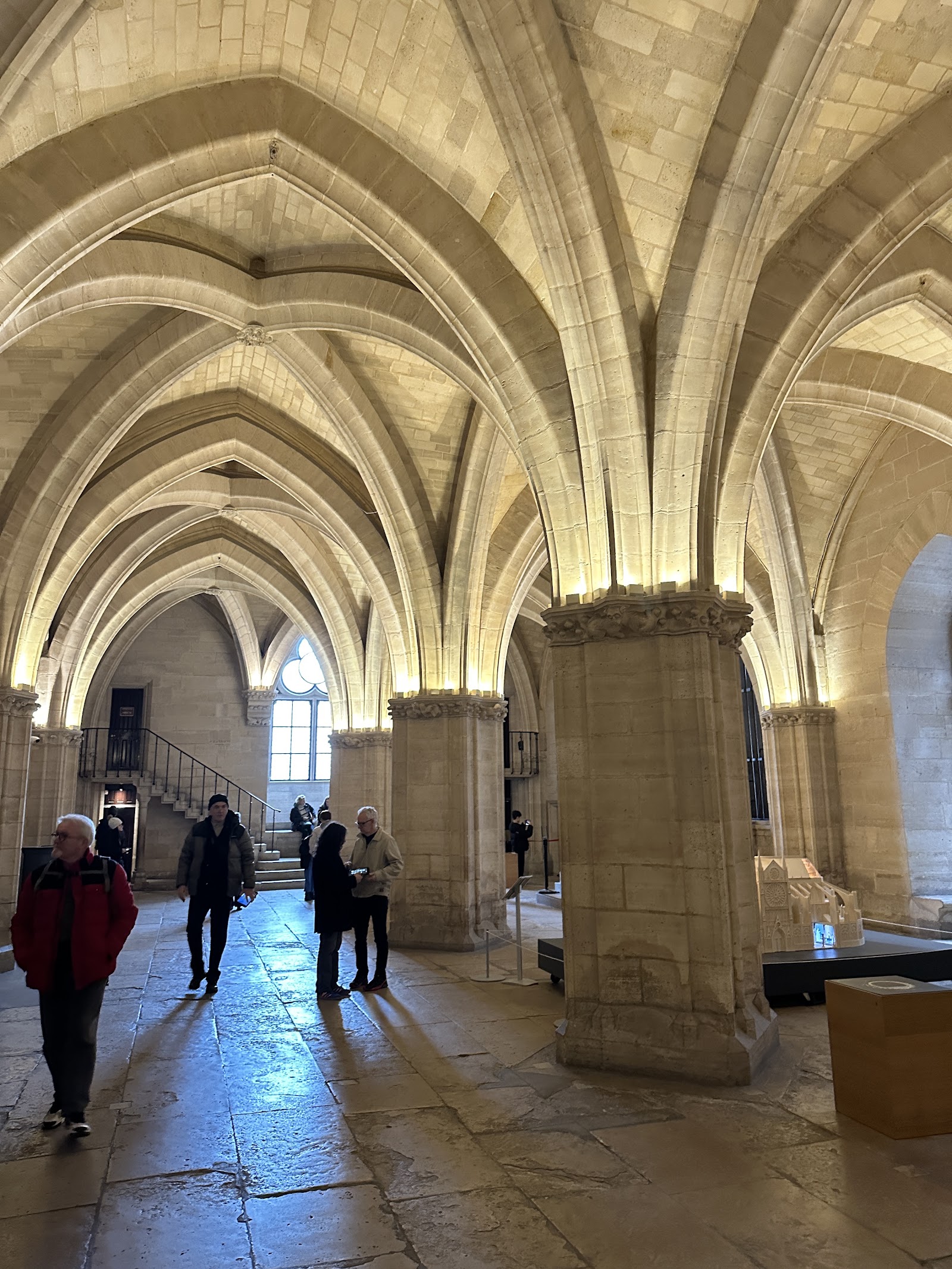
People who come back tend to linger in the Salle des Gardes rather than rushing toward the Marie-Antoinette cell. The 13th-to-14th-century stonework there is quieter and less curated, and you get a cleaner sense of the palace the Capetian kings actually inhabited. Arrive at 9:30 on a weekday and you'll often have the great halls to yourself for the first half-hour.
The story behind Conciergerie
The site has been occupied since at least 508, when the Merovingian king Clovis made it his capital. Hugh Capet built a large fortified residence here around the end of the 10th century, and Philip IV continued rebuilding between 1285 and 1314, adding the Grand Hall, the Silver Tower and the Tower of Caesar. When Charles V moved the royal household to the Louvre in the 1360s, the old palace's concierge was left in charge of lower courts, and cells began filling the lower floors. By 1391 it was functioning officially as a prison.
The Revolutionary Court arrived in March 1793, renaming the Grand'Chambre the Salle de la Liberté. Marie-Antoinette was held here from 2 August to 16 October 1793; her cell was converted into a chapel in 1815. Architect A.M. Peyrle began restoration work in 1812, and between 1847 and 1871, Joseph-Louis Duc and Étienne Théodore Dommey restored the medieval halls and raised the clock tower. The Conciergerie stopped functioning as a prison in 1934 and has been classified as a historical monument since 1862.
Good to know
Take Métro Line 4 to Cité — you'll surface almost at the door. Open daily 9:30am to 6pm (last entry 5:30pm), closed 1 January, 1 May and 25 December. The building is compact enough to see properly in 90 minutes; no need to rush.
Where is Conciergerie?
Location
- In Paris 1st Arrondissement
- 48.8557, 2.3465
- Open in Google Maps
Rating
4.4 ★ · 11,528 Google reviews
More tickets & tours for Conciergerie
Book directly at the provider
What travellers say about Conciergerie
We purchased a ticket to tour the Concierge along with Sainte Chapelle. There was no line to enter the Concierge, thinking very few visitors compared to Sainte Chapelle. The structure is a former courthouse and prison, originally part of the royal palace. There is an interactive guide that walks you through the building providing insight into what the prison looked like when filled with prisoners. This is the prison where Marie Antoinette's cell was with a small outside courtyard where the woman prisoners were allowed to spend time and wash their clothes. Well maintained and quite enjoyable.
Absolutely fantastic! I’d strongly advise to take the « historipad » for your visit, you will learn so much and it’s a lot of fun. I didn’t know what i could expect from this tour but I was really blown away by that iPad augmented reality and all the historical facts woven into it (even as a French). We spent 2h30 there, really taking the time to read everything each time. Also a great place to seek refuge from the summer heat!
An interesting place but don’t really have too many things to see. The iPad seemed nice but it stopped distributing at about 4:30 pm so I didn’t get one. But generally nice, demonstrated some good stories about Marie Antoinette, worth going.
Its a small place so not a lot of people come here. You can see Marie Antoinette’s cell - where she was forced to stay for 76 days before her death. They have a lot of history of the French Revolution. Good place to hang out for an hour or two for history buffs. They also have the interactive ipads that show you how the place looked like back in the day.
The Conciergerie is a fascinating historical site, expansive in its layout. However, to truly appreciate its significance, it requires more than just a passive walk through the space. You’ll need to actively seek out information and engage with the exhibits—without that, the experience might feel less impactful. One aspect that could be improved is the approach of the security staff before entry. While I understand the importance of safety measures, a more polite and welcoming attitude would have enhanced the experience. The most compelling part of the visit is undoubtedly the cell where Queen Marie Antoinette was held before her execution. This area stands out as the highlight of the tour, offering a poignant glimpse into a moment of history. Tablets are provided to help visitors visualize how each part of the building would have looked in its original form. While this is a useful feature, personally, I found it less appealing to walk around looking at a screen but others may find this useful and engaging.
More of Paris 1st Arrondissement
Discover where to stay, what to do and the best deals for your trip.
Explore Paris 1st Arrondissement →More attractions in Paris 1st Arrondissement
All of Paris 1st Arrondissement →
Background adapted from Wikipedia (CC BY-SA) · map data © OpenStreetMap contributors · ratings & place photos via Google · other photos with per-image credit. Ticket links may earn us a commission at no extra cost to you.