
Cimetière de Montmartre
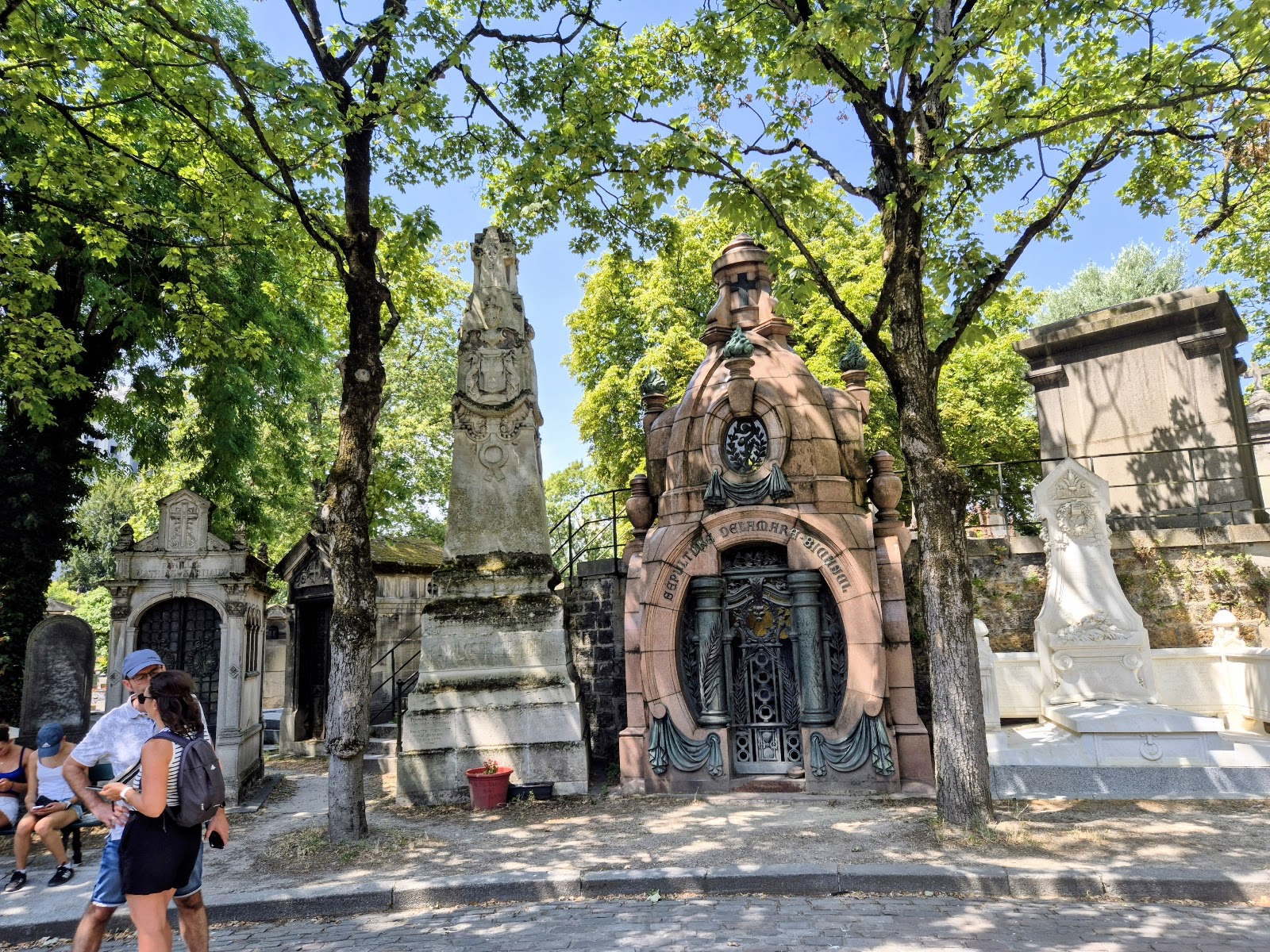
The entrance to Cimetière de Montmartre sits below street level on Avenue Rachel, tucked under the arch of Pont Caulaincourt — you descend into it rather than walk in, which sets the tone immediately. The ground itself has history before the cemetery does: this was a gypsum quarry, then a Revolutionary-era mass grave, before Pierre-Victor Sènel redesigned it and it opened on 1 January 1825.
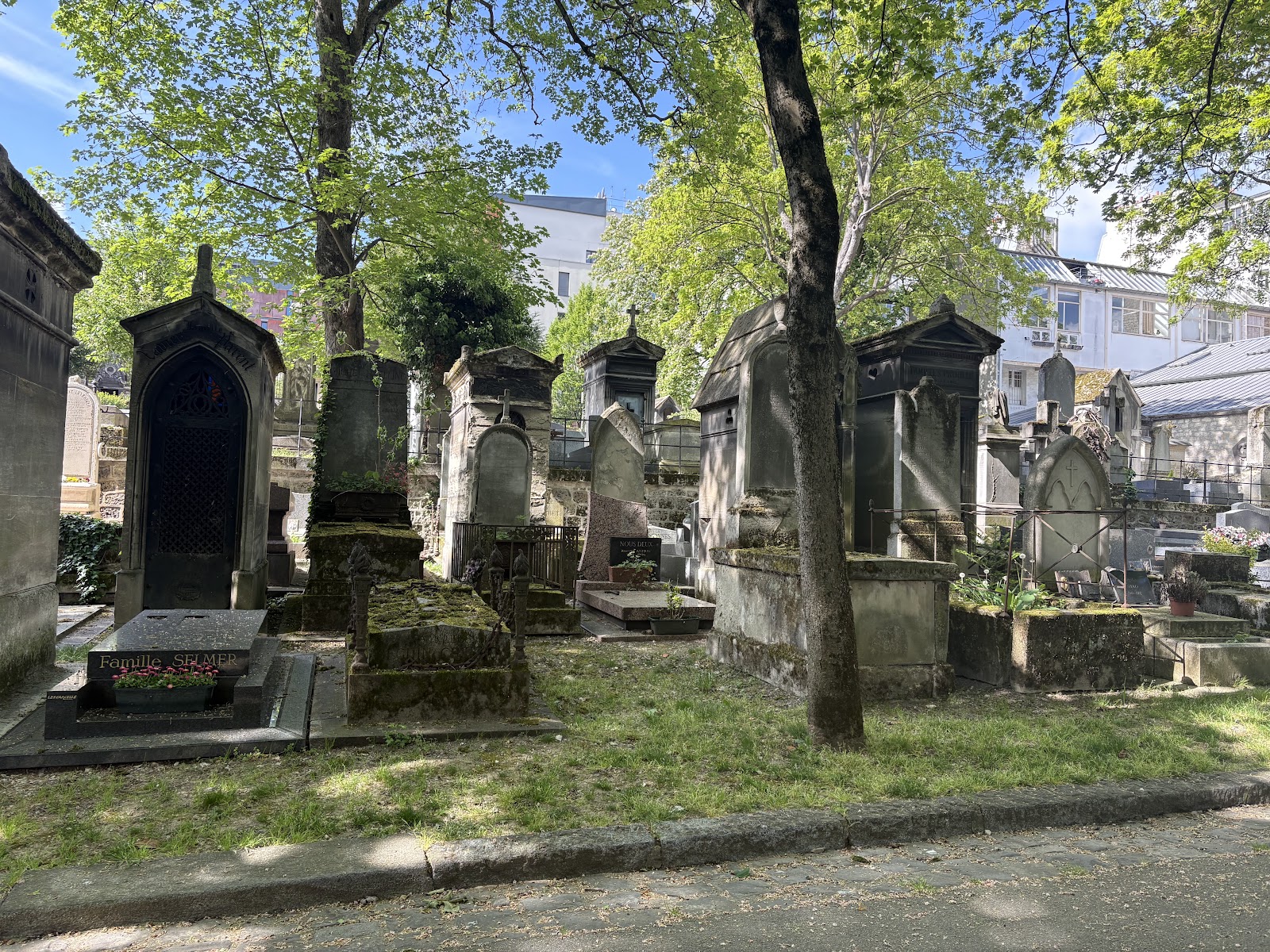
Across its 11 hectares, nearly 20,000 graves gather under some 800 trees — 38 species, mostly maples — arranged across 33 divisions. The funerary architecture ranges from plain headstones to elaborate mausoleums in Egyptian, Gothic, and Art Nouveau styles. Berlioz, Degas, Truffaut, Nijinsky, Stendhal: the ground here holds an unusual density of 19th- and 20th-century creative life.
💛 What travellers fall for
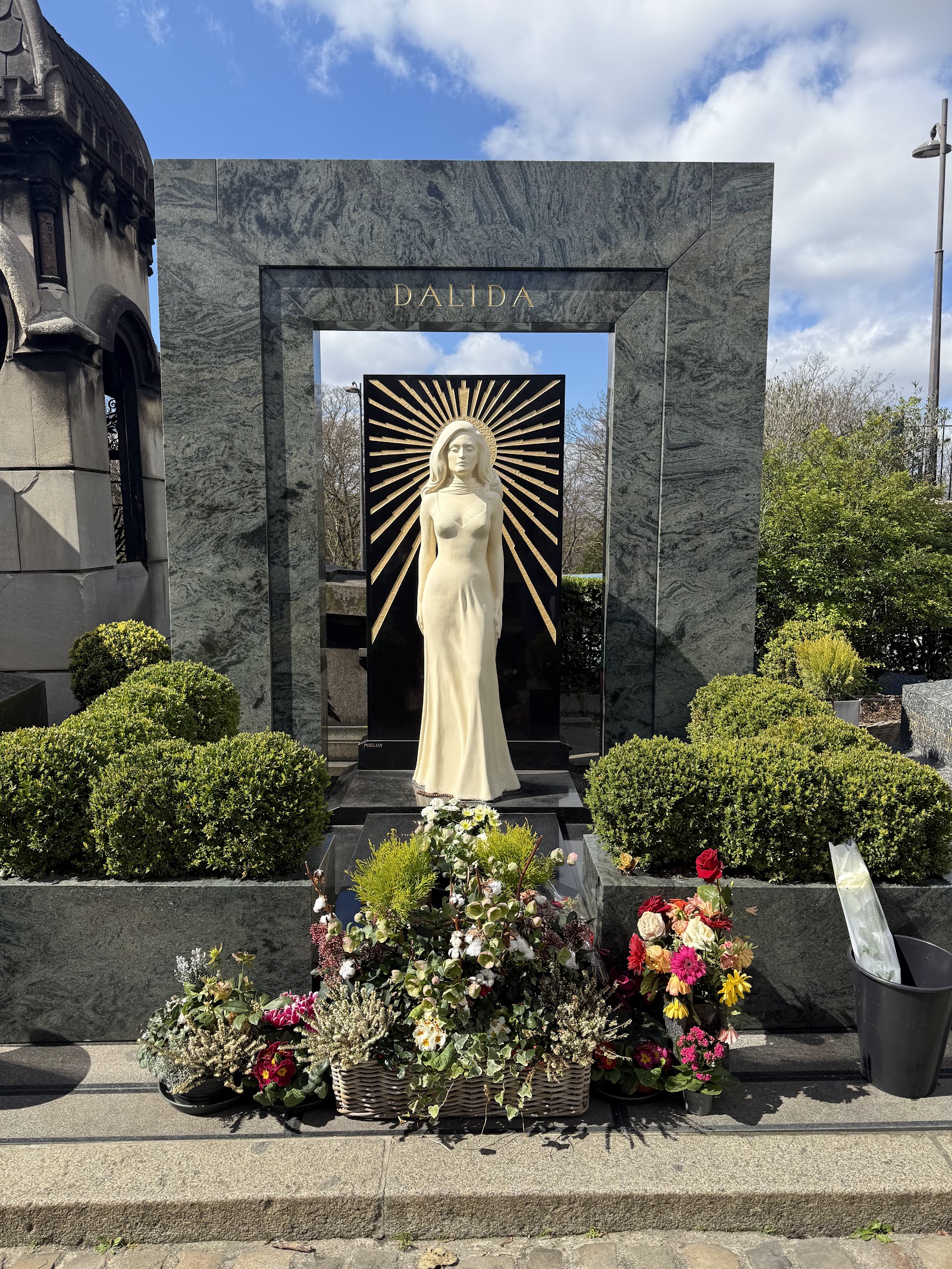
People who come back tend to pick up a free map at the entrance and treat it like a slow puzzle. Division 9 for Offenbach, division 11 for Degas. Nijinsky's grave, marked by a statue of him as Petrushka, stops most visitors cold. Dalida's tomb — life-size sculpture, gilded rays, perpetually fresh flowers — is the one that draws the longest quiet pause.
The story behind Cimetière de Montmartre
Paris's old inner-city cemeteries were closed in the 1780s after overcrowding made them a sanitary crisis — Cimetière des Innocents was the most notorious case. In the early 19th century, the city established four new cemeteries outside the old limits: Père Lachaise to the east, Montparnasse to the south, Passy to the west, and Montmartre to the north. Architect Pierre-Victor Sènel designed this one in an abandoned gypsum quarry west of the Butte, and it opened on 1 January 1825 under the name Cimetière des Grandes Carrières.
The quarry's past as a Revolutionary mass grave gave the site an already-layered history before the first formal burial. The metal Pont Caulaincourt was built over it in 1888, literally bridging the living street above and the cemetery below. In April 2024, the site was classified as a heritage site of the City of Paris.
Good to know
Take Métro line 2 to Blanche or Place de Clichy. The sole entrance is on Avenue Rachel, below Rue Caulaincourt — easy to miss if you're walking along the bridge above. No entry within 15 minutes of closing. Winter hours end at 17h30, so a late afternoon visit needs planning.
Spring and early autumn are the most rewarding seasons — the maple canopy is full but not yet blocking low light, and the stone takes on warmth in afternoon sun. Winter visits are quieter and starker, with closing time arriving early; the bare trees make the architecture easier to read.
Where is Cimetière de Montmartre?
Location
- In Paris 18th Arrondissement
- 48.8843, 2.3328
- Open in Google Maps
Rating
4.6 ★ · 928 Google reviews
More tickets & tours for Cimetière de Montmartre
Book directly at the provider
What travellers say about Cimetière de Montmartre
I have to start by mentioning the entrance, as it got us confused on Google Maps. It’s just below the bridge on the right side of the road. The place itself is grand, with a lot of important people’s graves. The cemetery doesn’t feel like a cemetery, it’s like a museum you’re walking around. Not all the important graves are marked either on the map near the entrance or on Google Maps, but no worries, you can just walk around and find them on your own. Also, there were a lot of cats :)
If you're into exploring the great (and lesser) cemeteries of Europe, you won't go wrong by adding this to your list. It's a lovely walk and the cemetery is filled with notable artists, authors and entertainers. I had some trouble connecting the location of burial sites with the map located at the entrance but, if you have time, it shouldn't matter (they're not going anywhere :) )
A must do . An insightful walk through French history . Many famous authors scientists politicians, have memorials here. The architecture of the memorials is amazing , reflecting monumental art of that particular era. It’s also peaceful and reflective . Above as the frantic city traffic races by, and people revel in the streets of Montmartre , here below people that once did those very same things rest eternally. The contrast to Myself couldn’t be more poignant.
The Montmartre Cemetery left a deep impression on me. Walking among the resting places of so many renowned individuals, artists, writers, and thinkers was both humbling and thought provoking. It reminded me that no matter how high we rise in life, we all eventually return to the same stillness. There’s something powerful about standing in the presence of history, where greatness now rests in quiet dignity. The cemetery itself is peaceful, shaded by trees, and full of character. It’s not just a place of remembrance, but a quiet space for reflection on the impermanence of life and the legacy we leave behind.
As a cemetery enthusiast, one of the best I have ever been to. Each grave is so beautiful and unique and holds so much history. It’s a very large cemetery so there’s so much to see! So many fun nooks to explore different views of it all. Not too many cats but that’s okay! I wish I could have spent longer here but just didn’t have the time. If i lived here or came back, I would love to take a longer stroll around, maybe find a bench with a pastry and some coffee and just enjoy the history of it all.
More of Paris 18th Arrondissement
Discover where to stay, what to do and the best deals for your trip.
Explore Paris 18th Arrondissement →More attractions in Paris 18th Arrondissement
All of Paris 18th Arrondissement →
Background adapted from Wikipedia (CC BY-SA) · map data © OpenStreetMap contributors · ratings & place photos via Google · other photos with per-image credit. Ticket links may earn us a commission at no extra cost to you.