
Chrob ou Chouf Fountain
The name says everything: Chrob ou Chouf means 'drink and look.' Set into a medina alleyway near the Ben Youssef Madrasa, this Saadian-era wall fountain is not a grand monument — it's a tap recessed into stone, sheltered by a carved cedar lintel dense with Arabic calligraphy in thuluth script, and crowned by a green-tiled wooden canopy that juts out over the lane.
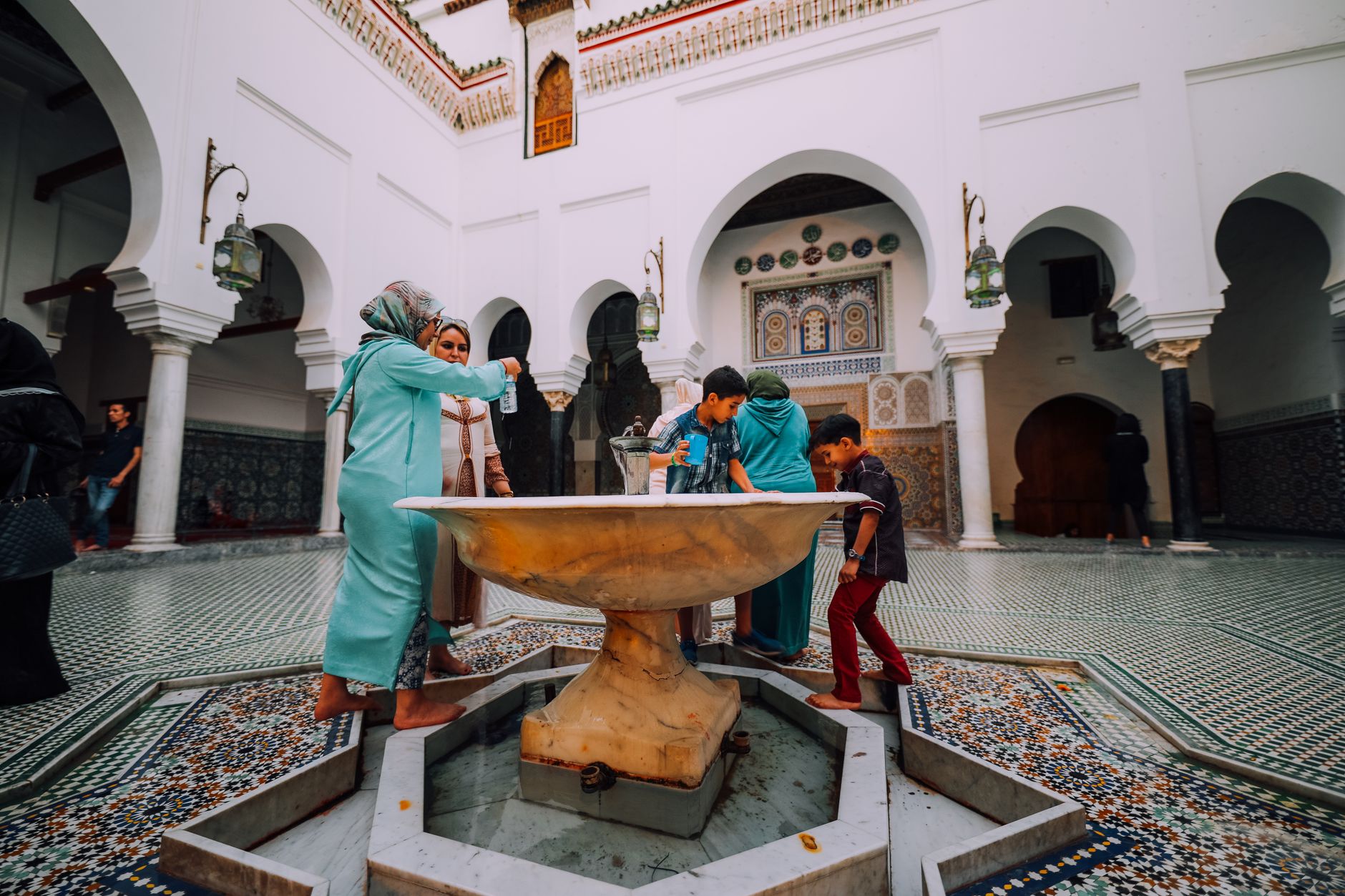
People still stop here. A resident fills a bottle, someone pauses mid-errand. The fountain is one of 45 public drinking points built into the medina's fabric, and this one — with its two cartouches praising God and its quiet instruction to slow down — is the most articulate of them.
💛 What travellers fall for
People who find it once tend to route past it again. The trick most share: don't trust the pin on your map — the GPS location runs about 800 feet off. Walk from the Medersa Ben Youssef and look for the projecting green-tiled canopy above the lane. Early morning, before the alleyways fill, the light on the cedar carving is worth the detour alone.
How Chrob ou Chouf Fountain came to be
The fountain dates to the late 16th or early 17th century, built during the Saadian dynasty when Marrakech served as the dynasty's capital. It's sometimes attributed to the reign of Sultan Ahmad al-Mansur (1578–1603), though no source confirms exactly who commissioned it or who designed it.
What survives is the architectural intention: a loggia form that shelters a water source from the sun, marks it with sacred text, and addresses the street directly. The medina as a whole was designated a UNESCO World Heritage Site in 1985, and the fountain — still functional — remains part of that living infrastructure rather than a relic of it.
Who and what shaped it
People who shaped it
Landmark buildings
Plan your visit
On the map
When to go
Spring (March to May) and autumn (late September to mid-November) are the most comfortable seasons, with daytime temperatures in the mid-20s to low 30s°C; summer pushes regularly past 38°C, which makes even a brief stop in a shaded alleyway feel like a considered choice. Winter days are mild but nights can drop to near freezing.
Right now
Background & history adapted from Wikipedia (CC BY-SA) · specs from Wikidata (CC0) · weather from Open-Meteo · map data © OpenStreetMap contributors · photos from Wikimedia Commons / Unsplash with per-image credit. No third-party reviews or social posts reproduced.