
Chiesa di San Michele in Foro

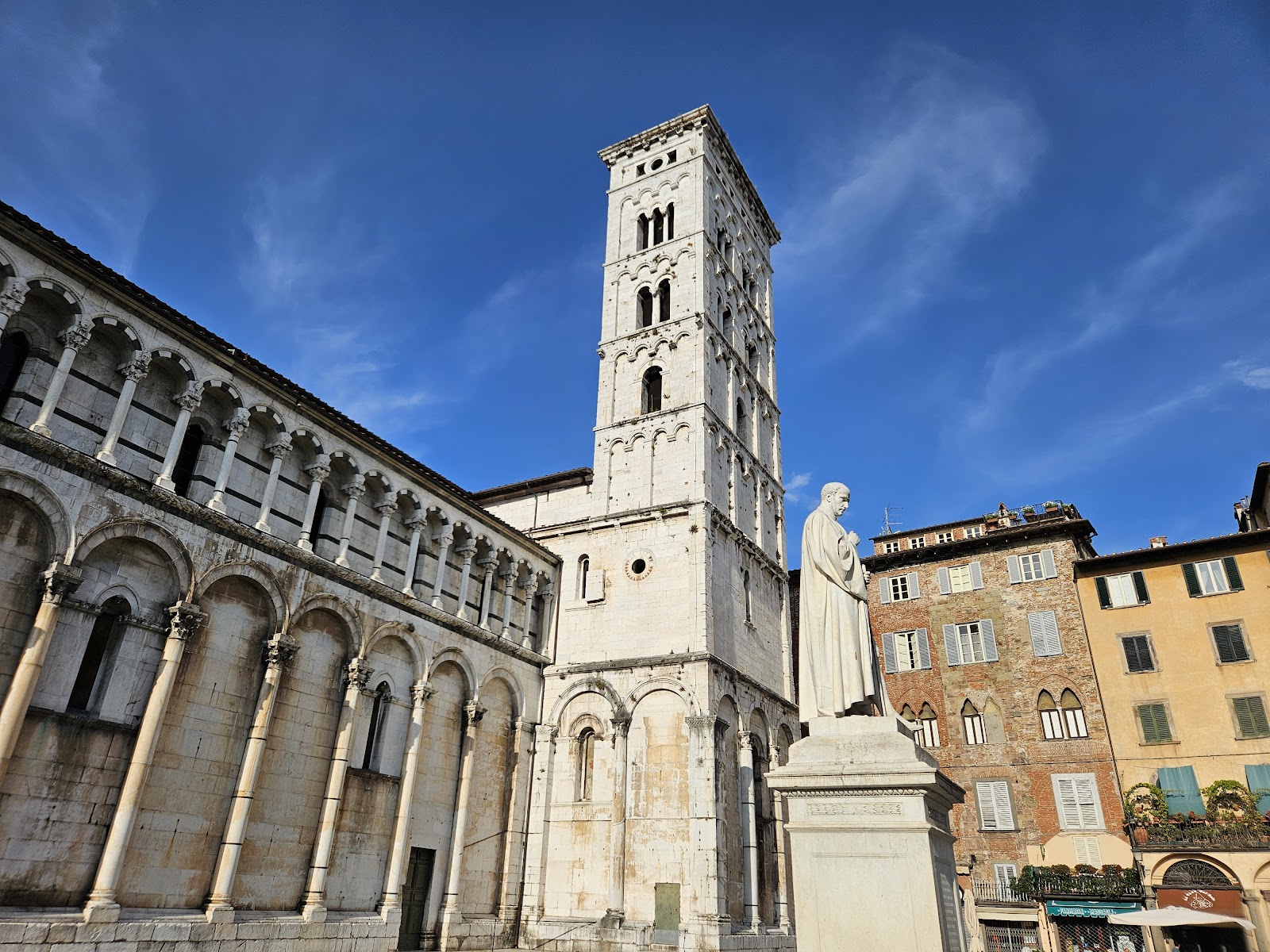
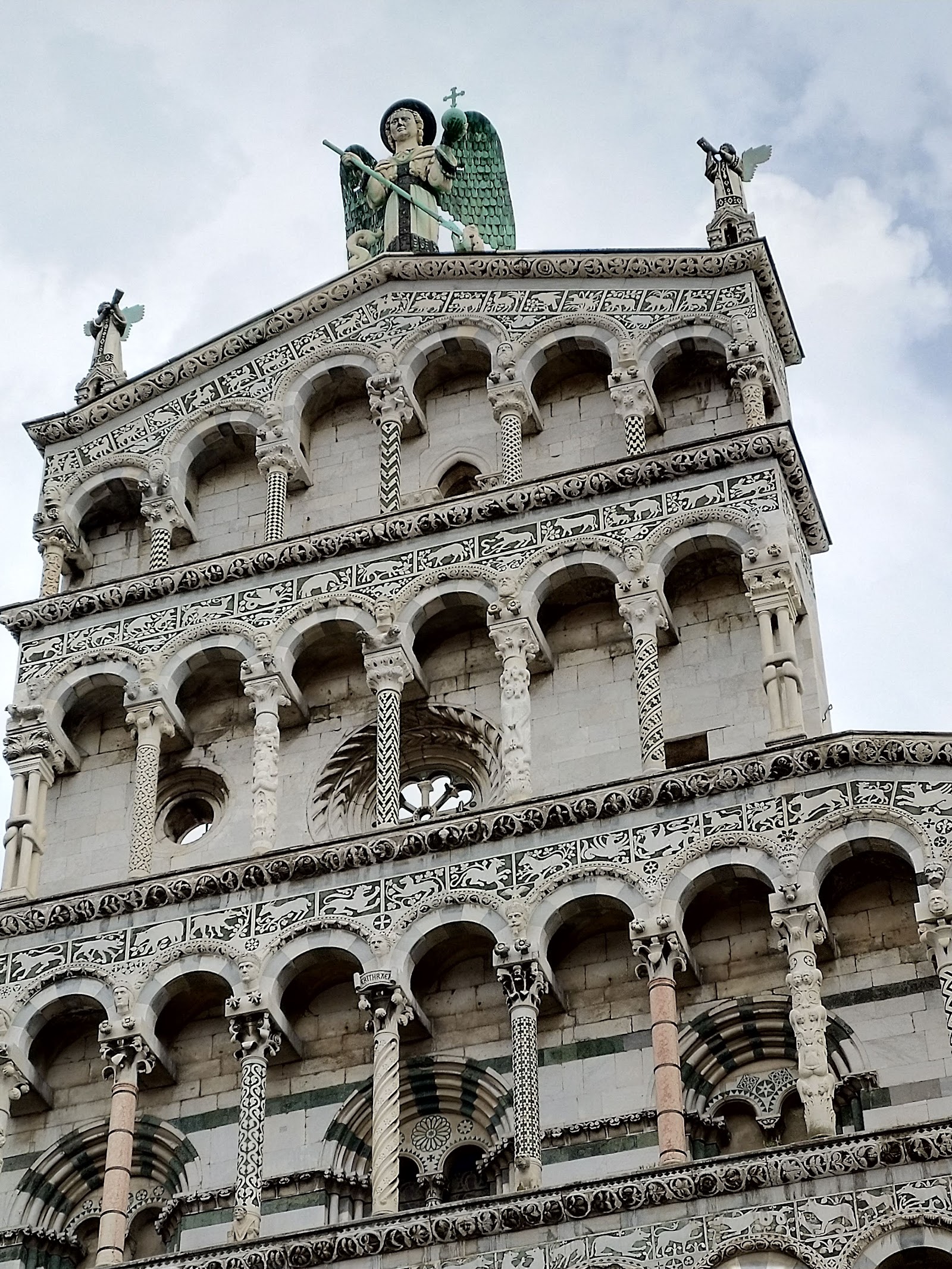
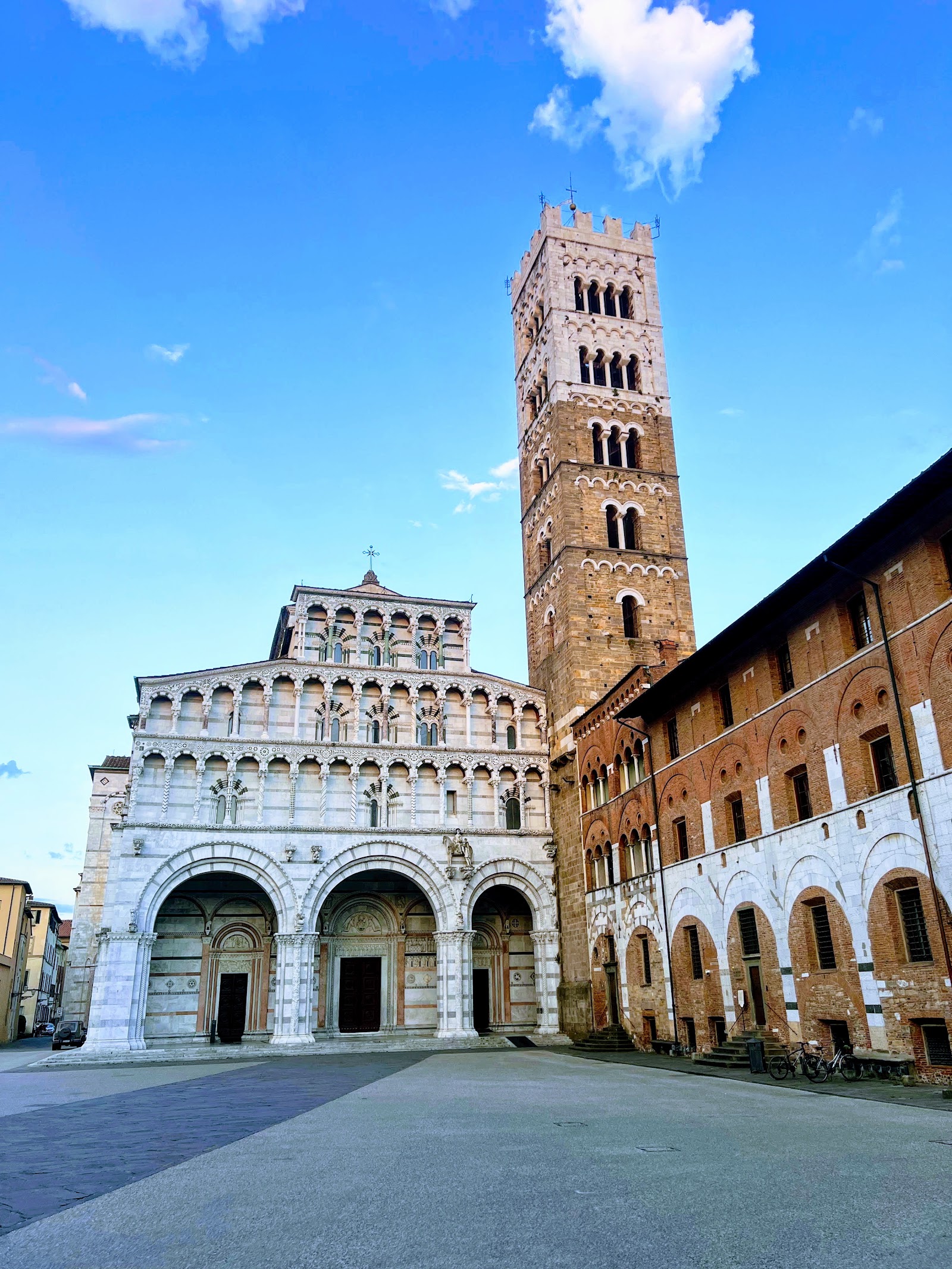
The façade of San Michele in Foro stops you before you've finished crossing the piazza. Four tiers of small loggias rise above the roofline, each column slightly different from the last, and at the very top a four-metre bronze archangel catches the light — on certain bright days, a green glint from the statue has fed a centuries-old rumour about an emerald hidden inside. No one has ever found it.
The church stands on the exact footprint of the ancient Roman forum, which is why it carries 'in foro' in its name. That continuity runs deep here: people have been gathering on this square for the better part of two thousand years, and the steps are still occupied most afternoons by locals eating gelato.
💛 What travellers fall for
People who return tend to come back for Filippino Lippi's 1483 altarpiece — four saints arranged with quiet precision — and for the Luca della Robbia Madonna in enamelled terracotta, which glows unexpectedly in the nave's half-light. Go in the morning when the interior is emptier and the loggia columns catch the low sun from the east.
The story behind Chiesa di San Michele in Foro
A document from 795 places a church 'ad foro' — at the forum — on this site, though the structure you see today began taking shape after 1070, when Pope Alexander II ordered a full rebuilding. The façade accumulated its current form through the 13th century, with sculptural work associated with Guidetto da Como's school, whose signature small loggias also appear on the nearby cathedral of San Martino, and possibly with Diotisalvi, who later built the Baptistry at Pisa.
For nearly three centuries, until 1370, the church served a civic as well as a sacred function: the Consiglio Maggiore, Lucca's governing assembly, met here. The bell tower's top floor was demolished in the 1360s, reportedly on the orders of the Doge of Pisa — either because it overshadowed a Pisan tower or because its bells could be heard as far as Pisa itself.
Good to know
Entrance is free. The church is a 900-metre walk from Lucca station or a short ride on the LAM Verde bus to the San Salvatore stop, 120 metres away. A wheelchair ramp runs alongside the entry staircase. Hours shift between summer and winter, so check before you go — an hour inside is usually enough.
Where is Chiesa di San Michele in Foro?
More tickets & tours for Chiesa di San Michele in Foro
Book directly at the provider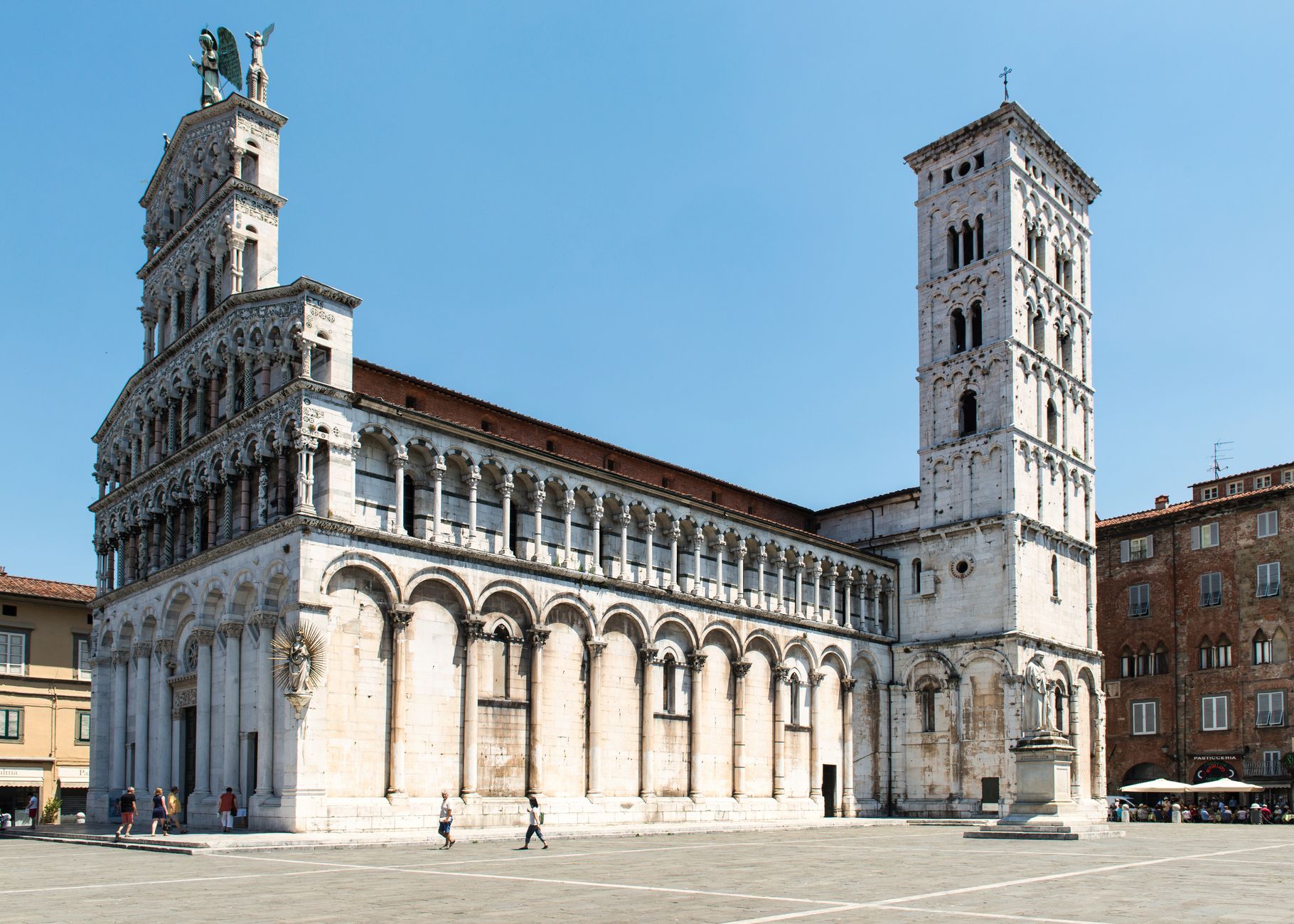
What travellers say about Chiesa di San Michele in Foro
This historical landmark is incredible to behold. It is dedicated to St. Michael and is known for housing the famous Magrini Altarpiece by Lippi. The architecture is Romanesque, with an impressive level of fine detail both inside and out. The interior is more solemn compared to other churches I’ve visited, but just as intriguing, especially in the ornate carvings that reward a closer look.
The exterior architecture is very enjoyable to examine, with great detail and fine craftsmanship. The same cannot be said for the interior; it lacks any features that match what we saw on the outside, it's quite simple.
A solemn, but beautiful church, first built in 795ad and dedicated to St. Michael. It was again added/rebuilt in 1070ad. It contains the remains of St. Davino Armeno. My favorite painting is the Magrini Alterpiece (~1480) by Filippo Lippi (student of Sandro Botticelli)
We started the Palm Sunday procession here. It is very old and not decorated lavishly as other cathedrals on the inside.
After seeing it the second time, it is still just as cool as the first. It is leaning for sure and it is a beautiful building. Crazy to see the "adjustment" they made on the middle floors if you look close enough. Still hate the fact that nobody follows the rules about staying off grass and people standing inside the no go zone for their pictures. Everyone is more important than anyone else. And unless you live within walking distance leave your dog at home.
More of Lucca
Discover where to stay, what to do and the best deals for your trip.
Explore Lucca →More attractions in Lucca
All of Lucca →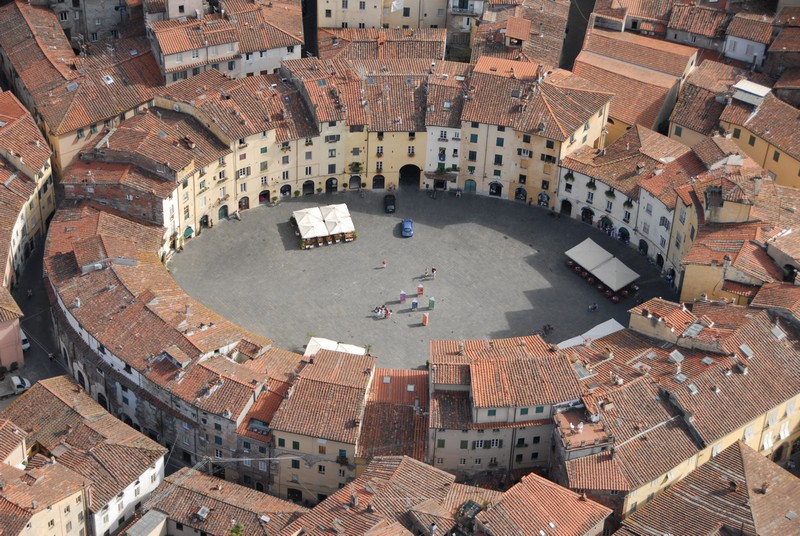


Background adapted from Wikipedia (CC BY-SA) · map data © OpenStreetMap contributors · ratings & place photos via Google · other photos with per-image credit. Ticket links may earn us a commission at no extra cost to you.