
Central Courtyard (Dar Menebhi Palace)
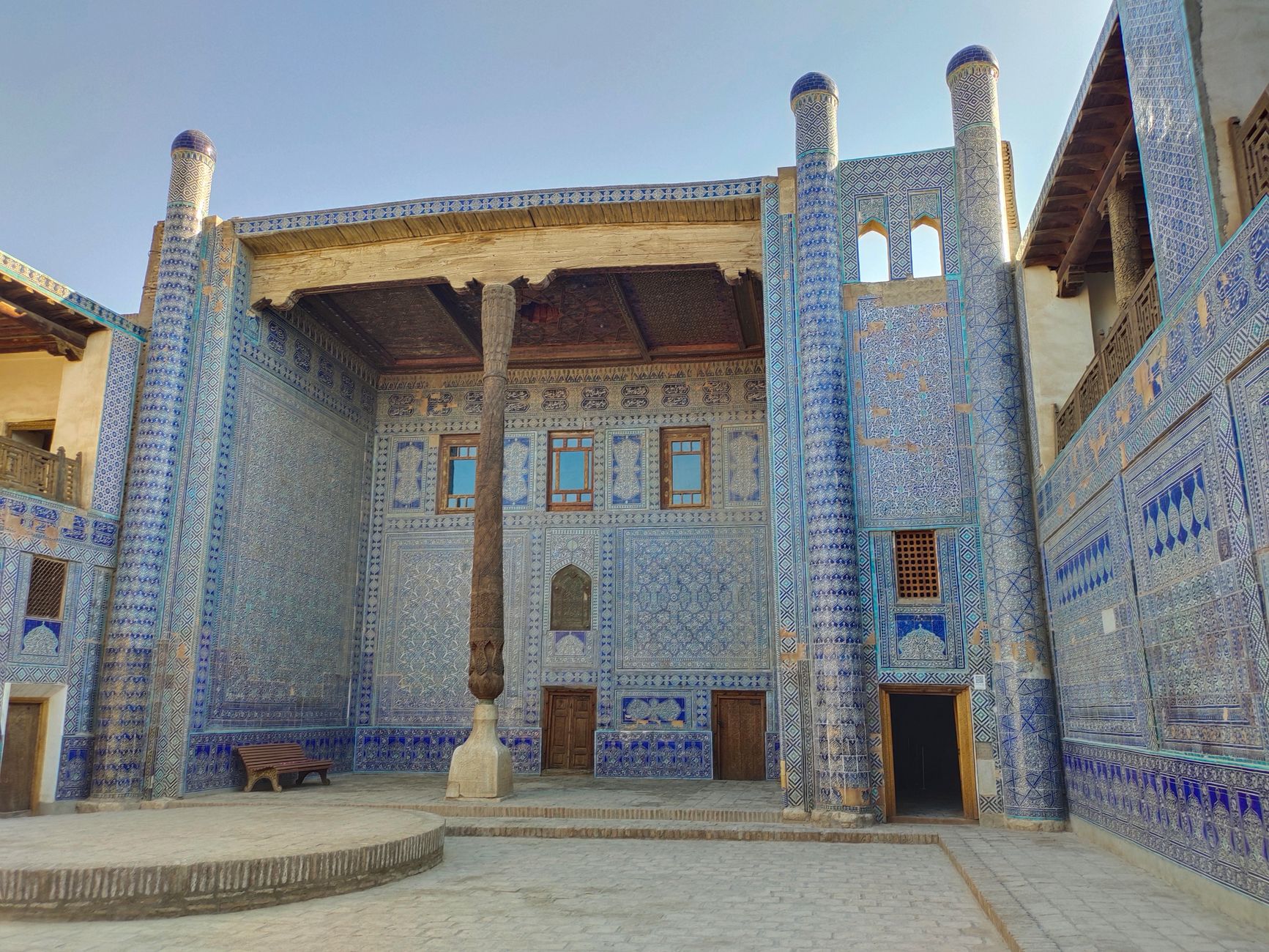
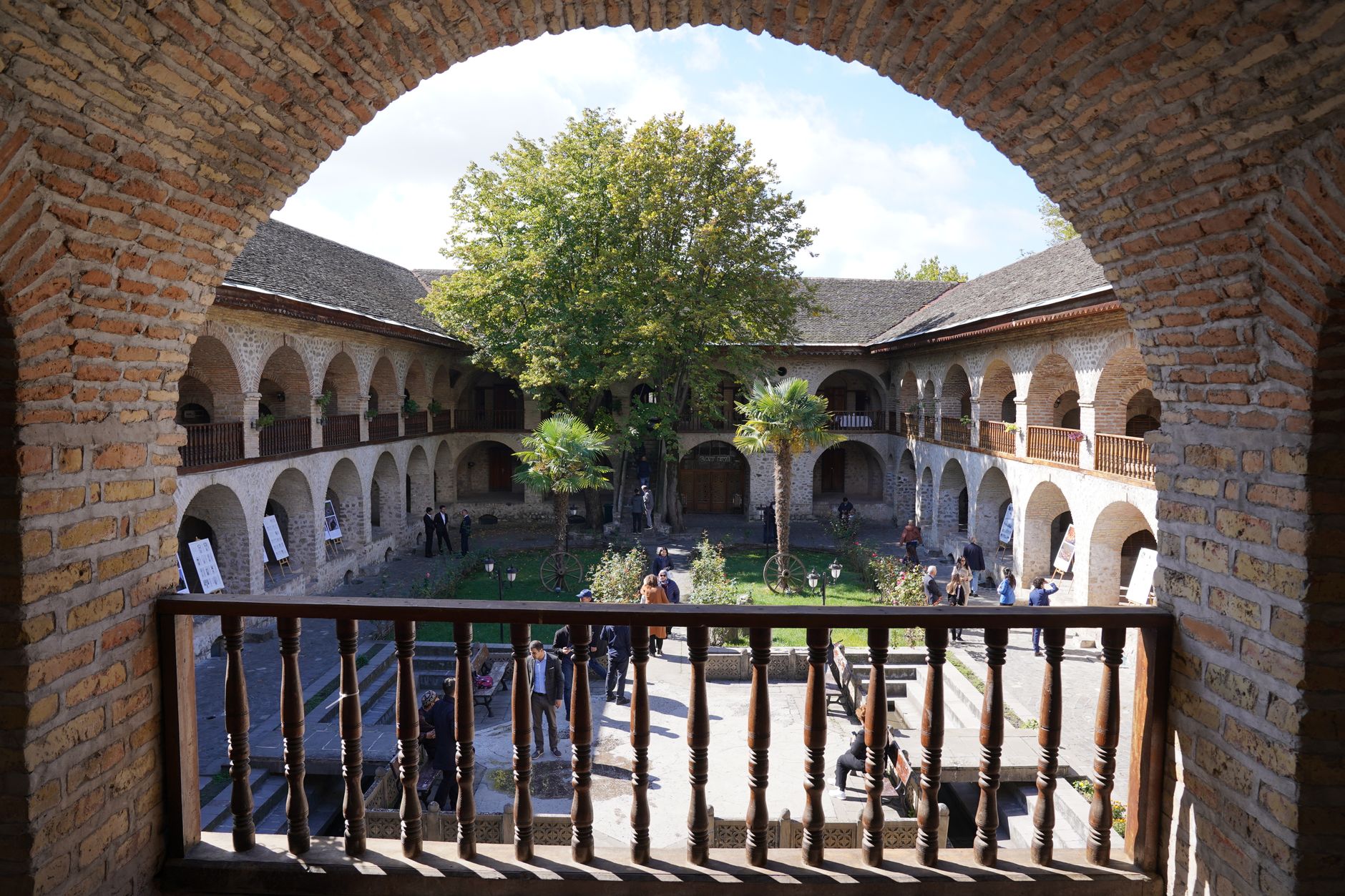
The first thing you notice is the chandelier — a vast brass construction hanging from the roofed-over courtyard, its geometric cutwork casting small shadows across the zellige below. This was once an open riad garden, trees and sky overhead; now it is paved and covered, the fountains still running, the cedar galleries still painted in deep ochre and green, the wall tiles still catching whatever light gets in.
Everything branches off from here. The rooms of the Marrakech Museum — coins, ceramics, weapons, jewelry — radiate outward from this central space, which means you keep returning to it between galleries, each time from a slightly different angle.
💛 What travellers fall for
People who come back tend to do the same thing: arrive when the museum opens at nine, before tour groups fill the galleries, and stand under the chandelier for a few minutes before moving anywhere else. The café is worth knowing about for a mid-visit coffee — quieter than anything on the street outside.
How Central Courtyard (Dar Menebhi Palace) came to be
The palace was built at the turn of the twentieth century for Mehdi al-Mnebhi, a qaid of the Mnabha tribe who served as minister of war under Sultan Moulay Abdelaziz from 1900 to 1908. It was built on a scale that reflected his position — multiple courtyards, a hammam, kitchens — and the central courtyard, originally planted as an open riad garden, was the organizing heart of the whole compound.
After Moroccan independence in 1956, the state seized the palace. By 1965 it had become a girls' school; after that, a period of disuse. The Omar Benjelloun Foundation restored it and opened it as the Marrakech Museum in 1997, roofing over the courtyard and installing the brass chandelier that now defines the space.
Who and what shaped it
People who shaped it
Landmark buildings
See Central Courtyard (Dar Menebhi Palace) in motion
Plan your visit
On the map
When to go
The courtyard is roofed, so rain is not a factor, but the museum has no climate control — in July and August the heat inside can be significant, while winter mornings turn genuinely cold. Spring and autumn visits, when outdoor temperatures sit in the low-to-mid twenties Celsius, make the experience considerably more comfortable.
Right now
Background & history adapted from Wikipedia (CC BY-SA) · specs from Wikidata (CC0) · weather from Open-Meteo · map data © OpenStreetMap contributors · photos from Wikimedia Commons / Unsplash with per-image credit. No third-party reviews or social posts reproduced.