
Cattedrale di San Martino (Lucca Cathedral)
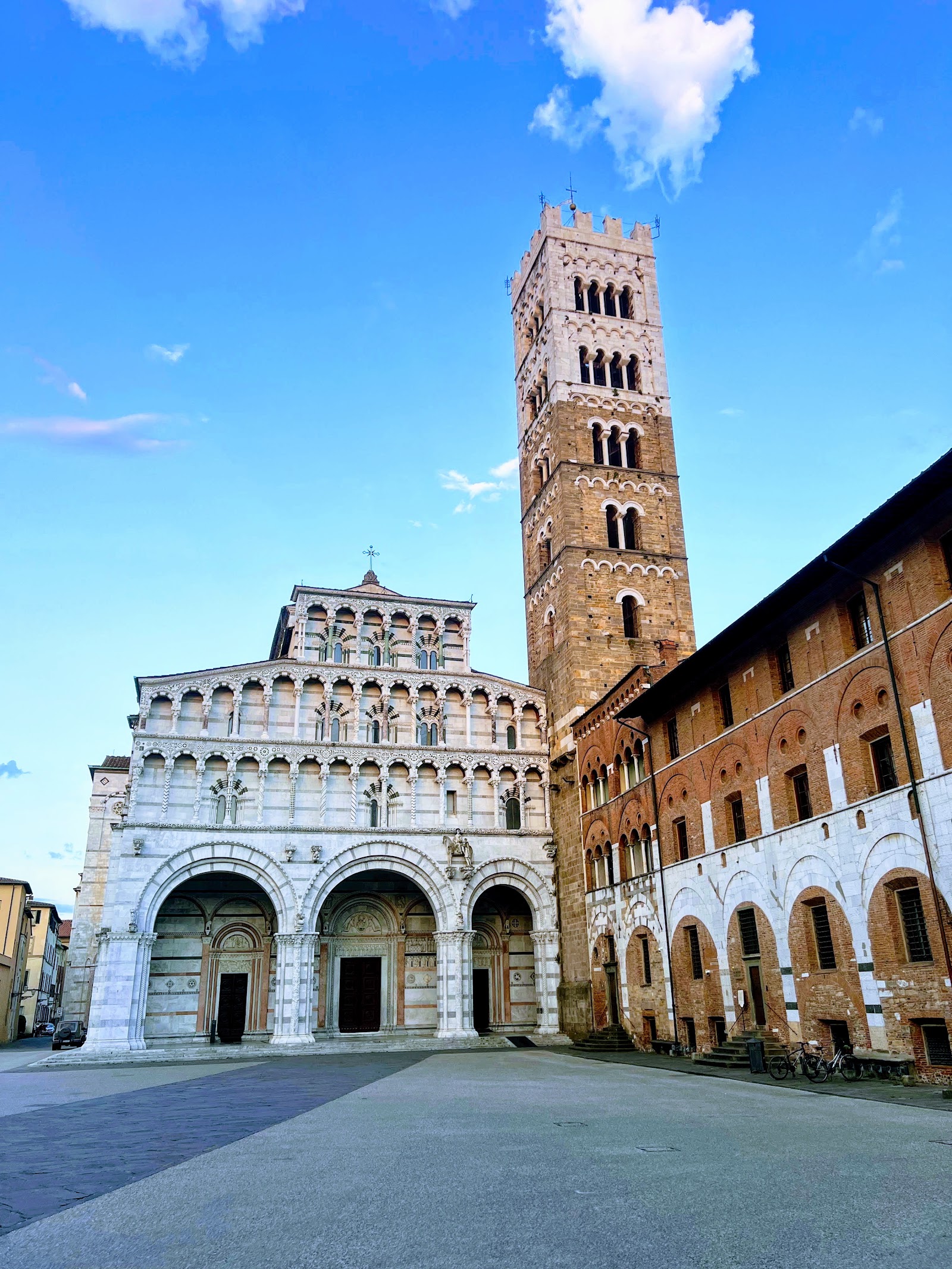
Before you step through the door, stop at the right pier of the portico and find the labyrinth carved into the stone — a small, finger-traced spiral that may predate the famous one at Chartres, yet follows the same pattern. Pilgrims on the Via Francigena once touched it on their way to Rome, and the moneychangers who set up stalls under these arches were reminded in monumental Latin inscription not to cheat them.
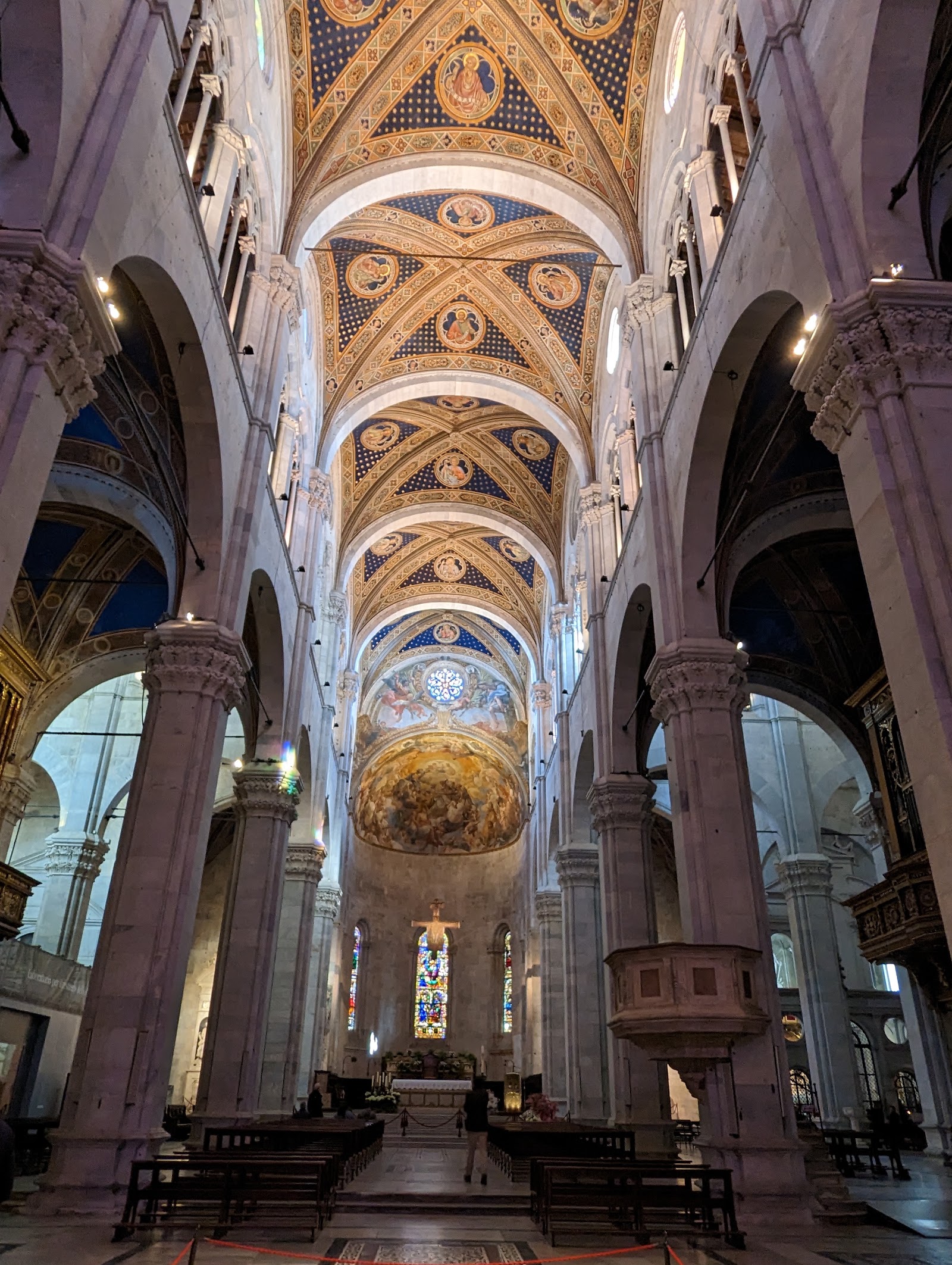
Inside, the Gothic nave opens into something quieter than its marble facade suggests. Matteo Civitali's octagonal chapel, built in 1484, holds the Holy Face of Lucca — a dark wooden crucifix whose legend traces back to the 8th century. Nearby, Jacopo della Quercia's marble effigy of Ilaria del Carretto lies in stillness that stops most people mid-step.
💛 What travellers fall for
People who return tend to spend less time looking up at the Tintoretto or the Ghirlandaio and more time circling back to the Ilaria effigy — the little dog at her feet, the way della Quercia carved her as if she had simply closed her eyes. The bell tower ticket is worth it for the view over the rooftops toward Le Mura.
The story behind Cattedrale di San Martino (Lucca Cathedral)
A church stood on this site as early as the 6th century, founded under Bishop Frediano, who led the diocese from around 560 to 588 AD. The episcopal seat moved here from the earlier church of San Reparto, and the building was completely rebuilt between 1060 and 1070 — consecrated that year by Anselmo da Baggio, by then Pope Alexander II, with Countess Matilda of Canossa present.
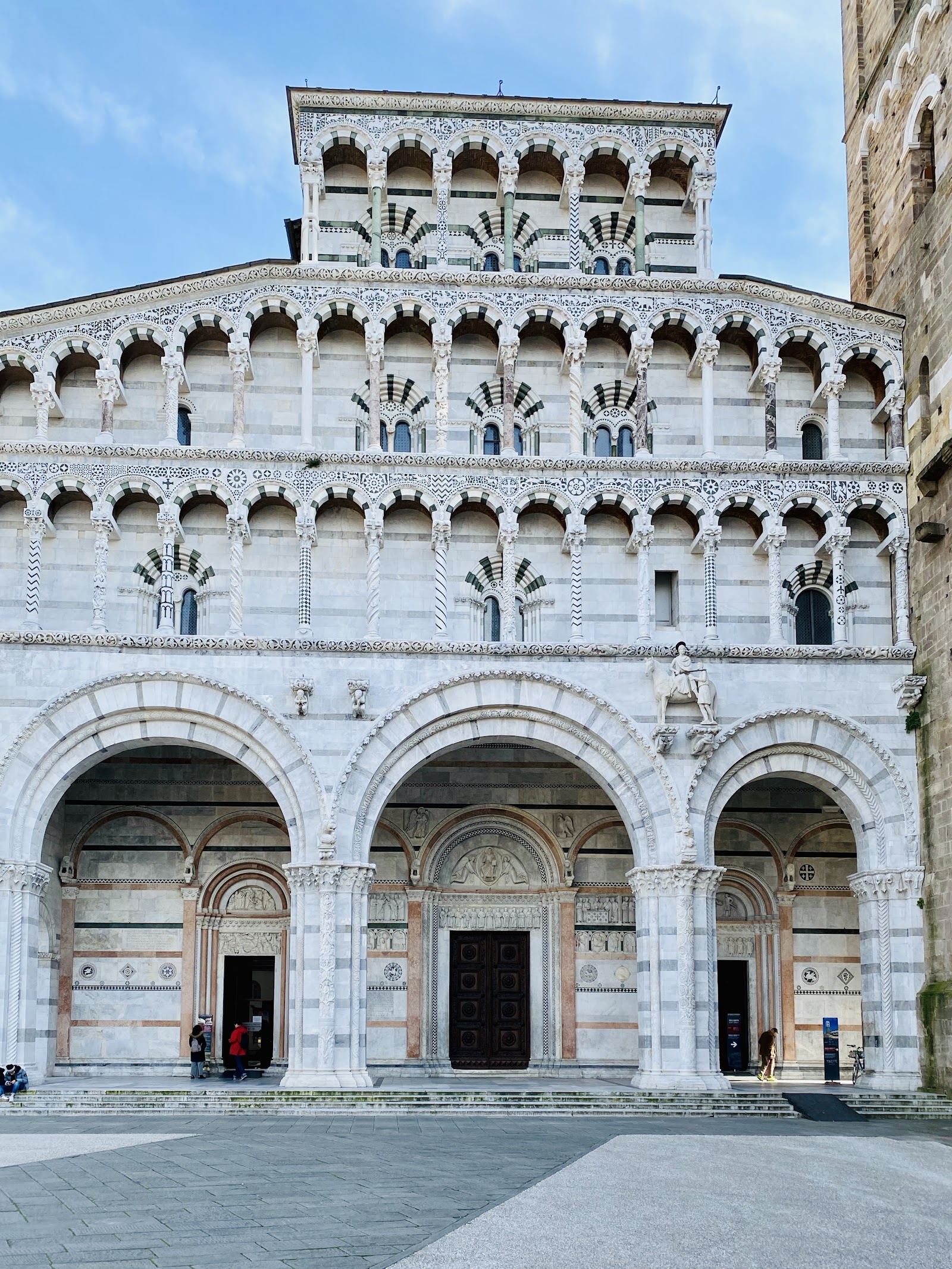
The facade you see today began taking shape in 1204 under Guido Bigarelli of Como, its alternating bands of white, green, and pink marble in the Pisan Romanesque style. The Gothic nave and transepts followed in the 14th century. Construction continued in phases for more than four centuries, ending in 1637 with the Shrine Chapel. The Holy Face relic — a carved wooden crucifix said to have arrived in Lucca in 782 — has been the cathedral's defining object throughout.
Good to know
Open Monday–Saturday 10am–6pm, Sunday from noon. Entry is €5 (cathedral and Ilaria del Carretto); residents of Lucca enter free. The bell tower is a separate €3. Lucca's train station is a ten-minute walk south. Skip the visit during Sunday midday Mass if you want quiet contemplation of the interior.
Where is Cattedrale di San Martino (Lucca Cathedral)?
More tickets & tours for Cattedrale di San Martino (Lucca Cathedral)
Book directly at the provider
What travellers say about Cattedrale di San Martino (Lucca Cathedral)
A beautiful, historic stop in Lucca! The Duomo di San Martino is an incredible piece of architecture. The Romanesque design of the facade is stunning, but the highlight for me was seeing the ancient labyrinth carved into the right wall of the porch—a fascinating piece of history for the pilgrims who used to visit it on their journeys. Entry to the cathedral is 5 euros, and it costs a bit extra if you want to climb the bell tower. Well worth the visit!
San Martino Cathedral in Lucca is an absolute masterpiece! The stunning Romanesque facade and the intricate carvings are breathtaking. Inside, Volto Santo and Ilaria del Carretto’s tomb are deeply moving. A peaceful, historic gem you cannot miss in this beautiful town.
Beautiful cathedral with lots of art. There is a Tintoretto's Last supper inside and other great pieces. The tower is accessible but has quite terrifying metal narrow stairs that are in the open space. If you pass them though, the view is great.
A church containing the "Holy Face" relic, a wooden crucifix supposedly carved by a person known to Jesus. The inlaid floors, as well as, the paintings are vibriant and commanding. The diverse columns on the outside of the building were the result if a contest, where the people of Lucca decided to use all of them. Then there is the mysterious labyrinth on one of the outside columns, believed to be carved before the one at Chartres.
Lovely quaint catherdral in a somewhat uncongested area. Has all of the splendid features of the larger and grander cathedrals, including artworks, sculptures and architecture. Surrounded by a pleasant square, that leads to other areas of interest.
More of Lucca
Discover where to stay, what to do and the best deals for your trip.
Explore Lucca →More attractions in Lucca
All of Lucca →


Background adapted from Wikipedia (CC BY-SA) · map data © OpenStreetMap contributors · ratings & place photos via Google · other photos with per-image credit. Ticket links may earn us a commission at no extra cost to you.