
Cattedrale di San Lorenzo
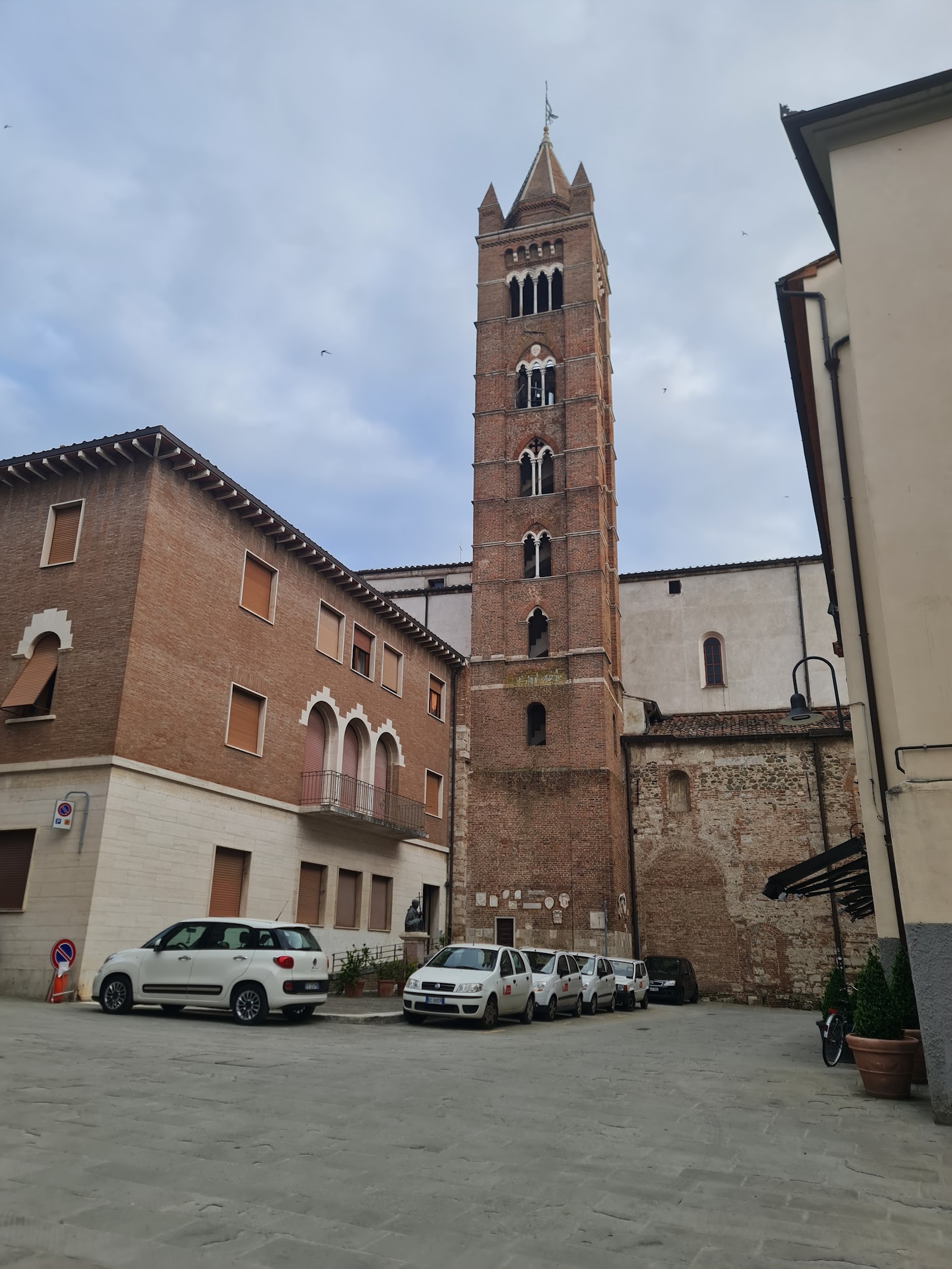
The striped marble facade of San Lorenzo — alternating bands of white and black — stops you before you've crossed the piazza. It reads as distinctly Sienese, which makes sense: the architect Sozzo Rustichini came from Siena when construction began in 1294, and his hand is legible in the stonework even after centuries of revision.
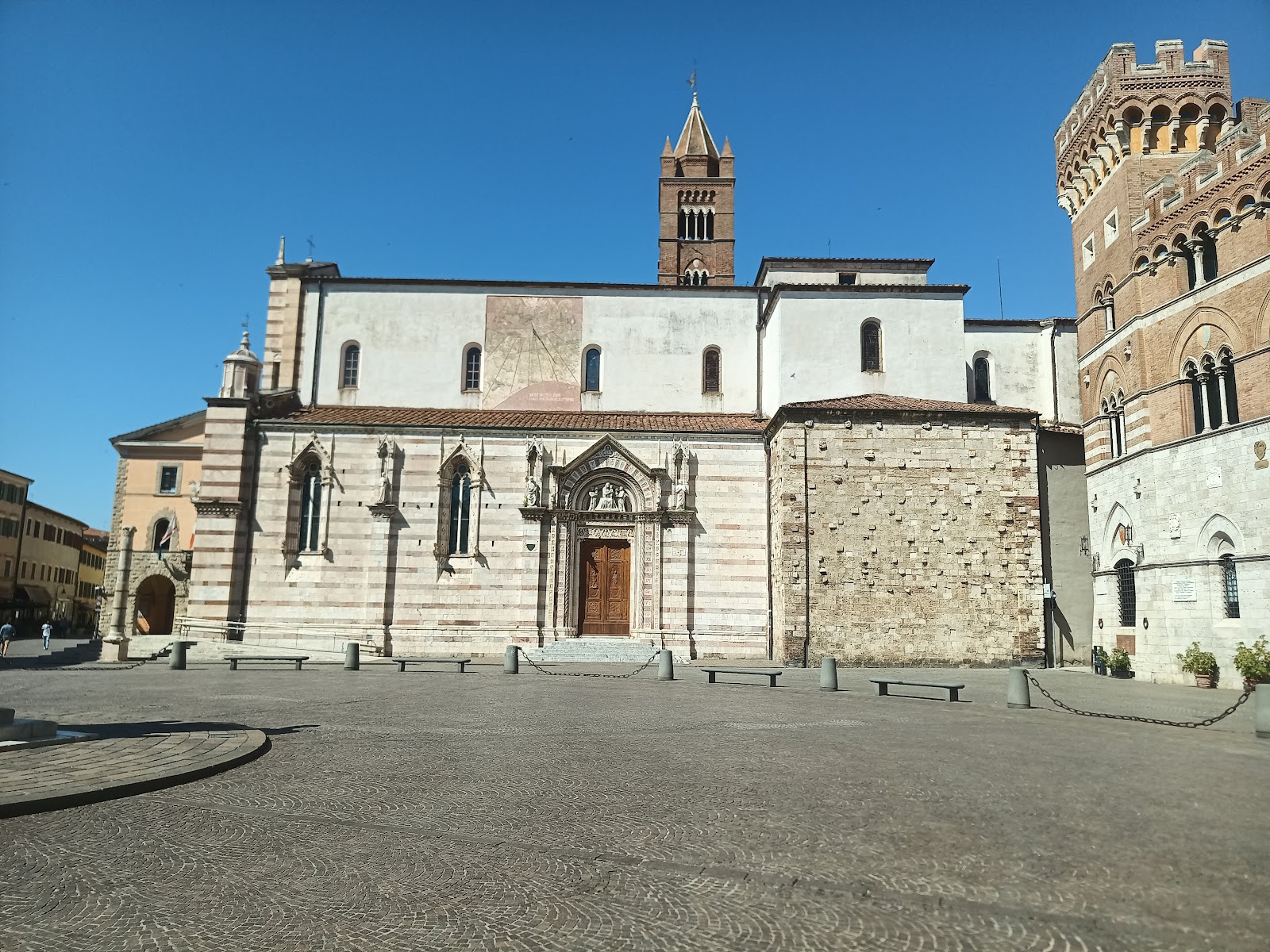
Inside, the cathedral holds a quiet density of craft. Benvenuto di Giovanni's stained-glass windows date to around 1470, the same decade Antonio Ghini carved the octagonal baptismal font with its ring of festoons. A polychrome wooden crucifix attributed to Vecchietta occupies its own corner of the space, worn and specific in the way 15th-century devotional objects tend to be.
💛 What travellers fall for
People who return tend to head straight for Matteo di Giovanni's Madonna delle Grazie altarpiece — the marble aedicula framing it, also by Ghini, is easy to pass over the first time. The five audioguides in English are worth picking up; they slow you down in the right places.
The story behind Cattedrale di San Lorenzo
Grosseto became a bishop's seat on 9 April 1138, when Pope Innocenzo II transferred the diocese here from the declining city of Roselle. The cathedral was built over an earlier church dedicated to Santa Maria Assunta, with Sozzo Rustichini of Siena beginning the current structure in 1294. Wars with Siena slowed progress; completion work by Agostino di Giovanni and his son Giovanni d'Agostino — responsible for the lateral portal and windows — stretched into the 1330s and 1340s.
The 16th century brought Antonio Maria Lari's addition of the transept and new nave pillars. A major restoration between 1840 and 1865 aimed to recover the medieval forms, and the campanile, begun in 1402, wasn't finished until 1902, completed to a design by Egisto Bellini.
Good to know
Entry appears to be free as an active parish church. Weekday morning masses run at 10:00, so arrive a little before or after if you want quiet time with the interior. The cathedral sits on Piazza del Duomo, well within the Mura Medicee — walkable from Grosseto train station in around fifteen minutes.
Where is Cattedrale di San Lorenzo?
More tickets & tours for Cattedrale di San Lorenzo
Book directly at the provider
What travellers say about Cattedrale di San Lorenzo
Beautiful serene and simple. Set in a quiet town and easy to get to.
Piazza Dante in Grosseto is a tranquil, historically rich square that has preserved its authentic atmosphere. It is dominated by the 13th-century Cathedral of Saint Lawrence and the neo-Gothic Palazzo Aldobrandeschi, the seat of the province. At its center stands the statue of Grand Duke Leopold II, known as Canapone, symbolizing the reclamation of the Maremma region. The square is unassuming, lacking bustling cafés or restaurants, which enhances its peaceful character. It is an ideal spot for those seeking a quiet pause and wishing to savor the historical ambiance of the city.
Amazing structure in old city centre in Grosseto.
do I need to add any comments? One of many small town in this great country.
Spectacular atchitecture of the cathedral
More of Grosseto
Discover where to stay, what to do and the best deals for your trip.
Explore Grosseto →More attractions in Grosseto
All of Grosseto →
Background adapted from Wikipedia (CC BY-SA) · map data © OpenStreetMap contributors · ratings & place photos via Google · other photos with per-image credit. Ticket links may earn us a commission at no extra cost to you.