
Castillo de Colomares
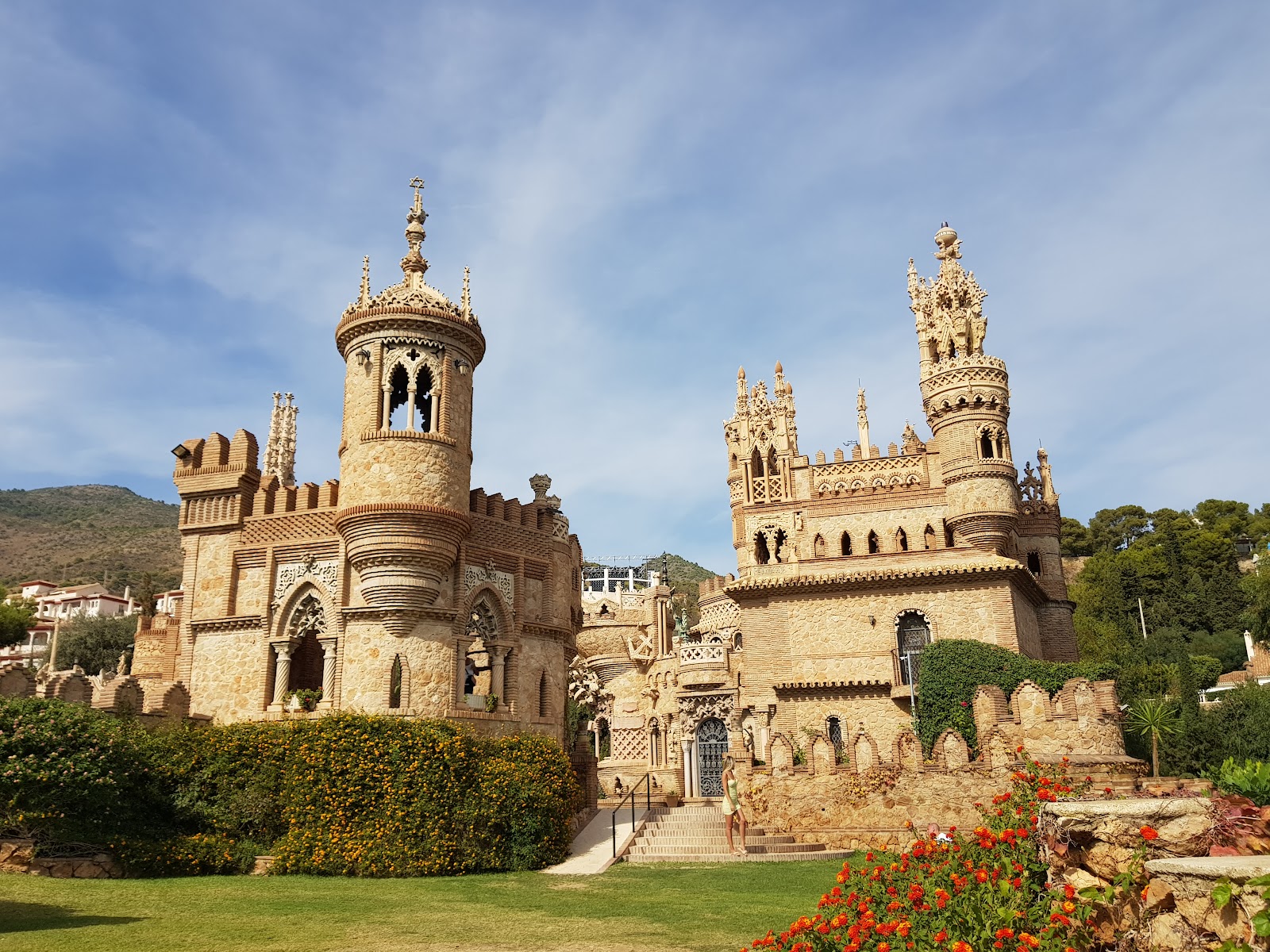
A gynecologist from New York, obsessed with Christopher Columbus, gave up his medical practice, came home to Benalmádena, and spent seven years building a castle with his own hands and two local masons. That is the full explanation for Castillo de Colomares — and it is somehow not enough to prepare you for the thing itself.
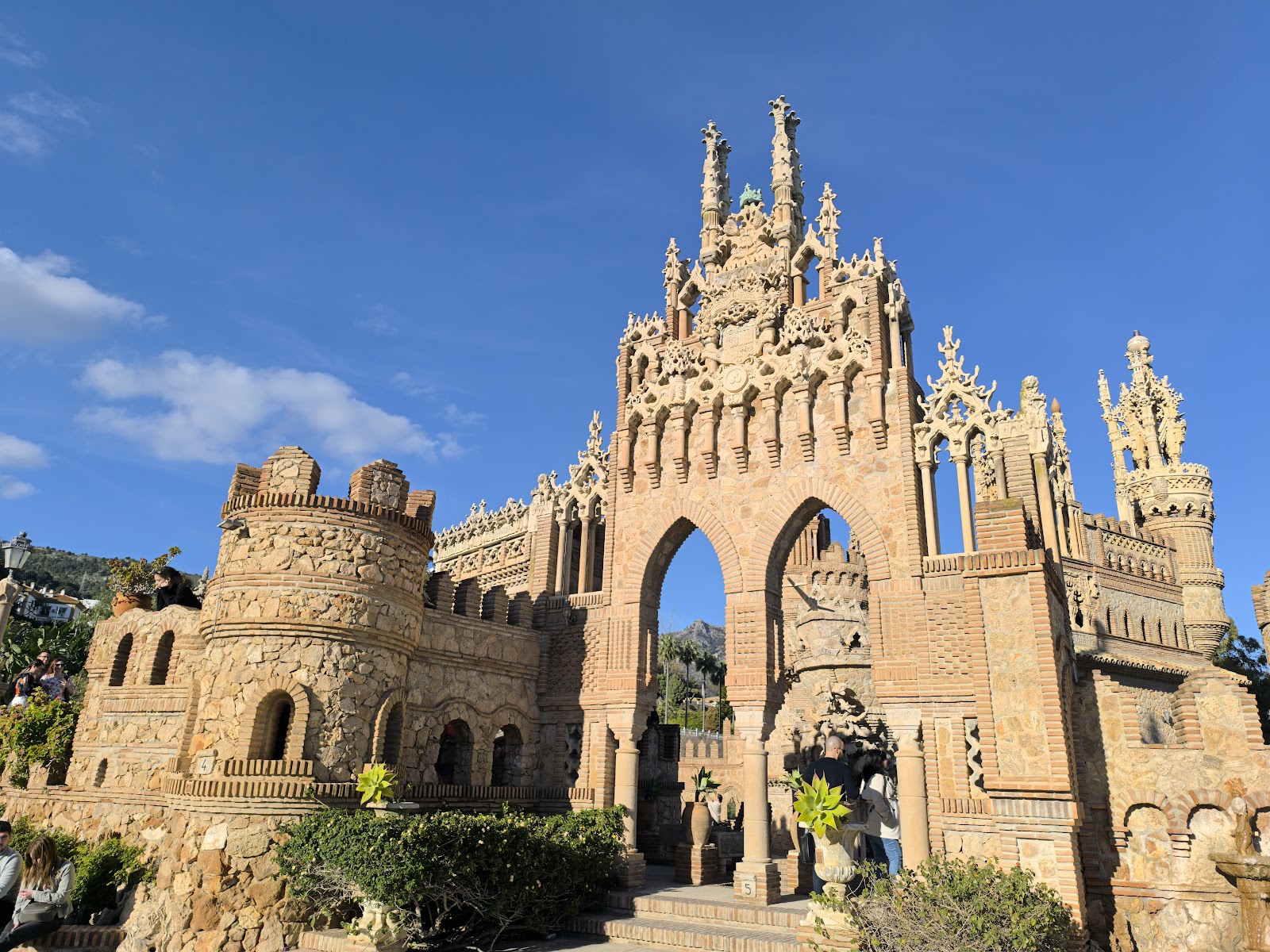
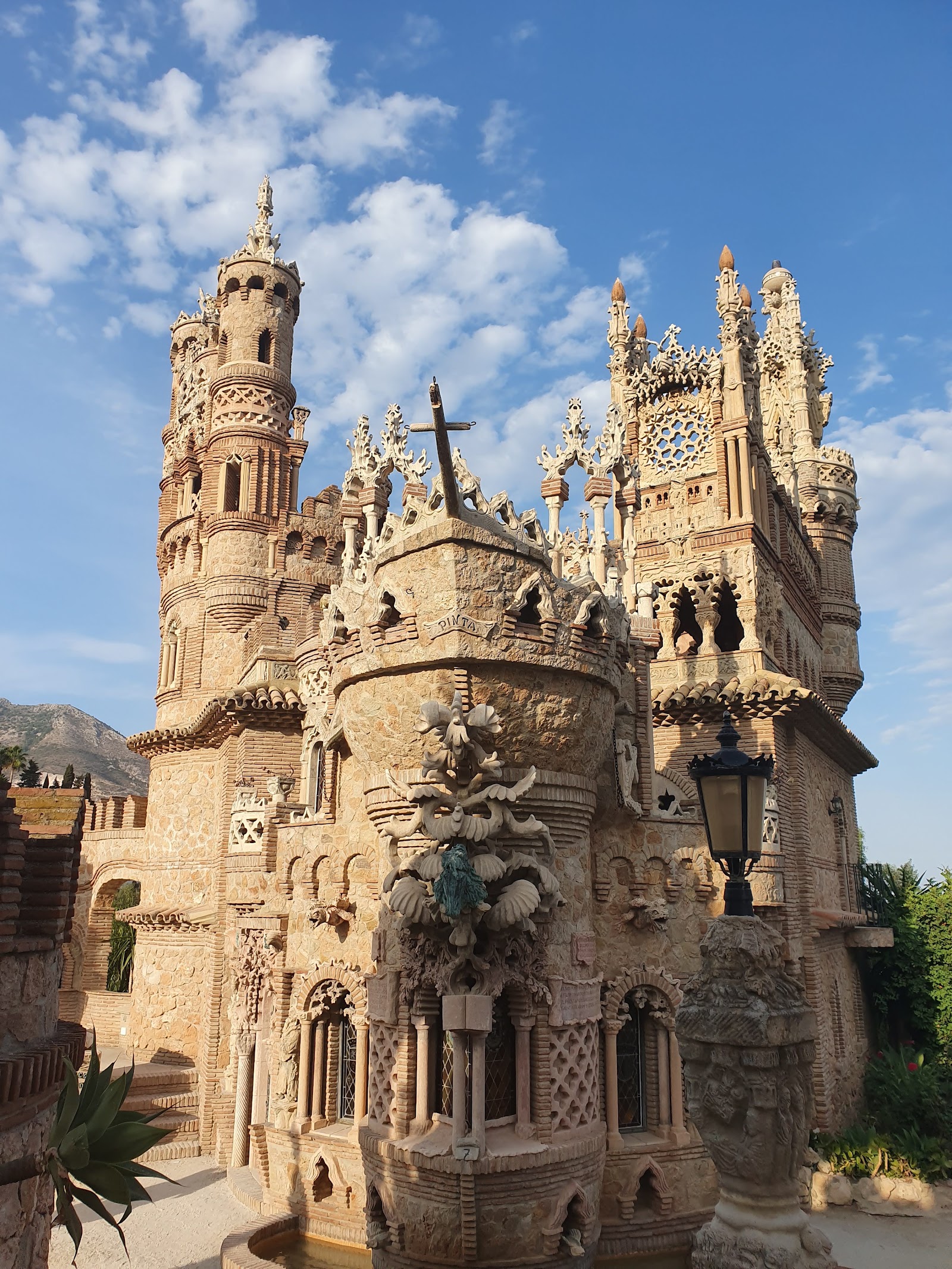
The structure covers 1,500 square metres and pulls from Neo-Roman, Neo-Byzantine, Neo-Gothic and Neo-Mudéjar architecture simultaneously, which sounds chaotic and reads as genuinely singular. Towers climb 33 metres. Stone panels carved in sixteen chapters walk you through Columbus's 1492 voyage. Somewhere inside the smallest church in the world — 1.96 square metres, dedicated to Saint Isabel of Hungary — the ashes of Dr. Esteban Martín Martín rest beneath the altar.
💛 What travellers fall for
People who return tend to follow the sixteen carved chapters in order rather than wandering freely — the sequence gives the architecture a logic it doesn't have if you treat it as a photo backdrop. They also note that the late afternoon reopening slot, when the stone cools and the light drops low, is a different monument from the midday version.
The story behind Castillo de Colomares
Dr. Esteban Martín Martín trained as a gynaecologist at the University of Valladolid, then built a career in the United States, where he met his Austrian wife, Hannelore Picka. Somewhere along the way he became consumed by the life of Columbus and, finding no monument in the world he considered adequate, decided to build one himself. He returned to Benalmádena, where he owned land, and began construction in 1987.
With two local bricklayers, he worked in brick, stone and cement for seven years, completing Colomares in 1994. The castle later served as a falconry and then a reptile centre before settling into its current life as a monument. Dr. Martín died on 8 February 2001. His ashes are interred in the tiny chapel he built within the structure, beside an empty mausoleum intended — someday — for Columbus himself.
Good to know
Admission is €3 (€2 for children and pensioners), cash only, no advance booking. The site is exterior-only — no interior halls. Expect steps, narrow cobbled paths and limited shade. Closed most Mondays and Tuesdays. Budget 60 to 90 minutes if you follow the narrative panels properly.
Spring (March to May) and autumn (September to November) are the most comfortable seasons; the stone stays cool enough to touch and the light is flattering. In July and August, the exposed surfaces bake between roughly 13:00 and 17:00 — go at the morning opening or wait for the late afternoon slot when the site reopens.
Where is Castillo de Colomares?
More tickets & tours for Castillo de Colomares
Book directly at the provider
What travellers say about Castillo de Colomares
Colomares Castle is an absolutely beautiful place. The architecture is stunning — full of intricate details, arches, towers and carvings that make you feel like you’re inside a stone fairytale. The views of the sea and coastline add even more magic to the experience. It’s peaceful, photogenic and truly special. Definitely worth visiting if you’re nearby.
Highly recommend this place if your staying around the Torremolinos/Benalmadena/Fuengirola area. Easy to get to via bus with a short walk down a steep hill from Benalmadena Pueblo. Cheap to access too. So a nice few hours out. Really photogenic and fantastic views.
Colomares Castle is a very impressive and unique place to visit. The architecture is stunning, with incredible details everywhere you look and the views from the area are absolutely beautiful. It is a great spot for taking photos. The only downside is the parking situation, which can be quite challenging. Finding a parking spot can be a real hassle, especially later in the day. I would strongly recommend arriving around opening time to avoid the parking problems and enjoy a more relaxed visit. Overall, it's a beautiful and worthwhile attraction with amazing views, but make sure to plan ahead when it comes to parking. Highly recommended!
Gorgeous views and the area surrounding it is beautiful. So glad I managed to finally visit. However, you can get round it and take lovely photos very quickly, so don’t expect to spend a long time here but do visit the lovely village higher up. It is gorgeous and the views are stunning. We watched the sunrise and then had coffee and croissants at a local cafe before visiting the castle
Very pretty and great entry price of €3. Interactive guides to read via QR codes as you go around. Toilets, cafe and souvenirs available.
More of Benalmádena
Discover where to stay, what to do and the best deals for your trip.
Explore Benalmádena →More attractions in Benalmádena
All of Benalmádena →

Background adapted from Wikipedia (CC BY-SA) · map data © OpenStreetMap contributors · ratings & place photos via Google · other photos with per-image credit. Ticket links may earn us a commission at no extra cost to you.