
Café de Flore
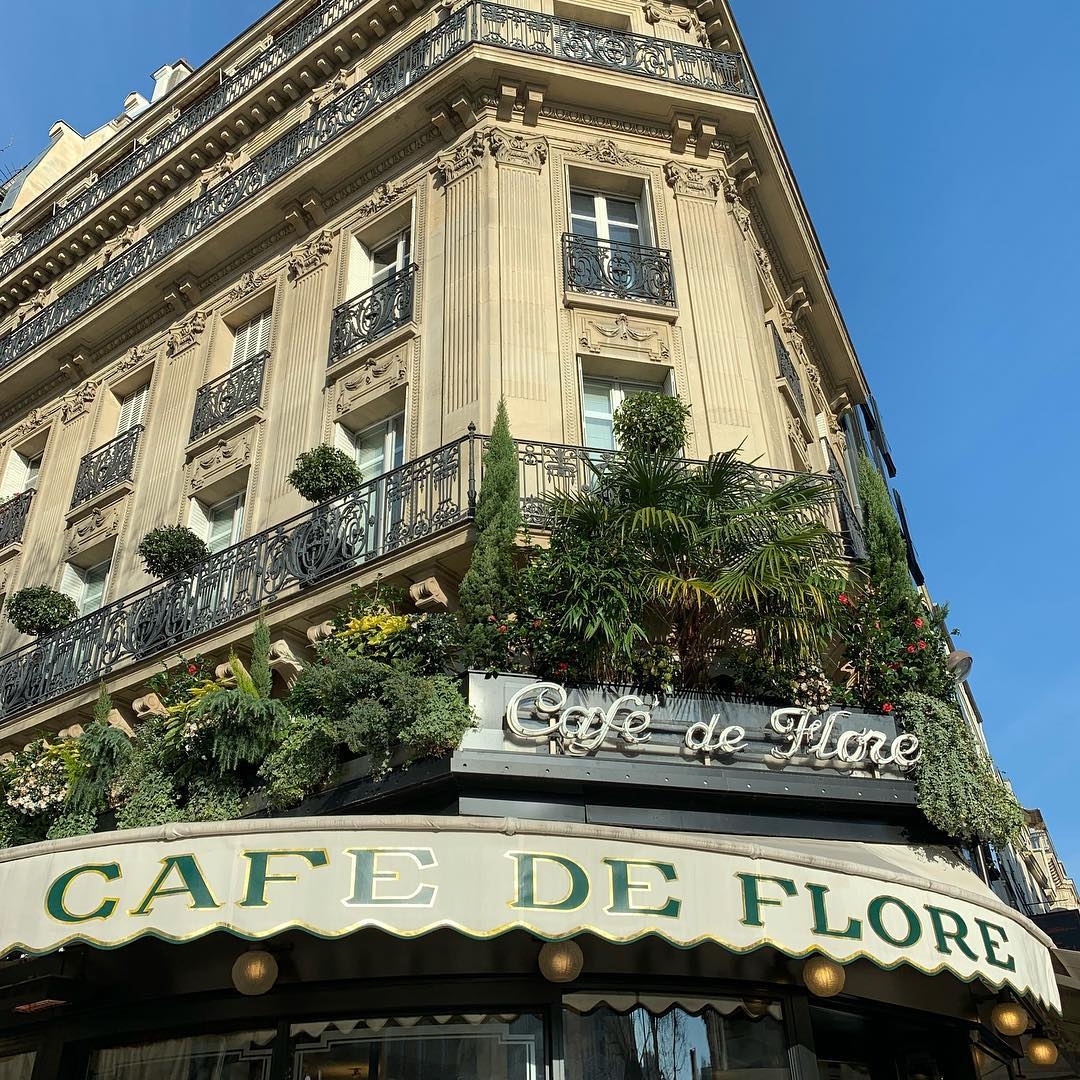
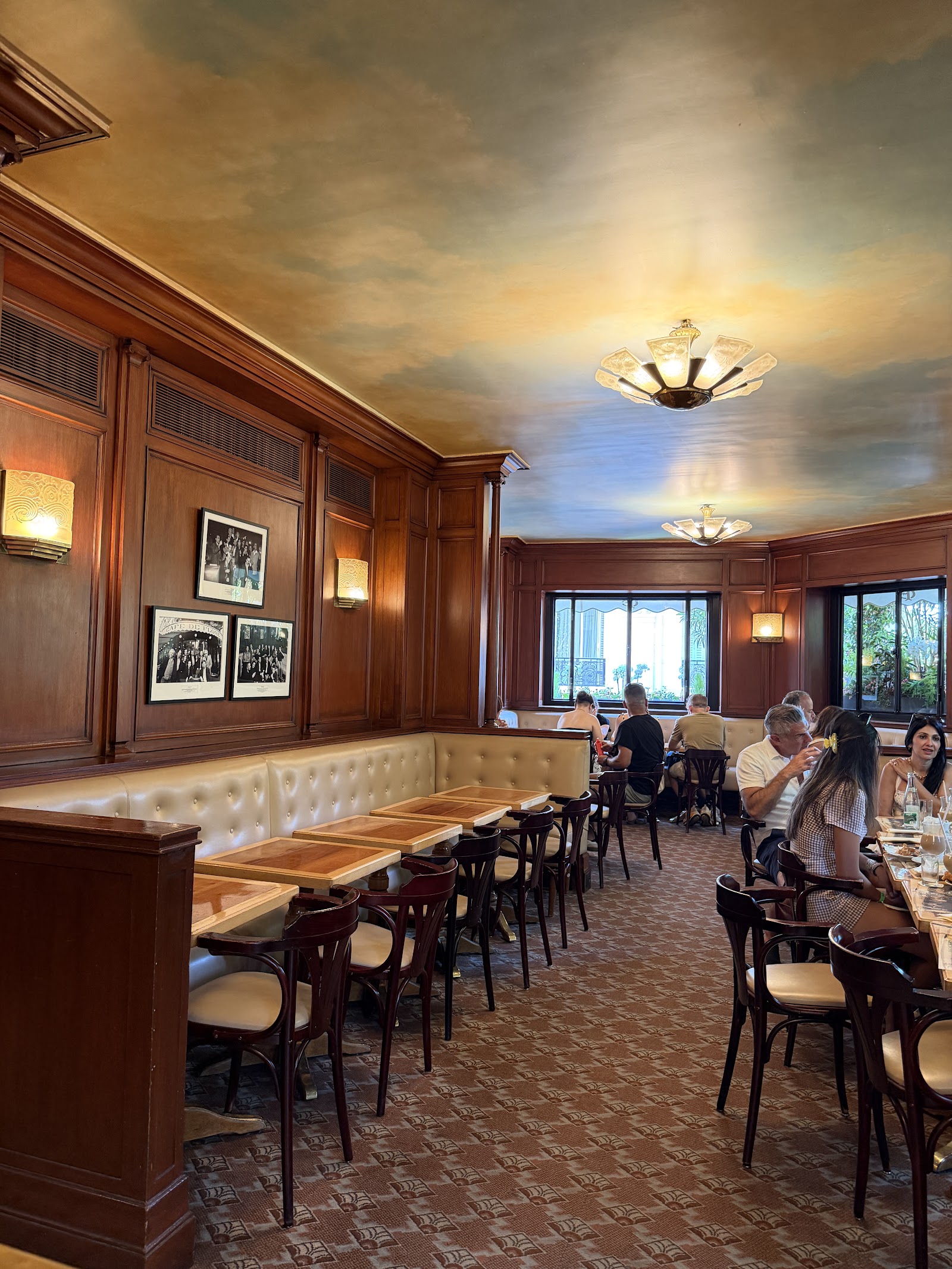
The red banquettes at Café de Flore have barely changed since the 1930s. The mahogany, the brass railings, the white-and-green china arriving at your table — all of it is essentially the same room where Sartre and de Beauvoir set up what amounted to a second office, and where James Baldwin ordered cognac and coffee on the upper floor while writing *Go Tell It on the Mountain*.
The café sits at the corner of Boulevard Saint-Germain and Rue Saint-Benoît, named for a nearby sculpture of Flora, Roman goddess of flowers. It opened in 1885, and the sediment of a century and a half of Paris intellectual life is somehow still present in the room.
💛 What travellers fall for
Regulars tend to arrive before nine. The left-hand tables near the entrance are, by long tradition, for people who come often. Upstairs is quieter and catches more light — the floor Baldwin used. The hot chocolate is a house specialty worth ordering even in summer, and the price of a simple espresso buys you a legitimate claim on the table.
The story behind Café de Flore
Flore opened in 1885, two years after its rival Les Deux Magots, forty-four metres up the same boulevard. Its early regulars included writers Joris-Karl Huysmans and Remy de Gourmont. By the early twentieth century, Guillaume Apollinaire was on the terrace coining the word 'surrealism' in conversation with André Breton, Louis Aragon, and Paul Reverdy. Picasso, Georges Bataille, and Raymond Queneau followed.
During the 1940s and '50s, Sartre and de Beauvoir treated the first floor as their primary workplace. Camus, Hemingway, Truman Capote, and a circle of Romanian thinkers — Cioran, Ionesco, Fondane — made it their quieter alternative to the café next door. Later, Karl Lagerfeld would sit alone downstairs reading Vogue for hours. In 1994, writer Frédéric Beigbeder inaugurated the Prix de Flore, a literary prize the café still awards annually.
Good to know
Take Métro line 4 to Saint-Germain-des-Prés — the café is a two-minute walk. No reservations are accepted. Avoid weekend mornings and the lunch rush between noon and two; the late-afternoon lull from three to five is the most Parisian hour to arrive. Open daily 7:30 AM to 1:30 AM.
Where is Café de Flore?
Location
- In Paris 6th Arrondissement
- 48.8539, 2.3330
- Open in Google Maps
Rating
3.9 ★ · 14,306 Google reviews
More tickets & tours for Café de Flore
Book directly at the provider
What travellers say about Café de Flore
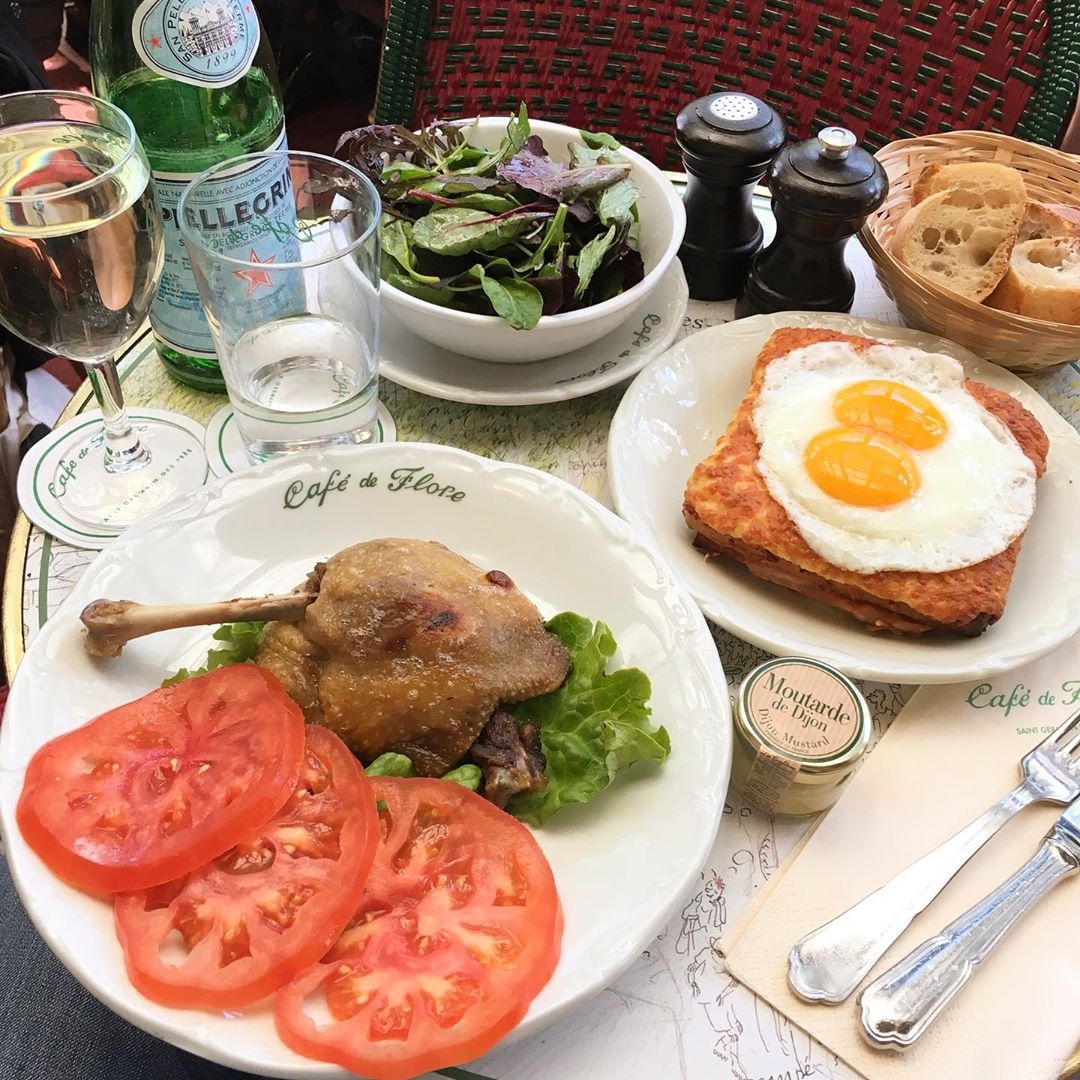
What a sweet little Parisian experience at the famous Café de Flore! There was a line of people waiting to get in, which already told us this place was something special, and it absolutely lived up to the hype. Of course, we had to try the legendary Special Flore dark chocolate with whipped cream. Oh my goodness… rich, creamy, and incredibly decadent. Definitely be careful not to burn yourself, it comes piping hot! 😄 We paired it with the classic French Napoleon pastry, and together they made the perfect combo. The atmosphere felt timeless and authentic, like stepping into a classic Paris café scene. A must-visit spot whether you’re a traveler exploring Paris or simply looking for a memorable dessert and hot chocolate experience. Absolutely delicious!
Iconic spot in Paris with amazing people watching, very professional service and good food. My cheese plate was delicious and my hot chocolate with whipped cream was phenomenal. You can see my photo of my cheese plate with lots of options and a cherry jam which was a nice touch. You can also see the photo of our neighbors who were going all in on the hot chocolate. You can also see our great waiter who was handling lunch crowds really well. You pay for the experience and it’s kind of worth it!
Visiting Paris for a few short days and my son saw this restaurant on TikTok or Instagram, and wanted us to try it. What a fantastic experience. The service was great, the food delicious and the ambiance perfect for a café breakfast! We were worried we wouldn’t be able to get in, but we were able to but had to sit inside. Don’t regret it!
Café de Flore is worth visiting at least once for its iconic status and classic Paris café atmosphere. What we had was good and enjoyable, though not exceptional. The service was formal, professional, and high-level, but a little reserved rather than warm or lively. The place definitely has a Parisian vibe, but it also feels quite touristic and “viral” at this point. In my view, there are other cafés in Paris that feel more authentically Parisian, but Café de Flore is still a nice experience if you want to visit one of the city’s most famous spots. Be prepared for premium pricing.
🍽️ Food fell flat. The hype sets an impossibly high bar — and the kitchen doesn't clear it. Below expectation for the price and the reputation. 📍 Inside seating is a miss. The clatter of plates and the cramped interior strip away any of the legendary Left Bank romance. The terrace is where the magic lives. 🤵 Service was a genuine highlight — attentive, warm, and unhurried. A welcome contrast to the food. 🚻 The bathroom deserves its own mention. Genuinely impressive — a small, unexpected delight.
More of Paris 6th Arrondissement
Discover where to stay, what to do and the best deals for your trip.
Explore Paris 6th Arrondissement →More attractions in Paris 6th Arrondissement
All of Paris 6th Arrondissement →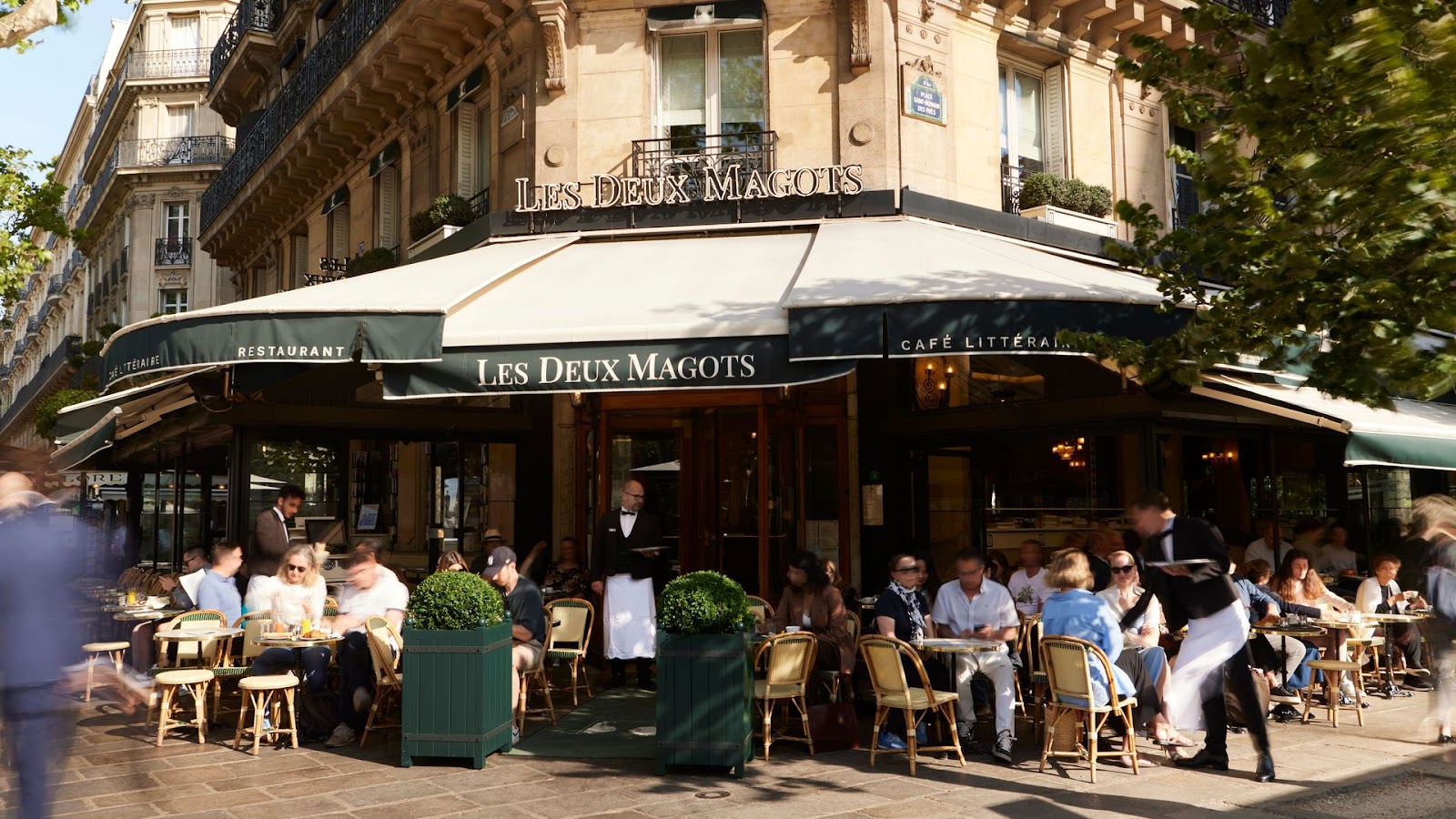
Background adapted from Wikipedia (CC BY-SA) · map data © OpenStreetMap contributors · ratings & place photos via Google · other photos with per-image credit. Ticket links may earn us a commission at no extra cost to you.