
Bijlmermuseum
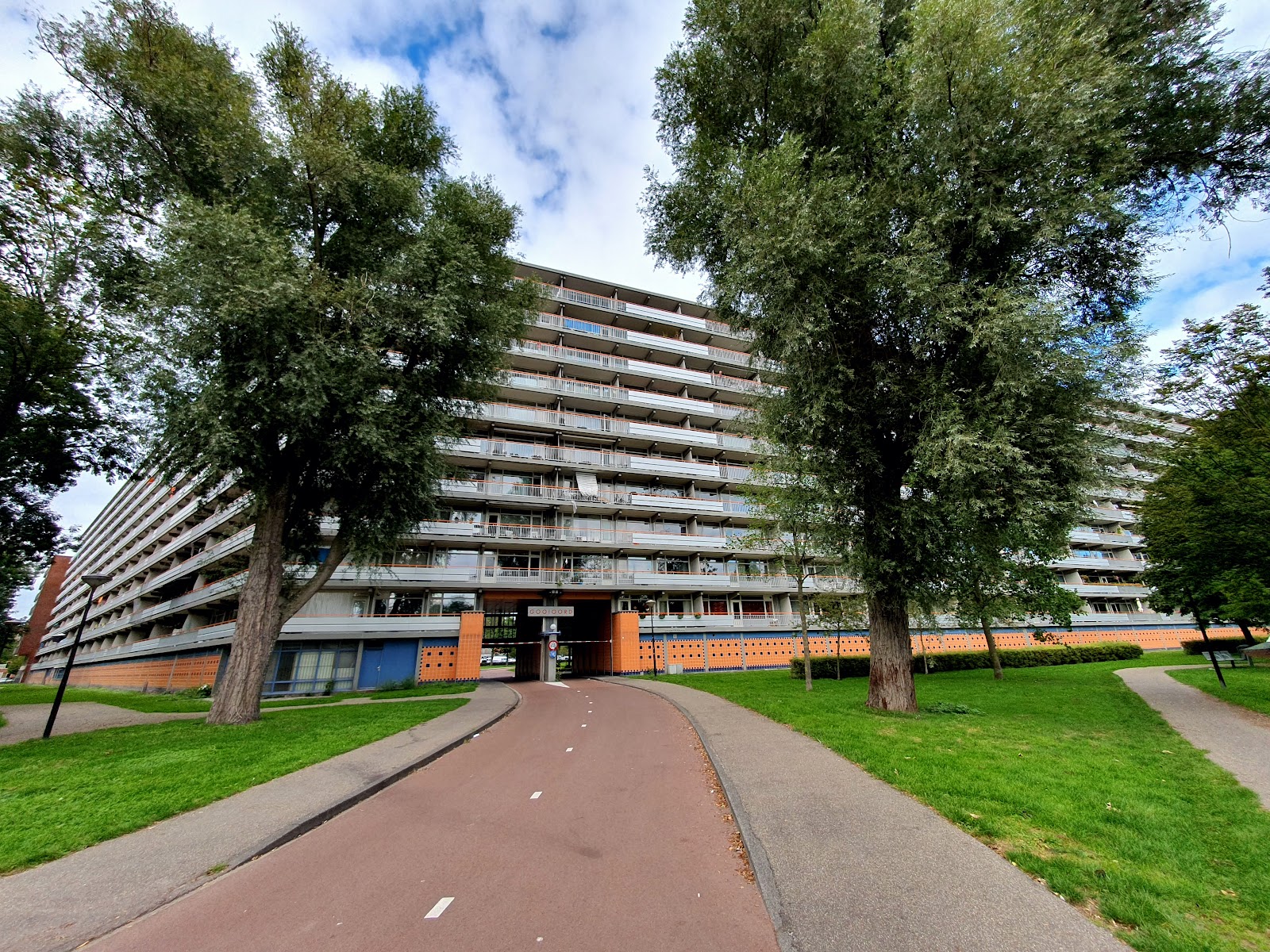
The Bijlmermuseum sits inside Grubbehoeve, one of six surviving eleven-storey honeycomb blocks that once defined an entire vision of how people might live. The address is an apartment. The archive is enormous. The admission is five euros.
This is a neighbourhood that argued, loudly and in writing, for its own preservation — and won. What began as a resident initiative in the early 1980s became a formal museum by 1984, and in 2019 the whole remaining complex was designated a municipal protected cityscape. The museum holds the record of that fight, and of everything the Bijlmermeer has been.
💛 What travellers fall for
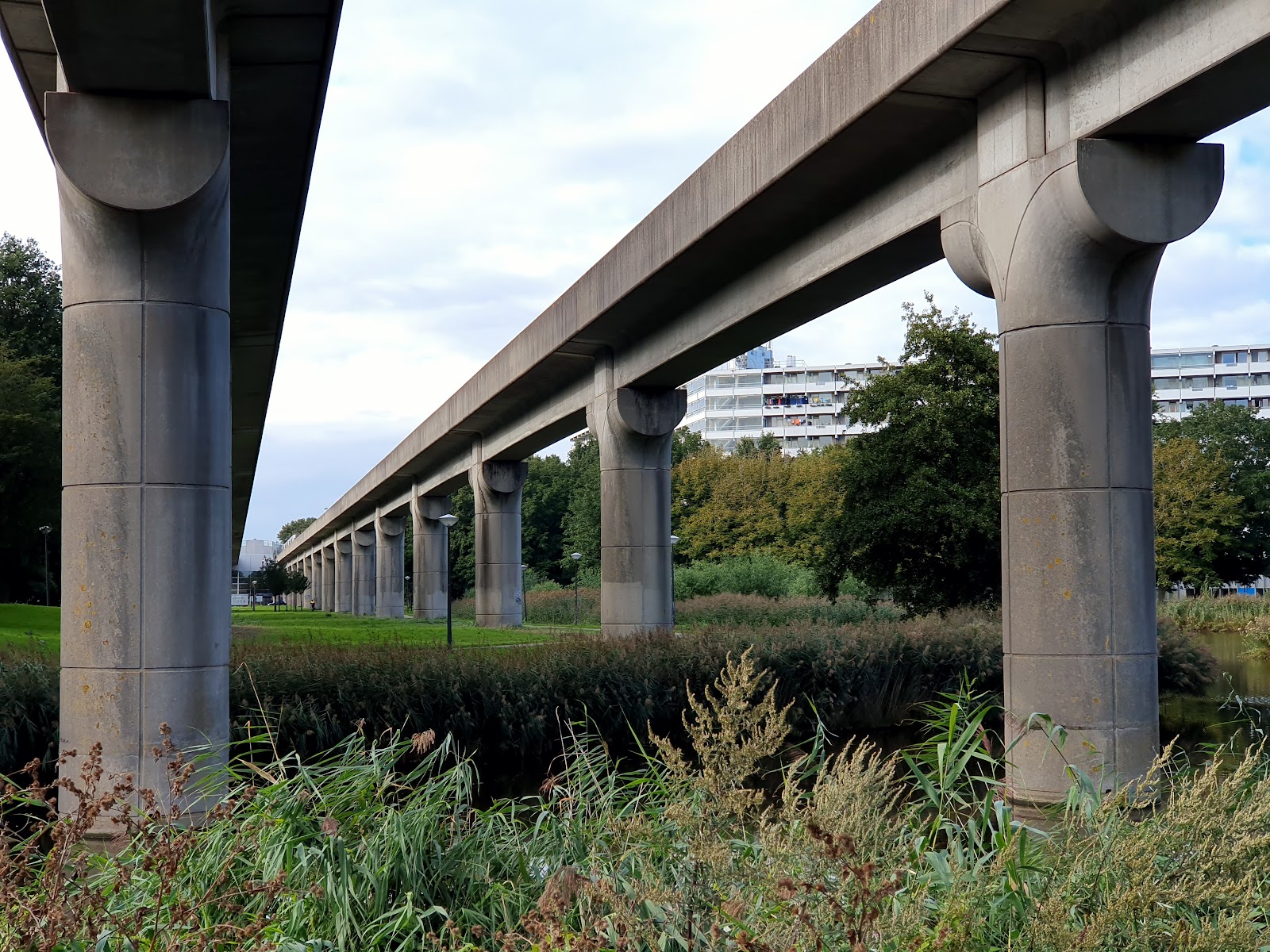
People who come back tend to walk the viaduct stretch between Ganzenhoef and Kraaiennest after the tour — the 1,100-metre metro bridge casts good shadow in summer, and the free sports park underneath has a sprint track and football pitches that see real use. The Groeiend Monument, co-designed by Herman Hertzberger, rewards a slower look than most visitors give it.
The story behind Bijlmermuseum
The Bijlmermeer was built from 1966 to solve Amsterdam's post-war housing shortage, with cars routed above ground and pedestrians given the green space below. The honeycomb blocks — Gooioord, Groeneveen, Grubbehoeve, Kikkenstein, Kleiburg, Kruitberg — were finished between 1969 and 1972. By the early 1980s, demolition was already being discussed, and residents formed the Stichting Bijlmer Museum to document and defend what they had built their lives inside.
On 4 October 1992, a Boeing 747 cargo plane crashed into the Groeneveen and Klein-Kruitberg flats, killing at least 43 people. The Groeiend Monument, designed with Herman Hertzberger, now stands as a memorial. The neighbourhood lost most of its original blocks to subsequent redevelopment, but the six that remain — and the museum inside one of them — carry the full weight of that history.
Good to know
Book ahead by phone or email — the museum opens by appointment only, at €5 per person. Metro Line 53 stops at both Ganzenhoef and Kraaiennest, a short walk from Grubbehoeve 38. Open Monumentendag (one September weekend, 10:00–17:00) is the easiest walk-in opportunity.
Where is Bijlmermuseum?
Location
- In Amsterdam-Zuidoost
- 52.3200, 4.9600
- Open in Google Maps
More tickets & tours for Bijlmermuseum
Book directly at the provider
More of Amsterdam-Zuidoost
Discover where to stay, what to do and the best deals for your trip.
Explore Amsterdam-Zuidoost →More attractions in Amsterdam-Zuidoost
All of Amsterdam-Zuidoost →
Background adapted from Wikipedia (CC BY-SA) · map data © OpenStreetMap contributors · ratings & place photos via Google · other photos with per-image credit. Ticket links may earn us a commission at no extra cost to you.