
Battistero di San Giovanni
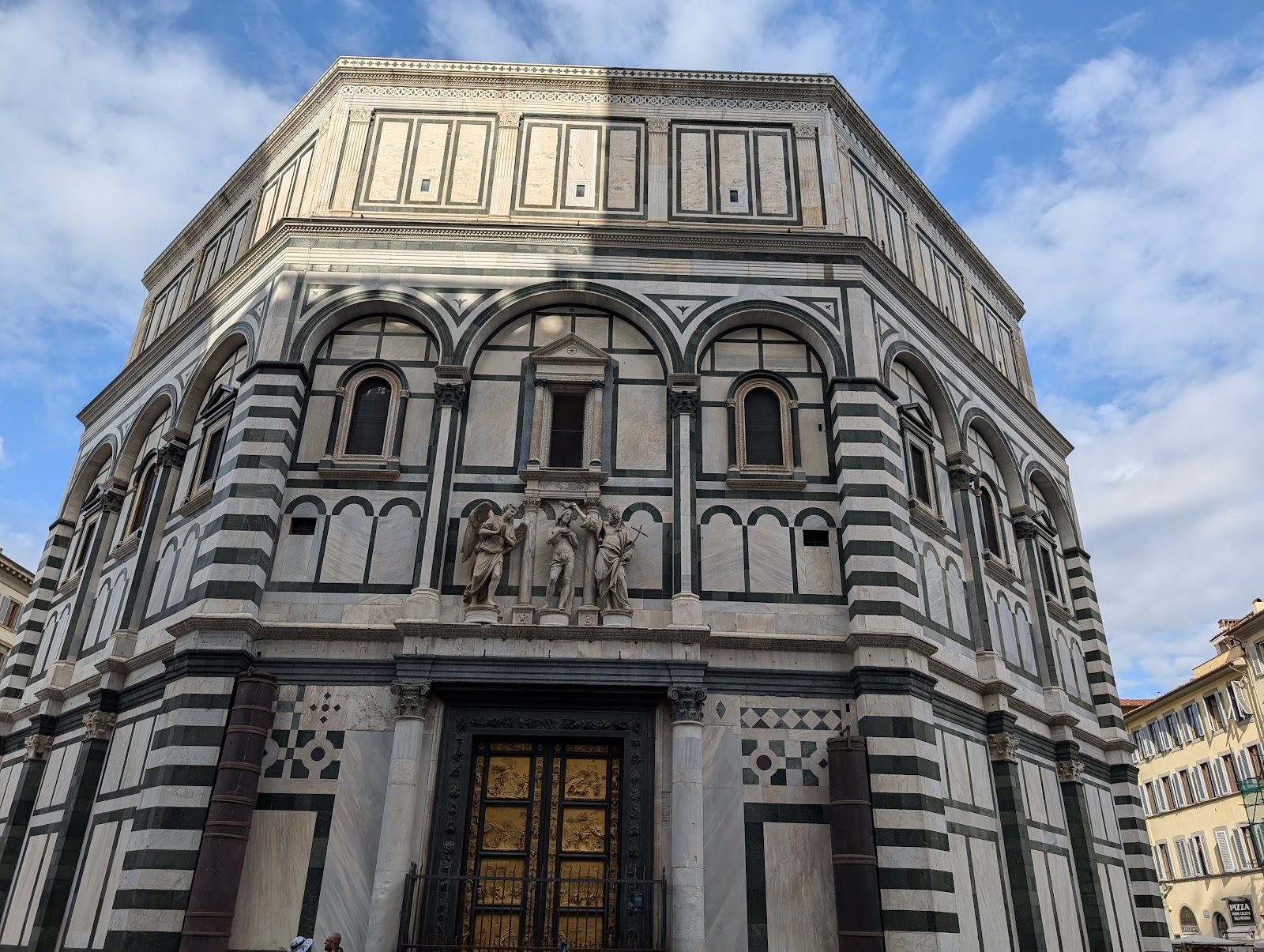
The Battistero di San Giovanni sits at the foot of a flight of stairs below Siena's cathedral, and the fact that it exists at all is a piece of medieval problem-solving. When the Opera del Duomo decided in 1317 to extend the cathedral choir outward over a steep drop, someone had to hold up the floor — and so a baptistery was built beneath it, its ceiling becoming the choir's foundation.
Step inside and the hexagonal bronze font at the centre pulls everything toward it. Five sculptors worked on it between 1417 and 1431 — Donatello, Ghiberti, Jacopo della Quercia among them — each contributing panels on the life of John the Baptist. The frescoed walls above, painted by Vecchietta and his school in the 1440s, complete the enclosure.

💛 What travellers fall for
Repeat visitors tend to go straight to Donatello's 'Herod's Banquet' panel and stand with it longer than they planned. The figures recoil from the severed head in a way that still reads as genuinely unsettled. Coming early, before the cathedral crowds filter down the staircase, means you often have the font to yourself.
The story behind Battistero di San Giovanni
Construction began in 1316 under master builder Camaino di Crescentino and was complete by 1325 — the structure raised specifically to support the extended choir bays of the cathedral above. The Gothic marble façade came later, commissioned to Domenico di Agostino from 1355 onward, though work stopped in 1382 and the upper section was never finished. The black-and-white marble matches the cathedral's own striping.
The interior's defining object arrived across the following century: the hexagonal baptismal font, assembled between 1417 and 1431 by a group of sculptors that reads like a roll call of early Renaissance talent — Donatello, Lorenzo Ghiberti, Giovanni di Turino, Goro di Neroccio and Jacopo della Quercia. The vault frescoes in the apse were added by Michele di Matteo da Bologna in 1477.
Good to know
Access is via the staircase off Piazza San Giovanni; a ramp makes the entrance partially accessible. Hours shift seasonally — 10:00–19:00 in summer, 10:30–17:30 in winter. A combined ticket covering the Cathedral and Museo dell'Opera del Duomo is worth it if you're spending the day in this corner of the city.
Where is Battistero di San Giovanni?
More tickets & tours for Battistero di San Giovanni
Book directly at the provider
What travellers say about Battistero di San Giovanni
It is a quick tour as it was being renovated mainly. Still beautiful, don't get me wrong, but we had to read and look the stands, not the paintings on the top, as they were covered. The architecture is pretty, for us it was the perfect way to spend the 20 min before our tower climbing time. It is included in the tickets so would really recommend to visit it, but I don't think I would buy tickets only to it.
Nothing much to see as the ceiling is in renovation mode. Even so, the walls and the floors were very impressive to see for their detailed design, also for the historical significance of the place as being part of the Brunelleschi site assembly. There were some nice and important details about every part of the ceiling paintings explained on displays.
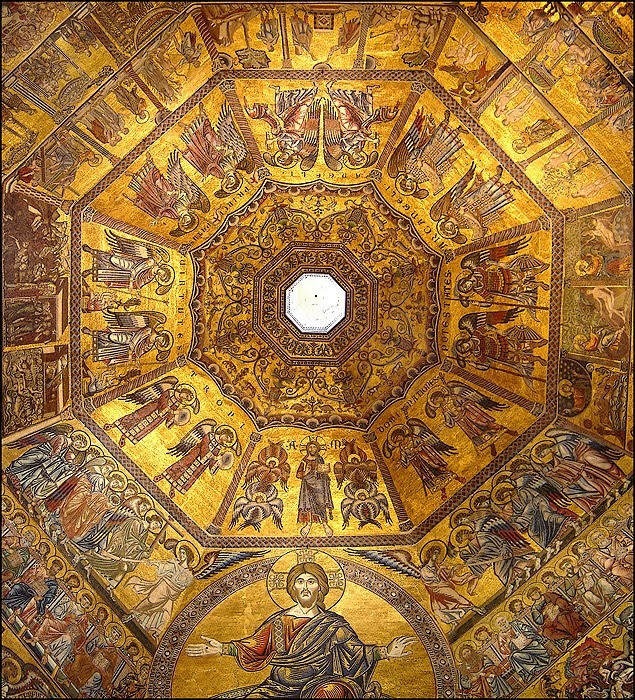
The magnificent mosaic ceiling, composed of thousands of glass mosaic pieces set against a gold background, is truly breathtaking. At its center is a depiction of Christ the Judge. It is the first structure that catches your eye when you arrive at the city square. Don’t miss out on visiting it just because you see other large buildings!
From the outside, the geometry is calm but the interior is completely different. The mosaic ceiling pulls your eyes upward and holds them there. Only then I appreciated how compact it is; you don’t have to walk far to absorb it. Despite all the people It feels ancient in a good way and right at the center of Florence.
Step inside Florence’s Piazza del Duomo and you can’t miss the Baptistery of St. John. Famous for its striking geometric white and green marble, this octagonal marvel holds centuries of history. Don't miss Ghiberti's legendary bronze doors, the Gates of Paradise, and the stunning golden mosaics inside!
More of Siena
Discover where to stay, what to do and the best deals for your trip.
Explore Siena →More attractions in Siena
All of Siena →
Background adapted from Wikipedia (CC BY-SA) · map data © OpenStreetMap contributors · ratings & place photos via Google · other photos with per-image credit. Ticket links may earn us a commission at no extra cost to you.