
Baiersbronn
The name Baiersbronn first appeared in a deed dated 1292, listing a few farms in the forest of Dornstetten. More than seven centuries later, the municipality is still mostly trees — long corridors of spruce and fir running up into the northern Black Forest, cut through by the Murg river and more than 550 kilometres of marked trails. What changed is the table. Somehow this valley of woodcutters and glassblowers ended up with more Michelin stars per square kilometre than almost anywhere in Germany, two of them three-star restaurants sitting within a few kilometres of each other.
The rhythm here is slow and deliberate: a long morning walk, lunch that turns into the afternoon, a night at a place that has been hosting people since the logging era. The five villages that merged to form the current municipality each kept their own character, so Baiersbronn is less a town than a loose gathering of hamlets held together by forest paths.
💛 What travellers fall for
People who come back tend to book the Schwarzwaldstube well in advance — the 35-seat room fills fast, and its three stars have held for 25 years. They also mention the Lakes Trail, the 91-kilometre five-stage route the German Hiking Association rates among the country's finest. Arrive for at least two nights and pick up the Black Forest Plus Card on arrival; it covers your buses.
Experiences you don't want to miss



Deals in Baiersbronn
Book directly at the provider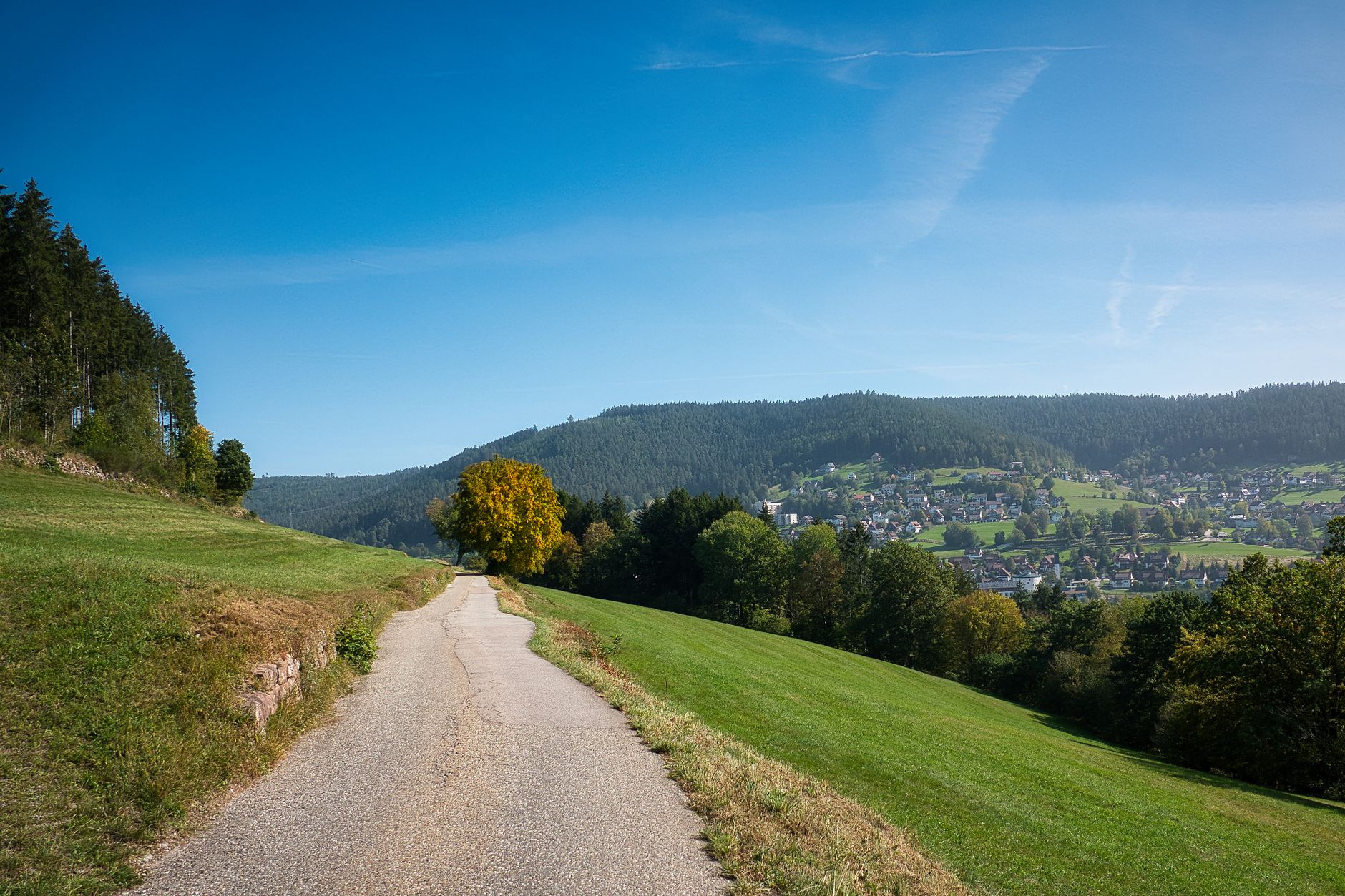


How Baiersbronn came to be
Baiersbronn's story begins in 1082, when the estate of Reichenbach was given to Hirsau Abbey, and the priory church that followed was consecrated three years later by Bishop Gebhard III of Constance. The 1292 deed that first names the settlement lists it among scattered farms — Strubenhardt, Tabechenhalde, Baiersbrunne — carved out of forest by wandering woodcutters who built temporary shelters and moved on.
The 18th and 19th centuries brought glass. The Buhlbach works, run at various points by Johann Georg Böhringer and Franz K. Klumpp, became the largest glassworks in the Black Forest, producing up to two million champagne bottles a year, including a distinctive bottle bottom the workers called the Buhlbacher Schlegel. The site is now a cultural park. The current municipal boundaries were drawn in the 1960s and 70s, when five separate villages were joined into one.
Who and what shaped it
People who shaped it
Landmark buildings
See Baiersbronn in motion
Plan your visit
On the map
When to go
Summers are comfortable — July days reach around 24°C with long hours of sun — but winters run cold and snowy, with February nights dipping below freezing. The annual rainfall is high (close to 1,270 mm), so a waterproof layer earns its place in your pack in any season.
Right now
Background & history adapted from Wikipedia (CC BY-SA) · specs from Wikidata (CC0) · weather from Open-Meteo · map data © OpenStreetMap contributors · photos from Wikimedia Commons / Unsplash with per-image credit. No third-party reviews or social posts reproduced.