
Argentière
Seven kilometres up the valley from Chamonix, Argentière sits at 1,252 metres with its back to the Grands Montets and its face turned toward a glacier that still fills the view at the end of the main street. The village is compact enough to walk end to end in ten minutes, yet it holds a baroque church with a gilded tabernacle shipped from Venice, a cemetery of legendary guides, and a main street named after a Victorian mountaineer and her climbing partner.
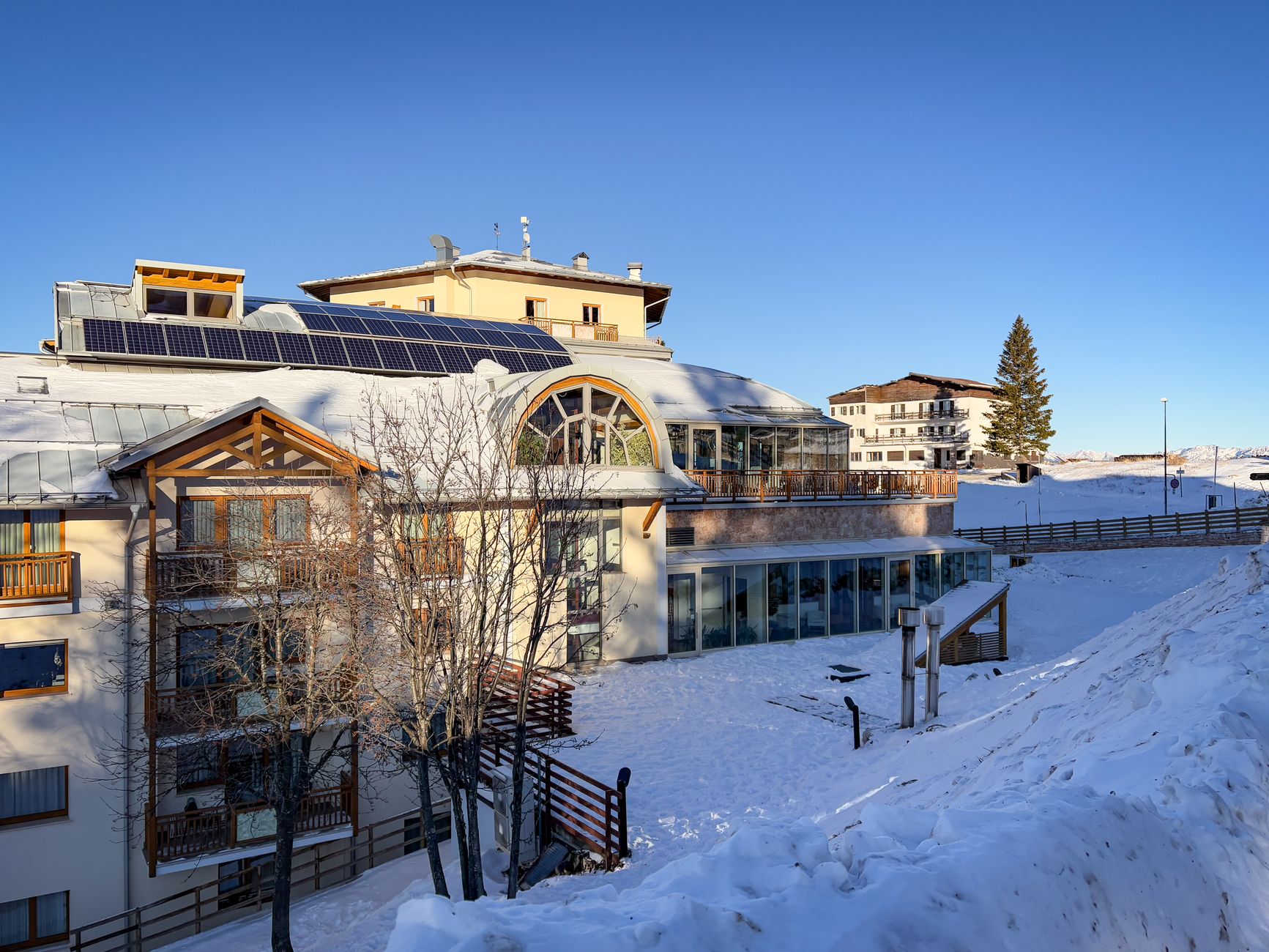
This was a silver-mining settlement long before it was a ski resort, and later a village of crystal makers — people who traded the stones they found in the high rock. That layered past is still readable in the architecture: old hotels from the early 1900s stand alongside farmhouses in the outlying hamlets of Montroc, Le Planet and Trélechamp.
💛 What travellers fall for
People who keep coming back tend to point you toward the Church of Saint-Pierre before the lifts open — the Venetian tabernacle catches early light in a way the photographs don't prepare you for. They'll also tell you to get the Guest Card from your accommodation on day one: it makes the Mont-Blanc Express train to Vallorcine and back completely free.
Experiences you don't want to miss


Deals in Argentière
Book directly at the provider
How Argentière came to be
The Romans were here first, drawn by silver and lead in the rock — the name Argentière carries that mineral history in its root. Centuries later it was known as a village of crystal makers, people who gathered the quartz formations the mountains gave up. When the journey to Chamonix became impossible in winter, the community built its own baroque church in the 18th century; Saint-Pierre still stands at the centre of the village, its Venetian tabernacle an unlikely treasure at altitude.
By the early 20th century the first wave of alpinism had already left its mark. The main street, Rue Charlet Straton, commemorates Jean Estéril Charlet and Isabella Straton — she came from a wealthy Sussex family and spent two decades exploring the Mont Blanc massif with him. One unnamed peak they crossed together is now called La Pointe Isabelle. The cemetery beside Saint-Pierre holds the graves of several of France's great mountain guides, many of them from families that have lived in Argentière for generations.
Who and what shaped it
People who shaped it
Landmark buildings
See Argentière in motion
Plan your visit
On the map
When to go
July averages around 18°C in the day and offers over nine hours of sunshine, making it the most reliable month for high-altitude walking and climbing. January drops to around -3°C with barely two hours of sun daily; December is the wettest month of the year, with 163 mm of precipitation falling mostly as snow at this elevation.
Right now
Background & history adapted from Wikipedia (CC BY-SA) · specs from Wikidata (CC0) · weather from Open-Meteo · map data © OpenStreetMap contributors · photos from Wikimedia Commons / Unsplash with per-image credit. No third-party reviews or social posts reproduced.