
Arènes de Lutèce
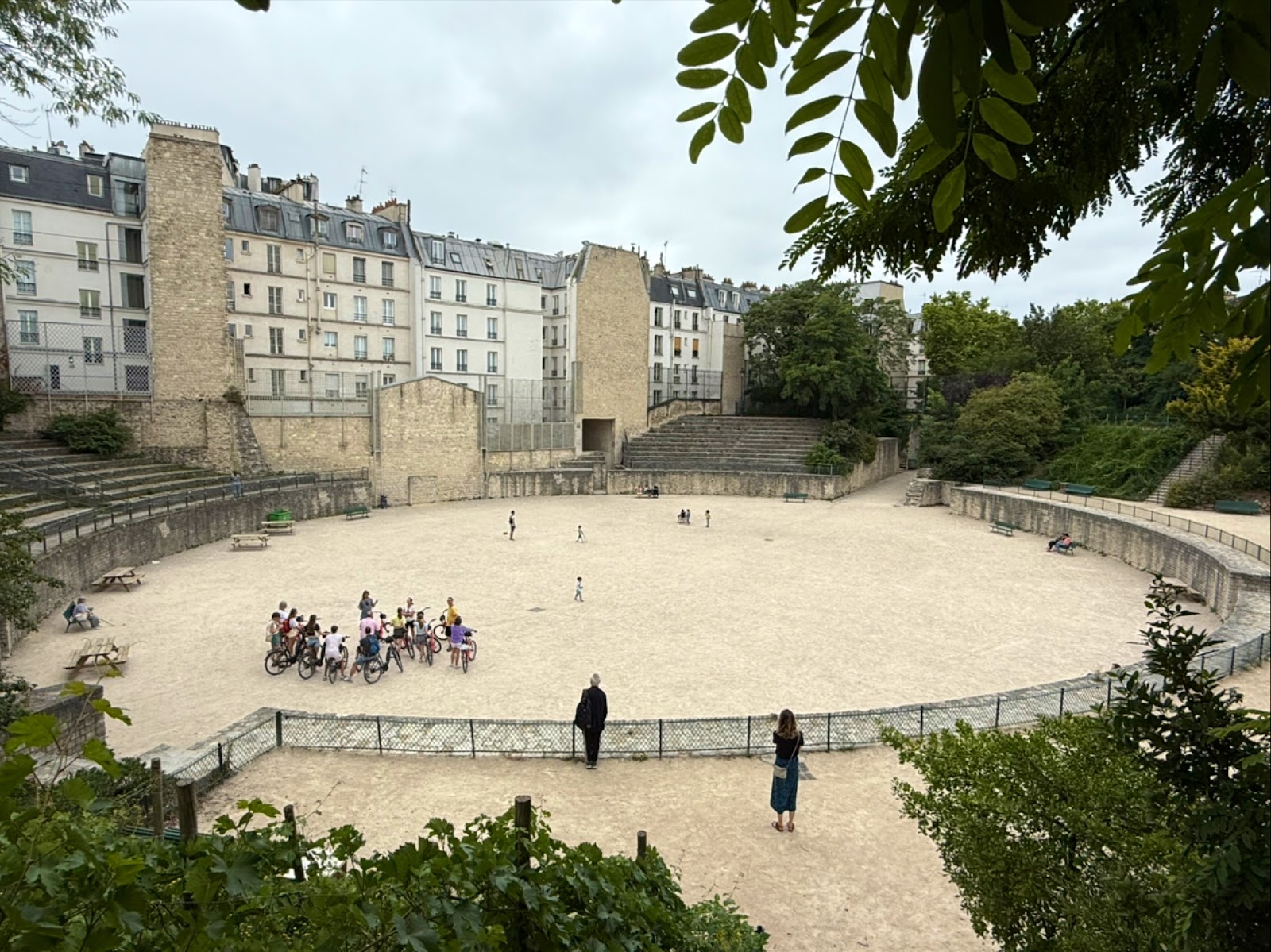
You enter through a gate on the Rue de Navarre, walk a long tunnel-like passage between high stone walls, and then the arena opens in front of you — an ellipse of tiered seating, grass, and two-thousand-year-old stonework sitting quietly in the middle of the 5th arrondissement. A few people are playing pétanque on the sand. Someone else is eating lunch on the lower steps.
This is Paris's only surviving Gallo-Roman amphitheatre, built in the 1st century AD when the city was still called Lutetia. At its height it held 15,000 spectators watching both theatrical performances and gladiatorial combat — an unusual hybrid that shows in its shape, which curves more like a Greek theatre than a Roman one.
💛 What travellers fall for
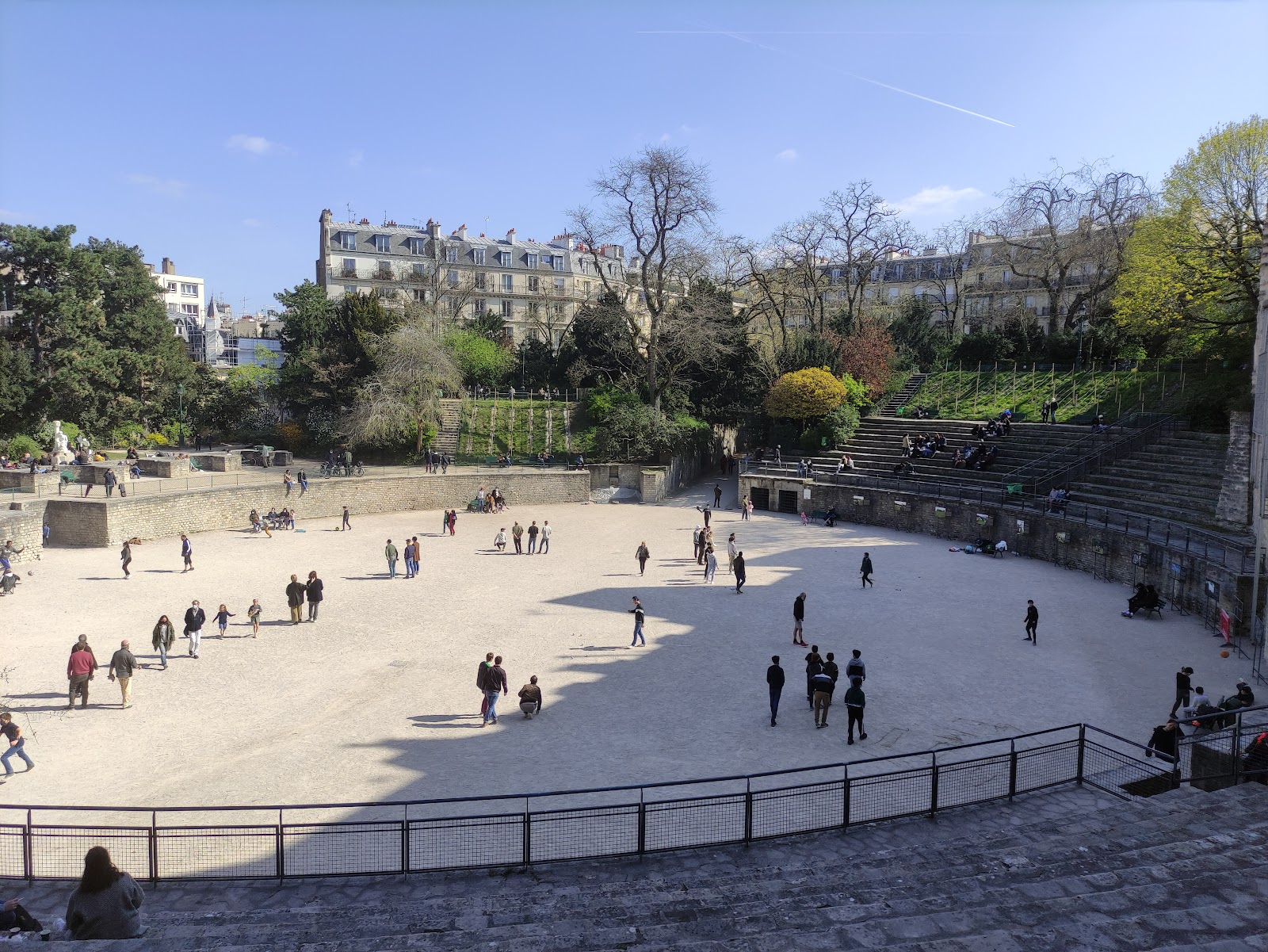
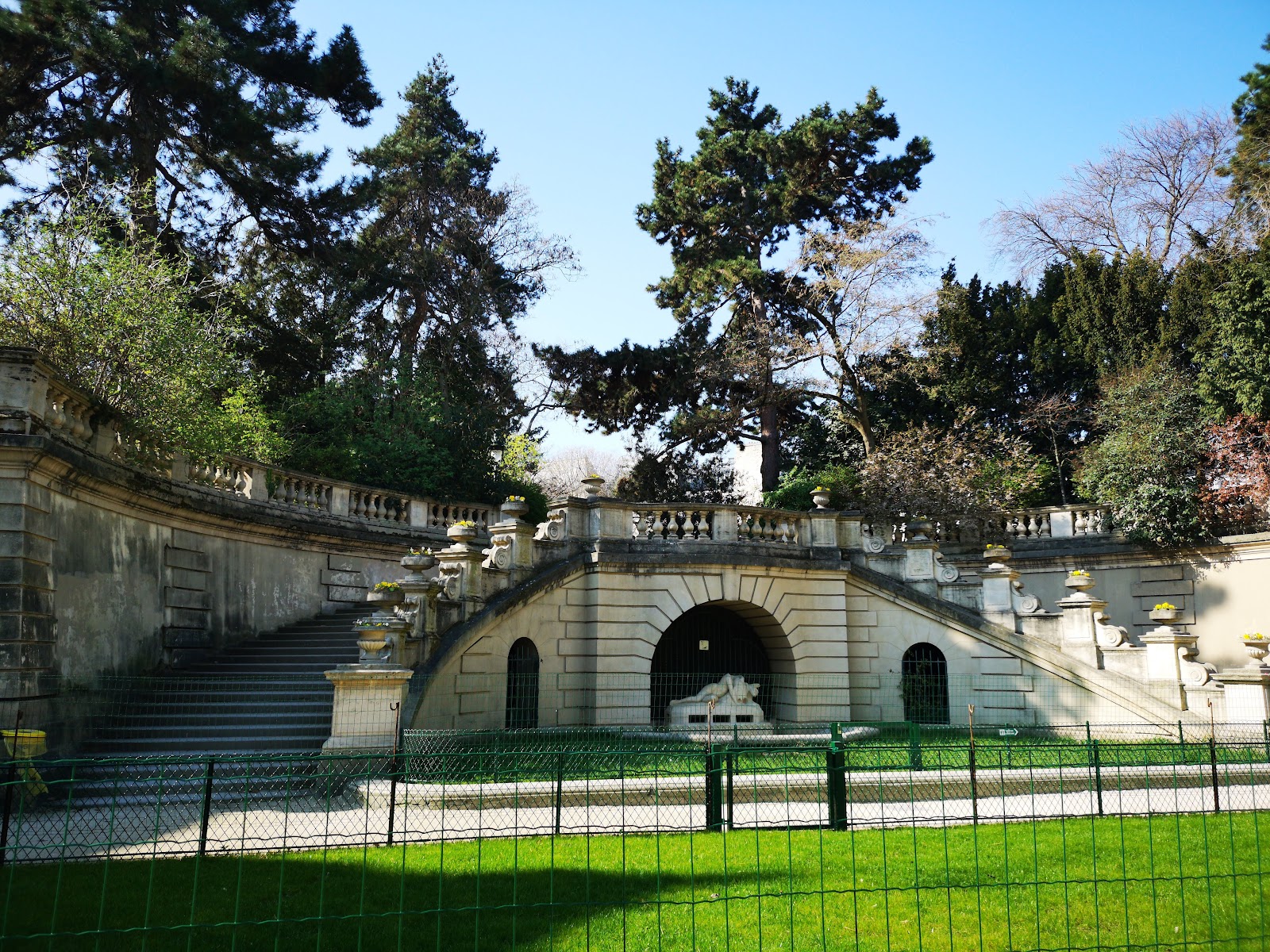
People who come back tend to time it for a weekday morning, before the school groups arrive, when the sand floor is still raked smooth. The nine stone niches along the stage wall are easy to overlook — worth a close look for the worn detail that survives. Square Capitan, just next door, is a good place to sit after.
The story behind Arènes de Lutèce
Built in the 1st century AD, the arena sat 15,000 people and served double duty as theatre and combat ground. When Lutetia was sacked in 275 AD, its stonework was stripped to reinforce the walls of the Île de la Cité. Chilperic I had it briefly restored in 577, but the structure eventually became a cemetery and was buried entirely after Philippe Auguste's city wall went up around 1210.
It resurfaced only in the 1860s, when archaeologist Théodore Vaquer found it during construction of the Rue Monge. A tramway depot threatened to erase it again — until Victor Hugo helped found a preservation society to fight for it. One-third was uncovered after a nearby convent came down in 1883, and the Municipal Council opened it as a public square in 1896. Doctor and anthropologist Jean-Louis Capitan completed further excavation near the end of World War I; the neighbouring Square Capitan carries his name.
Good to know
Free entry, no booking needed. Enter from Rue de Navarre or through 49 Rue Monge, or via Square Capitan. Nearest metro is Place Monge (line 7). Open 9am–8:30pm April–October, 8am–5:30pm November–March. Thirty to forty-five minutes is enough for most visits.
Spring and autumn are the most comfortable seasons to visit — mild enough to sit on the stone terraces without rushing. Summer afternoons bring shade to parts of the seating but the arena itself stays open to the sun. In winter the park around it stays tended, and the site is rarely crowded.
Where is Arènes de Lutèce?
Location
- In Paris 5th Arrondissement
- 48.8455, 2.3527
- Open in Google Maps
Rating
4.3 ★ · 5,758 Google reviews
More tickets & tours for Arènes de Lutèce
Book directly at the provider
What travellers say about Arènes de Lutèce
Historic Amphitheater in Paris that is very well preserved and quite beautiful. Large round open theatre with a few stone seating areas, walking paths to higher levels with plantings and open space, maybe used for seating. Very impressive to have these ruins so close to modern Paris.
Incredible! It’s more incredible I found it on my own without Google Maps 🤪 I was by myself exploring and saw this amazing place. The whole area around one entrance is so beautiful! My hotel was a block away.
The Arena de Lutèce (Arènes de Lutèce) is the remains of an ancient Roman amphitheater in Paris, France, and is one of the oldest Gallo-Roman structures in Paris. Built around the 1st century, it was used for gladiatorial games and theatrical performances, and could accommodate approximately 17,000 people. It is now preserved in a park in the 5th arrondissement of Paris, and serves as a public recreation area.
Free to enter! I was expecting more, maybe some more information pannels for visitors about the origins of the arena. The gardens on top around the arena were exquisite, climb the stairs to take a look, it's worth it! Lots of benches to sit and admire the view.
It’s free! Only some tours make you think it’s not which unethical. It’s a relic for sure and it’s nice to interact with the place which can be quite hidden because it’s behind existing buildings. Nice to see people playing games and having fun, after all this is in a residential area and isnt made for tourists. Not super relaxing but more of a place to engage and see how Parisians interact with each other. Lots of decent shops around and quieter green spaces if you need relief
More of Paris 5th Arrondissement
Discover where to stay, what to do and the best deals for your trip.
Explore Paris 5th Arrondissement →More attractions in Paris 5th Arrondissement
All of Paris 5th Arrondissement →

Background adapted from Wikipedia (CC BY-SA) · map data © OpenStreetMap contributors · ratings & place photos via Google · other photos with per-image credit. Ticket links may earn us a commission at no extra cost to you.