
Arco da Vila
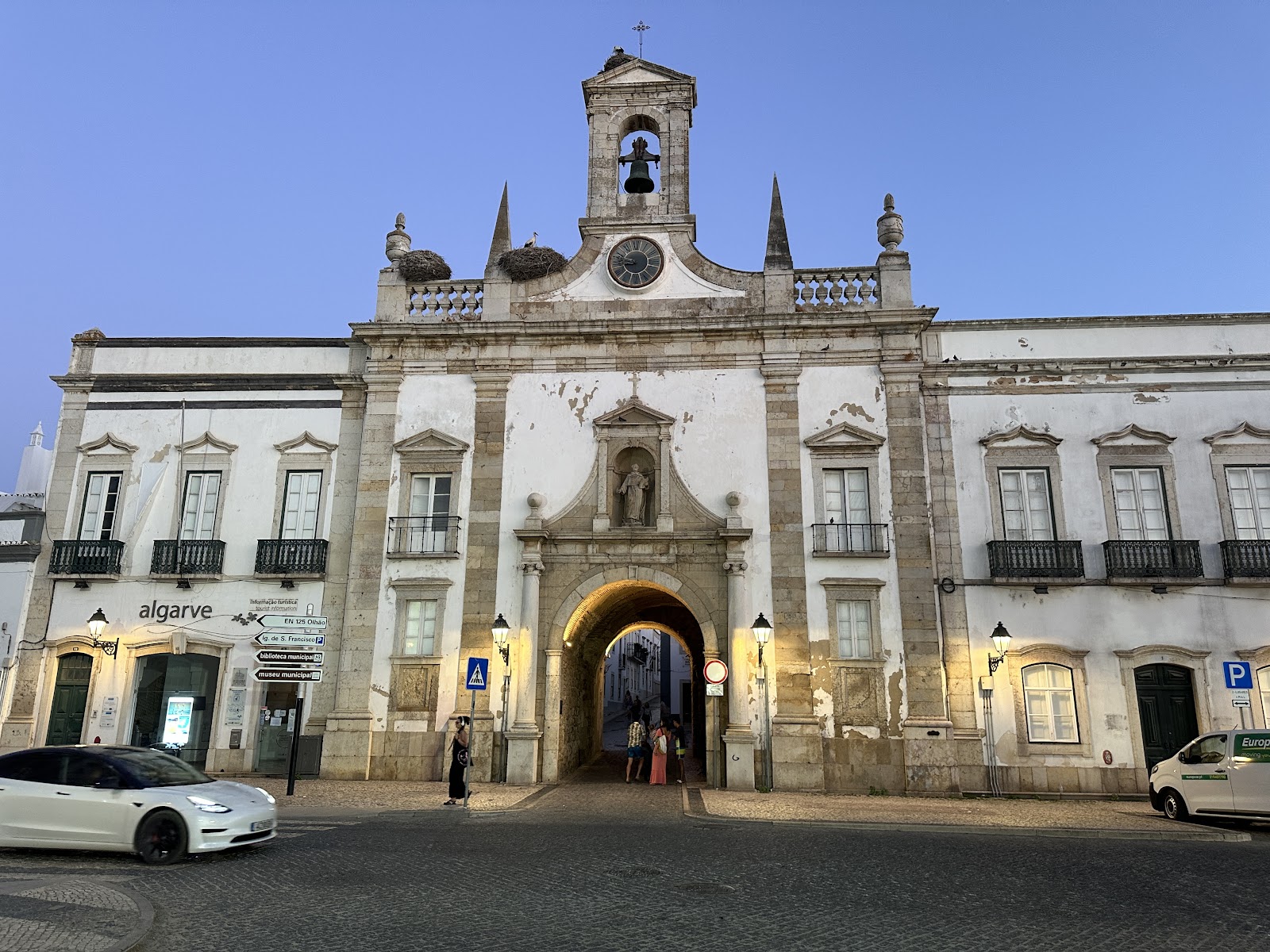
The first thing you notice, looking up at the Arco da Vila, is the storks. Their nests — great, shaggy platforms of sticks — crown the stonework and the adjacent church tower, and the birds stand in them with the unhurried authority of long-term tenants. Below the white marble statue of Saint Thomas Aquinas in its niche, below the neoclassical façade commissioned by a bishop and designed by an architect, people simply walk through, into the old town, as they have walked through a gate on this spot for over a thousand years.
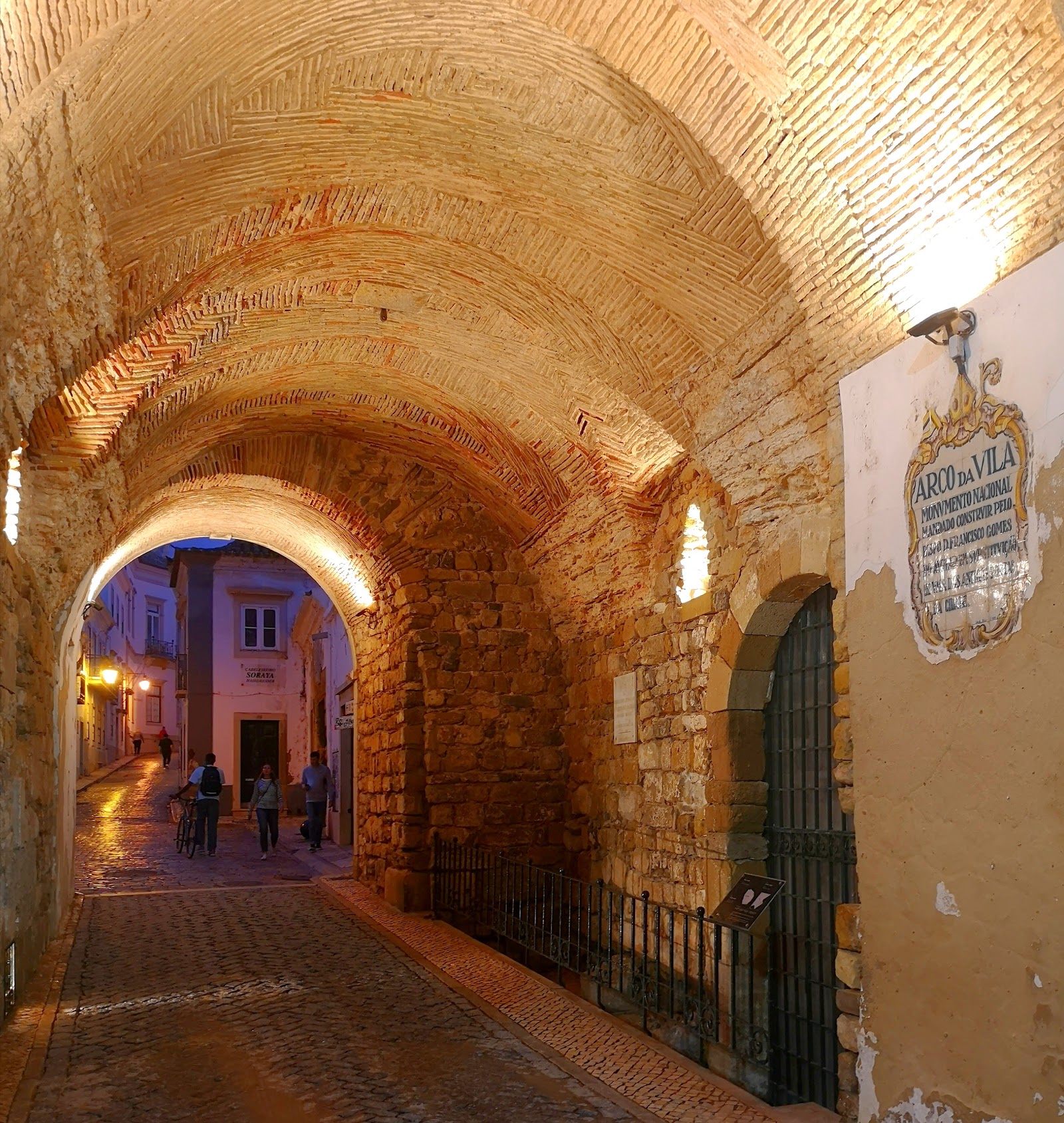
This is Faro's main entrance to the Cidade Velha, and it carries its history visibly. Pass under the 1812 arch and look down: the horseshoe gate beneath your feet, believed to date from the 11th-century Moorish period, is the only one of its kind left standing in the Algarve.
💛 What travellers fall for
People who come back tend to arrive early — before the tour groups reach the harbour front — when the storks are active and the stone is still cool. The narrow staircase inside the arch, accessed through the tourist office to the left of the entrance, leads to a terrace and a view across the old town rooftops to the Ria Formosa that most visitors never find.
The story behind Arco da Vila
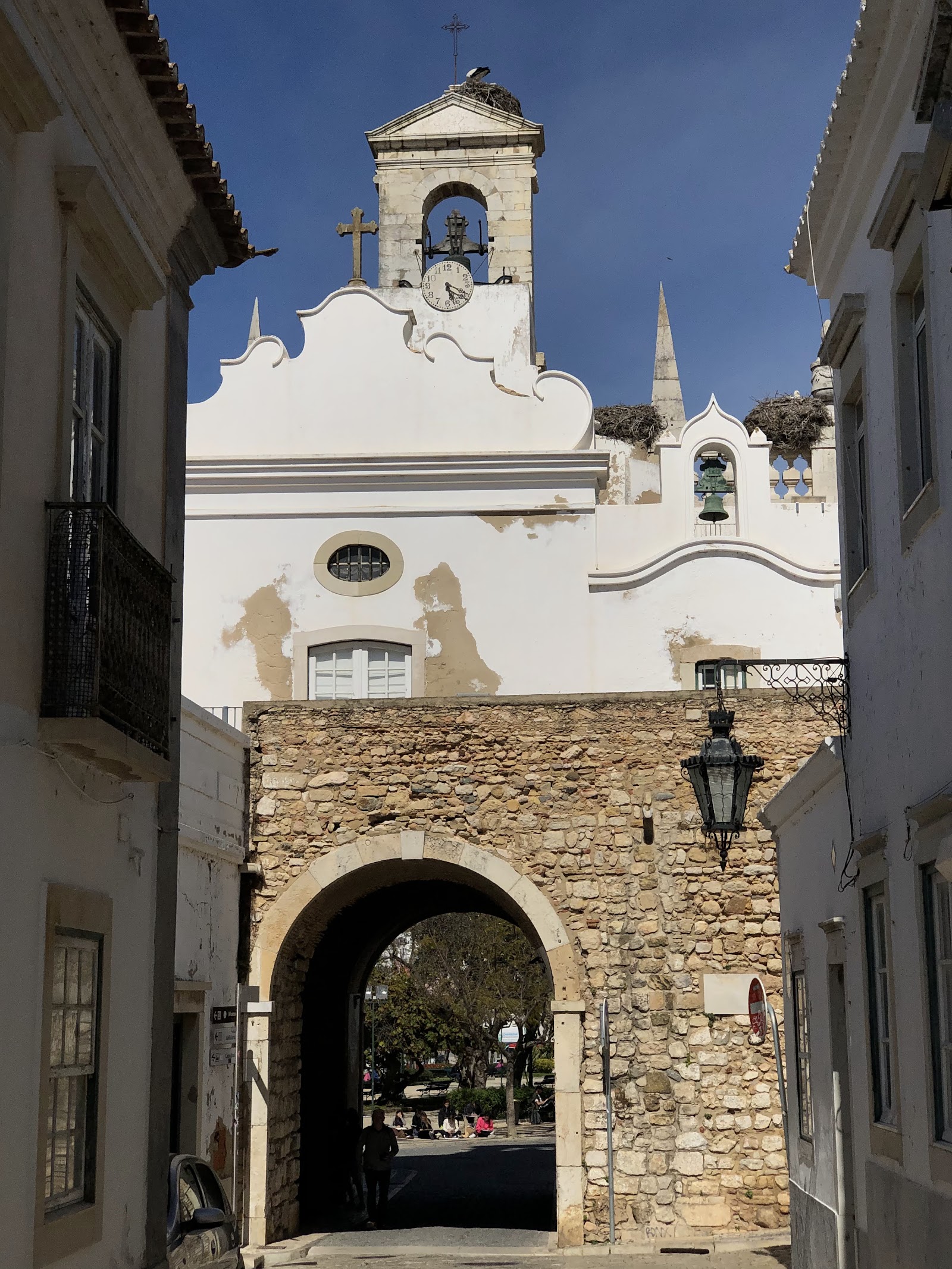
A gate has stood on this site since at least the Moorish occupation of Faro — the horseshoe arch visible inside the passage is thought to date from the 11th century and is the sole surviving example of its kind in the Algarve. The 1755 earthquake damaged the structure, and it remained in a compromised state for decades.
In 1812, Bishop Dom Francisco Gomes de Avelar commissioned a replacement. The architect Francisco Xavier Fabri produced a neoclassical facade facing the harbour, complete with a bell tower, a cross, and a niche housing a white marble statue of Saint Thomas Aquinas — the bishop's theological calling made stone. The opposite side, facing Rua de Santo António, shows a rococo balcony on Doric columns. A 1992 restoration stripped away 19th-century plaster and exposed the older Moorish masonry within. The arch has been classified as a National Monument since 1910.
Good to know
The arch itself is open around the clock and free to walk through. The interior exhibition and terrace are open 10am–1pm and 2pm–5:30pm, but closed Fridays and Saturdays — worth checking before you climb. Faro train station is a short walk away. The tourist office, immediately to the left as you enter, stocks maps.
Spring and autumn are the most comfortable seasons to linger here — temperatures between roughly 17°C and 25°C, long light, and fewer people at the arch itself. Summer is dry and sunny but hot, with August highs around 27°C; the storks are still in residence, which is a reason to come early in the day rather than avoid the season altogether.
Where is Arco da Vila?
More tickets & tours for Arco da Vila
Book directly at the provider
What travellers say about Arco da Vila
The building is beautiful. It is a passage from the promenade areas at the port and the houses behind it to the church and restaurants.
Beautiful old gate to the old city. The building is well maintained and looks beautiful. As far as I am aware, you cannot enter the gate.
We really like walking and exploring the streets of Faro. This building is very well maintained.
A Feathered Welcome to Faro's Charm. If you’re heading to Faro, you absolutely must check out Arco da Vila! This isn’t just any old archway; it’s a grand, feathered welcome to the beautiful old town. As a nature enthusiast, I was particularly charmed by the storks that have made the top of this arch their home. Watching these majestic birds nest and preen against the backdrop of historic architecture was an absolute treat. The arch itself is an impressive piece of history, but let's be honest – the real stars of the show are the storks. It's like they’ve decided to set up a luxury penthouse suite right in the heart of the city. Their nests are massive, and seeing these big birds so close is something straight out of a David Attenborough documentary. Once you’ve taken in the storks’ grand entrance, step through Arco da Vila and prepare to be charmed by Faro’s old town. Cobbled streets, quaint shops, and delightful little cafes await you. It's like stepping back in time, but with all the modern comforts you’d want. So, whether you’re a bird lover, a history buff, or just someone who enjoys a good bit of urban wildlife, Arco da Vila is a must-see. Come for the storks, stay for the old town’s charm – you won’t be disappointed!
Arco de Villa is a very calm place with old churches. We relaxed on a rooftop at the Cidade Vieja restaurant for some good drinks and appetizers. Prices comfortably priced.
More of Faro
Discover where to stay, what to do and the best deals for your trip.
Explore Faro →More attractions in Faro
All of Faro →

Background adapted from Wikipedia (CC BY-SA) · map data © OpenStreetMap contributors · ratings & place photos via Google · other photos with per-image credit. Ticket links may earn us a commission at no extra cost to you.