
Anne Frank House
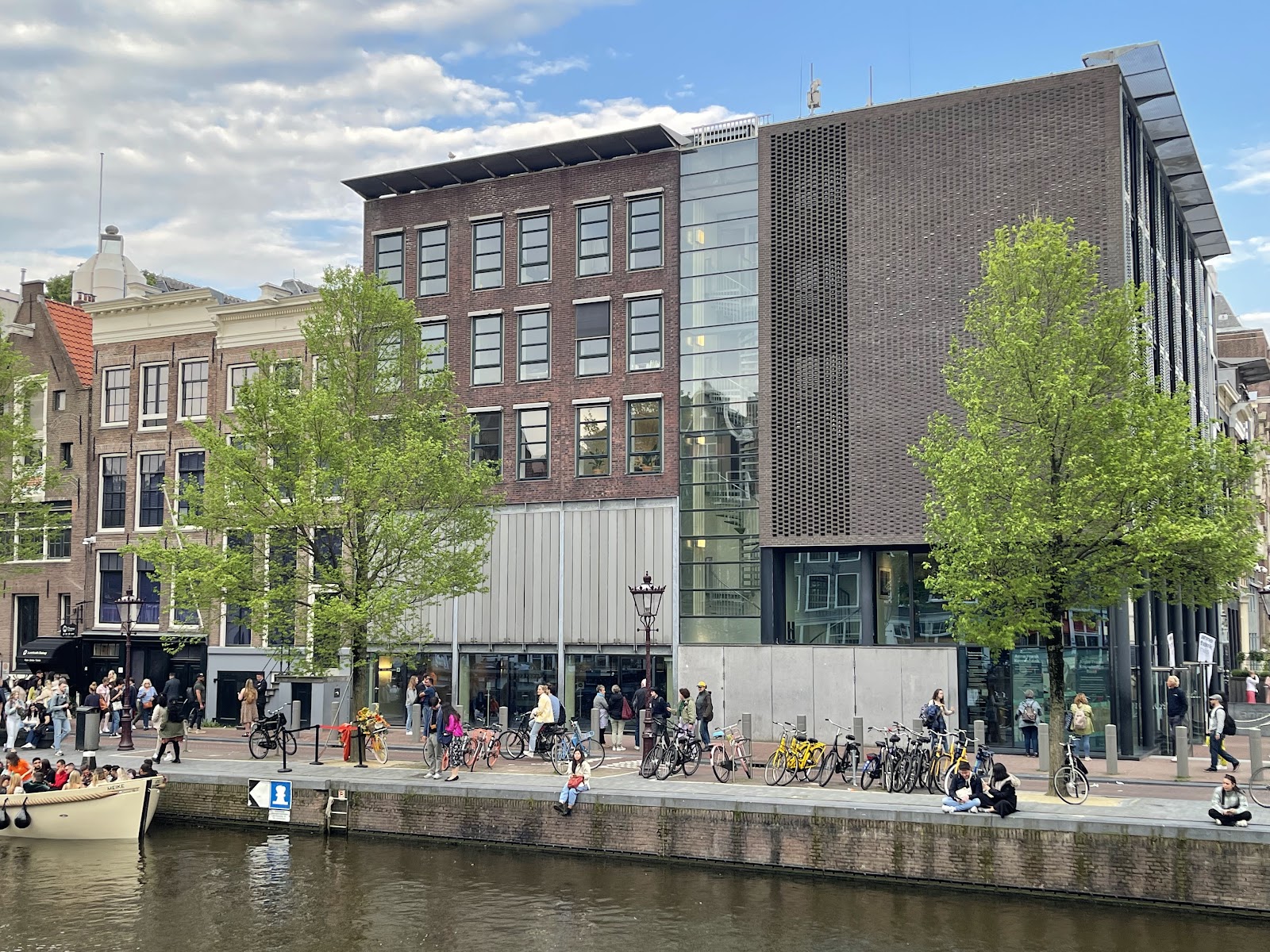
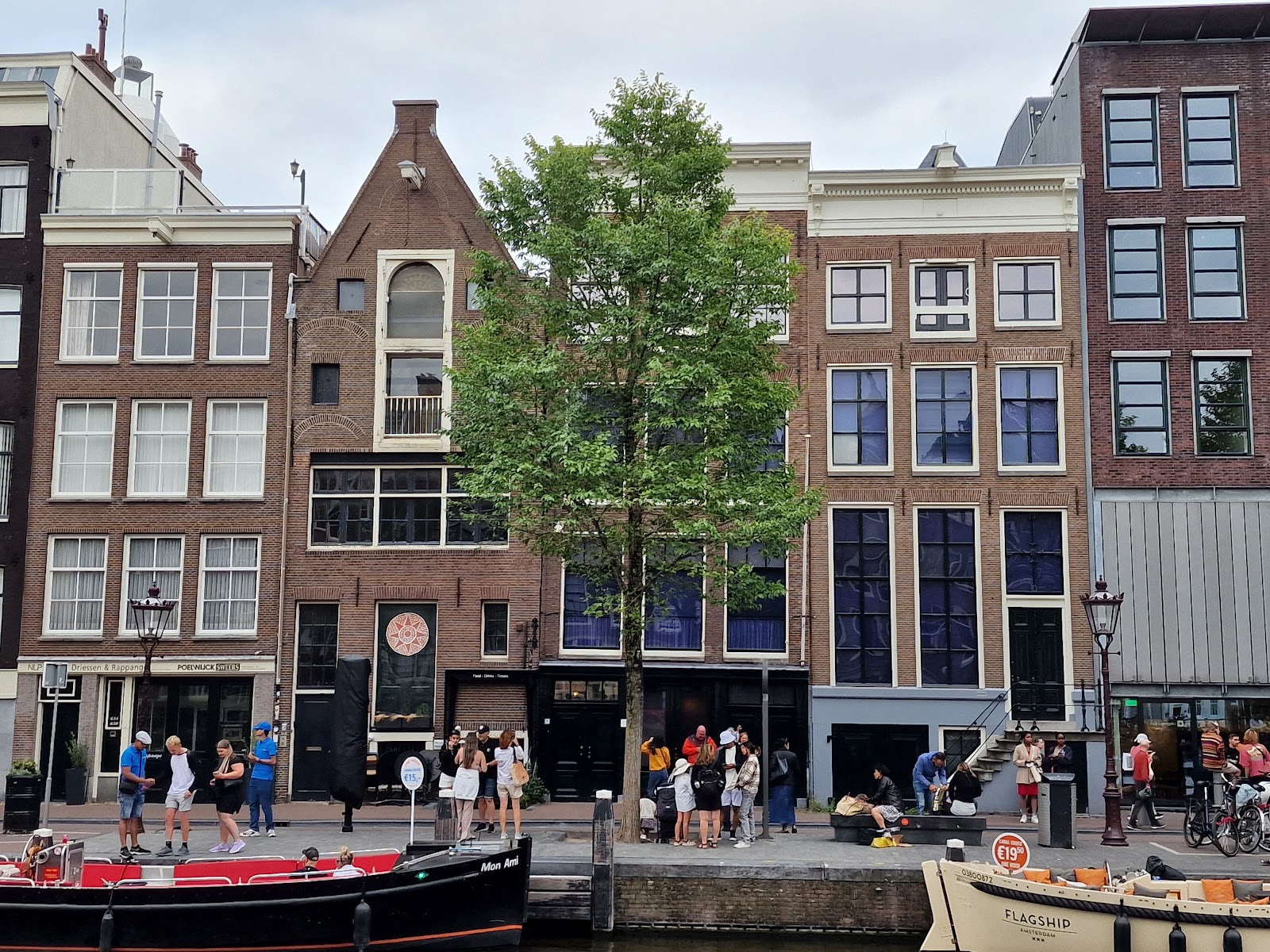
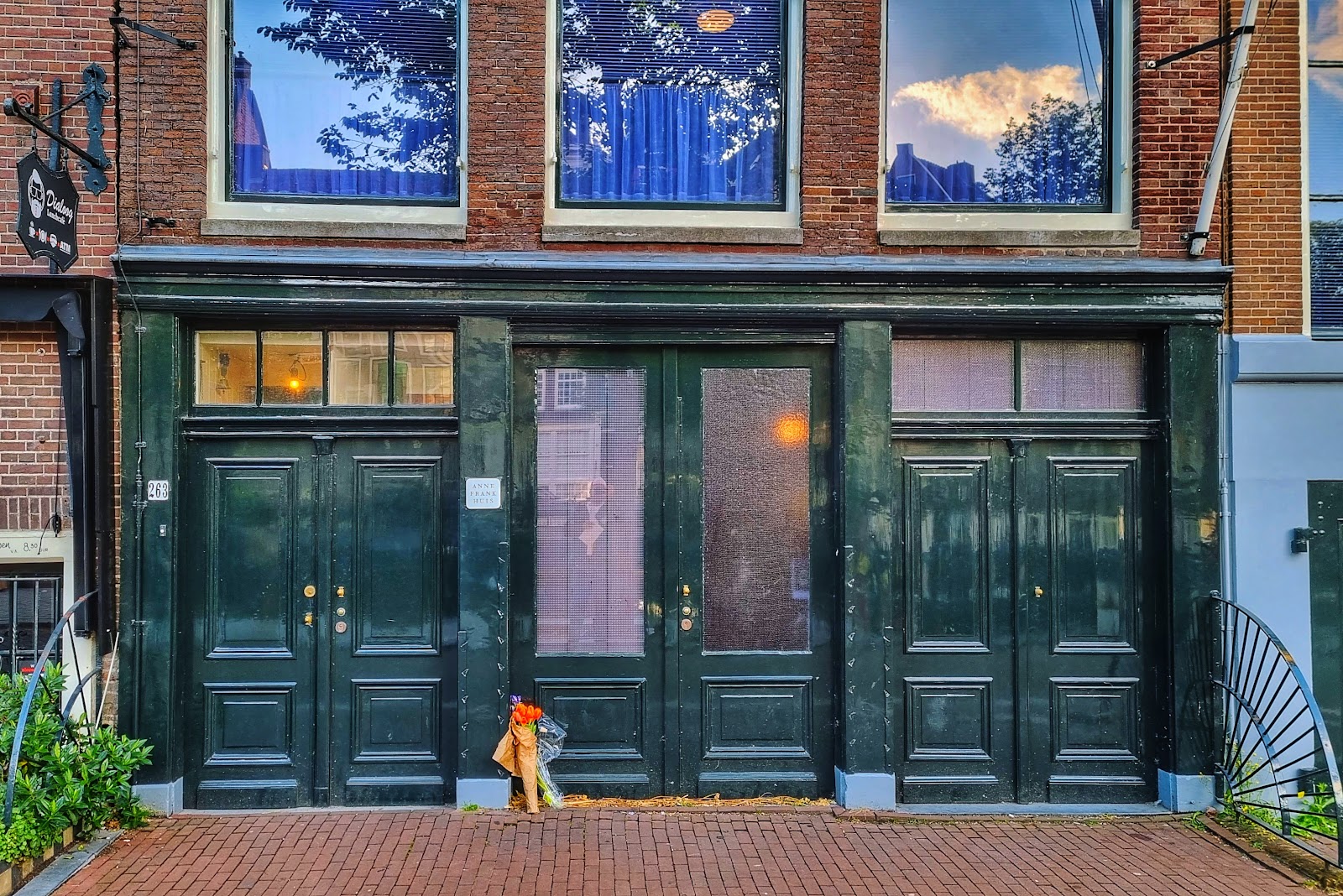
The canal house at Prinsengracht 263 looks much like its neighbours — tall, narrow, large windows, dark brick — which is part of what makes standing in front of it so disorienting. Between July 1942 and August 1944, eight people lived concealed in the annex behind this façade, in roughly 42 square metres, while the city went about its business a few walls away.
The rooms of the Secret Annex are left unfurnished, as Otto Frank requested when the museum opened in 1960. What remains are the wall marks: pencil lines tracking the children's heights, magazine pictures Anne pasted above her desk, the map where Otto followed Allied troop movements. These details do more than any exhibit could.
💛 What travellers fall for
People who come back tend to say the same thing: book the earliest slot you can get. The 9 am entry is noticeably quieter, and the steep stairs between floors feel less fraught when you're not navigating a crowd. The café overlooking the Prinsengracht is worth sitting in after — it takes a moment to re-enter the day.
The story behind Anne Frank House
The canal house dates to 1635, built by Dirk van Delft. The annex structure behind it was added in 1739. Otto Frank, who had moved his family from Germany to Amsterdam to escape Nazi persecution, relocated his companies — Opekta and Pectacon — to Prinsengracht 263 in December 1940. When his daughter Margot received a labour-camp call-up in July 1942, the family moved into the prepared hiding space the following day, joined eventually by four others.
The raid came on 4 August 1944. Otto Frank was the only one of the eight to survive Auschwitz, returning in June 1945. Miep Gies and Bep Voskuijl, who had helped sustain the hiding families, recovered Anne's papers from the annex after the arrest. The diary was published in 1947. The Anne Frank House organisation was established in 1957 — the same year the building was donated to it — and the museum opened 3 May 1960.
Good to know
Tickets are sold exclusively online for a fixed date and time — every Tuesday at 10 am CEST, slots open six weeks out. No walk-ins. Bags larger than an A4 sheet aren't allowed inside; leave luggage at your hotel or Central Station. Until February 2028, trams don't reach Westermarkt, so take tram 13 or 17 to Dam Square and walk ten minutes.
Where is Anne Frank House?
Location
- In Amsterdam Centrum
- 52.3752, 4.8840
- Open in Google Maps
Rating
4.5 ★ · 75,451 Google reviews
More tickets & tours for Anne Frank House
Book directly at the provider
What travellers say about Anne Frank House
Very informative, easy to follow the route around the exhibition. Interesting & heartbreaking audio commentary included in the ticket price. We were there 845am for 9am pre-purchased tickets, and there was already a queue. Surprised at the massive side entrance, but all went smoothly. Free Cloakroom was perfect so not carrying winter coats around inside. Staff were helpful.
Amazing experience just try to get the 9:00 a.m. slot so you can be the first in there. You do go into her attic and there are some very steep narrow stairs so be aware of that and you do also get to see her original diary. Very worth going to. I had to get my tickets on StubHub since they are sold out way ahead of time.
Buy tickets way in advance. Tourist prime time purchase months prior, in off season weeks prior. They sell out everyday. When you walk in they have free coat check. You get a listening device and get to walk through with a self guided tour. This is not handicap accessible. (Narrow stairs). Very limited chances to sit. All standing and takes a little over an hour. Overall very unique museum experience. No cameras allowed. Very friendly staff. Nice gift shop. This is a must see when visiting Amsterdam. I would not do it again. It's a one and done experience.
I traded Anne Frank's Diary in the 7th grade, and was too young to fully appreciate the story. To be there, to walk through the same rooms where she and her family hid from the Nazis was very powerful. If you visit Amsterdam, this is a must. Afterward, climb aboard one of the canal boats for a beautiful tour of Amsterdam from a unique perspective. It will clear your head.
I was extrelmely disappointed to discover that the annex was unfurnished and consisted of renovated new rooms with shiny wooden floors and paneling. The only thing there was a collection of pictures and historical information in addition to the audio imparting that info. I should have done my research before planning to visit from the USA. The info they had up on the walls and the audio was the same that I've been teaching my students for years. The stairs going up and down were uncomfortably narrow - barely enough to step on them sideways, and I had a hard time climbing up and down. Again, I should have researched all that before planning my visit. So, please gather all the information about it before you buy the tickets.
More of Amsterdam Centrum
Discover where to stay, what to do and the best deals for your trip.
Explore Amsterdam Centrum →More attractions in Amsterdam Centrum
All of Amsterdam Centrum →
Background adapted from Wikipedia (CC BY-SA) · map data © OpenStreetMap contributors · ratings & place photos via Google · other photos with per-image credit. Ticket links may earn us a commission at no extra cost to you.