
City

Akrotiri

Akrotiri
Photo by Yuko Photography on Pexels
Akrotiri
Photo by Matheus Bertelli on Pexels
Akrotiri
Photo by Suleyman Seykan on Pexels
Akrotiri
Photo by K on Pexels
Akrotiri
Photo by Matheus Bertelli on Pexels
Akrotiri
Photo by Plastic Lines on Pexels

Beneath a bioclimatic roof held up by 96 steel columns, a Bronze Age city sits more or less where it fell. Akrotiri was buried by the Theran eruption around 1613 BC under up to forty metres of volcanic ash, and that ash preserved it — multi-storey buildings, stone-lined sewers, painted plaster walls — in extraordinary detail.

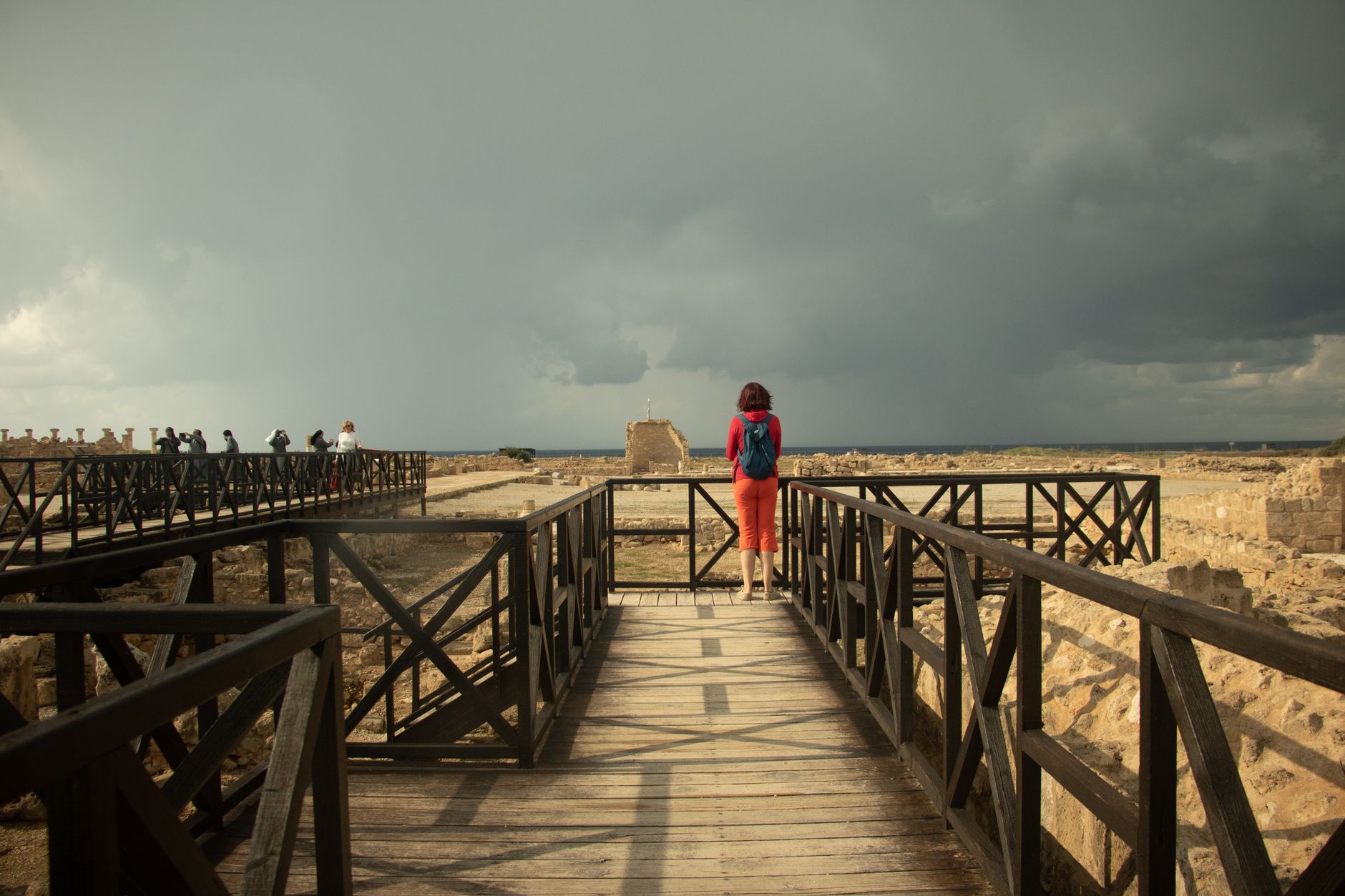
You walk above it all on suspended wooden boardwalk, looking down into streets that were sealed for three and a half millennia. The original frescoes are now in Fira and Athens, but the architecture itself — doorways, staircases, drainage channels running under the lanes — is the thing that stops you.

💛 What travellers fall for

People who come back tend to book a Wednesday or weekend slot (the site closes Tuesdays, and Monday hours are short). They also mention timing a visit for the first Sunday of the month, when entry is free, and pairing it with Red Beach afterward — a 1.7 km walk that feels earned after two hours underground.

Good to know
A public bus stops directly opposite the entrance; there is also paid parking on site. Timed tickets (€20 full price, €10 reduced) can be booked in advance on the Greek government ticketing site. Budget one to two hours. Skip the on-site fresco reproductions if you plan to visit the Museum of Prehistoric Thera in Fira — the originals are there.
Tips

Experiences you don't want to miss

All tips →

Deals in Akrotiri

Book directly at the provider
The story

How Akrotiri came to be

People have lived on this southwestern corner of Santorini since the fifth millennium BCE, starting as a fishing and farming community. By the Late Bronze Age, Akrotiri had grown into one of the Aegean's significant ports, complete with indoor plumbing, multi-storey buildings and walls covered in painted frescoes. The Theran eruption — now dated to around 1613 BC — ended it, burying the city under volcanic debris.

It stayed buried until 1867, when French geologist F. Fouque investigated after locals found artifacts at a quarry. Systematic modern excavation began in 1967 under Spyridon Marinatos and continued from 1974 under Christos Doumas. A roof collapse in 2005 closed the site until April 2012, by which time a new bioclimatic shelter spanning three acres had been completed.

People & landmarks

Who and what shaped it

People who shaped it

Spyridon Marinatos
Greek archaeologist who initiated extensive modern excavation of Akrotiri in 1967.
Christos Doumas
Archaeologist who continued excavations at Akrotiri from 1974 onwards.
F. Fouque
French geologist who conducted earliest excavations at Akrotiri in 1867 after local artifact discoveries.

Landmark buildings

Xeste 3
Multi-storey Bronze Age building at Akrotiri, among the most studied structures on the site.
West House
Multi-storey Bronze Age building at Akrotiri, among the most studied structures on the site.
Complex Delta
Four-structure Bronze Age complex crowned with double horns of consecration; preserved the Spring Fresco.
House of the Benches
Bronze Age building with seating on either side of an 80cm-wide entrance; purpose unknown.
Watch

See Akrotiri in motion

Practical

Plan your visit

On the map

When to go

Summer visits (June through mid-September) run warm — July regularly reaches 29–32°C — but the island's persistent wind keeps it manageable most days. Winters are mild and rainy; from November through March, all visitors pay the reduced admission rate.

Right now

☀️
27°C
Clear
Fri
☀️
30°
26°
Sat
☀️
31°
26°
Sun
☀️
32°
26°
Mon
☀️
33°
26°
Weather data: Open-Meteo

Background & history adapted from Wikipedia (CC BY-SA) · specs from Wikidata (CC0) · weather from Open-Meteo · map data © OpenStreetMap contributors · photos from Wikimedia Commons / Unsplash with per-image credit. No third-party reviews or social posts reproduced.

Top