Makgadikgadi Pans & Ntwetwe Pan
The Makgadikgadi Pans are among the largest salt flats on Earth — a blinding, other-worldly expanse of cracked white crust that was once a lake larger than Switzerland. In the dry season the pans feel like the surface of another planet; in the wet season they transform into a flamingo-pink mirage that draws one of Africa's great wildlife migrations.

The Dry-Season Moonscape
Between April and October the pans are bone dry, offering an extraordinary landscape of white salt crust stretching to an utterly flat horizon in every direction. The silence is profound and the light extraordinary — photographers come specifically for the 360-degree sunset skies and the star-filled nights unobstructed by any tree or hill.
Quad-biking across Ntwetwe Pan from Jack's Camp, a legendary tented camp that has hosted everyone from Mick Jagger to conservation scientists, is a bucket-list experience. The camp also runs guided walks with local Zu/'hoasi San Bushmen who share tracking skills and survival knowledge passed down for thousands of years.

The Wet-Season Miracle
From December to March, shallow water floods the pans and triggers one of Africa's most underrated wildlife spectacles. Hundreds of thousands of flamingos descend to breed, turning the horizon pink, and zebra and wildebeest pour in from the Boteti River corridor in a mini-migration that rivals anything in the Serengeti for sheer energy.
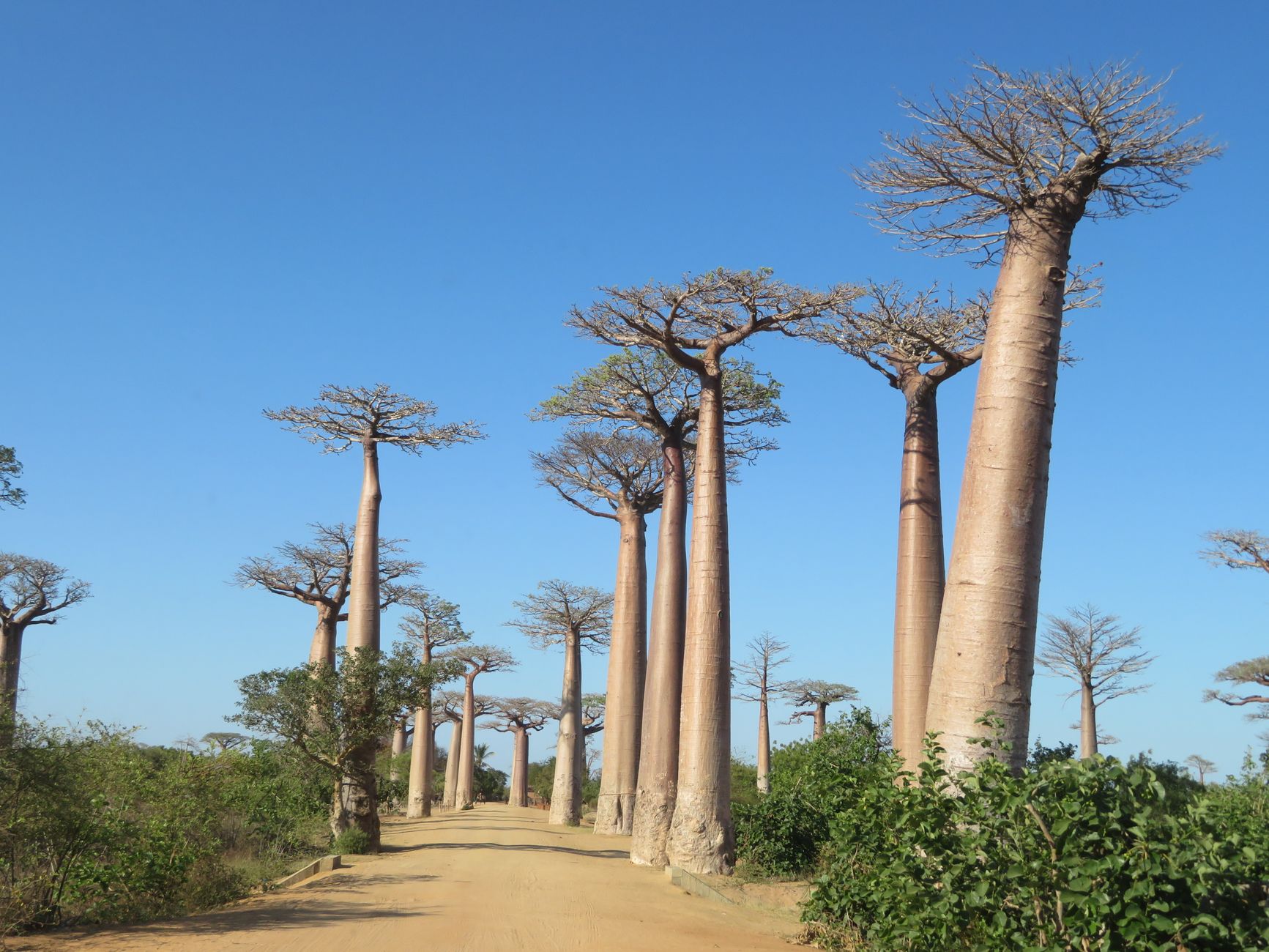
Baines' Baobabs, a cluster of ancient, impossibly fat baobab trees on the edge of Ntwetwe Pan, are named after the 19th-century artist Thomas Baines who painted them in 1862 — and they look almost identical today. They are one of Botswana's most photographed natural landmarks and easily accessible from the Gweta road.
Getting There & Staying
The town of Gweta on the A3 highway is the main access point and home to Planet Baobab, a colourful, affordable lodge with baobab-pod-shaped chalets that organises quad-bike and 4WD pan excursions. It's a 4-hour drive north-west from Gaborone or 2 hours from Maun.
A high-clearance 4WD is essential for driving on the pans themselves; in wet season the surface becomes dangerously soft and even experienced drivers get stuck. Always go with a guide or in convoy.
Makgadikgadi Pans & Ntwetwe Pan on video
More of Botswana
Discover where to stay, what to do and the best deals for your trip.
Explore Botswana →