Salar de Uyuni
At nearly 11,000 square kilometres, Salar de Uyuni is the largest salt flat on Earth — a blinding white canvas that, after rain, becomes a perfect mirror reflecting the entire sky. Standing here feels less like travel and more like stepping inside a hallucination.
What to Expect on the Flats
The crust of crystallised salt stretches to every horizon in a geometric honeycomb pattern, crunching underfoot like fresh snow. In the dry season (May–October) the surface is bone-white and ideal for the famous forced-perspective photographs that flood every traveller's Instagram.
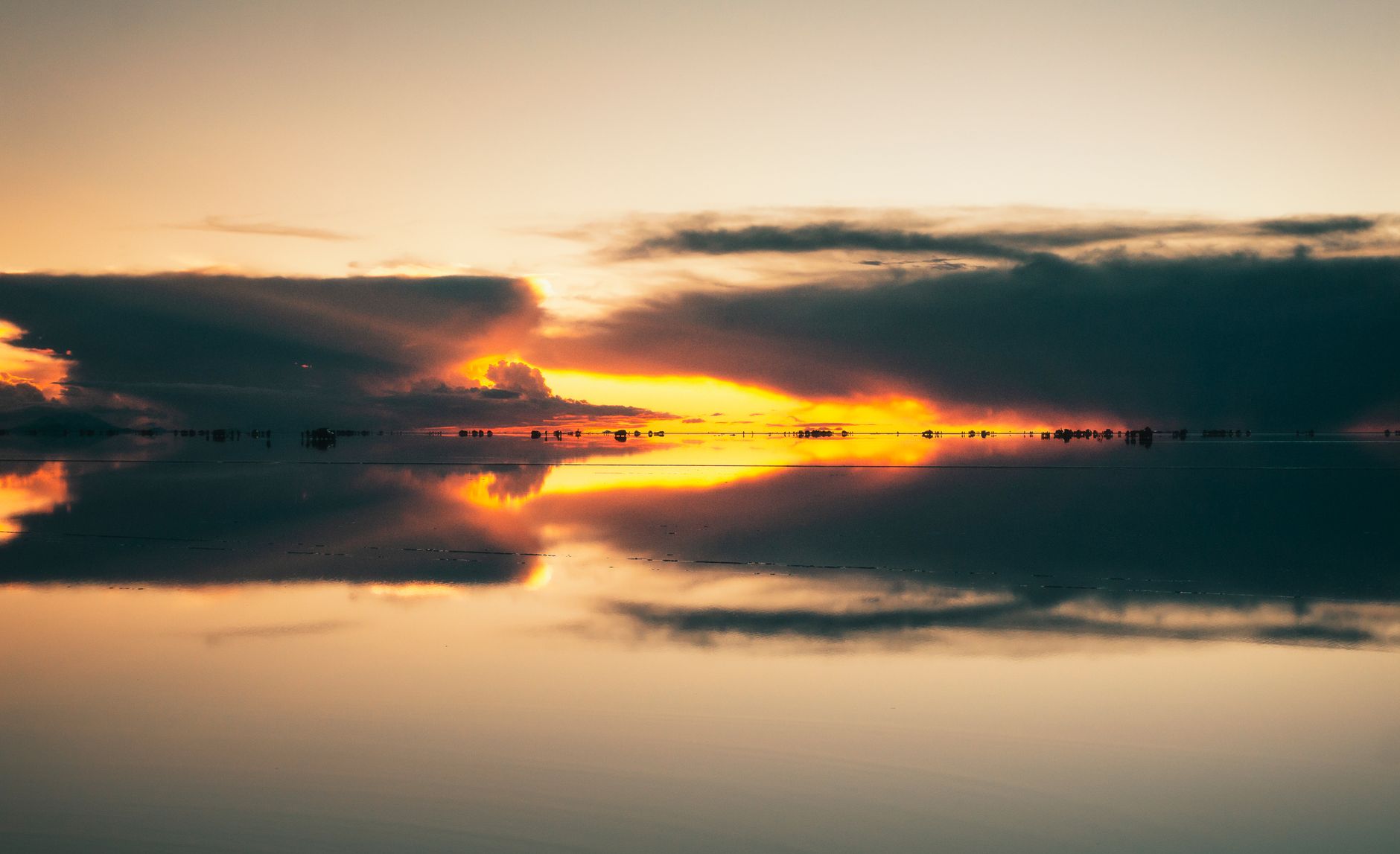
During the wet season (November–March) a thin layer of rainwater turns the flats into a flawless mirror, doubling the sky and making it impossible to tell where earth ends and heaven begins. Sunrise and sunset here are among the most photographed moments in South America.

Getting There and Beyond
The gateway town is Uyuni, reachable by overnight bus from La Paz (roughly 10–12 hours) or by a short flight via Amaszonas airlines. Most visitors join a 3-day 4WD tour that continues south through the Eduardo Avaroa Andean Fauna National Reserve, passing the red Laguna Colorada and the geothermal Geysers Sol de Mañana.
Don't miss Isla Incahuasi, a cactus-covered coral island rising improbably from the centre of the flats — the 360-degree view from its ridge path is one of Bolivia's great panoramas.

More of Bolivia
Discover where to stay, what to do and the best deals for your trip.
Explore Bolivia →