
Zugspitze
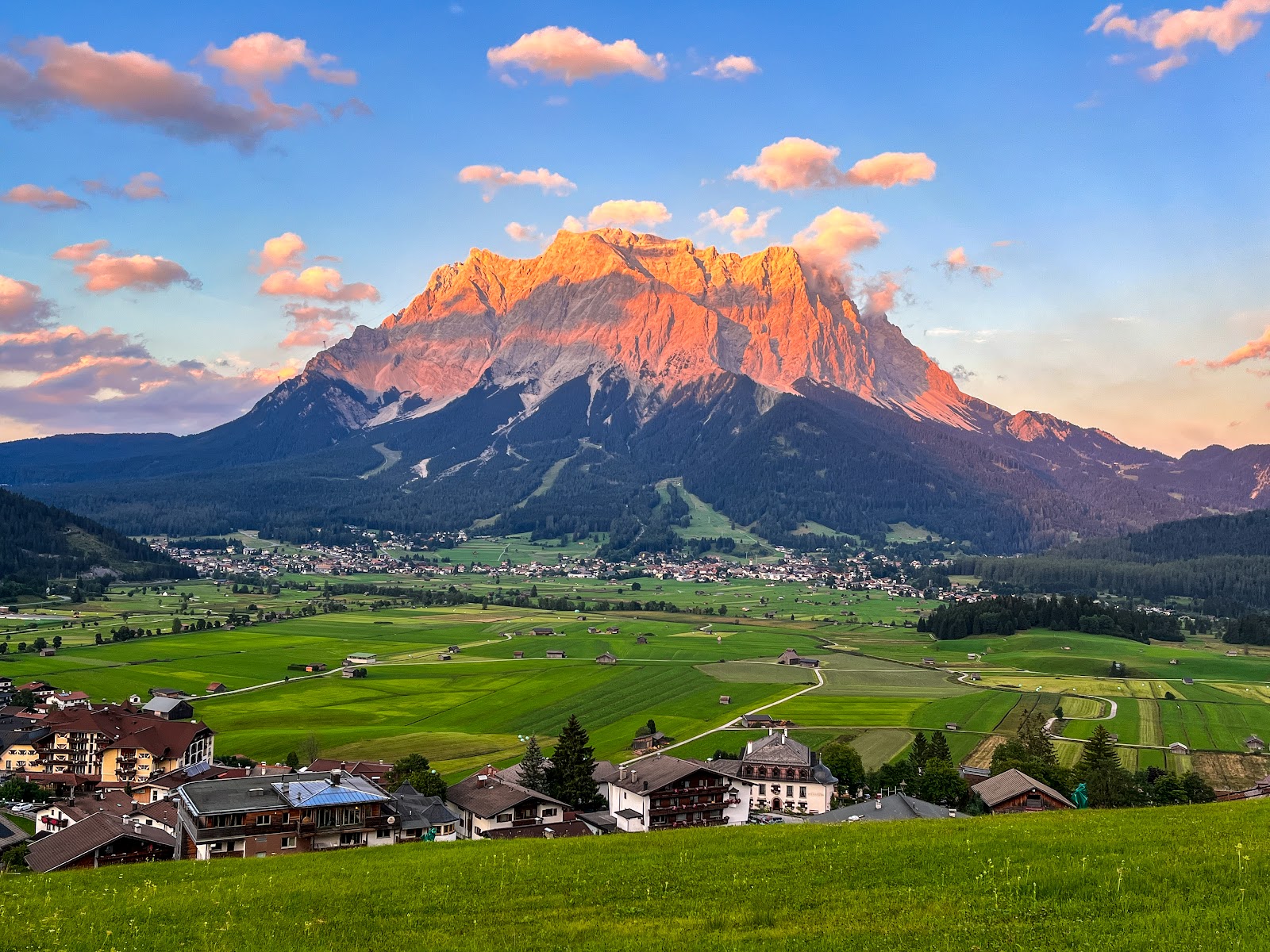
At 2,962 metres, the Zugspitze is Germany's highest point — and the summit makes that fact feel entirely physical. Step off the cable car and the air is noticeably thinner, the horizon impossibly wide, and on a clear day you can count four countries spread out below you. The golden summit cross, put up in 1851 at the instigation of a local priest named Christoph Ott, catches the light from a long way off.
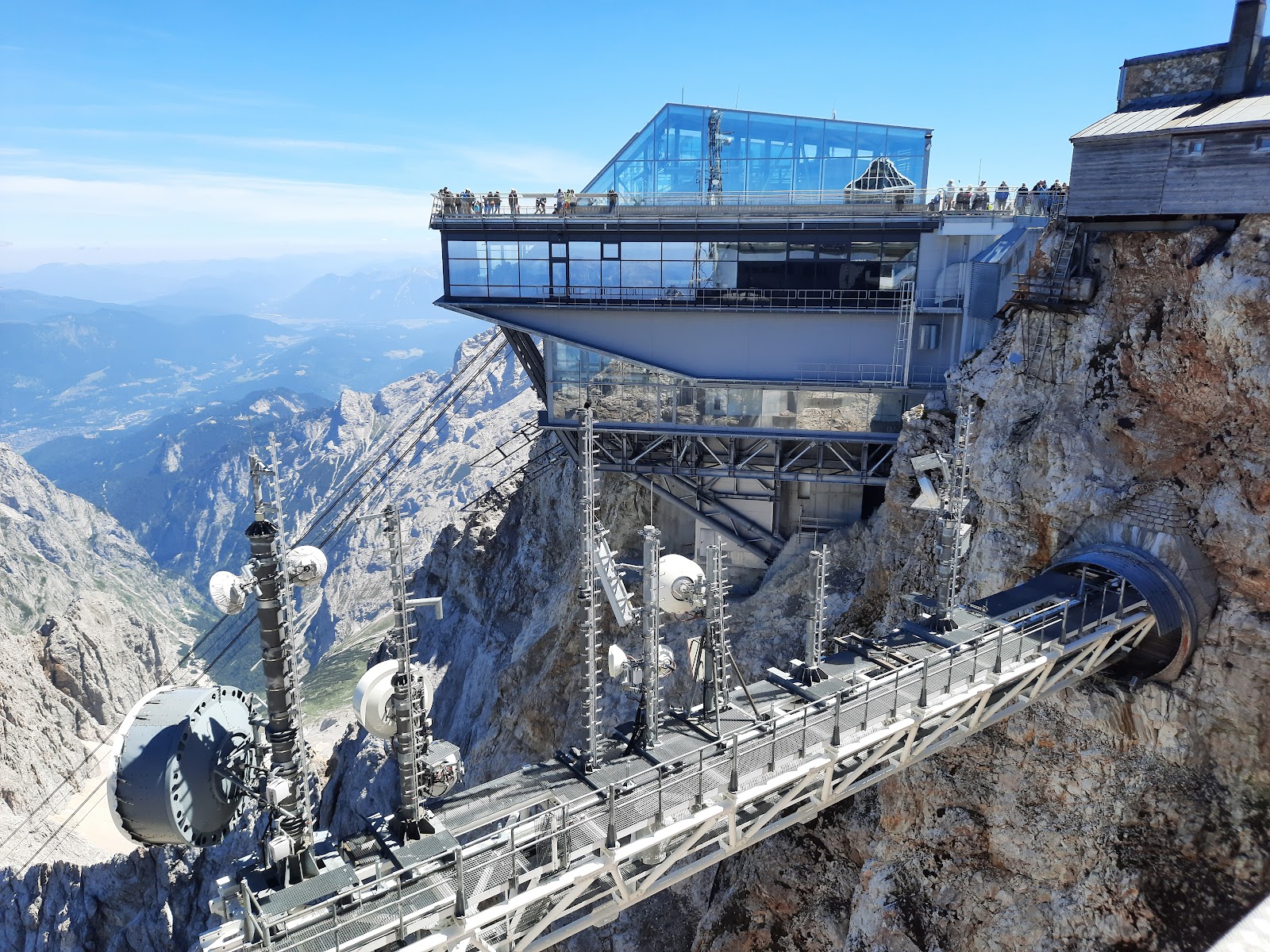
Two ways up exist on the Bavarian side: the 2017 Eibsee cable car, which climbs 1,945 metres on a single unsupported span of over three kilometres, or the cogwheel railway, completed in 1930, which burrows through the mountain on a 19-kilometre route before emerging onto the glacier plateau.
💛 What travellers fall for
People who return tend to take the cogwheel train up and the cable car down — the train through the tunnel is slower but gives you the glacier plateau at Zugspitzplatt before the crowds arrive. The Münchner Haus, open May to October, is worth knowing about if you want an overnight at nearly 3,000 metres, with around 30 beds and a view that changes completely after day-trippers leave.
The story behind Zugspitze
The mountain's name appears in writing as early as 1590, in a border document marking the line between the County of Werdenfels and Austria. Its first recorded ascent came on 27 August 1820, when Lieutenant Josef Naus, a survey assistant named Maier, and mountain guide Johann Georg Tauschl reached the top. The golden cross followed in 1851, and the first proper hut — the Wiener-Neustädter Hut — was built in 1884.
The infrastructure that made mass access possible arrived in two phases: Bavaria's first cable car, on the Austrian side, opened in 1926, while the cogwheel railway from Grainau, costing 22 million Reichsmarks, was completed in 1930. The Schneefernerhaus, originally a hotel, survived an avalanche in 1965 that killed ten people, was eventually closed in 1992, and spent the 1990s being converted into a research station. The Maria Heimsuchung chapel — Germany's highest church — was consecrated in 1980 by a then-Archbishop named Joseph Ratzinger.
Good to know
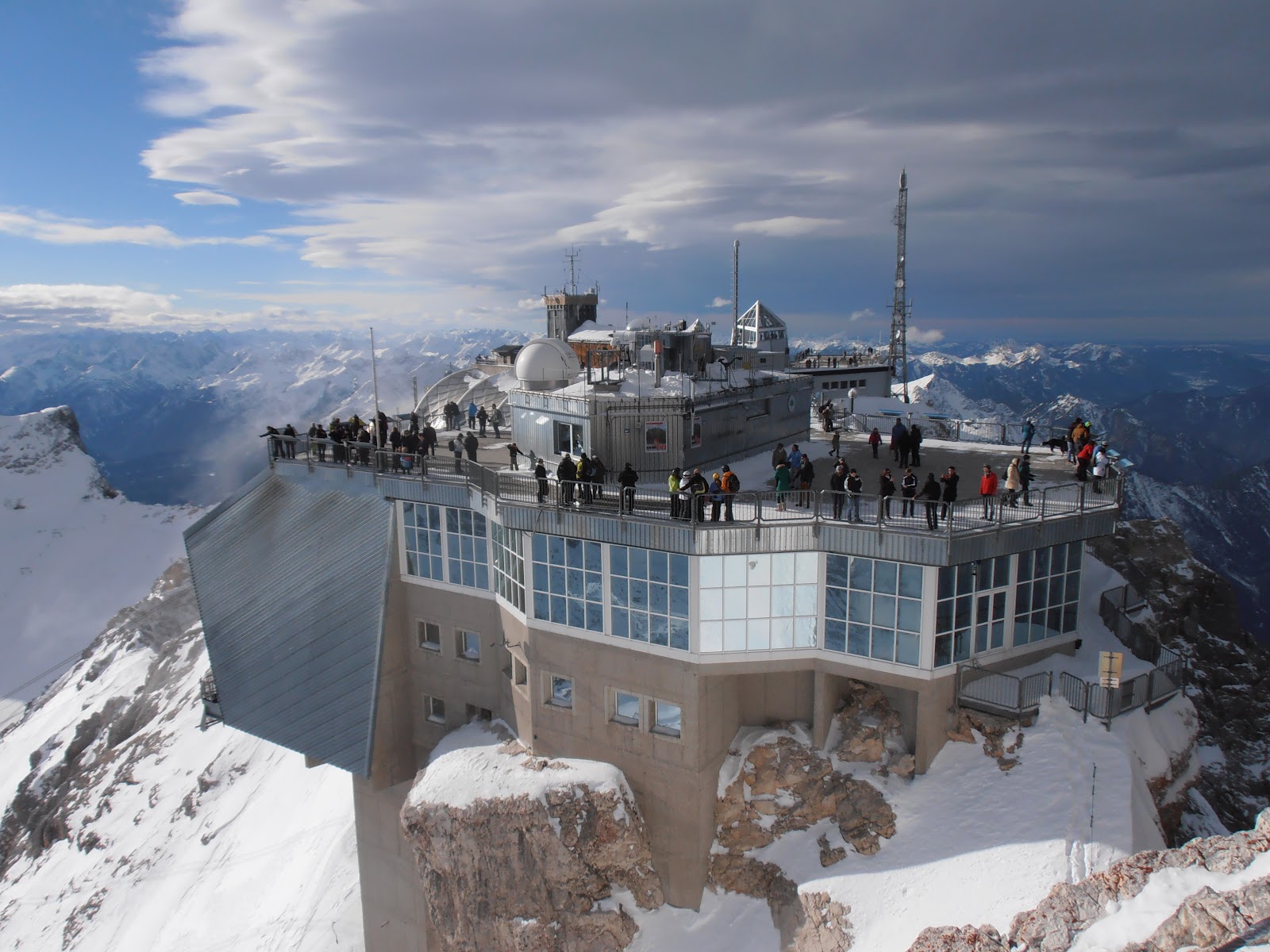
The Eibsee cable car and the Zugspitzbahn railway both depart from the Garmisch-Partenkirchen area; the Austrian Tiroler Zugspitzbahn offers a third approach from Ehrwald. Go mid-week if you can — weekends draw queues. The summit restaurant Panorama 2962 opened in 2018 and handles the lunch rush; the Münchner Haus is quieter.
Summit temperatures average well below zero even in summer, and wind can make it feel colder still — a warm layer is worth carrying in any month. Winter brings reliable snow on the glacier, but visibility can close in fast; the clearest skies tend to come in late spring and early autumn.
Where is Zugspitze?
Location
- In Garmisch-Partenkirchen
- 47.4211, 10.9847
- Open in Google Maps
Rating
4.8 ★ · 11,416 Google reviews
More tickets & tours for Zugspitze
Book directly at the provider
What travellers say about Zugspitze
Just amazing experience in the Bavarian Alps! Visited the beautiful Zugspitze in February 2026 and it was truly one of the best experiences of my trip to Germany. Standing at the top of Germany surrounded by the stunning Bavarian Alps was absolutely breathtaking. The entire journey itself was memorable and scenic from start to finish. I started from Marienplatz, München and took the day pass train journey to Garmisch-Partenkirchen. From there I took the bus to Eibsee Station. The cable car ride to the summit was simply amazing with unbelievable panoramic views of snow-covered mountains everywhere. The chair lift experience was also fantastic and added even more adventure to the day. The atmosphere at the top was peaceful, refreshing, and perfect for spending an entire day enjoying nature and the mountain views. There is also a train running from Garmisch to Eibsee, which I would definitely recommend for convenience. A must-visit destination in Germany for anyone who loves mountains, snow, and unforgettable views!
Great experience at Zugspitze. I took the train to Eibsee, then the cable car to the Top, and returned by train. The views were breathtaking, and it was amazing to see snow at the top. The free sledges were a fun bonus and made the visit even more memorable. The staff were very helpful and clearly explained the route and the best way to reach the Top. Everything was well organized, and the whole experience was smooth from start to finish. Highly recommended.
Fantastic place whit epic views ! The climb was worth every euro. Unfortunately, the summit was closed due to icy conditions, but it was still worth it!
It was a gorgeous sunny but chilly late afternoon when my husband and I visited. We walked the entire top area and also are at the restaurant inside. Great customer service. The views are amazing and photos don’t do it justice. Just pack for the weather and wear comfy shoes.
Lovely experience, not just taking the cable car to the top but actually climbing to the very peak. You need to climb a small ladder, and it’s rocky and a bit challenging at the summit, but the views are absolutely worth it. A thrilling and unforgettable adventure.
More of Garmisch-Partenkirchen
Discover where to stay, what to do and the best deals for your trip.
Explore Garmisch-Partenkirchen →More attractions in Garmisch-Partenkirchen
All of Garmisch-Partenkirchen →

Background adapted from Wikipedia (CC BY-SA) · map data © OpenStreetMap contributors · ratings & place photos via Google · other photos with per-image credit. Ticket links may earn us a commission at no extra cost to you.