
Zubizuri Bridge
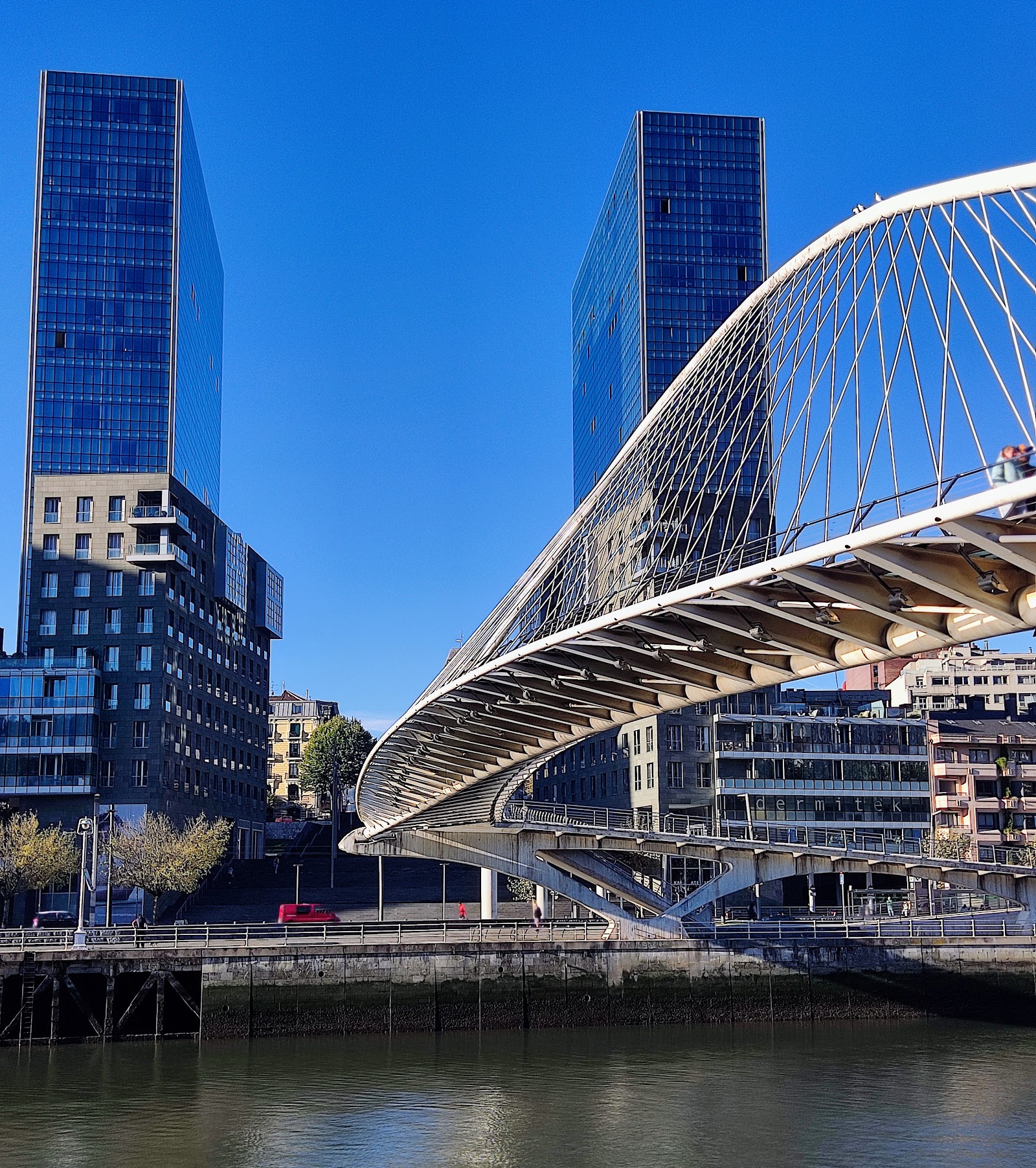
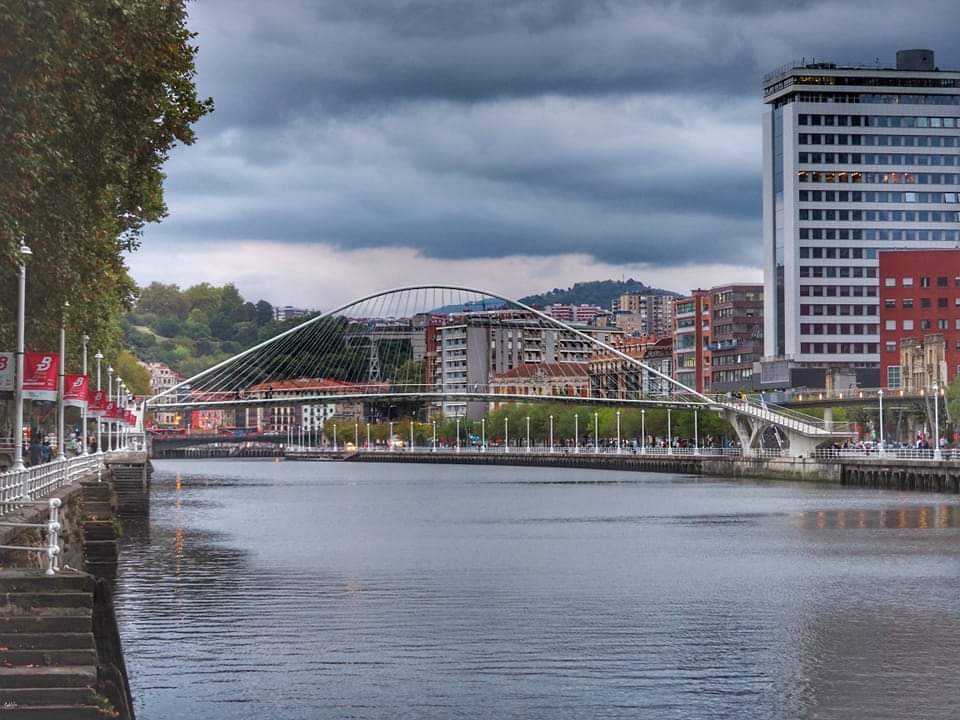
The Zubizuri is all white arch and suspended intention — a footbridge across the Nervión that looks, from the riverbank, somewhere between a sailboat and a spine. Santiago Calatrava designed it to be walked through as much as looked at, and the translucent glass-brick deck lets light filter down to the water below.
It connects the Campo Volantin side of the river to Uribitarte, which makes it genuinely useful rather than merely decorative. At 75 metres long and 15 metres high, it's a short crossing, but one that rewards a slow pace — especially after dark, when the deck lighting turns the whole structure into something that seems to float above the water.
💛 What travellers fall for
People who've crossed it more than once tend to time a return visit for after sunset. The bridge's own lighting does something the daytime doesn't — the white arch holds its shape against the dark sky while the deck glows from below. Worth the detour even if you've already been, and the walk to the Guggenheim from the Uribitarte end takes about five minutes.
The story behind Zubizuri Bridge
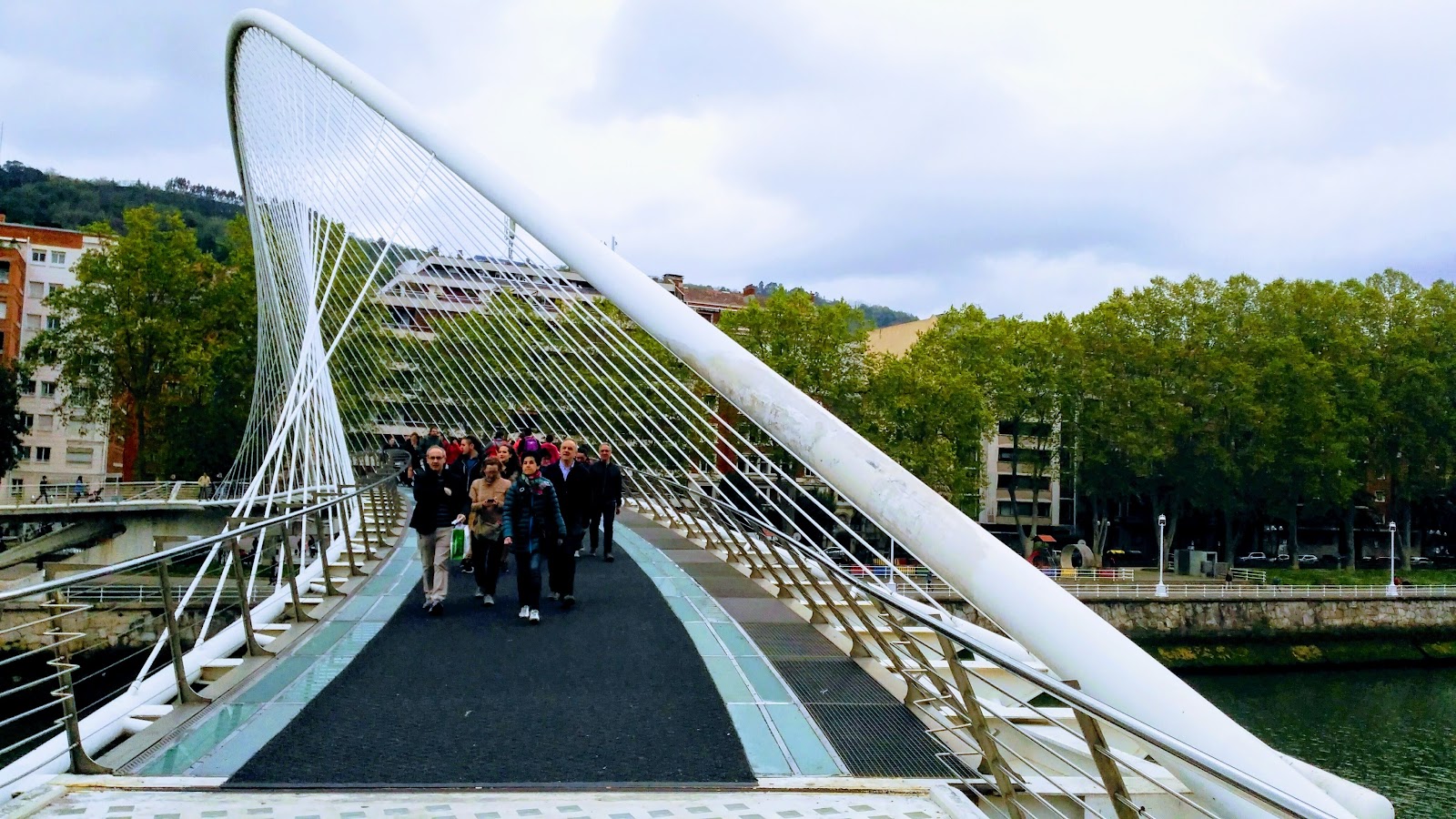
Calatrava was commissioned to design the bridge in 1990, with construction running from 1994 to 1997. The original deck was made of translucent glass bricks — striking to look at, genuinely treacherous to walk on when wet. Bilbao being Bilbao, that turned out to be a recurring problem. The city council eventually replaced the surface with non-slip matting, covering most of the glass.
The more contentious chapter came in 2006, when local authorities approved a new footway connecting to Arata Isozaki's towers nearby — attaching it directly to Calatrava's structure. Calatrava sued the city in 2007, arguing the addition violated his moral rights as the work's creator. The case put a spotlight on how cities balance architectural legacy with practical urban growth.
Good to know
Open around the clock, no ticket required. The nearest light rail stop is Uribitarte, a two-minute walk. Come early morning or after dark for the best light and the fewest people. The deck is covered in black non-slip matting — less photogenic than the original glass, but steadier underfoot, particularly in wet weather.
Bilbao is a genuinely rainy city year-round, and the bridge's exposed position over the river means wind and wet are regular companions. The matted deck handles rain reasonably well, but in winter the crossing can be cold and blustery. Summer mornings are the most comfortable time to linger.
Where is Zubizuri Bridge?
More tickets & tours for Zubizuri Bridge
Book directly at the provider
What travellers say about Zubizuri Bridge
Beautiful bridge providing pedestrian traffic to Abando neighborhood.
Cute little bridge!
A bit disappointed by the street and bridge. Maybe I overthought the place , seen in movies etc. Honestly no reason to visit at all. Only if you would hang out or stay in a hotel on the other side , you would use the bridge
Beautiful and interesting if in Bilbao don’t miss it.
Nice esthetic, but a total Calatrava disaster
More of Bilbao
Discover where to stay, what to do and the best deals for your trip.
Explore Bilbao →More attractions in Bilbao
All of Bilbao →

Background adapted from Wikipedia (CC BY-SA) · map data © OpenStreetMap contributors · ratings & place photos via Google · other photos with per-image credit. Ticket links may earn us a commission at no extra cost to you.