
Zhujiajiao
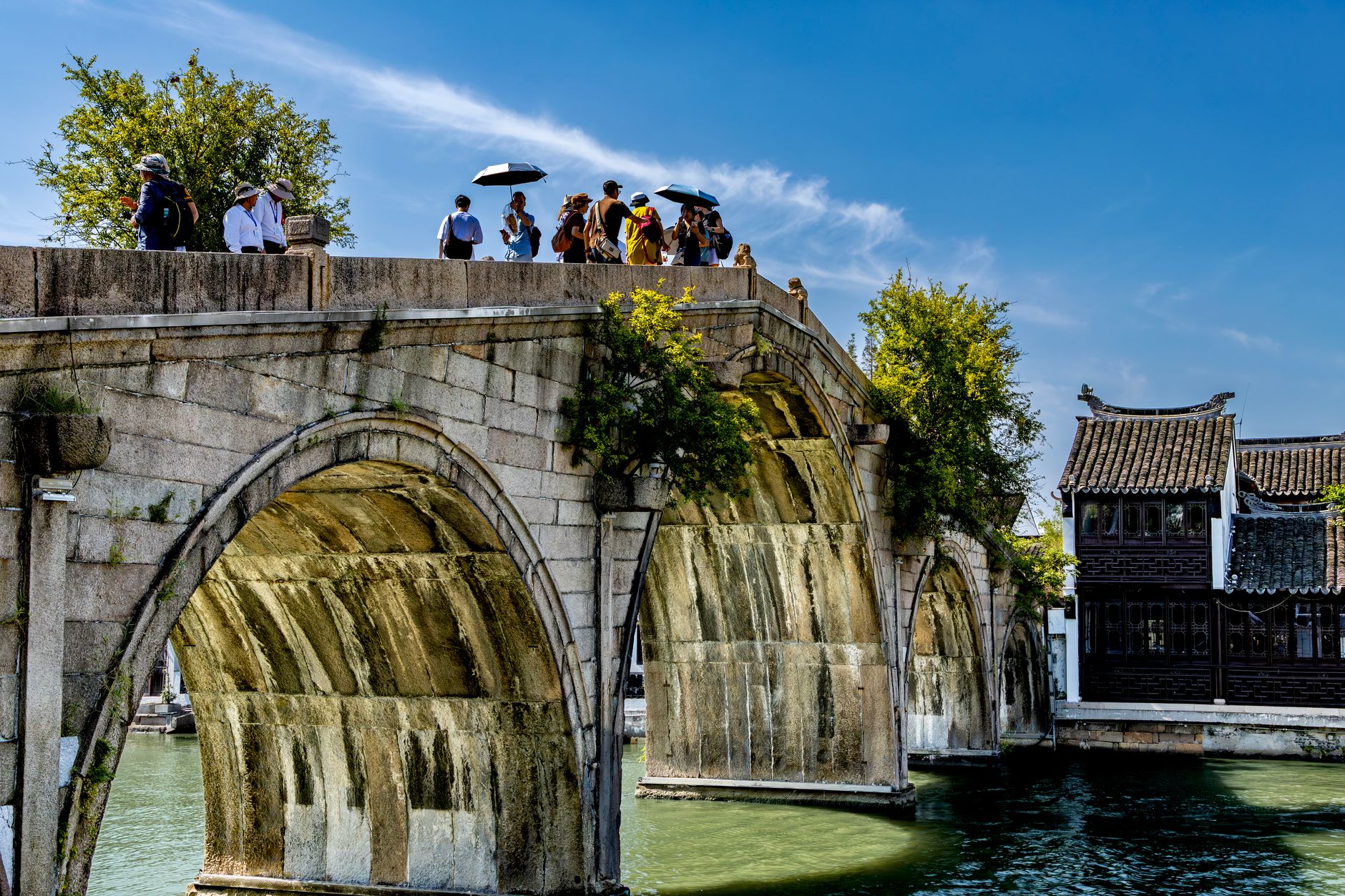

Thirty-six stone bridges cross the canals here, and the one you'll notice first is Fangsheng Bridge — 70.8 metres of five-arched Ming stonework that has anchored the town's waterfront since 1571. Zhujiajiao sits about an hour west of central Shanghai on Metro Line 17, and for roughly 1,700 years it has been a working river town before it was ever a day trip.
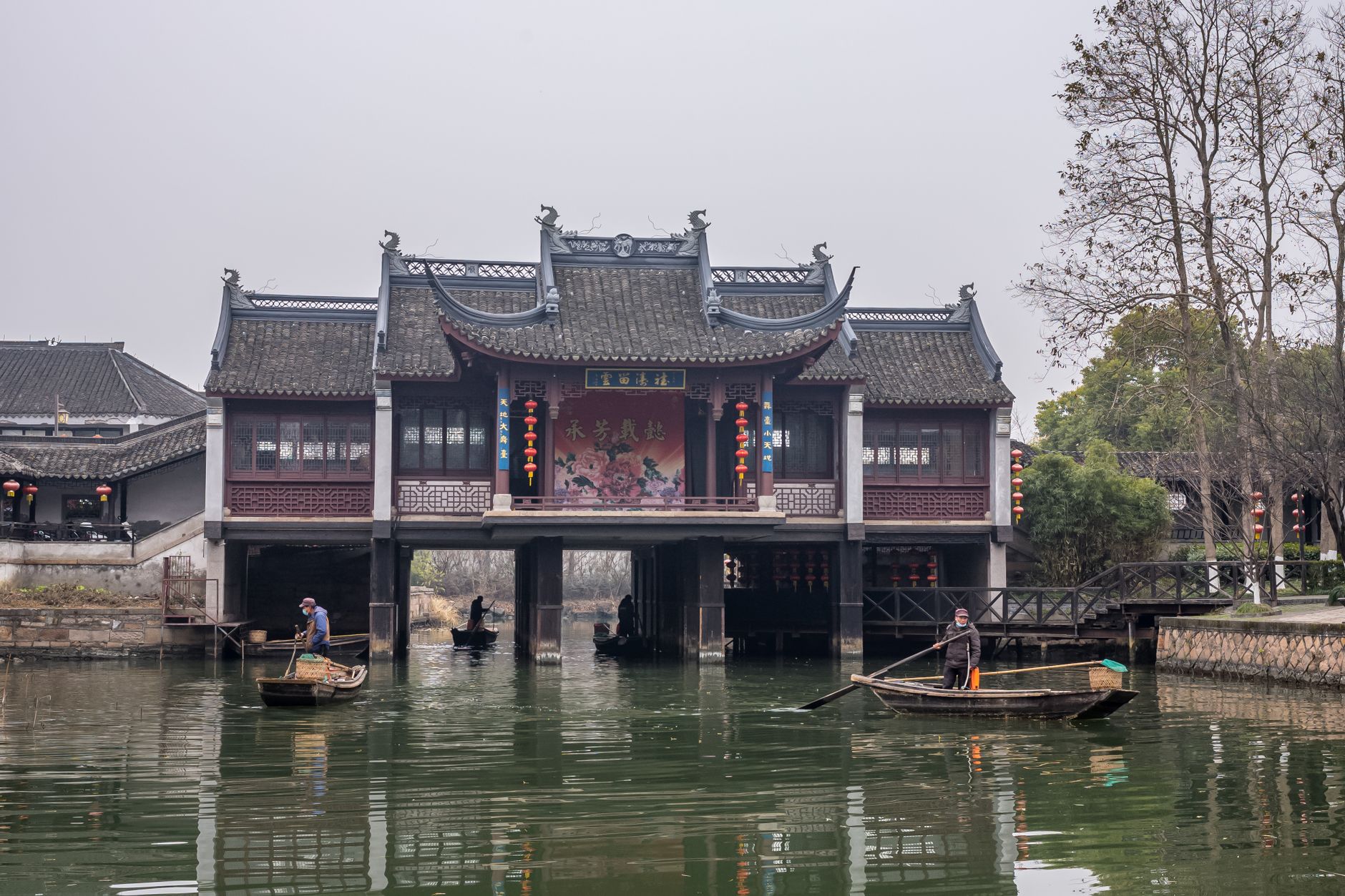
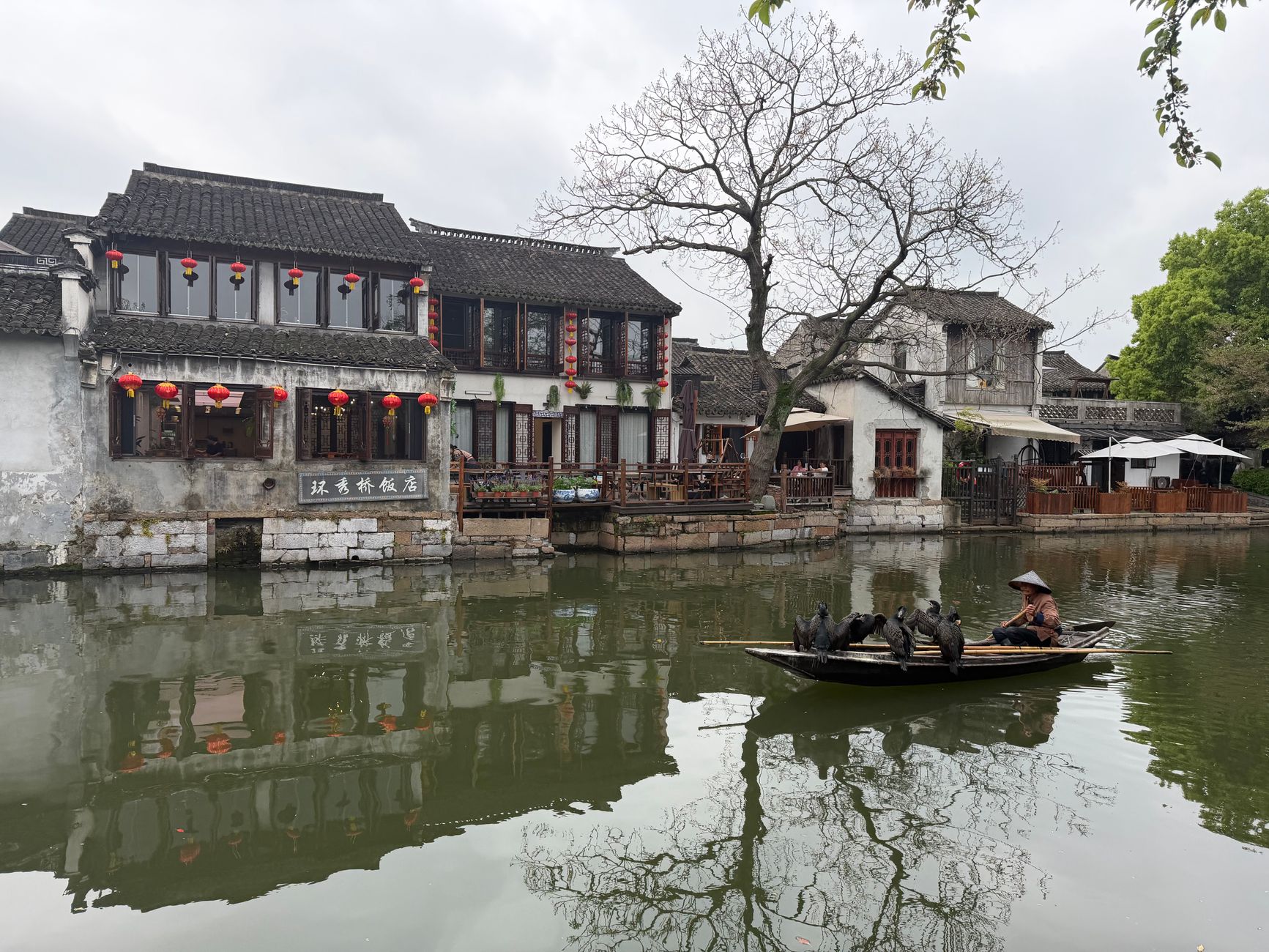
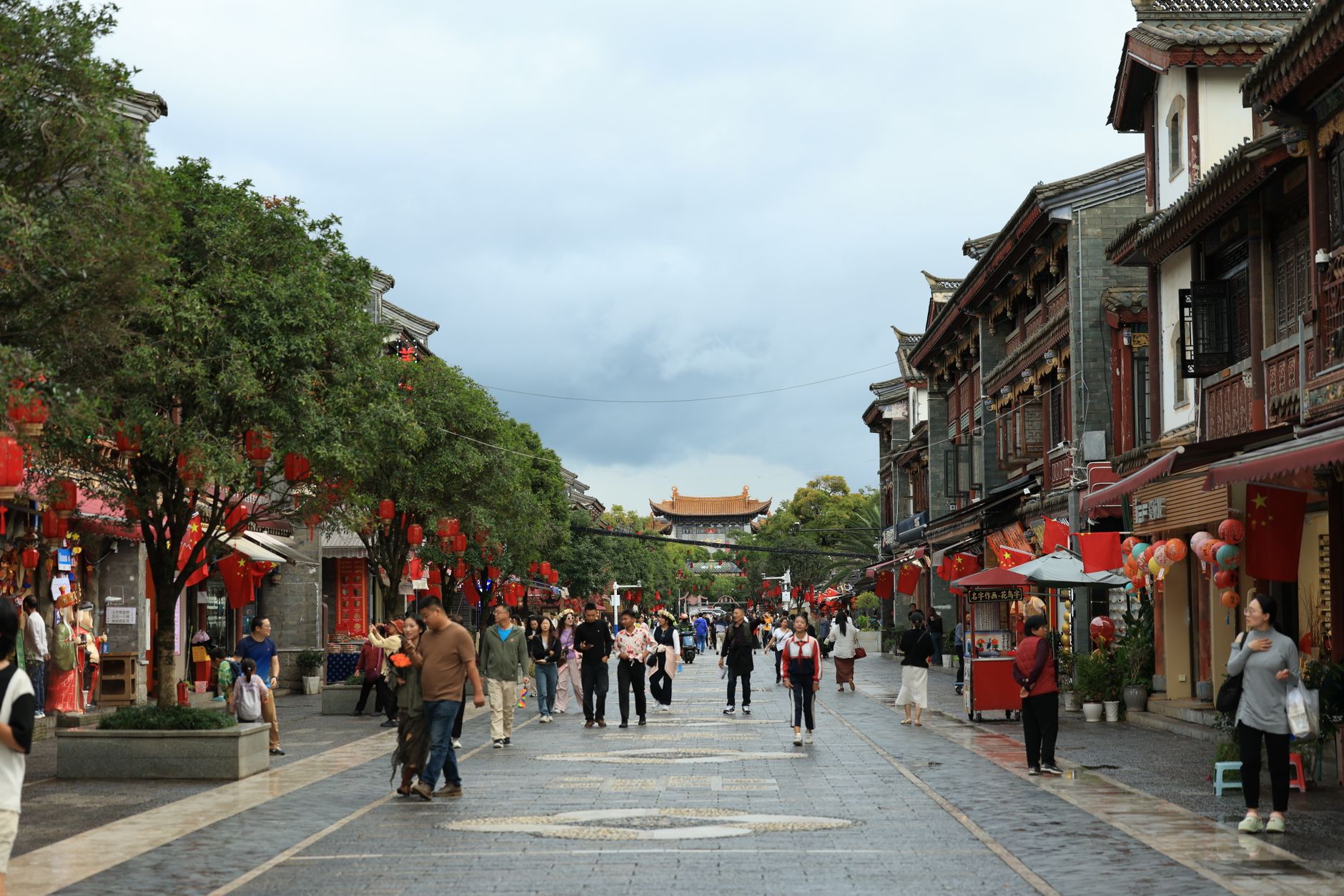
North Street, Bei Dajie, runs about a kilometre and narrows in places to two metres wide, flanked by Ming and Qing shop-houses whose ground floors now sell rice wine, sticky rice cakes, and handmade combs. The canals still carry wooden gondolas, and the Qing Dynasty post office — operating from 1903 and considered the best-preserved of its kind in China — still stands near the water.
💛 What travellers fall for
People who return tend to come back on a Tuesday or Wednesday, when the lanes are thin enough to actually see the stonework underfoot. They'll tell you to buy a ticket bundle that includes the boat ride, split it six ways with strangers at the dock, and time your exit before the 16:30 sharp close — the buildings don't linger.
Deals in Zhujiajiao
Book directly at the provider

How Zhujiajiao came to be
Zhujiajiao began as a village during the Three Kingdoms period and grew into a formal town during the Wanli era of the Ming Dynasty, between 1573 and 1620. Its rivers were its economy — rice, cotton textiles, and processed oil moved by barge through a network of canals that connected it to wider regional trade. The monk Xingchao completed Fangsheng Bridge in 1571, the same decade the town was formalising its identity.
Through the Qing dynasty the commerce deepened, and the built fabric that survives today — the post office (1903), the City God Temple relocated in 1763, the Yuanjin Buddhist Temple founded in 1341 — layers those centuries visibly. In 1912, merchant Ma Wenqing began work on Kezhi Garden, spending more than 300,000 taels of silver over fifteen years on a 60,000-square-metre estate that blended Chinese garden tradition with Western architectural details. Shanghai designated Zhujiajiao one of its four famous historical and cultural towns in 1991.
Who and what shaped it
People who shaped it
Landmark buildings
See Zhujiajiao in motion
Plan your visit
On the map
When to go
April and October are the most comfortable months, with temperatures between 20°C and 26°C. July pushes toward 34°C and June brings heavy rain — nearly 300 mm across fifteen days — so summer visits call for an early start and a willingness to get wet; January is cold and dry, around 10°C.
Right now
Background & history adapted from Wikipedia (CC BY-SA) · specs from Wikidata (CC0) · weather from Open-Meteo · map data © OpenStreetMap contributors · photos from Wikimedia Commons / Unsplash with per-image credit. No third-party reviews or social posts reproduced.