
York


York announces itself before you've left the station. Step out onto the platform and the Victorian glass-and-iron roof curves overhead — when it opened in 1877 it was the largest station in the world, and it still stops you for a moment. Ten minutes on foot and you're inside a circuit of medieval limestone walls that takes two hours to walk in full, with the Minster's towers visible above the roofline most of the way.
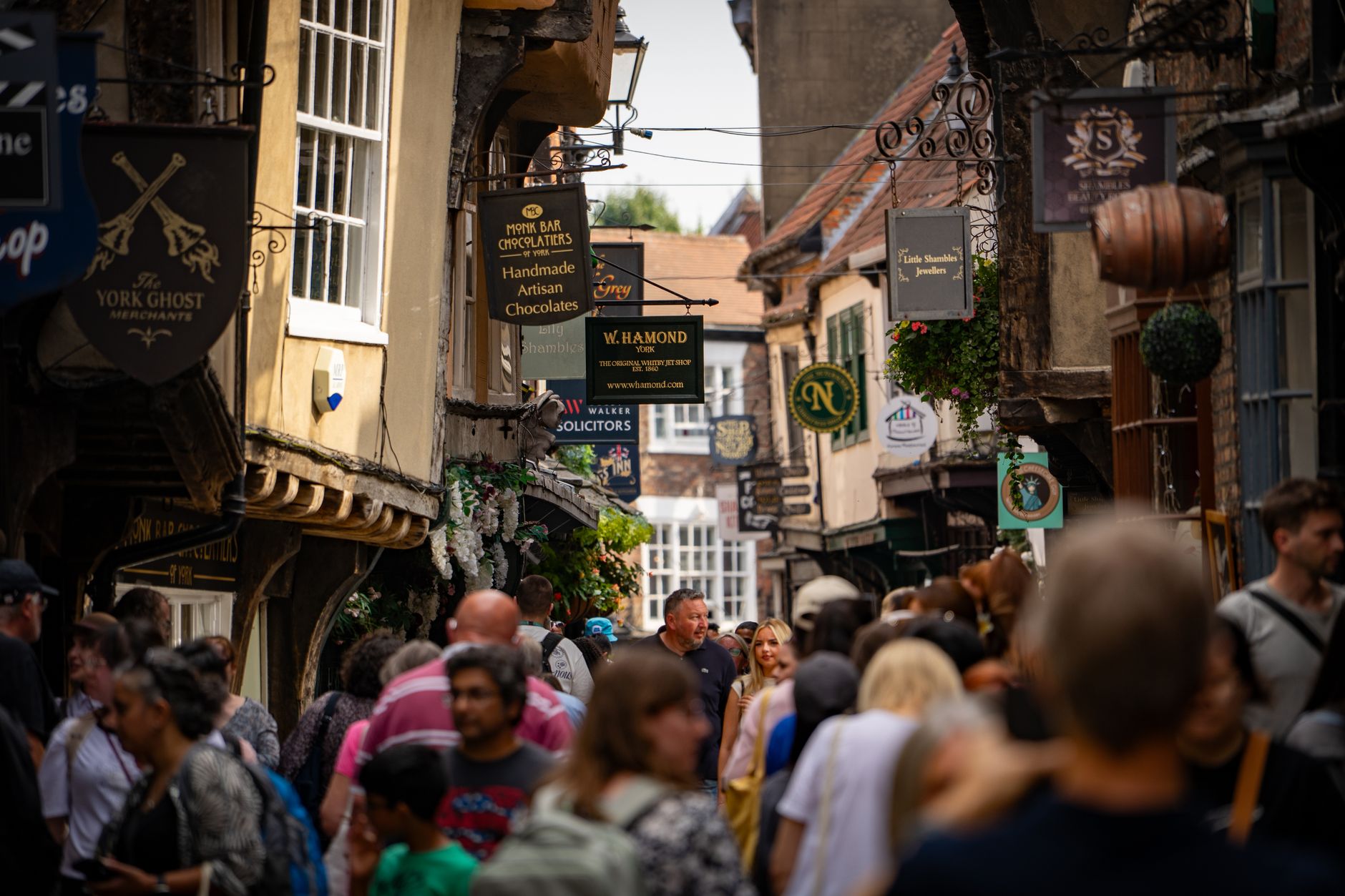
The city layers its histories without apology: Roman foundations, Viking street-plans, Norman keeps, Gothic stonework, Georgian terraces, and a free railway museum the size of a small town. You can stand on the Shambles — a street of overhanging timber-framed buildings where butchers traded in the 14th century — and look up at architecture that has barely moved since.
💛 What travellers fall for
People who come back tend to walk the walls first thing in the morning, before the crowds reach the Minster. They go to Clifford's Tower at dusk rather than midday. And they usually mention the National Railway Museum — even those who arrived with no particular interest in trains end up spending longer there than anywhere else.
Deals in York
Book directly at the provider

How York came to be
In AD 71, around 5,000 soldiers of the Roman Ninth Legion marched north from Lincoln and pitched camp on a patch of ground they called Eboracum — 'place of the yew trees.' The site grew into a provincial capital, and in AD 306, Constantine was proclaimed Emperor here, one of the more consequential moments to happen on English soil. When the Romans left around 410, the city passed through Anglo-Saxon hands and became the capital of the kingdom of Deira, before Viking forces took it in 866 and renamed it Jorvik.
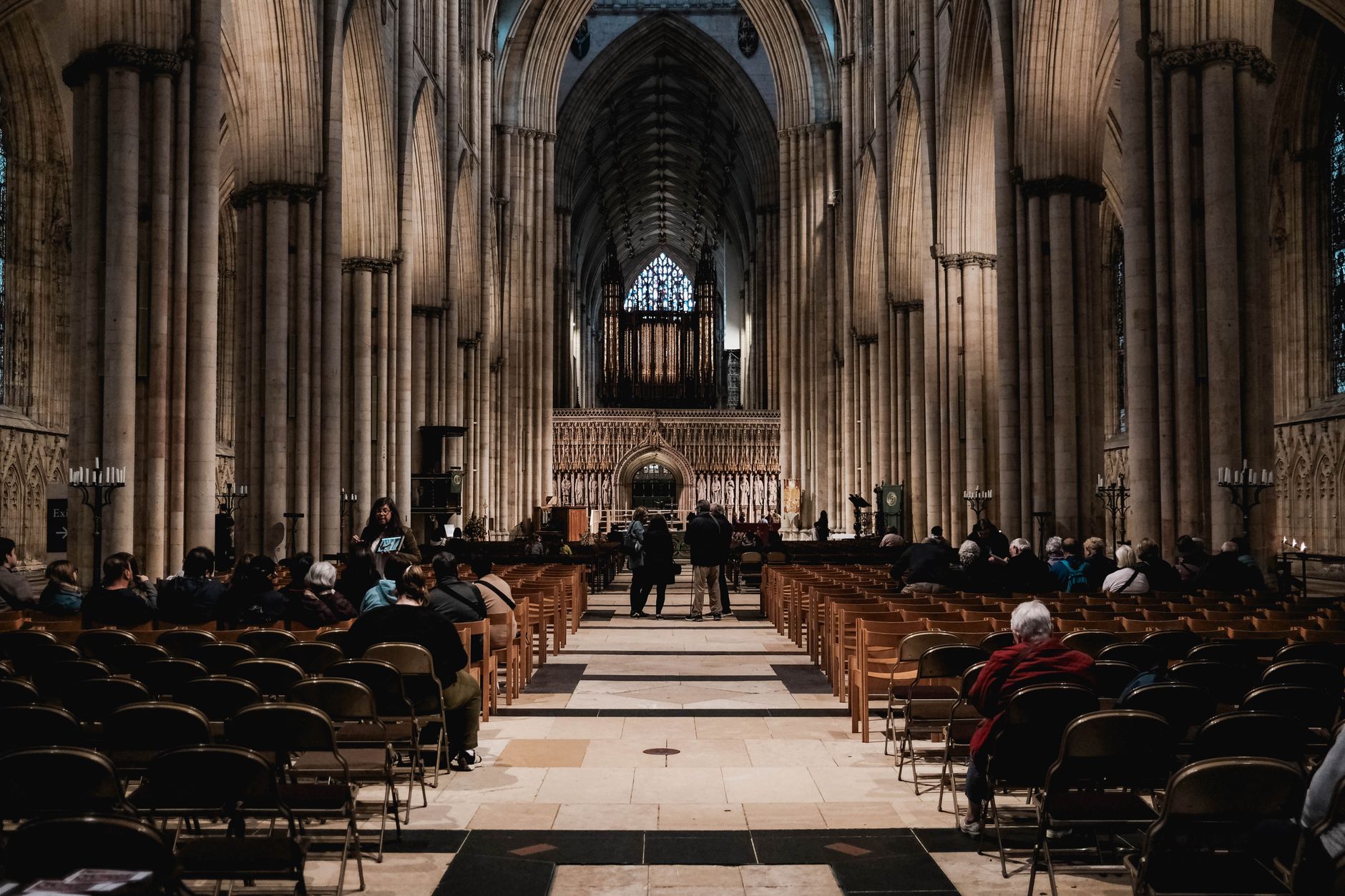
William the Conqueror arrived in the 11th century and built two motte-and-bailey castles to hold the city down. The stone keep known as Clifford's Tower followed in the 13th century. Meanwhile, work on the Gothic Minster ran from 1220 to 1482 — two and a half centuries of building that produced the largest Gothic church north of the Alps.
Who and what shaped it
People who shaped it
Landmark buildings
See York in motion
Plan your visit
On the map
When to go
York has an oceanic climate: winters are cold, damp and frequently grey, with January averaging around 4°C; summers are mild but still bring regular rain. Spring and early autumn tend to offer the most manageable conditions for walking the walls and the open sites.
Right now
Background & history adapted from Wikipedia (CC BY-SA) · specs from Wikidata (CC0) · weather from Open-Meteo · map data © OpenStreetMap contributors · photos from Wikimedia Commons / Unsplash with per-image credit. No third-party reviews or social posts reproduced.